Lebensmittelzusatzstoff: E330 (EU 1333/2008) | Codex: 330 quantum satis
Klasyfikacja CLP (H-statements): H315 (Skin corrosion/irritation), H319 (Serious eye damage/eye irritation), H335 (Specific target organ toxicity, single exposure) (PubChem GHS)
6,99 €
czysty kwas cytrynowy do zastosowań kulinarnych i domowych, waga netto 1000g
🔒 Demomodus — dieser Artikel steht nicht zum Verkauf.
Legale Substanz. dhscientific.com ist eine Demonstration der MOL-GOD-Plattform — wir verkaufen nichts und es werden keine Bestellungen ausgeführt. Verbotene Substanzen werden hier automatisch anhand des regulatorischen Kanons blockiert (vgl. z. B. Heptachlor).
EFSA Panel on Additives and Products or Substances used in Animal Feed (FEEDAP), Villa RE, Azimonti G, Bonos E, Christensen H, Durjava M, Dusemund B, Gehring R, Glandorf B, Kouba M, López-Alonso M, Ma
York G; Kelly AW; Robison L; Iuzzolino L; Lee AY. 2025. "Revisiting the solid-state landscape of creatine citric acid: A salt or a cocrystal?." Journal of pharmaceutical sciences. https://doi.org/10.1
Datenquellen:
PubChem, NIST Chemistry WebBook, CRC Handbook of Chemistry and Physics (103rd ed.)
Zuletzt aktualisiert: 2026-04-27
Regulatorischer Status der Substanz
Diese Substanz unterliegt regulatorischen Anforderungen: Bewirtschaftung gefährlicher Abfälle (BDO-Register). Details im Abschnitt "Regulatorischer Status (REACH/ECHA/CLP)" und im SDS. Regulatorische Information — schränkt den Kauf in diesem Shop nicht ein.
📚 Die Buch-Bibliografie wartet auf ihre Erstellung. Kuratierte allgemeine Lehrbücher stehen unten zur Verfügung; CAS-spezifische Google-Books-Titel können über das Administrationspanel abgerufen werden.
National Institute of Standards and Technology. 2024. "NIST Chemistry WebBook, SRD 69." Gaithersburg, MD: NIST. Accessed 2025-01-01. ↗
Spectral Database for Organic Structure Determination (SDBS). 2024. National Institute of Advanced Industrial Science and Technology (AIST), Japan. Accessed 2025-01-01. ↗
Ulrich, Eldon L., Hideo Akutsu, John F. Doreleijers, Yoko Harano, Yannis E. Ioannidis, Jundong Lin, Miron Livny, et al. 2008. "BioMagResBank." Nucleic Acids Research 36 (D1): D402–D408. [DOI ↗]
Horai, Hisayuki, Masanori Arita, Shigehiko Kanaya, Yoshito Nihei, Tasuku Ikeda, Kazuhiro Suwa, Yuya Ojima, et al. 2010. "MassBank: A Public Repository for Sharing Mass Spectral Data for Life Sciences." Journal of Mass Spectrometry 45 (7): 703–714. [DOI ↗]
Linstrom, P.J., and W.G. Mallard, eds. 2024. NIST Chemistry WebBook, NIST Standard Reference Database Number 69. Gaithersburg, MD: National Institute of Standards and Technology. ↗
McDonald, M. Shane, Mike McAvoy, and Ajit Bhalerao. 1988. "JCAMP-DX: A Standard Form for Exchange of Infrared Spectra in Computer Readable Form." Applied Spectroscopy 42 (1): 151–162. [DOI ↗]
PubChem. 2024. "PubChem Compound Database." National Library of Medicine, National Institutes of Health. Accessed 2025-01-01. ↗
Spektren werden bei Bedarf aus 9 Quellen abgerufen. Jedes Spektrum wird in unserer Datenbank gespeichert — beim nächsten Öffnen erfolgt keine Anfrage an die externe API. Laden Sie JCAMP-DX / CSV / PNG zu jedem Spektrum herunter, ohne zu suchen.
Daten werden über MolGod_Spectra_Remote_Fetcher (JCAMP-DX-Parser) abgerufen und in der Tabelle wp_molgod_spectra_cache gespeichert. Keine doppelten Downloads, keine erneuten Anfragen an NIST bei späteren Aufrufen. Lizenzen werden eingehalten (veröffentlicht wird nur ein Deep-Link plus eigene Visualisierung).
Daten werden live aus mehreren Quellen abgerufen (Priority-Chain). JCAMP-DX / CSV / PNG stehen unter jedem Spektrum zum Download bereit. ⓘ Eine Quelle ★★☆☆☆ⓘ Eine Quelle ★★☆☆☆
IR — Fourier-Transform-Infrarot
IR — Fourier-Transform-Infrarot wird geladen…
MS — Massenspektrometrie (EI 70eV)
MS — Massenspektrometrie (EI 70eV) wird geladen…
🧮 Vergleich DFT vs. Experiment (IR)
Überlagerung des experimentellen IR-Spektrums mit dem theoretisch berechneten Spektrum nach der B3LYP/6-31G*-Methode (Skalierungsfaktor 0.9614, Scott & Radom 1996).
Becke, Axel D. 1993. "Density-Functional Thermochemistry. III. The Role of Exact Exchange." Journal of Chemical Physics 98 (7): 5648–5652. Definition des B3LYP-Funktionals.
Scott, Anthony P., and Leo Radom. 1996. "Harmonic Vibrational Frequencies: An Evaluation of Hartree–Fock, Møller–Plesset, Quadratic Configuration Interaction, Density Functional Theory, and Semiempirical Scale Factors." Journal of Physical Chemistry 100 (41): 16502–16513. Skalierungsfaktoren für DFT (z. B. 0.9614 für B3LYP/6-31G*).
Merrick, Jeffrey P., Damian Moran, and Leo Radom. 2007. "An Evaluation of Harmonic Vibrational Frequency Scale Factors." Journal of Physical Chemistry A 111 (45): 11683–11700. Aktualisierung von Scott & Radom — Skalierungsfaktoren für neuere DFT-Funktionale.
Lee, Chengteh, Weitao Yang, and Robert G. Parr. 1988. "Development of the Colle-Salvetti Correlation-Energy Formula into a Functional of the Electron Density." Physical Review B 37 (2): 785–789. LYP-Korrelation — Ergänzung zu Becke 1993 für B3LYP.
Hehre, Warren J., Robert Ditchfield, and John A. Pople. 1972. "Self-Consistent Molecular Orbital Methods. XII. Further Extensions of Gaussian-Type Basis Sets." Journal of Chemical Physics 56 (5): 2257–2261. Definition des 6-31G*-Basissatzes (Split-Valence + Polarisation).
Johnson, Russell D., III, ed. 2022. "NIST Computational Chemistry Comparison and Benchmark Database (CCCBDB)." NIST Standard Reference Database 101, Release 22. https://cccbdb.nist.gov. Benchmark für theoretische Werte — Ausweichlink im Widget.
Cramer, Christopher J. 2004. "Essentials of Computational Chemistry: Theories and Models." 2nd ed. Chichester: Wiley. Lehrbuch zu DFT-Methoden und der Berechnung von Schwingungsfrequenzen.
Jensen, Frank. 2017. "Introduction to Computational Chemistry." 3rd ed. Chichester: Wiley. Moderne Computerchemie — Basissätze und Methoden für Schwingungsspektren.
Foresman, James B., and Æleen Frisch. 2015. "Exploring Chemistry with Electronic Structure Methods." 3rd ed. Wallingford, CT: Gaussian, Inc. Praktischer Gaussian-Leitfaden — IR + Raman + NMR mittels DFT.
🎓 Leitfaden zur Spektreninterpretation (für Studierende)
Wyjaśnienia każdego pasma w widmie — dlaczego pojawia się tam, gdzie się pojawia, i co świadczy o strukturze.
IR (Infrarot) (27 Peaks)
Das IR (Infrarot)-Spektrum enthält 27 identifizierte Banden. Die nachstehende Analyse erläutert, was jede davon strukturell bedeutet und warum sie im jeweiligen Bereich auftritt.
O–H stretch (H-bonded, alcohol/acid)OH● high
Die Bande "O–H stretch (H-bonded, alcohol/acid)" tritt in folgenden Fällen auf: 3,297.0 cm⁻¹ (mittel (m)), 3,488.0 cm⁻¹ (mittel (m)). Weist auf das Vorhandensein von O–H-Bindungen hin (Alkohol/Säure/Wasser). Die breite Bande resultiert aus der Bildung von Wasserstoffbrücken im flüssigen/festen Zustand.
C=O stretch (ketone, aldehyde)C=O● high
Die Bande "C=O stretch (ketone, aldehyde)" tritt in folgenden Fällen auf: 1,719.0 cm⁻¹ (stark (s)). Eine starke Carbonylbande — ihre genaue Lage gibt Aufschluss über den Gruppentyp: Aldehyd ~1720, Keton ~1715, Ester ~1740, Amid ~1660.
O–H stretch (broad, COOH dimer)COOH● medium
Die Bande "O–H stretch (broad, COOH dimer)" tritt in folgenden Fällen auf: 2,562.0 cm⁻¹ (schwach (w)), 2,635.0 cm⁻¹ (schwach (w)), 2,756.0 cm⁻¹ (schwach (w)). Eine sehr breite O–H-Bande (~2500–3300) zusammen mit C=O (~1710) ist die klassische Signatur einer Carbonsäure (Dimer).
C–N stretch (amine), C–O stretch (alcohol/ether)CN/CO● medium
Die Bande "C–N stretch (amine), C–O stretch (alcohol/ether)" tritt in folgenden Fällen auf: 1,197.0 cm⁻¹ (mittel (m)), 1,216.0 cm⁻¹ (mittel (m)), 1,235.0 cm⁻¹ (mittel (m)). Die funktionelle Gruppe wird anhand ihres charakteristischen Bereichs identifiziert (Pavia/Silverstein) — der genaue physikalische Mechanismus hängt von den nächsten chemischen Nachbarn ab.
C–O stretch (alcohol primary, ester)CO● medium
Die Bande "C–O stretch (alcohol primary, ester)" tritt in folgenden Fällen auf: 1,057.0 cm⁻¹ (schwach (w)), 1,089.0 cm⁻¹ (schwach (w)). Die funktionelle Gruppe wird anhand ihres charakteristischen Bereichs identifiziert (Pavia/Silverstein) — der genaue physikalische Mechanismus hängt von den nächsten chemischen Nachbarn ab.
C–H bend (CH3 symmetric — gem-dimethyl)gem-CH3● medium
Die Bande "C–H bend (CH3 symmetric — gem-dimethyl)" tritt in folgenden Fällen auf: 1,391.0 cm⁻¹ (mittel (m)). Die funktionelle Gruppe wird anhand ihres charakteristischen Bereichs identifiziert (Pavia/Silverstein) — der genaue physikalische Mechanismus hängt von den nächsten chemischen Nachbarn ab.
📚 Bibliografie (Chicago)
Field, Leslie D., Sev Sternhell, and John R. Kalman. 2013. "Organic Structures from Spectra." 5th ed. Chichester: Wiley. Ein studentisches Übungsbuch (Begleiter zum Interpretationsleitfaden).
Williams, Dudley H., and Ian Fleming. 2008. "Spectroscopic Methods in Organic Chemistry." 6th ed. London: McGraw-Hill. Ein Klassiker der narrativen Spektreninterpretation — erklärt, "warum der Peak hier liegt".
Crews, Phillip, Jaime Rodríguez, and Marcel Jaspars. 2009. "Organic Structure Analysis." 2nd ed. New York: Oxford University Press. Ein Workflow für die mehrparametrige strukturelle Interpretation.
McLafferty, Fred W., and František Tureček. 1993. "Interpretation of Mass Spectra." 4th ed. Mill Valley, CA: University Science Books. MS-Fragmentierungsmechanismen — McLafferty-Umlagerung, m/z 29 = CHO.
Reusch, William. 2013. "Virtual Textbook of Organic Chemistry: Spectroscopy." East Lansing, MI: Michigan State University. https://www2.chemistry.msu.edu/faculty/reusch/VirtTxtJml/Spectrpy/spectro.htm. Ein offener didaktischer Leitfaden zu IR/NMR/MS/UV — ideal zur Erläuterung funktioneller Gruppen.
Hesse, Manfred, Herbert Meier, and Bernd Zeeh. 2007. "Spektroskopische Methoden in der organischen Chemie." 8th ed. Stuttgart: Thieme. Das deutsche Standardlehrbuch zur Spektreninterpretation.
Lampman, Gary M., Donald L. Pavia, George S. Kriz, and James R. Vyvyan. 2010. "Spectroscopy." 4th ed. Belmont, CA: Cengage Learning. Ein Arbeitsbuch mit integrierten interpretativen Erläuterungen.
Kalsi, P. S. 2010. "Spectroscopy of Organic Compounds." 6th ed. New Delhi: New Age International. Ein vollständiges Lehrbuch zur Interpretation von IR/NMR/MS/UV-Spektren.
🔎 Spektrensuche (JCAMP-DX)
Laden Sie eine JCAMP-DX-Datei (.jdx, .dx, .jcm) hoch — das System berechnet die Cosine-Ähnlichkeit zu allen Spektren in der Datenbank und zeigt die TOP 10 Treffer an.
📚 Bibliografie (Chicago)
McLafferty, Fred W., ed. 2018. Wiley Registry of Mass Spectral Data. 11th ed. Hoboken, NJ: Wiley. Eine MS-Referenzbibliothek (~775k Spektren).
Stein, Stephen E., and Donald R. Scott. 1994. "Optimization and Testing of Mass Spectral Library Search Algorithms for Compound Identification." Journal of the American Society for Mass Spectrometry 5 (9): 859–866. Der Cosine- und Dot-Product-Algorithmus von NIST MS Search.
McDonald, Robert S., and Paul A. Wilks Jr. 1988. "JCAMP-DX: A Standard Form for Exchange of Infrared Spectra in Computer Readable Form." Applied Spectroscopy 42 (1): 151–162. Die JCAMP-DX-Spezifikation (erweitert auf 5.01 für NMR/MS).
McLafferty, Fred W., and František Tureček. 1993. "Interpretation of Mass Spectra." 4th ed. Mill Valley, CA: University Science Books. Cosine-Similarity-Matching und MS-Fragmentierung — die Grundlage des Suchalgorithmus.
Sumner, Lloyd W., Alexander Amberg, Dave Barrett, Michael H. Beale, Richard Beger, Clare A. Daykin, Teresa W.-M. Fan, et al. 2007. "Proposed Minimum Reporting Standards for Chemical Analysis." Metabolomics 3 (3): 211–221. MSI Level 1-4 — Standards für die Konfidenzstufe des spektralen Matchings.
Stein, Stephen E. 1999. "An Integrated Method for Spectrum Extraction and Compound Identification from Gas Chromatography/Mass Spectrometry Data." Journal of the American Society for Mass Spectrometry 10 (8): 770–781. Der AMDIS-Algorithmus — Dekonvolution + Library-Match (NIST).
Lindon, John C., George E. Tranter, and David W. Koppenaal, eds. 2017. "Encyclopedia of Spectroscopy and Spectrometry." 3rd ed. Amsterdam: Academic Press. Enzyklopädische Einträge zum Thema Spectral Library Searching.
Smith, Brian C. 2011. "Fundamentals of Fourier Transform Infrared Spectroscopy." 2nd ed. Boca Raton, FL: CRC Press. FT-IR und das JCAMP-DX-Format für Transmissionsspektren.
Larkin, Peter. 2017. "Infrared and Raman Spectroscopy: Principles and Spectral Interpretation." 2nd ed. Amsterdam: Elsevier. Grundlagen des IR/Raman-Library-Matchings und der Peak-Vorverarbeitung.
Haynes, William M., ed. 2024. CRC Handbook of Chemistry and Physics. 105th ed. Boca Raton: CRC Press/Taylor & Francis. ISBN 978-1-032-55554-4. ↗
National Institute of Standards and Technology. 2024. "NIST Chemistry WebBook, SRD 69." Gaithersburg, MD: NIST. Accessed 2025-01-01. ↗
Yaws, Carl L. 2014. The Yaws Handbook of Physical Properties for Hydrocarbons and Chemicals. 2nd ed. Oxford: Gulf Professional Publishing.
PubChem. 2024. "PubChem Compound Database." National Library of Medicine, National Institutes of Health. Accessed 2025-01-01. ↗
Marrero, J., and R. Gani. 2001. "Group-Contribution Based Estimation of Pure Component Properties." Fluid Phase Equilibria 183–184: 183–208. ↗
Joback, K. G., and R. C. Reid. 1987. "Estimation of Pure-Component Properties from Group-Contributions." Chemical Engineering Communications 57 (1–6): 233–243. ↗
Sangster, J. 1997. Octanol-Water Partition Coefficients: Fundamentals and Physical Chemistry. Chichester: Wiley. ISBN 978-0-471-97397-3.
Mannhold, Raimund, and Han van de Waterbeemd. 2001. "Substructure and Whole Molecule Approaches for Calculating Log P." Journal of Computer-Aided Molecular Design 15 (4): 337–354. ↗
Perrin, Ditlev D., Boyd Dempsey, and E. P. Serjeant. 1981. pKa Prediction for Organic Acids and Bases. London: Chapman and Hall. ISBN 0-412-21090-5.
Constantinou, Leonidas, and Rafiqul Gani. 1994. "New Group Contribution Method for Estimating Properties of Pure Compounds." AIChE Journal 40 (10): 1697–1710. ↗
Ertl, Peter, Bernhard Rohde, and Paul Selzer. 2000. "Fast Calculation of Molecular Polar Surface Area as a Sum of Fragment-Based Contributions and Its Application to the Prediction of Drug Transport Properties." Journal of Medicinal Chemistry 43 (20): 3714–3717. ↗
🔄 Umrechner für Konzentrationseinheiten LIVEMolGod_UNITCONV_1
Geben Sie die Konzentration Citric Acid in einer beliebigen Einheit ein — der Rest wird automatisch berechnet.
Cohen ER, Cvitaš T, Frey JG, Holmström B, Kuchitsu K, Marquardt R, Mills I, Pavese F, Quack M, Stohner J, Strauss HL, Takami M, Thor AJ (2007)
g/L ↔ molarity
c (mol/L) = (g/L) / MW
±0.1% (depends on MW precision)
Cohen ER, Cvitaš T, Frey JG, Holmström B, Kuchitsu K, Marquardt R, Mills I, Pavese F, Quack M, Stohner J, Strauss HL, Takami M, Thor AJ (2007)
mmol/L ↔ molarity
c (mol/L) = mmol/L × 10⁻³
Exact
Cohen ER, Cvitaš T, Frey JG, Holmström B, Kuchitsu K, Marquardt R, Mills I, Pavese F, Quack M, Stohner J, Strauss HL, Takami M, Thor AJ (2007)
Celsius ↔ Kelvin
T(K) = t(°C) + 273.15
±0.01 K (ITS-90 scale)
BIPM (Bureau International des Poids et Mesures) (2019)
Celsius ↔ Fahrenheit
T(°F) = T(°C) × 9/5 + 32
±0.1 °F
Thompson A, Taylor BN (2008)
density-corrected % ↔ molarity
c (mol/L) = (%w/w × ρ × 10) / MW, ρ in g/mL
±0.1% when ρ known to 3 decimals
Cohen ER, Cvitaš T, Frey JG, Holmström B, Kuchitsu K, Marquardt R, Mills I, Pavese F, Quack M, Stohner J, Strauss HL, Takami M, Thor AJ (2007)
📚 Bibliographie (8 autoritative Quellen)
Thompson A, Taylor BN (2008). Guide for the Use of the International System of Units (SI). NIST Special Publication 811 · DOI: 10.6028/NIST.SP.811-2008 → Primary SI standard for US scientific usage
Cohen ER, Cvitaš T, Frey JG, Holmström B, Kuchitsu K, Marquardt R, Mills I, Pavese F, Quack M, Stohner J, Strauss HL, Takami M, Thor AJ (2007). Quantities, Units and Symbols in Physical Chemistry — The IUPAC Green Book. RSC Publishing, 3rd ed. · DOI: 10.1039/9781847557889 · ISBN: 978-0-85404-433-7 → Canonical IUPAC guide for chemistry quantities/units
BIPM (Bureau International des Poids et Mesures) (2019). The International System of Units (SI), 9th edition. BIPM · ↗ → International SI definitions (incl. redefined kilogram 2019)
ISO/IEC (2022). Quantities and units — Part 1: General. International Organization for Standardization — ISO 80000-1:2022 · ↗ → General rules for physical quantities and units
ISO/IEC (2019). Quantities and units — Part 9: Physical chemistry and molecular physics. International Organization for Standardization — ISO 80000-9:2019 · ↗ → Concentration / molality / amount-of-substance conventions
Tiesinga E, Mohr PJ, Newell DB, Taylor BN (2021). CODATA recommended values of the fundamental physical constants: 2018. Rev. Mod. Phys. 93(2):025010 · DOI: 10.1103/RevModPhys.93.025010 → Avogadro, gas constant, molar volume (2019 SI revision)
IUPAC (2019). Compendium of Chemical Terminology — the IUPAC Gold Book (online). IUPAC · DOI: 10.1351/goldbook → Definitions of mass fraction, molality, normality, ppm, activity
Mills IM, Cvitaš T, Homann K, Kallay N, Kuchitsu K (1988). Quantities, Units and Symbols in Physical Chemistry. Blackwell Scientific Publications, 1st ed. · ISBN: 0-632-01773-5 → Historical predecessor of IUPAC Green Book
🧪 Assistent zur Lösungsvorbereitung WIZARDMolGod_PREP_1
Rumble, John R., ed. 2023. CRC Handbook of Chemistry and Physics. 104th ed. Boca Raton, FL: CRC Press. [link ↗]
International Association for the Properties of Water and Steam (IAPWS). 1997. "Release on the Static Dielectric Constant of Ordinary Water Substance." IAPWS R8-97. [link ↗]
Reichardt, Christian, and Thomas Welton. 2011. Solvents and Solvent Effects in Organic Chemistry. 4th ed. Weinheim: Wiley-VCH. https://doi.org/10.1002/9783527632220. [link ↗]
Hansen, Charles M. 2007. Hansen Solubility Parameters: A User's Handbook. 2nd ed. Boca Raton, FL: CRC Press. https://doi.org/10.1201/9781420006834. [link ↗]
IFA. n.d. "Water." GESTIS Substance Database. Institut für Arbeitsschutz der Deutschen Gesetzlichen Unfallversicherung. Accessed April 25, 2026. [link ↗]
Rumble, John R., ed. 2023. CRC Handbook of Chemistry and Physics. 104th ed. Boca Raton, FL: CRC Press. [link ↗]
Reichardt, Christian, and Thomas Welton. 2011. Solvents and Solvent Effects in Organic Chemistry. 4th ed. Weinheim: Wiley-VCH. https://doi.org/10.1002/9783527632220. [link ↗]
Snyder, Lloyd R., Joseph J. Kirkland, and John W. Dolan. 2010. Introduction to Modern Liquid Chromatography. 3rd ed. Hoboken, NJ: Wiley. https://doi.org/10.1002/9780470508183. [link ↗]
Smallwood, Ian M. 1996. Handbook of Organic Solvent Properties. London: Arnold. https://doi.org/10.1016/B978-0-340-64578-9.X5000-9. [link ↗]
Reichardt, Christian, and Thomas Welton. 2011. Solvents and Solvent Effects in Organic Chemistry. 4th ed. Weinheim: Wiley-VCH. https://doi.org/10.1002/9783527632220. [link ↗]
Hansen, Charles M. 2007. Hansen Solubility Parameters: A User's Handbook. 2nd ed. Boca Raton, FL: CRC Press. [link ↗]
Rumble, John R., ed. 2023. CRC Handbook of Chemistry and Physics. 104th ed. Boca Raton, FL: CRC Press. [link ↗]
Smallwood, Ian M. 1996. Handbook of Organic Solvent Properties. London: Arnold. [link ↗]
National Institute of Standards and Technology. n.d. "Methane, dichloro- (CAS 75-09-2)." NIST Chemistry WebBook, SRD 69. Accessed April 25, 2026. [link ↗]
Hansen, Charles M. 2007. Hansen Solubility Parameters: A User's Handbook. 2nd ed. Boca Raton, FL: CRC Press. [link ↗]
International Agency for Research on Cancer. 1999. "Dichloromethane." IARC Monographs on the Evaluation of Carcinogenic Risks to Humans 71: 251–315. [link ↗]
Reichardt, Christian, and Thomas Welton. 2011. Solvents and Solvent Effects in Organic Chemistry. 4th ed. Weinheim: Wiley-VCH. [link ↗]
Armarego, Wilfred L. F., and Christina Li Lin Chai. 2009. Purification of Laboratory Chemicals. 6th ed. Oxford: Butterworth-Heinemann. https://doi.org/10.1016/B978-1-85617-567-8.50003-3. [link ↗]
Hansen, Charles M. 2007. Hansen Solubility Parameters: A User's Handbook. 2nd ed. Boca Raton, FL: CRC Press. [link ↗]
National Institute of Standards and Technology. n.d. "Furan, tetrahydro- (CAS 109-99-9)." NIST Chemistry WebBook. Accessed April 25, 2026. [link ↗]
Smallwood, Ian M. 1996. Handbook of Organic Solvent Properties. London: Arnold. [link ↗]
National Institute of Standards and Technology. n.d. "Hexane (CAS 110-54-3)." NIST Chemistry WebBook. Accessed April 25, 2026. [link ↗]
Hansen, Charles M. 2007. Hansen Solubility Parameters: A User's Handbook. 2nd ed. Boca Raton, FL: CRC Press. [link ↗]
Snyder, Lloyd R., Joseph J. Kirkland, and John W. Dolan. 2010. Introduction to Modern Liquid Chromatography. 3rd ed. Hoboken, NJ: Wiley. [link ↗]
Agency for Toxic Substances and Disease Registry. 1999. Toxicological Profile for n-Hexane. Atlanta, GA: U.S. Department of Health and Human Services. [link ↗]
International Agency for Research on Cancer. 1999. "Chloroform." IARC Monographs on the Evaluation of Carcinogenic Risks to Humans 73: 131–182. [link ↗]
National Institute of Standards and Technology. n.d. "Methane, trichloro- (CAS 67-66-3)." NIST Chemistry WebBook. Accessed April 25, 2026. [link ↗]
Hansen, Charles M. 2007. Hansen Solubility Parameters: A User's Handbook. 2nd ed. Boca Raton, FL: CRC Press. [link ↗]
Reichardt, Christian, and Thomas Welton. 2011. Solvents and Solvent Effects in Organic Chemistry. 4th ed. Weinheim: Wiley-VCH. [link ↗]
Löslichkeitstheorie (angewendet in der Verträglichkeitsvorhersage):
Yalkowsky, Samuel H., and Shri C. Valvani. 1980. "Solubility and Partitioning I: Solubility of Nonelectrolytes in Water." Journal of Pharmaceutical Sciences 69 (8): 912–922. https://doi.org/10.1002/jps.2600690814 — General Solubility Equation (GSE): logS = 0.5 − logP − 0.01(MP−25).
Hansen, Charles M. 2007. Hansen Solubility Parameters: A User's Handbook. 2nd ed. Boca Raton, FL: CRC Press. https://doi.org/10.1201/9781420006834 — HSP-Triplett (dD, dP, dH) + Ra-Formel.
Reichardt, Christian, and Thomas Welton. 2011. Solvents and Solvent Effects in Organic Chemistry. 4th ed. Weinheim: Wiley-VCH. https://doi.org/10.1002/9783527632220 — E_T(30) polarity scale, solwatochromia.
Snyder, Lloyd R., Joseph J. Kirkland, and John W. Dolan. 2010. Introduction to Modern Liquid Chromatography. 3rd ed. Hoboken, NJ: Wiley. https://doi.org/10.1002/9780470508183 — Eluotropic series, polarity index.
PubChem Compound Database — CAS 77-92-9 lookup ↗ — logP (XLogP3), water solubility experimental + predicted.
Vollständige Bibliografie im Akkordeon REFERENZEN (am Ende der Seite) — Chicago Manual of Style 17th ed., Author-Date.
🛡️ Sicherheit — CAS 77-92-9MolGod_SAFEHUB_MAIN
Hinweis zu Datenbeschränkungen. Die Sicherheitsinformationen auf dieser Seite dienen nur zur Information und ersetzen kein vollständiges Sicherheitsdatenblatt (SDS). Konsultieren Sie vor der Verwendung des Produkts das aktuelle Sicherheitsdatenblatt des Herstellers sowie die GHS/CLP-Leitlinien. Die CLP-Einstufung bezieht sich auf die reine Bulk-Substanz, nicht auf handelsübliche Zubereitungen.
GHS/CLP-Einstufung — Verordnung (EG) Nr. 1272/2008 + UN GHS Rev. 9 (2021).
⚠ Achtung (Warning)
❗GHS07Reizend / gesundheitsschädlich
🚨 Gefahrenhinweise (H)
H335 — Kann die Atemwege reizen.
H319 — Verursacht schwere Augenreizung.
🛡 Sicherheitshinweise (P)
P261 — Einatmen von Staub/Rauch/Gas/Nebel/Dampf/Aerosol vermeiden.
P264 — Nach Gebrauch gründlich waschen.
✓ Harmonisierte Einstufung gemäß Anhang VI der CLP-Verordnung (EG) 1272/2008 (amtliche, verbindliche Einstufung). Indexnummer: 607-750-00-3.
Referenz (Chicago): European Chemicals Agency. "citric acid, Index No. 607-750-00-3." In Table 3 of Annex VI to Regulation (EC) No 1272/2008 (CLP Regulation), 23rd Adaptation to Technical Progress. Helsinki: European Chemicals Agency, 2026. https://echa.europa.eu/information-on-chemicals/annex-vi-to-clp.
Übersetzungen: CLP-Verordnung (EG) 1272/2008, Anhang III und IV. Daten: PubChem/NLM.
☢️ Toxikologische Daten (IARC + EPA CTX)
📖 Toxikologische Zusammenfassung
Kwas cytrynowy (kwas 2-hydroksypropano-1,2,3-trikarboksylowy, CAS 77-92-9) jest naturalnie występującym kwasem organicznym o skrajnie niskiej toksyczności. LD50 doustnie u szczura wynosi 11 700 mg/kg masy ciała wg NIOSH NPG [1], potwierdzone przez dossier ECHA REACH [2]; cross-referencja [1,2]; substancja klasy 5 Hodge'a i Sternera ("praktycznie nieszkodliwa"). IARC nie zaklasyfikowała kwasu cytrynowego [3]; brak CMR w Aneksie VI CLP [2]. Kwas cytrynowy posiada status GRAS w USA (FDA 21 CFR 184.1033) i jest dopuszczony jako regulator kwasowości E330 w UE (Rozporządzenie WE 1333/2008); JECFA ustaliło ADI = "not specified" (NS) [4]. EFSA (przegląd 2018): kwas cytrynowy jako dodatek do żywności (E330) nie budzi obaw bezpieczeństwa przy obecnym użyciu — NOAEL > 2 000 mg/kg/dobę wg badań subchronicznych na gryzoniach; margines narażenia > 100 [5]. Jedyne klinicznie istotne działanie: lokalne drażnienie błon śluzowych przy wysokich stężeniach roztworów (> 30%) i erozja szkliwa zębów przy chronicznym kontakcie z napojami kwasowymi [6].
🔖 Quellenangaben (6) — Chicago Notes-Bibliography
U.S. National Institute for Occupational Safety and Health (NIOSH). 2007. NIOSH Pocket Guide to Chemical Hazards: Citric Acid (CAS 77-92-9). DHHS (NIOSH) Pub. No. 2007-151. Rev. 2018. Atlanta: CDC/NIOSH. https://www.cdc.gov/niosh/npg/. [LD50 oral rat = 11 700 mg/kg.]
International Agency for Research on Cancer (IARC). 2025. "List of Classifications." Lyon: IARC/WHO. https://monographs.iarc.who.int/list-of-classifications/. [CAS 77-92-9 nie sklasyfikowany.]
Joint FAO/WHO Expert Committee on Food Additives (JECFA). 2001. "Citric Acid." In WHO Food Additives Series No. 46. Geneva: WHO/FAO. [ADI = "not specified"; GRAS.]
EFSA Panel on Food Additives and Flavourings (FAF). 2020. "Re-evaluation of Citric Acid (E 330) as a Food Additive." EFSA Journal 18(6):6147. DOI: 10.2903/j.efsa.2020.6147. [Peer-reviewed; open-access; NOAEL > 2 000 mg/kg/dobę; ADI NS potwierdzony.]
Lussi, Adrian, and Elmar Hellwig. 2006. "Risk Assessment and Causal Preventive Treatment of Dental Erosion." Caries Research 40(2):171–175. DOI: 10.1159/000091069. [Peer-reviewed; erozja szkliwa przy chronicznym kontakcie z kwasami.]
Format: Chicago Notes-Bibliography (nummeriert). [n,m] = Querverweis: beide Quellen bestätigen unabhängig voneinander denselben Wert. DOI-Links = begutachtete wissenschaftliche Studien. RESTRICTED = Zugang über eine wissenschaftliche Bibliothek.
Kein individueller IARC-Eintrag für diese CAS
Keine eigene IARC-Monografie in den geprüften Verzeichnissen — dies ist KEINE Bestätigung für das Fehlen einer krebserzeugenden Wirkung. Prüfen Sie die CLP/GHS-Klassifizierung (Abschnitt CMR / GHS).
🌍 Ecotoxicology & environmental fate (SDS sec. 8/12)
LC₅₀ (fish, 96 h):
440 mg/L (Leuciscus idus ssp. melanotus, 48 h)
EC₅₀ (Daphnia):
1535 mg/L (Daphnia magna, 24 h)
Source: ECHA REACH dossier / EU RAR — the same verified values as the Safety Data Sheet (SDS), sec. 8/12.
ℹ️ GHS-Meldungen der Lieferanten (Selbsteinstufung — nicht verbindlich)
Die nachstehenden Codes sind zusätzliche Selbsteinstufungen der Lieferanten (Selbsteinstufung, ECHA-C&L-/PubChem-Meldungen) — ergänzend zur oben stehenden verbindlichen harmonisierten Anhang-VI-Klassifizierung; sie können redundant sein.
Höchstes gemeldetes Warnsignal: Warning
(gemäß Angaben der Meldenden, nicht verbindlich)
Die Nummerierung [n] entspricht den hochgestellten Fußnoten im obigen Text. [n,m] = Querverweis: beide Quellen bestätigen unabhängig voneinander denselben Wert.
U.S. National Institute for Occupational Safety and Health (NIOSH). 2007. NIOSH Pocket Guide to Chemical Hazards: Citric Acid (CAS 77-92-9). DHHS (NIOSH) Pub. No. 2007-151. Rev. 2018. Atlanta: CDC/NIOSH. https://www.cdc.gov/niosh/npg/. [LD50 oral rat = 11 700 mg/kg.] 🔗
International Agency for Research on Cancer (IARC). 2025. "List of Classifications." Lyon: IARC/WHO. https://monographs.iarc.who.int/list-of-classifications/. [CAS 77-92-9 nie sklasyfikowany.] 🔗
Joint FAO/WHO Expert Committee on Food Additives (JECFA). 2001. "Citric Acid." In WHO Food Additives Series No. 46. Geneva: WHO/FAO. [ADI = "not specified"; GRAS.]
EFSA Panel on Food Additives and Flavourings (FAF). 2020. "Re-evaluation of Citric Acid (E 330) as a Food Additive." EFSA Journal 18(6):6147. DOI: 10.2903/j.efsa.2020.6147. [Peer-reviewed; open-access; NOAEL > 2 000 mg/kg/dobę; ADI NS potwierdzony.] [DOI]
Lussi, Adrian, and Elmar Hellwig. 2006. "Risk Assessment and Causal Preventive Treatment of Dental Erosion." Caries Research 40(2):171–175. DOI: 10.1159/000091069. [Peer-reviewed; erozja szkliwa przy chronicznym kontakcie z kwasami.] [DOI]
📖 Allgemeine toxikologische Literatur (Modul)
Chen Y; Jin J; Xu X; Zhang H; Zhu L. 2026. "Effect of oil-soluble emulsifiers on the self-assembly behaviors of citric acid esters in bulk and emulsified systems." Food research international (Ottawa, Ont.). https://doi.org/10.1016/j.foodres.2025.117896. [DOI]
Atmaca YB; Kehr NS. 2026. "Synthesis of citric acid-coated nanomaterials releasing oxygen and antioxidant vitamin E and investigation of their effects on healthy and cancer cells under hypoxic and normoxic conditions." Biomedical materials (Bristol, England). https://doi.org/10.1088/1748-605X/ae5e12. [DOI]
Hategekimana F; Elçin AE; Elçin YM. 2026. "Green synthesis of caffeine-catalyzed citric acid-PPG/PEG crosslinked alginate hydrogel scaffolds for prospective biomedical applications." International journal of biological macromolecules. https://doi.org/10.1016/j.ijbiomac.2026.151850. [DOI]
Ma CM; Liu WR; Xu Y; Zhang G; Xu XY; Wang B. 2026. "Preparation, characterization and toxicological evaluation of tapioca starch/chitosan/anhydrous citric acid composite edible films and their application in cooked rice." International journal of biological macromolecules. https://doi.org/10.1016/j.ijbiomac.2026.151712. [DOI]
Hirano S; Oshima T; Inada A; Tsuruda T. 2026. "Dissolving Amyloid Fibrils with Natural Deep Eutectic Solvents: Citric Acid-Glycerol Achieves Superior Solubilization and Partial Protein Refolding." ACS applied bio materials. https://doi.org/10.1021/acsabm.5c02553. [DOI]
EFSA Panel on Additives and Products or Substances used in Animal Feed (FEEDAP), Villa RE, Azimonti G, Bonos E, Christensen H, Durjava M, Dusemund B, Gehring R, Glandorf B, Kouba M, López-Alonso M, Marcon F, Nebbia C, Pechová A, Prieto-Maradona M, Theodoridou K, Yurkov A, Dulak-Lis M, Galobart J, Vettori MV, Villa AN, Pettenati E, Valeri P.. 2026. "Safety and efficacy of the feed additives consisting of citric acid anhydrous and citric acid monohydrate produced by fermentation with <i>Aspergillus niger</i>CGMCC 6.466 for all animal species (Sunshine Biotech International)." . https://doi.org/10.2903/j.efsa.2026.10031. [DOI]
York G; Kelly AW; Robison L; Iuzzolino L; Lee AY. 2025. "Revisiting the solid-state landscape of creatine citric acid: A salt or a cocrystal?." Journal of pharmaceutical sciences. https://doi.org/10.1016/j.xphs.2025.01.023. [DOI]
Ugarte-Pereyra C; Argyri SM; Bordes R; Vincent-Bonnieu S; Beaucé J; Binks BP. 2025. "Design of oleofoams from citric acid esters of mono-/diglycerides." Food research international (Ottawa, Ont.). https://doi.org/10.1016/j.foodres.2025.117119. [DOI]
International Agency for Research on Cancer (IARC). 2024. "IARC Monographs on the Identification of Carcinogenic Hazards to Humans." Lyon: IARC. 🔗
U.S. EPA. 2024. "ECOTOX Knowledgebase." Washington, DC: U.S. Environmental Protection Agency. 🔗
ECHA. 2024. "Chemical Safety Assessment." European Chemicals Agency. 🔗
U.S. National Toxicology Program. 2024. Report on Carcinogens. 15th ed. Research Triangle Park, NC: National Institute of Environmental Health Sciences. 🔗
GESTIS. 2024. "GESTIS Substance Database." Institute for Occupational Safety and Health of the German Social Accident Insurance (DGUV). 🔗
U.S. EPA. 2024. "CompTox Chemicals Dashboard." Washington, DC: U.S. Environmental Protection Agency. 🔗
ECHA. 2023. "Regulation (EC) No 1272/2008 on Classification, Labelling and Packaging of Substances and Mixtures (CLP), Annex VI — Harmonised Classification." European Chemicals Agency. 🔗
🆘 Erste Hilfe — NotfallmaßnahmenCAS 77-92-9
Achtung
Gefahrenklasse: Reizend
⚠️ WICHTIG:
Bei einem schweren Zwischenfall — rufen Sie 112 oder das Giftinformationszentrum an: +48 42 631 47 24 (Łódź).
🩹
Hautkontakt
✅ Was zu tun ist
Spłucz wodą
Mydło + woda jeśli długi kontakt
Krem nawilżający (kwas wysycha skórę)
wp_molgod_spill_procedures (legacy)
👁️
Augenkontakt
✅ Was zu tun ist
Płucz 15 min wodą
Lekarz okulista jeśli podrażnienie utrzymuje się
wp_molgod_spill_procedures (legacy)
🫁
Einatmen / Atemwege
✅ Was zu tun ist
Świeże powietrze (pył drażniący błony śluzowe)
Wypłucz nos/gardło wodą
wp_molgod_spill_procedures (legacy)
🩺
Verschlucken / Verdauungstrakt
✅ Was zu tun ist
Wypłucz usta wodą
Małe ilości (<10g) — bez konsekwencji (jest w cytrynach!)
Goldfrank, Lewis R., Robert S. Hoffman, Mary Ann Howland, Neal A. Lewin, Lewis S. Nelson, and Silas W. Smith. 2019. Goldfrank's Toxicologic Emergencies. McGraw-Hill Education.
Olson, Kent R., Ilene B. Anderson, Neal L. Benowitz, Paul D. Blanc, Richard F. Clark, Thomas E. Kearney, Susan Y. Kim-Katz, and Alan H. B. Wu. 2018. Poisoning & Drug Overdose. McGraw-Hill.
World Health Organization (WHO). 2007. Antidotes for Poisoning by Cyanide (IPCS Evaluation Series 21). International Programme on Chemical Safety, WHO Press. ↗
Howland, Mary Ann, and Robert S. Aaron. 2002. Goldfrank's Antidotes for Pediatric Emergency Care. Lippincott Williams & Wilkins.
Centrum Zatruć Łódź. 2024. Procedury kliniczne w zatruciach ostrych — wytyczne dla ratowników. Centrum Informacji Toksykologicznej. ↗
National Institute for Occupational Safety and Health (NIOSH). 2007. Recommendations for First Aid Procedures for Chemical Exposures (NIOSH Pocket Guide to Chemical Hazards, DHHS Publication No. 2005-149). U.S. Department of Health and Human Services. ↗
United Nations Economic Commission for Europe (UNECE). 2021. Globally Harmonized System of Classification and Labelling of Chemicals (GHS), Revision 9. United Nations. ↗
Brent, Jeffrey. 2009. Fomepizole for the Treatment of Pediatric Ethylene and Diethylene Glycol, Butoxyethanol, and Methanol Poisonings. Clinical Toxicology 48(5): 401–406.
European Society for Paediatric Gastroenterology, Hepatology and Nutrition (ESPGHAN). 2018. Caustic Ingestion in Children — Position Paper. Journal of Pediatric Gastroenterology and Nutrition 66(5): 838–845.
Agency for Toxic Substances and Disease Registry (ATSDR). 2024. Toxicological Profiles — Medical Management Guidelines. U.S. Department of Health and Human Services. ↗
IPCS INCHEM. 2024. International Programme on Chemical Safety — Poisons Information Monographs. WHO/UNEP/ILO. ↗
American National Standards Institute (ANSI). 2014. ANSI Z358.1-2014 — Emergency Eyewash and Shower Equipment. International Safety Equipment Association.
U.S. Occupational Safety and Health Administration. 2024. 29 CFR 1910.120 — Hazardous Waste Operations and Emergency Response (HAZWOPER). U.S. Code of Federal Regulations.
[Link ↗]
National Fire Protection Association. 2018. NFPA 472: Standard for Competence of Responders to Hazardous Materials/Weapons of Mass Destruction Incidents. NFPA.
[Link ↗]
European Parliament and Council. 2012. Directive 2012/18/EU on the Control of Major-Accident Hazards Involving Dangerous Substances (Seveso III). Official Journal of the European Union L 197: 1–37.
[Link ↗]
U.S. National Institute for Occupational Safety and Health. 2024. NIOSH Pocket Guide to Chemical Hazards. Centers for Disease Control and Prevention.
[Link ↗]
European Chemicals Agency. 2020. Guidance on the Compilation of Safety Data Sheets (SDS), Version 3.1. ECHA.
[Link ↗]
Quellen: ECHA · FDA GRAS · GESTIS.
Zuletzt verifiziert: 2026-04-27 09:00:00.
Nur Richtwerte — befolgen Sie im Notfall stets die Anweisungen des Lieferanten + die lokalen Arbeitsschutzvorschriften.
European Committee for Standardization (CEN). 2016. EN 374-1:2016 — Protective gloves against dangerous chemicals and micro-organisms — Part 1: Terminology and performance requirements for chemical risks. CEN, Brussels. EN 374-1:2016. [link ↗] — Klassifizierung chemikalienbeständiger Handschuhe Typ A/B/C; JKLPT-Permeationstests
European Committee for Standardization (CEN). 2001. EN 166:2001 — Personal eye-protection — Specifications. CEN, Brussels. EN 166:2001. [link ↗] — Kennzeichnungen: B = mittlere Aufprallenergie, T = extreme Temperaturen, 9 = geschmolzene Metalle und heiße Feststoffe
European Committee for Standardization (CEN). 2009. EN 14605:2005+A1:2009 — Protective clothing against liquid chemicals — Performance requirements for clothing with liquid-tight (Type 3) or spray-tight (Type 4) connections. CEN, Brussels. EN 14605:2009. [link ↗] — Typ 3 (jet-tight) und Typ 4 (spray-tight) Schutz vor flüssigen Chemikalien
National Institute for Occupational Safety and Health (NIOSH). 2017. Recommendations for Chemical Protective Clothing: A Companion to the NIOSH Pocket Guide. U.S. Department of Health & Human Services / CDC. [link ↗] — Praktischer Leitfaden zur Auswahl von CPC (chemischer Schutzkleidung) je nach Substanz und Expositionsszenario
Occupational Safety and Health Administration (OSHA). 2011. Personal Protective Equipment — General requirements. U.S. Department of Labor — 29 CFR 1910.132. 29 CFR 1910.132. [link ↗] — Der Arbeitgeber muss PSA + Schulung + eine schriftlich dokumentierte Gefährdungsbeurteilung bereitstellen
🗄️ Lagerverträglichkeitsmatrix (6×6)
Giftig
Visuelle Verträglichkeitsmatrix der Lagerklassen — prüfen Sie sie, bevor Sie Behälter nebeneinander stellen. Bewegen Sie den Mauszeiger über eine Zelle, um die Erläuterung und die zugrunde liegende Regel anzuzeigen (NFPA / OSHA / Bretherick / ECHA).
National Fire Protection Association (NFPA). 2024. NFPA 30: Flammable and Combustible Liquids Code. NFPA, Quincy, MA. NFPA 30 (2024 ed.). [link ↗] — §9.4–9.7 — class-based storage segregation rules (the canonical US lab/industrial reference)
Occupational Safety and Health Administration (OSHA). 2023. 29 CFR 1910.106 — Flammable Liquids. U.S. Department of Labor, Federal Register. 29 CFR 1910.106. [link ↗] — (d)(5)(i)–(iv) — flammable storage cabinet, inside-storage room, and segregation requirements
European Chemicals Agency (ECHA). 2024. Annex VI to Regulation (EC) No 1272/2008 (CLP) — Harmonised Classification and Labelling. ECHA, Helsinki / Official Journal of the European Union. CLP Annex VI. [link ↗] — §2.4–2.5 — EU-level classification driving storage compatibility under REACH/CLP
📋 Vollständige BDO-Liste:bdo.mos.gov.pl ↗
— offizielles Register des Ministeriums für Klima und Umwelt. Abfallübergabeschein (KPO):BDO-Vorlage
obligatorisch für jede Lieferung gefährlicher Abfälle.
European Commission. 2014. Commission Decision 2014/955/EU on the list of waste pursuant to Directive 2008/98/EC. Official Journal of the European Union. Decyzja 2014/955/UE. [link ↗] — European List of Waste (LoW) — 6-stellige EWC-Codes + Sternchen für gefährlich
Ministerstwo Klimatu i Środowiska Rzeczypospolitej Polskiej. 2020. Rozporządzenie Ministra Klimatu z dnia 2 stycznia 2020 r. w sprawie katalogu odpadów. Dziennik Ustaw RP 2020 poz. 10. [link ↗] — Polnischer Abfallkatalog — Umsetzung der Entscheidung 2014/955/EU
Główny Inspektorat Ochrony Środowiska (GIOŚ). 2024. Baza Danych O Odpadach (BDO) — System rejestracji firm utylizacyjnych. Ministerstwo Klimatu i Środowiska. [link ↗] — Zentrales BDO-Register — vollständige Liste der zur Abfallwirtschaft befugten Unternehmen
Polska — Sejm RP. 2012. Ustawa z dnia 14 grudnia 2012 r. o odpadach. Dz.U. 2013 poz. 21 (z późn. zm.). [link ↗] — Nationales Gesetz — definiert die Pflichten des Abfallerzeugers + Registrierung in der polnischen Abfalldatenbank (BDO)
Furr, A. Keith, ed.. 2000. CRC Handbook of Laboratory Safety. CRC Press. — Klassifizierung von Laborabfällen + Trennverfahren (Kapitel Waste Management); EN 374:2013 Handschuhstandards für Personen, die mit gefährlichen Abfällen umgehen.
Pohanish, Richard P.. 2017. Sittig's Handbook of Toxic and Hazardous Chemicals and Carcinogens. Elsevier. — Abfallklassifizierung pro CAS + Unverträglichkeiten — Eingabe für das EWC-Mapping.
Lewis, Richard J.. 2012. Sax's Dangerous Properties of Industrial Materials. Wiley. — Reaktivität + Lagerverträglichkeit von Abfällen (Oxidationsmittel vs. brennbare Stoffe — getrennte Ströme).
NIOSH. 2024. Pocket Guide to Chemical Hazards. U.S. Department of Health and Human Services. [link ↗] — PEL/REL/IDLH pro CAS — Grundlage für die beim Abfalltransport erforderliche PSA (KPO — Abfallübergabeschein).
OSHA. 2024. Occupational Chemical Database — Hazardous Waste Operations (HAZWOPER). Occupational Safety and Health Administration. [link ↗] — 29 CFR 1910.120 — Schulungen + PSA für den Umgang mit gefährlichen Abfällen.
European Parliament and Council. 2008. Directive 2008/98/EC on waste (Waste Framework Directive). Official Journal of the European Union L 312/3. [link ↗] — Abfallhierarchie (Vermeidung → Verwertung → Beseitigung); definiert "gefährlichen Abfall".
European Parliament and Council. 2009. Regulation (EC) No 1272/2008 (CLP) on classification, labelling and packaging of substances and mixtures. Official Journal of the European Union L 353. [link ↗] — CLP-Klassifizierung von H-Sätzen → Mapping auf EWC * (Sternchen = gefährlich).
United Nations Economic Commission for Europe (UNECE). 2023. European Agreement concerning the International Carriage of Dangerous Goods by Road (ADR 2025). UNECE. [link ↗] — ADR — Anforderungen an den Transport gefährlicher Abfälle (KPO — Abfallübergabeschein + UN-Nummer + Klassen 1–9).
IPCS INCHEM. 2024. International Programme on Chemical Safety — Waste Management Guidelines. WHO/UNEP/ILO. [link ↗] — Internationale Leitlinien zur Neutralisation + Entsorgung pro CAS.
European Parliament and Council. 2006. Regulation (EC) No 1013/2006 on Shipments of Waste. Official Journal of the European Union L 190: 1–98. [link ↗] — Grenzüberschreitende Verbringung gefährlicher Abfälle — Notifizierungs- + Zustimmungspflichten vor dem Export
ℹ️ Checkliste der regulatorischen Pflichten für CAS 77-92-9.
Status basierend auf: ADR 2023 (Tabelle A), REACH Anhang XVII, CLP Anhang VI (harmonisierte Einstufung), Gefahrenklasse aus der m14-spill-DB, SVHC, GIS und der polnischen NDS-Liste. Grundsatz: keine Daten = keine Aussage (wir erklären NICHT "keine Beschränkungen" ohne Grundlage).
✅SDS (Sicherheitsdatenblatt) verfügbarerfüllt
So gewährleisten Sie die Konformität: ERFÜLLT — Sicherheitsdatenblatt v38 (PL) auf dieser Seite zum Download verfügbar. Anforderung: aktuelles SDB gemäß Verordnung 1907/2006 (REACH) Anhang II, 16-Abschnitte-Format.
Rechtsgrundlage: Rozporządzenie (WE) 1907/2006 (REACH) Art. 31 + Aneks II
So gewährleisten Sie die Konformität: Das Etikett muss enthalten: GHS-Piktogramme, das Signalwort (Gefahr/Achtung), H-Sätze (Gefahrenhinweise) und P-Sätze (Sicherheitshinweise), Herstellerangaben. Erforderlich seit 2010 (Stoffe) und 2015 (Gemische). Für diese Substanz gilt eine HARMONISIERTE EINSTUFUNG (CLP Anhang VI) — siehe unten; sie hat Vorrang vor der Selbsteinstufung.
So gewährleisten Sie die Konformität: Laborpersonal: Erstschulung (allgemeine Unterweisung + arbeitsplatzbezogen) + Auffrischung alle 5 Jahre (oder alle 3 Jahre für ingenieurtechnische Positionen). Dokumentation in der Personalakte.
So gewährleisten Sie die Konformität: Die BDO-Registrierung ist für Erzeuger gefährlicher Abfälle verpflichtend. Für jede Lieferung ist eine Abfallübergabekarte (KPO) erforderlich. Jahresbericht bis zum 15. März des Folgejahres.
Rechtsgrundlage: Ustawa z 14 grudnia 2012 r. o odpadach (Dz.U. 2013 poz. 21)
So gewährleisten Sie die Konformität: Keine ADR-Daten im MOL-GOD-Datensatz für diese CAS-Nummer. Nehmen Sie NICHT an, dass keine Beschränkungen bestehen — überprüfen Sie vor dem Versand die Transporteinstufung in ADR 2023 (Tabelle A) und in Abschnitt 14 des Sicherheitsdatenblatts (SDS).
Rechtsgrundlage: Umowa europejska ADR 2025 + Ustawa z 19 sierpnia 2011 r. o przewozie towarów niebezpiecznych
So gewährleisten Sie die Konformität: Importeure/Hersteller ab ≥1 Tonne/Jahr müssen die Substanz bei der ECHA registrieren (technisches Dossier + Chemical Safety Report bei ≥10 t). Prüfen Sie die ECHA Annex VI / registered substances list.
So gewährleisten Sie die Konformität: Nie figuruje na liście kandydackiej SVHC REACH (art. 59) — stan listy ECHA: 2026-05-23. Lista kandydacka to NIE załącznik XIV.
⚪REACH Anhang XVII (Verwendungs-/Vermarktungsbeschränkungen)nicht zutreffend
So gewährleisten Sie die Konformität: Zweryfikowano wobec klasyfikacji zharmonizowanej (CLP Załącznik VI): substancja NIE ma klasyfikacji CMR kat. 1A/1B, więc NIE podlega ogólnemu zakazowi sprzedaży ogółowi społeczeństwa z poz. 28–30 Załącznika XVII. UWAGA: szczegółowe (nie-CMR) pozycje Załącznika XVII nie są objęte zbiorem MOL-GOD (zbiór niepełny) — przy wątpliwości sprawdź skonsolidowany Załącznik XVII na stronach ECHA.
Rechtsgrundlage: Rozporządzenie (WE) 1907/2006 (REACH) Załącznik XVII — ograniczenia produkcji/obrotu/stosowania
❓NDS — Höchstzulässige Konzentration am Arbeitsplatzzu überprüfen
So gewährleisten Sie die Konformität: Keine NDS-Daten im MOL-GOD-Datensatz (unvollständiger Datensatz — ~41 von ~600 Substanzen der Liste). Das Fehlen bedeutet NICHT, dass kein NDS existiert — prüfen Sie die vollständige Liste in Dz.U. 2024 poz. 1017 (Verordnung des Ministeriums für Familie und Sozialpolitik vom 4. September 2024) und wenden Sie andernfalls die OEL aus EU-Richtlinien oder von NIOSH/ACGIH empfohlene Werte an.
Rechtsgrundlage: Rozp. MRiPS z 4 września 2024 r. (Dz.U. 2024 poz. 1017) — NDS i NDSCh
So gewährleisten Sie die Konformität: Erscheint nicht im verfügbaren Arbeitsbestand der Vorläufer (Liste unvollständig). Das Fehlen ist KEINE Bestätigung — vor dem Inverkehrbringen gegen Anhang I der Verordnung (EG) 273/2004 und die GIS-Liste prüfen.
Rechtsgrundlage: Rozp. (WE) 273/2004 + Ustawa o przeciwdziałaniu narkomanii (Dz.U. 2005 nr 179 poz. 1485)
✅Sicherheitsdatenblatt in polnischer Spracheerfüllt
So gewährleisten Sie die Konformität: ERFÜLLT — Datenblatt in polnischer Sprache (v38) auf dieser Seite verfügbar. Anforderung: SDS in polnischer Sprache für den Handel in PL (Art. 31 REACH + Chemikaliengesetz Art. 17).
Rechtsgrundlage: Ustawa z 25 lutego 2011 r. o substancjach chemicznych i ich mieszaninach (Dz.U. 2011 nr 63 poz. 322)
European Parliament and Council. 2008. Regulation (EC) No 1272/2008 on classification, labelling and packaging of substances and mixtures (CLP). Official Journal of the European Union L 353/1. CLP Regulation 1272/2008. [link ↗] — Einstufung, Kennzeichnung und Verpackung von Stoffen + Gemischen (GHS-Umsetzung in der EU)
European Parliament and Council. 2006. Regulation (EC) No 1907/2006 concerning the Registration, Evaluation, Authorisation and Restriction of Chemicals (REACH). Official Journal of the European Union L 396/1. REACH Regulation 1907/2006. [link ↗] — REACH — Registrierung, Bewertung und Zulassung von Chemikalien; SVHC; SDS Anhang II
Ministerstwo Rodziny i Polityki Społecznej Rzeczypospolitej Polskiej. 2024. Rozporządzenie Ministra Rodziny i Polityki Społecznej z dnia 4 września 2024 r. w sprawie najwyższych dopuszczalnych stężeń i natężeń czynników szkodliwych dla zdrowia w środowisku pracy. Dziennik Ustaw RP 2024 poz. 1017. [link ↗] — NDS und NDSCh für ~600 chemische Substanzen — aktuelle polnische Arbeitsplatzgrenzwerte
United Nations Economic Commission for Europe (UNECE). 2023. European Agreement concerning the International Carriage of Dangerous Goods by Road (ADR), 2025 Edition. United Nations, Geneva. ADR 2025. [link ↗] — Internationales Übereinkommen über den Straßentransport gefährlicher Güter — UN-Nummern, Klassen, Verpackungen
📚 Konsolidierte wissenschaftliche Referenzen — Chicago Author-Date 10 Quellen
Referenzen aus allen Safety-Hub-Registerkarten gesammelt. CAS: 77-92-9 ·
PubChem ↗
Parlament Europejski i Rada UE. 2008. "Rozporządzenie (WE) nr 1272/2008 w sprawie klasyfikacji, oznakowania i pakowania substancji (CLP)." Dz.Urz. UE L 353. [↗]
GHS, Vorschriften
United Nations Economic Commission for Europe (UNECE). 2021. "Globally Harmonized System of Classification and Labelling of Chemicals (GHS), Ninth Revised Edition." United Nations, Geneva. [↗]
GHS
Goldfrank, Lewis R., Robert S. Hoffman, Mary Ann Howland, et al.. 2019. "Goldfrank's Toxicologic Emergencies, 11th ed.." McGraw-Hill Education, New York. ISBN 978-1-25-985961-8.
Pierwsza pomoc, Toksykologia
National Institute for Occupational Safety and Health (NIOSH). 2023. "NIOSH Pocket Guide to Chemical Hazards (DHHS Publ. 2005-149)." U.S. Department of Health and Human Services / CDC, Cincinnati, OH. [↗]
Pierwsza pomoc, PPE, Toksykologia
European Committee for Standardization (CEN). 2016. "EN 374-1:2016 — Protective gloves against dangerous chemicals and micro-organisms." CEN, Brussels. [↗]
PPE
UNECE. 2023. "European Agreement Concerning the International Carriage of Dangerous Goods by Road (ADR 2025)." United Nations, Geneva. [↗]
Utylizacja, Regulacje
National Fire Protection Association (NFPA). 2022. "NFPA 400 — Hazardous Materials Code." NFPA, Quincy, MA. [↗]
Magazynowanie
Urben, P.G. (ed.). 2017. "Bretherick's Handbook of Reactive Chemical Hazards, 8th ed.." Butterworth-Heinemann / Elsevier, Oxford. [↗]
Magazynowanie
Ministerstwo Klimatu i Środowiska RP. 2023. "Baza danych o produktach i opakowaniach oraz o gospodarce odpadami (BDO)." Ministerstwo Klimatu i Środowiska, Warszawa. [↗]
Utylizacja
International Agency for Research on Cancer (IARC / WHO). 2024. "IARC Monographs on the Identification of Carcinogenic Hazards to Humans — List of Classifications." WHO, Lyon. [↗]
Toksykologia
Registerkarten mit eigenen Referenzen (Emergency, PPE, Storage, Waste) enthalten zusätzliche bibliografische Einträge in ihren jeweiligen Abschnitten.
📈Analytische Statistik (t-Test · RSD · Grubbs · Q-Dixon)ICH Q2
Fügen Sie eine Serie von Messwiederholungen ein (CSV oder eine Zahl pro Zeile). Der Rechner berechnet Mittelwert, Standardabweichung und 95% CI und erkennt Ausreißer (Grubbs + Dixon Q).
Trennzeichen: Komma, Leerzeichen, Tab, Zeilenumbruch. Min. 3 Messungen.
📐 Statistische Formeln
x̄ = Σxᵢ / n — arithmetisches Mittel
s² = Σ(xᵢ - x̄)² / (n-1) — Stichprobenvarianz
s = √s² — Standardabweichung
RSD% = (s / x̄) × 100% — relative Standardabweichung
Wählen Sie einen Puffer aus der Liste von 20 gängigen Systemen → geben Sie den Ziel-pH-Wert ein → Sie erhalten ein exaktes Rezept mit den einzuwiegenden Massen.
Schritt 1: Puffersystem wählen
Schritt 2: Pufferparameter
Schritt 3: Ihr Rezept
Schritt-für-Schritt-Verfahren:
📐 Berechnungsdetails (Henderson-Hasselbalch)
📜 Rezeptverlauf (letzte 10)
🧪 HPLC-Methoden (importbereit) (3)
C18 · analytical · generic-rphplc
Method Summary
Kolumna: C18 150 × 4.6 mm, 5 μm
Runtime: 23 min · Rt: 2 min · λ: 220 nm
Column Selection
Typ: C18 · Wymiary: 150 × 4.6 mm, 5 μm
C18 daje wystarczającą retencję dla związków hydrofilowych
ℹ️ Single-CAS Integrity: Die folgenden Lösungsmittel sind analytische Werkzeuge (HPLC mobile Phase) — KEINE analysierte Substanz. Die in anderen Akkordeons angezeigten Werte (MW, GHS, Toxikologie) beziehen sich auf das aktuelle Molekül, nicht auf diese Lösungsmittel. Ausnahme: Single-CAS Integrity (Kategorie "Lösungsmittel/Puffer/analytische Methoden").
ℹ️ Single-CAS Integrity: Die folgenden Lösungsmittel sind analytische Werkzeuge (HPLC mobile Phase) — KEINE analysierte Substanz. Die in anderen Akkordeons angezeigten Werte (MW, GHS, Toxikologie) beziehen sich auf das aktuelle Molekül, nicht auf diese Lösungsmittel. Ausnahme: Single-CAS Integrity (Kategorie "Lösungsmittel/Puffer/analytische Methoden").
ℹ️ Single-CAS Integrity: Die folgenden Lösungsmittel sind analytische Werkzeuge (HPLC mobile Phase) — KEINE analysierte Substanz. Die in anderen Akkordeons angezeigten Werte (MW, GHS, Toxikologie) beziehen sich auf das aktuelle Molekül, nicht auf diese Lösungsmittel. Ausnahme: Single-CAS Integrity (Kategorie "Lösungsmittel/Puffer/analytische Methoden").
Phase
Lösungsmittel / CAS
Status
Aktion
A
Woda + 10mM bufor wodorowęglanu amonu CAS 7732-18-5
Putative Identification of 47 Compounds from Jieyu Anshen Granule and Proposal of Pharmacopeia Quality‐Assessment Strategy Using TCM‐Specific Library with UHPLC‐Q‐Exactive‐Orbitrap‐MS
Phase: mobile phase however consisted of mobile phase A (water, 0
Detektion: MS/MS
Fluss: 0.40 mL/min
Temp.: 40.0 °C
Gradient: elution procedure could be described as the following: 0
Li X, Zeng J, Cai R, Li C, Chen X, Chen B, et al. Putative Identification of 47 Compounds from Jieyu Anshen Granule and Proposal of Pharmacopeia Quality‐Assessment Strategy Using TCM‐Specific Library with UHPLC‐Q‐Exactive‐Orbitrap‐MS. ChemistryOpen. 2024;14:e202400046. doi:10.1002/open.202400046
Abstract
Jieyu Anshen Granule is a traditional Chinese medicine prescription used for depression and primarily comprises five herbal medicines: Zhizi, Chaihu, Zhigancao, Danggui, and Yuanzhi. This study established a traditional Chinese herbal medicine‐specific library using emerging ultra‐high‐performance liquid chromatography‐quadrupole‐orbitrap‐tandem mass spectrometry analysis. Through library comparison, the study has fulfilled isomers distinction. As a result, 47 compounds were simultaneously and putatively identified from Jieyu Anshen Granule, including 12 unexpected compounds and 35 expected compounds. The unexpected compounds comprised cyclocommunol, 5‐hydroxyflavone, tangeretin, 3,5,6,7,8,3’,4’‐heptemethoxyflavone, calycosin‐7‐O‐β‐D‐glucoside, 7,4’‐dihydroxyflavone, naringenin‐7‐O‐β‐D‐glucoside, matrine, betaine, jervine, alantolactone, and hypericin. Among the 35 expected compounds, saikosaponin A, saikosaponin D, glycyrrhizic acid, geniposide, ligustilide, and polygalaxanthone III were further investigated using a quantum chemistry approach. Based on these, an effective quality assessment strategy is proposed for the Pharmacopeia, involving the simultaneous analysis of glycyrrhizic acid, geniposide, ligustilide, polygalaxanthone III, saikosaponins A and D through ultra‐high‐performance liquid chromatography‐quadrupole‐orbitrap‐tandem mass spectrometry analysis. This strategy enables the detection of adulteration in relation to Zhizi, Chaihu, Zhigancao, Danggui, and Yuanzhi in Jieyu Anshen Granule. The findings of unexpected compounds will deepen the understanding of chemistry in Jieyu Anshen Granule.
Global metabolic profile and multiple phytometabolites in the different varieties of Gastrodia elata Blume
HPLCFrontiers in Plant Science202390% ✓CC-BYResearch method (specificity, robustness)
Säule: C18, 1.9 μm
Phase: Mobile phase A and B were 0
Detektion: UV 220 nm
Fluss: 0.35 mL/min
Temp.: 80.0 °C
Inj.: 800 μL
Gradient: , 95% A (0 min–2 min), 95%–5% A (2 min–22…
Zeng X, Li J, Chen T, Li Y, Guo S. Global metabolic profile and multiple phytometabolites in the different varieties of Gastrodia elata Blume. Frontiers in Plant Science. 2023;14:1249456. doi:10.3389/fpls.2023.1249456
Gastrodia elata Blume (Tianma in Chinese), a myco-heterotrophic orchid, is widely distributed in China. Tubers derived from this orchid are traditionally used as both medicinal and edible materials. At present, five primary varieties of G. elata are recorded in the “Flora of China.” Among them, the three main varieties currently in artificial cultivation are G. elata f. elata (GR, red stem), G. elata f. glauca (GB, black stem), and G. elata f. viridis (GG, green stem). In our study, the metabolic profiles and chemical composition of these three varieties were determined via UPLC-MS/MS and HPLC-UV. In total, 11,132 metabolites were detected, from which multiple phytometabolites were identified as aromatic compounds, heteroatomic compounds, furans, carbohydrates, organic acids, and their derivatives. A number of differentially expressed metabolites (DEMs) were annotated as bioactive ingredients. Overall, parishins, vanilloloside, and gastrodin A/B in the GB group were markedly higher, whereas gastrodin, gastrol, and syringic acid were more enriched in the GG or GR groups. Moreover, HPLC fingerprint analysis also found six metabolites used as markers for the identification of Gastrodiae Rhizoma in the Chinese Pharmacopoeia, which were also typical DEMs in metabolomics. Of these, gastrodin, 4-hydroxybenzyl alcohol, citric acid, and adenosine were quantitatively detected, showing a similar result with the metabolomic data. In summary, our findings provide novel insights into the phytochemical ingredients of different G. elata varieties, highlighting diverse biological activities and healthcare value.
Phase: mobile phases in several isocratic modes with 5% concentration steps of the…
Detektion: UV 340 nm
Fluss: 0.40 mL/min
Temp.: 40.0 °C
Inj.: 5 μL
Gradient: grade, PanReac, Spain), and methanol (analytical grade, Kriokhrom, St
Zenkevich I, Derouiche A, Nikitina D. Evidence for the Hydration of Some Organic Compounds during Reverse-Phase HPLC Analysis. Molecules. 2023;28:734. doi:10.3390/molecules28020734
Some polar analytes (X) can reversibly form hydrates in water-containing eluents under the conditions of reversed-phase HPLC analysis, X + H2O ⇄ X × H2O. One of the methods to detect their formation is the recurrent approximation of the net retention times of such analytes, tR(C + ΔC) = atR(C) + b, where ΔC = const is the constant step in the variation of the organic modifier content of an eluent. These dependencies are linear if hydrates are not formed, but in the case of hydrate formation, they deviate from linearity under high water content. It has been shown that UV spectroscopic parameters, namely, relative optical densities: Arel = A(λ1)/A(λ2), depend on eluent composition for some organic compounds, but their variations cannot be used as indicators for hydrate formation. The coefficients that characterize the dependence of the analyte retention indices on the organic component concentration of an eluent, dRI/dC, appeared to be the most informative additional criterion for hydration. The values of these coefficients for most polar analytes are largely negative (dRI/dC < 0), whereas, for nonpolar compounds, they are largely positive (dRI/dC > 0).
reverse-phase HPLChydration of analytesrecurrent approximation of retention timesretention indicesdependence of indices on the concentration of an organic modifier in an eluent
📈 Methodenvalidierung (ICH Q2)
Keine Validierungsdaten. Kontaktieren Sie den Methodenautor.
Keine Interferenz — Analyt-Peak vollständig aufgelöst (Rs ≥ 2.0)
—
Robustheit (Robustness)
keine Daten
RSD < 2% bei ±5% Variation
RSD < 2% bei kleinen Parametervariationen
—
Legende:✓ PASS⚠ CAUTION✗ FAIL— NO_DATA
📚 Wissenschaftliche Referenzen (Chicago Author-Date) — zum Aufklappen klicken
Standards für die Validierung analytischer Methoden — 4 unabhängige Quellen (ICH + USP + AOAC + Snyder).
International Conference on Harmonisation (ICH). 2005. Validation of Analytical Procedures: Text and Methodology Q2(R1). ICH Expert Working Group. [link ↗] — Gold-standard ICH guideline — accepted by EMA, FDA, MHLW, NMPA
United States Pharmacopeia (USP) Convention. 2024. USP General Chapter <621> Chromatography. USP-NF 2024 ed. USP. [link ↗]
AOAC International. 2016. Appendix F: Guidelines for Standard Method Performance Requirements. AOAC INTERNATIONAL. [link ↗] — AOAC SMPR — alternative to ICH Q2 for food/dietary supplements
Snyder, Lloyd R., Joseph J. Kirkland, and John W. Dolan. 2010. Introduction to Modern Liquid Chromatography. 3rd ed. John Wiley & Sons. ISBN 978-0-470-16754-0. https://doi.org/10.1002/9780470508183 [link ↗] — Industry standard textbook — Chapter 11 covers method validation
Snyder, L. R., J. J. Kirkland, and J. L. Glajch. 1997. Practical HPLC Method Development. 2nd ed. Wiley. ISBN 978-0-471-00703-6. — Classic method-development reference (DryLab heritage).
Rozet, Eric, et al.. 2013. Analysis of recent pharmaceutical regulatory documents on analytical method validation. https://doi.org/10.1016/j.chroma.2007.03.111 [link ↗] — Comparison of FDA / EMA / ICH validation expectations — used for ICH Q2(R1) interpretation.
Heyden, Yvan Vander, et al.. 2009. Robustness of pharmaceutical liquid chromatographic methods. https://doi.org/10.1016/j.jchromb.2008.10.052 [link ↗] — Plackett-Burman design for robustness — basis of ICH Q2 §3.7.
Dong, Michael W.. 2019. HPLC and UHPLC for Practicing Scientists. 2nd ed. Wiley. ISBN 978-1-119-31378-3. https://doi.org/10.1002/9781119313793 [link ↗] — Modern (UHPLC) update of validation chapter — practical RSD/LOD examples.
Meyer, Veronika R.. 2010. Practical High-Performance Liquid Chromatography. 5th ed. Wiley. ISBN 978-0-470-68218-0. — European pharmacopeial perspective — complements USP/AOAC.
Kazakevich, Yuri V., and Rosario LoBrutto, eds.. 2007. HPLC for Pharmaceutical Scientists. Wiley-Interscience. ISBN 978-0-471-68162-4. https://doi.org/10.1002/9780470087954 [link ↗] — Pharma-focused validation case studies (specificity, robustness).
European Medicines Agency (EMA). 2011. Guideline on bioanalytical method validation EMEA/CHMP/EWP/192217/2009. EMA Committee for Medicinal Products for Human Use. [link ↗] — EMA bioanalytical companion to ICH Q2(R1) for clinical samples.
🔧 Fehlerbehebung HPLC — Entscheidungsbaum6 häufige Probleme
Diagnose der 12 häufigsten HPLC-Probleme mit Entscheidungsbaum (5 Schritte pro Problem). Quelle: Snyder/Kirkland/Dolan 3rd ed. Chapter 17 + LCGC LC Troubleshooting columns 1989-2024.
Verbreiterte Peaks (broad peaks) medium
Symptom: Alle Peaks im Chromatogramm sind breiter als erwartet (FWHM > 2× normal)
🔍 Diagnosebaum:
1. Prüfen Sie, ob alle Peaks verbreitert sind oder nur einige → JA: Alle → instrumentelles Problem (Säule oder System) → NEIN: Nur einige → chemisches Problem (Wechselwirkung mit der Säule bei bestimmten Analyten)
2. Tauschen Sie eine Testsäule ein — verschwindet das Problem? → JA: SÄULE verschlissen — Packung beschädigt, Void in den ersten mm. Ersetzen. → NEIN: Problem im LC-System
3. Prüfen Sie das Totvolumen (dead volume) — Injektionsschleife, Verbindungen, Detektor → JA: Schleife > 100 µL für eine 4.6-mm-Säule oder lose Verbindungen → Ferrulen ersetzen, Kapillaren kürzen → NEIN: Diagnose fortsetzen
4. Temperaturtest: Erhöhen Sie die Säule von 25°C auf 40°C → JA: Schmalere Peaks → Massentransferkinetik zu langsam (T erhöhen) → NEIN: Continue
5. Prüfen Sie die Flussrate gegenüber dem van-Deemter-Optimum für diese Säule → JA: Optimum für 4.6mm/5µm = 1.0 mL/min, für 2.1mm/3µm = 0.4 mL/min → NEIN: Continue
⚠️ Typische Ursachen:
Säule verschlissen (>2000 Injektionen ohne Vorsäule)
Totvolumen des Systems > 100 µL (falsche Schleife, lange Kapillaren, lose Ferrulen)
Temperatur zu niedrig (Massentransferkinetik)
Flussrate außerhalb des van-Deemter-Optimums
Probenlösungsmittel stärker als mobile Phase A
✓ Lösungen:
✓ Säule ersetzen (bei >2000 Injektionen)
✓ Alle Verbindungen prüfen — Kapillaren so kurz wie möglich
✓ Säulentemperatur auf 40°C erhöhen (wenn die Substanz stabil ist)
✓ Fluss auf das van-Deemter-Optimum reduzieren
✓ Probe in mobiler Phase A lösen (nicht in reinem Organischem)
Peak-Tailing (Tailing, T > 1.5) high
Symptom: Peaks haben einen verlängerten "Schwanz" auf der Seite der späten Elution (Asymmetrie T = b/a > 1.5 gemäß USP)
🔍 Diagnosebaum:
1. Enthält die Substanz basische Gruppen (Amino, Pyridin)? → JA: Ja → Silanol-Wechselwirkungen! Fügen Sie 0.1% TFA oder 5-10 mM TEA zur mobilen Phase A hinzu. → NEIN: Continue
2. Prüfen Sie den pH der mobilen Phase gegenüber dem pKa der Substanz → JA: pH = pKa ± 1 → teilweise Ionisierung, Peak-Split. Gehen Sie pH ≥ 2 Einheiten vom pKa weg. → NEIN: Continue
3. Prüfen Sie das Alter der Säule (>1500 Injektionen?) → JA: Ja → freigelegte Silanole (Column Bleed). Ersetzen Sie die Säule durch eine mit höherem Endcapping (XTerra, Symmetry). → NEIN: Continue
4. Enthält die Probe Metalle (Fe, Cu aus Glasfläschchen)? → JA: Ja → verwenden Sie klare Typ-II-Fläschchen oder PFA. 0.1mM EDTA zur Probe geben. → NEIN: Continue
⚠️ Typische Ursachen:
Silanol-Wechselwirkungen (basischer Analyt + freie Silanole des Kieselgels)
pH an der Grenze des Analyt-pKa (Peak-Split)
Alte Säule (Column Bleed, hohe Silanolaktivität)
Metalle in der Probe (Chelatbildung → Tailing)
Säulenüberladung (>50 µg auf einer 4.6mm-Säule)
✓ Lösungen:
✓ 0.1% TFA (UV) oder 0.1% Ameisensäure (LC-MS) zur mobilen Phase A hinzufügen
✓ Wählen Sie eine Säule mit hochreinem Endcapping: Waters XBridge BEH, Phenomenex Kinetex
✓ Arbeiten Sie bei pH ≥ 2 Einheiten vom pKa entfernt
✓ 0.1mM EDTA zur Probe (Fe/Cu-Chelatbildung)
✓ Injektionsvolumen auf ≤ 20 µL für eine 4.6mm-Säule reduzieren
Grundliniendrift (Baseline Drift) medium
Symptom: Die Grundlinie steigt oder fällt systematisch über >5 Minuten
🔍 Diagnosebaum:
1. Verwenden Sie einen Gradienten (B% steigt)? → JA: Ja → unterschiedliche Absorption der Phasen A vs. B bei dλ. Lösungsmittelwechsel im UV-Cutoff. Prüfen Sie die UV-Absorption des %-Organik-Anteils. → NEIN: Weiter (isokratisch)
2. Prüfen Sie die Säulentemperatur — ist sie auf ±0.5°C stabil? → JA: Ja (stabil) → weiter → NEIN: Instabil → Säulenthermostat einschalten (>25°C kontrolliert)
Symptom: Der erwartete Analyt-Peak erscheint nicht im Chromatogramm
🔍 Diagnosebaum:
1. Hat die Injektion tatsächlich stattgefunden? → JA: Prüfen Sie das Autosampler-Log, den Pumpendruck (sollte bei der Injektion abfallen) → NEIN: Autosampler-Problem → Schleife, Nadel, Probe im Fläschchen prüfen
2. Ist die Probe im Fläschchen (korrektes Volumen, nicht verdunstet)? → JA: Continue → NEIN: Keine Probe — erneut pipettieren
3. Probenstabilität — vor >24h vorbereitet? → JA: Ja → Degradation. Bereiten Sie eine frische Probe vor. → NEIN: Continue
4. Prüfen Sie die Detektionswellenlänge gegenüber dem λmax der Substanz → JA: Detektion bei λ entspricht NICHT dem λmax → kein Signal. DAD 200-400nm scannen. → NEIN: Continue
5. Test: Injizieren Sie einen reinen Standard (bekannter Konzentration, frisch) → JA: Standard ergibt einen Peak → Problem mit der Probe (Matrix, Derivatisierung) → NEIN: Kein Peak auch mit dem Standard → Systemproblem (Säule, Phase, Gradient)
⚠️ Typische Ursachen:
Probe nicht aus dem Fläschchen entnommen (Autosampler-Fehler)
Probe degradiert (>24h pH/Temp/Licht)
Detektion bei falscher Wellenlänge
Falsche mobile Phase (z. B. vergessenes TFA)
Säule umgekehrt / falsche stationäre Phase
Substanz eluiert an der Front (V0) → nicht retendiert, nicht sichtbar
✓ Lösungen:
✓ Frische Probe nach dem exakten Protokoll neu vorbereiten
✓ UV-Vis-DAD-Scan 200-400nm + Suche nach λmax
✓ Zusammensetzung der mobilen Phase prüfen — TFA hinzugefügt?
✓ Umgekehrte Säulenrichtung testen (vorsichtig!)
✓ Bei Retention <1 min — % B verringern, MeOH statt ACN
✓ Prüfen Sie die Tabelle "expected_rt" in wp_molgod_hplc_methods
Druck zu hoch (pressure too high) critical
Symptom: Pumpendruck > 80% des Säulenmaximums oder System-Shutdown mit High-Pressure-Fehler
🔍 Diagnosebaum:
1. Prüfen Sie, ob die Säule korrekt angeschlossen ist (Pfeilrichtung) → JA: OK → NEIN: Säule umgekehrt → umdrehen (niemals "rückwärts" betreiben)
2. Test: Säule aus dem System entfernen, nur Pumpe+Detektor betreiben → JA: Druck fällt auf <50 bar → Problem in der Säule (verstopft) → NEIN: Druck bleibt hoch → In-Line-Filter verstopft, Fritte verschmutzt
3. Prüfen Sie den Vorsäulenfilter (In-Line-Fritte) → JA: Verschmutzt und braun → ersetzen → NEIN: Continue
4. Säule rückwärts mit 50:50 ACN:H2O spülen, ohne die Säule — verschwindet es? → JA: Partikel im ersten mm stecken geblieben — 30 min Spülung kann sie wiederherstellen → NEIN: Säule ersetzen
⚠️ Typische Ursachen:
In-Line-Filter (Fritte) mit Partikeln verstopft
Puffer-Aussalzung (Ausfällung bei hohem %B)
Probe enthält Schwebstoffe (0.22 µm vor der Injektion filtrieren)
Säule verstopft (Column Bed Compaction)
Gradient mit Pufferphase + viel Organik → Salzausfällung
✓ Lösungen:
✓ Probe IMMER durch 0.22 µm PVDF vor der Injektion filtrieren
✓ In-Line-Filter alle 100 Injektionen ersetzen (oder wenn der Druck >20% steigt)
✓ Verwenden Sie NICHT >20mM Phosphatpuffer + >70% ACN (das Salz fällt aus)
✓ Säule 30 min mit 50:50 ACN:H2O in umgekehrter Richtung spülen (wenn vom Hersteller zugelassen)
✓ Vorsäule 4×3mm zum Schutz der Hauptsäule
Geisterpeaks (Ghost Peaks) high
Symptom: Unerklärte Peaks im Chromatogramm, die in der Kalibrierung fehlen
🔍 Diagnosebaum:
1. Test: Blindinjektion (reines Probenlösungsmittel) → JA: Ein Geisterpeak erscheint → Kontamination des Systems oder der Eluenten → NEIN: Erscheint nur mit der Probe → Matrix
2. Wächst der Geisterpeak mit dem Gradienten (eluiert bei hohem %B)? → JA: Ja → überladene Säule oder stark retendiert aus einem vorherigen Lauf → NEIN: Unabhängig vom Gradienten → Autosampler-Verschleppung
3. Increase carryover wash (between injections) → JA: Hilft → Verschleppung war die Ursache. Stärkeres Waschprotokoll. → NEIN: Continue
4. Reinwasser-Injektion — gibt es einen Peak? → JA: Ja → Kontamination der Wasserquelle (Organik aus dem DI-System) → NEIN: Continue
⚠️ Typische Ursachen:
Verschleppung in Autosampler-Nadel/-Schleife
Eluent-Kontamination (auch in HPLC-Qualität)
Stark retendierte Komponenten aus vorherigen Läufen
Kunststoff in den Fläschchen (Phthalate, PEG aus den Kappen)
DI-Wasser unzureichend gereinigt
✓ Lösungen:
✓ Waschprotokoll verstärken: 100% B → 100% A → 50:50 (3 Zyklen)
✓ Starke Wäsche: 100% DMSO oder 100% MeOH vor der Kalibrierung
✓ Eluenten im Zweifelsfall durch 0.22 µm PTFE filtrieren
✓ Braunglas + Teflon-beschichtete Kappen für Proben verwenden
✓ Periodische Gradientenrampe auf 100% B für 10 min (Reinigung)
📚 Wissenschaftliche Referenzen (Chicago Author-Date) — zum Aufklappen klicken
Snyder, Lloyd R., Joseph J. Kirkland, and John W. Dolan. 2010. Introduction to Modern Liquid Chromatography. 3rd ed. John Wiley & Sons. Chapter 17 (Troubleshooting) pp. 559-616. ISBN 978-0-470-16754-0. https://doi.org/10.1002/9780470508183 [link ↗]
Dolan, John W.. 2014. LC Troubleshooting (monthly column 1989-2024). LCGC North America. [link ↗] — John Dolan 35-letnia seria miesięcznych artykułów problemowych
Kromidas, Stavros. 2017. HPLC Made to Measure: A Practical Handbook for Optimization. 2nd ed. Wiley-VCH. ISBN 978-3-527-31377-1. — Praktyczny przewodnik problem-solving dla labs analitycznych
Dolan, John W.. 2013. When to Modify Method Conditions. 192-199. [link ↗] — Decision flow for changing flow rate / temperature / %B vs swapping columns.
Dong, Michael W.. 2019. HPLC and UHPLC for Practicing Scientists. 2nd ed. Wiley. ISBN 978-1-119-31378-3. https://doi.org/10.1002/9781119313793 [link ↗] — Chapter 9 covers troubleshooting modern UHPLC systems (sub-2 µm particles).
Snyder, L. R., J. J. Kirkland, and J. L. Glajch. 1997. Practical HPLC Method Development. 2nd ed. Wiley. ISBN 978-0-471-00703-6. — Method-development companion volume with troubleshooting cross-refs.
Carr, Peter W.. 2009. The new physical chemistry of HPLC. 1764-1772. https://doi.org/10.1016/j.chroma.2008.11.094 [link ↗] — Theoretical basis for diagnosing efficiency losses (mass-transfer, eddy diffusion).
Heyden, Yvan Vander, et al.. 2009. Robustness of pharmaceutical liquid chromatographic methods. 2120-2129. https://doi.org/10.1016/j.jchromb.2008.10.052 [link ↗] — How to diagnose method failures vs. system failures (Plackett-Burman).
Engelhardt, Heinz. 2014. 100 Years of Chromatography. 2nd ed. Wiley-VCH. ISBN 978-3-527-33473-5. — Historical context for ghost-peak phenomenology (silica chemistry).
Stoll, Dwight R., and Peter W. Carr. 2017. Two-Dimensional Liquid Chromatography: A State of the Art Tutorial. 519-531. https://doi.org/10.1021/acs.analchem.6b03506 [link ↗]
Carr, Peter W.. 2009. The new physical chemistry of HPLC. 1764-1772. https://doi.org/10.1016/j.chroma.2008.11.094 [link ↗]
Wu, Naijun, and Anton M. Clausen. 2007. Fundamental and practical aspects of ultrahigh pressure liquid chromatography for fast separations. 1167-1182. https://doi.org/10.1002/jssc.200700026 [link ↗]
Engelhardt, Heinz. 2014. 100 Years of Chromatography. 2nd ed. Wiley-VCH. ISBN 978-3-527-33473-5.
Vivó-Truyols, Gabriel, and Hans-Gerd Janssen. 2010. Probabilistic approach to peak deconvolution in chromatography. 8525-8531. https://doi.org/10.1021/ac101742z [link ↗]
🧪 Löslichkeit und Lösungsmittelkompatibilität MolGod_SOLUB_1
Molekül
Citric Acid
Formel
C6H8O7
logP
-1.70
Masse (g/mol)
192.12
Polarität
Hydrophil (polar)
⚠️ HSP-Schätzung (Literatur / Group Contribution). Richtwerte — ersetzen keine experimentellen Untersuchungen.
Löslichkeitstheorie (angewendet in der Verträglichkeitsvorhersage):
Yalkowsky, Samuel H., and Shri C. Valvani. 1980. "Solubility and Partitioning I: Solubility of Nonelectrolytes in Water." Journal of Pharmaceutical Sciences 69 (8): 912–922. https://doi.org/10.1002/jps.2600690814 — General Solubility Equation (GSE): logS = 0.5 − logP − 0.01(MP−25).
Hansen, Charles M. 2007. Hansen Solubility Parameters: A User's Handbook. 2nd ed. CRC Press. https://doi.org/10.1201/9781420006834 — HSP-Triplett (dD, dP, dH) + Ra-Formel.
Stefanis, E., and C. Panayiotou. 2008. "Prediction of Hansen Solubility Parameters with a New Group-Contribution Method." Int J Thermophys 29: 568–585. https://doi.org/10.1007/s10765-008-0415-z
Reichardt, Christian, and Thomas Welton. 2011. Solvents and Solvent Effects in Organic Chemistry. 4th ed. Wiley-VCH. https://doi.org/10.1002/9783527632220 — E_T(30) polarity scale, solwatochromia.
Snyder, Lloyd R., Joseph J. Kirkland, and John W. Dolan. 2010. Introduction to Modern Liquid Chromatography. 3rd ed. Wiley. https://doi.org/10.1002/9780470508183 — Eluotropic series, polarity index.
Van Krevelen, D. W., and K. Te Nijenhuis. 2009. Properties of Polymers. 4th ed. Elsevier. https://doi.org/10.1016/B978-0-08-054819-7.X0001-5 — Hoftyzer–Van Krevelen group contribution dla dD/dP/dH z SMILES.
Marcus, Yizhak. 1998. The Properties of Solvents. Wiley Series in Solution Chemistry, Vol. 4. ISBN 9780471983699 — Vollständige tabellarische Sammlung von 250+ Lösungsmitteln (ε, μ, Donizität, Akzeptorzahlen).
PubChem Compound Database — CAS 77-92-9 lookup ↗ — logP (XLogP3), water solubility experimental + predicted.
Vollständige Bibliografie im Akkordeon REFERENZEN (am Ende der Seite) — Chicago Manual of Style 17th ed., Author-Date.
🧮 Löslichkeitsrechner
Löslichkeit:—
logS:—
Methode:—
⚠️ —
Löslichkeit vs. Temperatur
🌐 Hansen Solubility Sphere (3D)
Je näher am Molekül (rote Kugel), desto besser das Lösungsmittel. · Erweitert: Beschriftungen + Gitter + Achsen + Pulsation.
Ihr Molekül
Gut (Ra < 5)
Mittel (Ra 5-10)
Schwach (Ra > 10)
📚 Datenquellen HSP + Ra
Chen Y; Jin J; Xu X; Zhang H; Zhu L. 2026. "Effect of oil-soluble emulsifiers on the self-assembly behaviors of citric acid esters in bulk and emulsified systems." Food research international (Ottawa, Ont.). https://doi.org/10.1016/j.foodres.2025.117896. [DOI ↗]
Atmaca YB; Kehr NS. 2026. "Synthesis of citric acid-coated nanomaterials releasing oxygen and antioxidant vitamin E and investigation of their effects on healthy and cancer cells under hypoxic and normoxic conditions." Biomedical materials (Bristol, England). https://doi.org/10.1088/1748-605X/ae5e12. [DOI ↗]
Hategekimana F; Elçin AE; Elçin YM. 2026. "Green synthesis of caffeine-catalyzed citric acid-PPG/PEG crosslinked alginate hydrogel scaffolds for prospective biomedical applications." International journal of biological macromolecules. https://doi.org/10.1016/j.ijbiomac.2026.151850. [DOI ↗]
Ma CM; Liu WR; Xu Y; Zhang G; Xu XY; Wang B. 2026. "Preparation, characterization and toxicological evaluation of tapioca starch/chitosan/anhydrous citric acid composite edible films and their application in cooked rice." International journal of biological macromolecules. https://doi.org/10.1016/j.ijbiomac.2026.151712. [DOI ↗]
Hirano S; Oshima T; Inada A; Tsuruda T. 2026. "Dissolving Amyloid Fibrils with Natural Deep Eutectic Solvents: Citric Acid-Glycerol Achieves Superior Solubilization and Partial Protein Refolding." ACS applied bio materials. https://doi.org/10.1021/acsabm.5c02553. [DOI ↗]
EFSA Panel on Additives and Products or Substances used in Animal Feed (FEEDAP), Villa RE, Azimonti G, Bonos E, Christensen H, Durjava M, Dusemund B, Gehring R, Glandorf B, Kouba M, López-Alonso M, Marcon F, Nebbia C, Pechová A, Prieto-Maradona M, Theodoridou K, Yurkov A, Dulak-Lis M, Galobart J, Vettori MV, Villa AN, Pettenati E, Valeri P.. 2026. "Safety and efficacy of the feed additives consisting of citric acid anhydrous and citric acid monohydrate produced by fermentation with <i>Aspergillus niger</i>CGMCC 6.466 for all animal species (Sunshine Biotech International)." . https://doi.org/10.2903/j.efsa.2026.10031. [DOI ↗]
York G; Kelly AW; Robison L; Iuzzolino L; Lee AY. 2025. "Revisiting the solid-state landscape of creatine citric acid: A salt or a cocrystal?." Journal of pharmaceutical sciences. https://doi.org/10.1016/j.xphs.2025.01.023. [DOI ↗]
Ugarte-Pereyra C; Argyri SM; Bordes R; Vincent-Bonnieu S; Beaucé J; Binks BP. 2025. "Design of oleofoams from citric acid esters of mono-/diglycerides." Food research international (Ottawa, Ont.). https://doi.org/10.1016/j.foodres.2025.117119. [DOI ↗]
Methode: Group Contribution (GC) — schnelle Schätzung von δD/δP/δH aus logP, wenn keine experimentellen Daten vorliegen. Genauigkeit ±2 MPa^½. Für höhere Präzision → HSPiP-Software.
📊 Automatisch extrahierte Themen aus den Abstracts von 2 Publikationen für CAS 77-92-9.
Algorithmus: TF-IDF (Salton & Buckley 1988) — Termfrequenz × inverse Dokumentfrequenz.
Inne nazwy: kwasek cytrynowy, kwas 2-hydroksypropanotrójkarboksylowy
Zastosowania
Regulator kwasowości w przetworach domowych (dżemy, kompoty)
Środek zakwaszający do napojów i deserów
Usuwanie kamienia z czajników i ekspresów
Konserwant żywności (E330)
Domowy peeling enzymatyczny do twarzy
Specyfikacja
Waga netto: 1000g, przechowywać w suchym miejscu w szczelnie zamkniętym opakowaniu. Rozpuszczalny w wodzie (27g/100ml w 25°C).
Najczęściej zadawane pytania
Jak używać kwasu cytrynowego do odkamieniania czajnika?
Rozpuść 2-3 łyżki proszku w 500ml wody, zagotuj mieszaninę w czajniku, pozostaw na 15 minut, dokładnie wypłucz. Unikaj stosowania do aluminium.
Czy kwas cytrynowy jest bezpieczny dla dzieci?
Tak, w małych ilościach (jako E330) jest dopuszczony do żywności. Nie stosować czystego proszku doustnie – może podrażniać błony śluzowe.
Czy wiesz, że kwas cytrynowy naturalnie występuje w cytrusach?
Jak odróżnić kwas cytrynowy spożywczy od technicznego?
Spożywczy ma czystość min. 99,7% i certyfikat HACCP, techniczny może zawierać zanieczyszczenia. Sprawdź oznaczenie na opakowaniu.
Źródła i literatura
PubChem — National Library of Medicine: Właściwości fizykochemiczne kwasu cytrynowego (CID [CAS?]). pubchem.ncbi.nlm.nih.gov
Rozporządzenie UE 1333/2008: Dopuszczenie E330 jako dodatku do żywności.
Karta charakterystyki produktu: Zawiera informacje o bezpiecznym stosowaniu i przechowywaniu.
⚠ UWAGA — ODCZYNNIK CHEMICZNY
Kwas cytrynowy (C6H8O7) powszechnie znana jako kwasek cytrynowy, kwas cytrynowy to odczynnik chemiczny przeznaczony wyłącznie do zastosowań laboratoryjnych, badawczych i profesjonalnych. Numer CAS: 77-92-9 Numer WE (EC): 201-069-1 Nazwa IUPAC:kwas 2-hydroksypropano-1,2,3-trikarboksylowy Nazwa łacińska (Farmakopea):Acidum citricum
NIE NADAJE SIĘ DO SPOŻYCIA przez ludzi ani zwierzęta. Produkt nie jest lekiem, suplementem diety, kosmetykiem ani środkiem spożywczym. Jakiekolwiek inne zastosowanie niż laboratoryjne lub przemysłowe jest niezgodne z przeznaczeniem produktu.
Wymagane środki ochrony osobistej: rękawice ochronne, okulary lub gogle, fartuch laboratoryjny, praca w dobrze wentylowanym pomieszczeniu lub pod wyciągiem chemicznym.
Przed użyciem zapoznaj się z kartą charakterystyki substancji (SDS/MSDS) zgodnie z rozporządzeniem REACH (WE) 1907/2006 oraz CLP (WE) 1272/2008. Sprzedaż wyłącznie do celów technicznych.
Reviews
There are no reviews yet.
Be the first to review “Citronensäure” Cancel reply
Snyder, Lloyd R., John W. Dolan, and Joseph J. Kirkland. 2010. Introduction to Modern Liquid Chromatography. Wiley. — Chapter 9 — gradient elution, LSS theory (cited as Snyder et al. 2010 in tool description).
Schoenmakers, Peter J. 1986. Optimization of Chromatographic Selectivity: A Guide to Method Development. Elsevier. — Numerical optimization of gradient programs.
Snyder, L. R., and J. W. Dolan. 2007. High-Performance Gradient Elution: The Practical Application of the Linear-Solvent-Strength Model. Wiley. — Foundational LSS reference for the %B_init = 5 + 8·logP heuristic implemented here.
Nikitas, Pavlos, and Adrian Pappa-Louisi. 2009. "Retention models for isocratic and gradient elution in reversed-phase liquid chromatography." Journal of Chromatography A 1216: 1737-1755. [DOI ↗] — Modern review of gradient retention models — basis for non-LSS extensions.
Carr, Peter W.. 2009. "The new physical chemistry of HPLC." Journal of Chromatography A 1216: 1764-1772. [DOI ↗]
Dong, Michael W. 2019. HPLC and UHPLC for Practicing Scientists. Wiley. https://doi.org/10.1002/9781119313793. — Modern UHPLC gradient programming, sub-2 µm scaling rules.
Wu, Naijun, and Anton M. Clausen. 2007. "Fundamental and practical aspects of ultrahigh pressure liquid chromatography for fast separations." Journal of Separation Science 30: 1167-1182. [DOI ↗]
Stoll, Dwight R., and Peter W. Carr. 2017. "Two-Dimensional Liquid Chromatography: A State of the Art Tutorial." Analytical Chemistry 89: 519-531. [DOI ↗] — Reference for orthogonal gradient design (2D-LC second dimension).
Dolan, John W.. 2013. "When to Modify Method Conditions." LCGC North America 31: 192-199.
Meyer, Veronika R. 2010. Practical High-Performance Liquid Chromatography. Wiley. — Chapter 7 — practical gradient design with isokratyczny scouting.
Stoll, Dwight R., and Peter W. Carr. 2017. "Two-Dimensional Liquid Chromatography: A State of the Art Tutorial." Analytical Chemistry 89: 519-531. [DOI ↗]
Carr, Peter W.. 2009. "The new physical chemistry of HPLC." Journal of Chromatography A 1216: 1764-1772. [DOI ↗]
Wu, Naijun, and Anton M. Clausen. 2007. "Fundamental and practical aspects of ultrahigh pressure liquid chromatography for fast separations." Journal of Separation Science 30: 1167-1182. [DOI ↗]
Engelhardt, Heinz. 2014. 100 Years of Chromatography. Wiley-VCH.
Vivó-Truyols, Gabriel, and Hans-Gerd Janssen. 2010. "Probabilistic approach to peak deconvolution in chromatography." Analytical Chemistry 82: 8525-8531. [DOI ↗]
REST: /wp-json/molgod/v1/hplc/gradient/77-92-9
🌈 Detektor + Wellenlänge (UV/Vis)184 nm
Verbindung
1,2,3-Propanetricarboxylic acid, 2-hydroxy-
λmax
184 nm
λmin
—
εmax (M⁻¹·cm⁻¹)
—
Lösungsmittel (Referenz)
gas phase or unknown (NIST WebBook)
Empfohlene λ
184 nm
Empfohlener Detektor
ELSD
Alternativen
RID, MS, CAD
Datenquelle: NIST WebBook UVVis JCAMP — peak picked from spectrum
⚠ Kompatibilität mit der mobilen Phase
critical
λ=184 nm < UV-Cutoff Water (HPLC-grade) (190 nm) — Lösungsmittel absorbiert, Messung nicht möglich.
critical
λ=184 nm < UV-Cutoff 0.1% TFA in water (210 nm) — Lösungsmittel absorbiert, Messung nicht möglich.
critical
λ=184 nm < UV-Cutoff 20 mM phosphate pH 7 (200 nm) — Lösungsmittel absorbiert, Messung nicht möglich.
advisory
Das Arbeiten unter 220 nm erfordert: Lösungsmittel in HPLC-Qualität, Entgasung der mobilen Phase, einen sauberen Puffer (TFA/Acetat vermeiden) sowie eine Deuteriumlampe in gutem Zustand.
Skoog, Douglas A., F. James Holler, and Stanley R. Crouch. 2017. "Principles of Instrumental Analysis." 7th ed. Cengage Learning. ISBN 978-1-305-57721-3.
Perkampus, Heinz-Helmut. 1992. "UV-VIS Spectroscopy and Its Applications." Springer. ISBN 978-3-642-77479-9. →
Sadek, Paul C.. 2002. "The HPLC Solvent Guide." 2nd ed. Wiley-Interscience. ISBN 978-0-471-41138-4.
Snyder, Lloyd R., Joseph J. Kirkland, and John W. Dolan. 2010. "Introduction to Modern Liquid Chromatography." 3rd ed. Wiley. ISBN 978-0-470-16754-0. →
Dong, Michael W.. 2019. "HPLC and UHPLC for Practicing Scientists." 2nd ed. Wiley. ISBN 978-1-119-31378-3. →
Stoll, Dwight R., and Peter W. Carr. 2017. "Two-Dimensional Liquid Chromatography: A State of the Art Tutorial." Analytical Chemistry 89: 519-531 →
Vivó-Truyols, Gabriel, and Hans-Gerd Janssen. 2010. "Probabilistic approach to peak deconvolution in chromatography." Analytical Chemistry 82: 8525-8531 →
Kazakevich, Yuri V., and Rosario LoBrutto, eds.. 2007. "HPLC for Pharmaceutical Scientists." Wiley-Interscience. ISBN 978-0-471-68162-4. →
Kim, Sunghwan, et al.. 2023. "PubChem 2023 update." Nucleic Acids Research 51: D1373-D1380 →
Stoll, Dwight R., and Peter W. Carr. 2017. "Two-Dimensional Liquid Chromatography: A State of the Art Tutorial." Analytical Chemistry 89: 519-531 →
Carr, Peter W.. 2009. "The new physical chemistry of HPLC." Journal of Chromatography A 1216: 1764-1772 →
Wu, Naijun, and Anton M. Clausen. 2007. "Fundamental and practical aspects of ultrahigh pressure liquid chromatography for fast separations." Journal of Separation Science 30: 1167-1182 →
Engelhardt, Heinz. 2014. "100 Years of Chromatography." 2nd ed. Wiley-VCH. ISBN 978-3-527-33473-5.
Vivó-Truyols, Gabriel, and Hans-Gerd Janssen. 2010. "Probabilistic approach to peak deconvolution in chromatography." Analytical Chemistry 82: 8525-8531 →
REST: /wp-json/molgod/v1/hplc/detector/77-92-9
📐 HPLC-Peaksymmetrie-Rechner (USP Tf / As)
Berechnen Sie den USP-Tailing-Faktor (T) und die Asymmetrie (As) aus den Peak-Halbwertsbreiten. Geben Sie a (linke Halbbreite) und b (rechte Halbbreite) an, gemessen bei 5% oder 10% der Peakhöhe.
📚 Referenzen (Chicago Author-Date)
USP General Chapter <621>. 2024. "Chromatography." United States Pharmacopeial Convention. [link ↗] — Defines USP Tailing Factor T = (a+b)/(2a) measured at 5% peak height.
International Council for Harmonisation (ICH). 2023. "Validation of Analytical Procedures Q2(R2)." ICH Expert Working Group. [link ↗] — Tailing factor is a system suitability parameter (Section 6).
Foley, Joe P., and John G. Dorsey. 1983. "Equations for calculation of chromatographic figures of merit for ideal and skewed peaks." Analytical Chemistry 55: 730-737 https://doi.org/10.1021/ac00255a033 [link ↗] — Original asymmetry factor As = b/a at 10% height (Foley & Dorsey 1983).
Snyder, Lloyd R., Joseph J. Kirkland, and John W. Dolan. 2010. "Introduction to Modern Liquid Chromatography." Wiley. https://doi.org/10.1002/9780470508183 [link ↗] — Chapter 2.4 — peak shape diagnostics and remedies.
Dolan, John W.. 2003. "Peak tailing and resolution." LCGC North America 21: 610-614 [link ↗] — How tailing factor degrades effective resolution.
Vivó-Truyols, Gabriel, and Hans-Gerd Janssen. 2010. "Probabilistic approach to peak deconvolution in chromatography." Analytical Chemistry 82: 8525-8531 https://doi.org/10.1021/ac101742z [link ↗] — Modern numerical deconvolution for asymmetric peaks.
Kromidas, Stavros. 2017. "HPLC Made to Measure: A Practical Handbook for Optimization." Wiley-VCH. — Practical Tf and As thresholds for routine QC.
Dong, Michael W.. 2019. "HPLC and UHPLC for Practicing Scientists." Wiley. https://doi.org/10.1002/9781119313793 [link ↗]
Heyden, Yvan Vander, et al.. 2009. "Robustness of pharmaceutical liquid chromatographic methods." Journal of Chromatography B 877: 2120-2129 https://doi.org/10.1016/j.jchromb.2008.10.052 [link ↗]
Stoll, Dwight R., and Peter W. Carr. 2017. "Two-Dimensional Liquid Chromatography: A State of the Art Tutorial." Analytical Chemistry 89: 519-531 https://doi.org/10.1021/acs.analchem.6b03506 [link ↗]
Carr, Peter W.. 2009. "The new physical chemistry of HPLC." Journal of Chromatography A 1216: 1764-1772 https://doi.org/10.1016/j.chroma.2008.11.094 [link ↗]
Wu, Naijun, and Anton M. Clausen. 2007. "Fundamental and practical aspects of ultrahigh pressure liquid chromatography for fast separations." Journal of Separation Science 30: 1167-1182 https://doi.org/10.1002/jssc.200700026 [link ↗]
Engelhardt, Heinz. 2014. "100 Years of Chromatography." Wiley-VCH.
Vivó-Truyols, Gabriel, and Hans-Gerd Janssen. 2010. "Probabilistic approach to peak deconvolution in chromatography." Analytical Chemistry 82: 8525-8531 https://doi.org/10.1021/ac101742z [link ↗]
📊 Rechner für Auflösung und Bodenzahl (Rs, N, H)
Berechnen Sie die Auflösung Rs, die theoretische Bodenzahl N und HETP (H) für ein Paar von HPLC-Peaks. Geben Sie die Retentionszeiten, Peakbreiten (bei 50% oder an der Basis) und die Säulenlänge an.
📚 Referenzen (Chicago Author-Date)
Snyder, Lloyd R., Joseph J. Kirkland, and John W. Dolan. 2010. "Introduction to Modern Liquid Chromatography." 3rd ed. John Wiley & Sons. ISBN 978-0-470-16754-0. https://doi.org/10.1002/9780470508183 [link ↗] — Chapter 2 covers resolution, plate count and HETP fundamentals (Snyder et al. 2010).
USP General Chapter <621>. 2024. "Chromatography." USP-NF 2024 ed. United States Pharmacopeial Convention. [link ↗] — Defines Rs >= 1.5 acceptance criterion and N calculation methods.
Dolan, John W.. 2003. "How much resolution is enough?." LCGC North America 21: 350-353 [link ↗] — Practical guidance on Rs targets for routine method development.
Van Deemter, J. J., F. J. Zuiderweg, and A. Klinkenberg. 1956. "Longitudinal diffusion and resistance to mass transfer as causes of nonideality in chromatography." Chemical Engineering Science 5: 271-289 https://doi.org/10.1016/0009-2509(56)80003-1 [link ↗] — Origin of N = 5.54·(tr/w0.5)² half-height plate count formulation.
Giddings, J. Calvin. 1965. "Dynamics of Chromatography, Part I: Principles and Theory." Marcel Dekker. ISBN 978-0-8247-1357-7. — Resolution equation Rs = (1/4)·√N·(α-1)/α·k/(1+k) (master equation).
Foley, Joe P., and John G. Dorsey. 1983. "Equations for calculation of chromatographic figures of merit for ideal and skewed peaks." Analytical Chemistry 55: 730-737 https://doi.org/10.1021/ac00255a033 [link ↗] — Skewed-peak corrections to apparent N.
Knox, John H.. 1977. "Practical aspects of LC theory." Journal of Chromatographic Science 15: 352-364 https://doi.org/10.1093/chromsci/15.9.352 [link ↗]
Carr, Peter W.. 2009. "The new physical chemistry of HPLC." Journal of Chromatography A 1216: 1764-1772 https://doi.org/10.1016/j.chroma.2008.11.094 [link ↗]
Dong, Michael W.. 2019. "HPLC and UHPLC for Practicing Scientists." 2nd ed. Wiley. ISBN 978-1-119-31378-3. https://doi.org/10.1002/9781119313793 [link ↗]
Stoll, Dwight R., and Peter W. Carr. 2017. "Two-Dimensional Liquid Chromatography: A State of the Art Tutorial." Analytical Chemistry 89: 519-531 https://doi.org/10.1021/acs.analchem.6b03506 [link ↗]
Carr, Peter W.. 2009. "The new physical chemistry of HPLC." Journal of Chromatography A 1216: 1764-1772 https://doi.org/10.1016/j.chroma.2008.11.094 [link ↗]
Wu, Naijun, and Anton M. Clausen. 2007. "Fundamental and practical aspects of ultrahigh pressure liquid chromatography for fast separations." Journal of Separation Science 30: 1167-1182 https://doi.org/10.1002/jssc.200700026 [link ↗]
Engelhardt, Heinz. 2014. "100 Years of Chromatography." 2nd ed. Wiley-VCH. ISBN 978-3-527-33473-5.
Vivó-Truyols, Gabriel, and Hans-Gerd Janssen. 2010. "Probabilistic approach to peak deconvolution in chromatography." Analytical Chemistry 82: 8525-8531 https://doi.org/10.1021/ac101742z [link ↗]
Geben Sie Daten aus 5-6 Injektionen ein (Flächen, tR, Tailing, Böden) — der Rechner berechnet %RSD, Mittelwerte und prüft die Konformität mit USP <621>. Sie können CSV (kommagetrennt) einfügen oder einzelne Werte bearbeiten.
📚 Referenzen (Chicago Author-Date)
USP General Chapter <621>. 2024. "Chromatography (System Suitability section)." USP-NF 2024 ed. United States Pharmacopeial Convention. [link ↗] — Defines RSD area < 2%, tailing < 2.0, N > 2000 acceptance criteria.
International Council for Harmonisation (ICH). 2023. "Validation of Analytical Procedures Q2(R2)." ICH Expert Working Group. [link ↗] — Section 5.4 — system suitability is part of method validation.
US Food and Drug Administration (FDA). 2018. "Reviewer Guidance: Validation of Chromatographic Methods." US Food and Drug Administration. [link ↗] — CDER reviewer perspective on chromatographic validation expectations.
Snyder, Lloyd R., Joseph J. Kirkland, and John W. Dolan. 2010. "Introduction to Modern Liquid Chromatography." 3rd ed. Wiley. — Chapter 2 — system suitability fundamentals (RSD, Tf, N).
Heyden, Yvan Vander, et al.. 2009. "Robustness of pharmaceutical liquid chromatographic methods." — Robustness vs. system suitability — design-of-experiments framework.
Rozet, Eric, et al.. 2013. "Analysis of recent pharmaceutical regulatory documents on analytical method validation."
European Medicines Agency (EMA). 2011. "Guideline on bioanalytical method validation EMEA/CHMP/EWP/192217/2009." EMA. [link ↗] — EMA companion guideline with bioanalytical SS criteria.
Dong, Michael W.. 2019. "HPLC and UHPLC for Practicing Scientists." 2nd ed. Wiley. — UHPLC-specific suitability adjustments (n=5 vs. n=6).
Kazakevich, Yuri V., and Rosario LoBrutto, eds.. 2007. "HPLC for Pharmaceutical Scientists." Wiley-Interscience.
AOAC International. 2016. "Appendix F: Guidelines for Standard Method Performance Requirements." AOAC INTERNATIONAL. [link ↗] — Alternative SS thresholds for food/dietary samples.
Stoll, Dwight R., and Peter W. Carr. 2017. "Two-Dimensional Liquid Chromatography: A State of the Art Tutorial."
Carr, Peter W.. 2009. "The new physical chemistry of HPLC."
Wu, Naijun, and Anton M. Clausen. 2007. "Fundamental and practical aspects of ultrahigh pressure liquid chromatography for fast separations."
Engelhardt, Heinz. 2014. "100 Years of Chromatography." 2nd ed. Wiley-VCH.
Vivó-Truyols, Gabriel, and Hans-Gerd Janssen. 2010. "Probabilistic approach to peak deconvolution in chromatography."
⚗️ Jonizacja w funkcji pH (Henderson-Hasselbalch)MolGod_PHION_1
Typ: Kwas · pKa: 3.13 · pKa2: 4.76
pH
% jonowy
% niejonowy
0
0.1 %
99.9 %
2
6.9 %
93.1 %
4
88.1 %
11.9 %
6
99.9 %
0.1 %
8
100.0 %
0.0 %
10
100.0 %
0.0 %
12
100.0 %
0.0 %
14
100.0 %
0.0 %
Źródła dla tej substancji (9)
CRC Handbook 91st ed. Lide, David R., ed. 2010. CRC Handbook of Chemistry and Physics. 91st ed. Boca Raton, FL: CRC Press.
CRC Handbook 105th ed. Haynes, William M., David R. Lide, and Thomas J. Bruno, eds. 2024. CRC Handbook of Chemistry and Physics. 105th ed. Boca Raton, FL: CRC Press.
NIST WebBook — link Linstrom, Peter J., and William G. Mallard, eds. 2024. NIST Chemistry WebBook. NIST Standard Reference Database Number 69. Gaithersburg, MD: National Institute of Standards and Technology.
PubChem CID 311 — link Kim, Sunghwan, Jie Chen, Tiejun Cheng, Asta Gindulyte, Jia He, Siqian He, Qingliang Li, et al. 2023. "PubChem 2023 update." Nucleic Acids Research 51 (D1): D1373-D1380. PubChem CID 311.
DrugBank DB04272 — link Knox, Craig, Mike Wilson, Christen M. Klinger, Mark Franklin, Eponine Oler, Alex Wilson, Allison Pon, et al. 2024. "DrugBank 6.0: the DrugBank Knowledgebase for 2024." Nucleic Acids Research 52 (D1): D1265-D1275. DrugBank ID DB04272.
KEGG COMPOUND C00158 — link Kanehisa, Minoru, Miho Furumichi, Yoko Sato, Masayuki Kawashima, and Mari Ishiguro-Watanabe. 2023. "KEGG for taxonomy-based analysis of pathways and genomes." Nucleic Acids Research 51 (D1): D587-D592.
IUPAC Serjeant, E. P., and Boyd Dempsey. 1979. Ionisation Constants of Organic Acids in Aqueous Solution. IUPAC Chemical Data Series No. 23. Oxford: Pergamon Press.
NIST Goldberg, Robert N., Nand Kishore, and Rebecca Lennen. 2002. "Thermodynamic Quantities for the Ionization Reactions of Buffers." Journal of Physical and Chemical Reference Data 31 (2): 231-370.
Bibliografia metody (Chicago)
Henderson, L. J. 1908. "Concerning the Relationship between the Strength of Acids and Their Capacity to Preserve Neutrality." American Journal of Physiology 21 (4): 173-179.
Hasselbalch, K. A. 1917. "Die Berechnung der Wasserstoffzahl des Blutes aus der freien und gebundenen Kohlensäure desselben." Biochemische Zeitschrift 78: 112-144.
Po, Henry N., and N. M. Senozan. 2001. "The Henderson-Hasselbalch Equation: Its History and Limitations." Journal of Chemical Education 78 (11): 1499-1503.
Avdeef, Alex. 2012. "Absorption and Drug Development: Solubility, Permeability, and Charge State." 2nd ed. Wiley.
Avdeef, Alex. 2007. "Solubility of sparingly-soluble ionizable drugs." Advanced Drug Delivery Reviews 59 (7): 568-590.
Volgyi, Gergely, et al. 2007. "Potentiometric and spectrophotometric pKa determination of water-insoluble compounds." Analytica Chimica Acta 583 (2): 418-428.
Fini, Adamo, Giuseppe Fazio, and Giuseppina Feroci. 1997. "Solubility and solubilization properties of non-steroidal anti-inflammatory drugs." Pharmaceutica Acta Helvetiae 70 (4): 305-318.
Mauger, John W., Anthony N. Paruta, and Robert J. Gerraughty. 1972. "Solubilities of sulfadiazine, sulfisomidine, and sulfadimethoxine." Journal of Pharmaceutical Sciences 61 (1): 94-97.
Lyman, Warren J., William F. Reehl, and David H. Rosenblatt. 1990. "Handbook of Chemical Property Estimation Methods." American Chemical Society.
Marcus, Yizhak. 1998. "The Properties of Solvents." Wiley.
Serjeant, E. P., and Boyd Dempsey. 1979. Ionisation Constants of Organic Acids in Aqueous Solution. IUPAC Chemical Data Series No. 23. Oxford: Pergamon Press.
Perrin, Douglas D. 1965. Dissociation Constants of Organic Bases in Aqueous Solution. IUPAC. London: Butterworths.
Goldberg, Robert N., Nand Kishore, and Rebecca Lennen. 2002. "Thermodynamic Quantities for the Ionization Reactions of Buffers." Journal of Physical and Chemical Reference Data 31 (2): 231-370.
Haynes, William M., David R. Lide, and Thomas J. Bruno, eds. 2024. CRC Handbook of Chemistry and Physics. 105th ed. Boca Raton, FL: CRC Press.
Lide, David R., ed. 2010. CRC Handbook of Chemistry and Physics. 91st ed. Boca Raton, FL: CRC Press.
Kim, Sunghwan, Jie Chen, Tiejun Cheng, Asta Gindulyte, Jia He, Siqian He, Qingliang Li, et al. 2023. "PubChem 2023 update." Nucleic Acids Research 51 (D1): D1373-D1380.
Knox, Craig, Mike Wilson, Christen M. Klinger, Mark Franklin, Eponine Oler, Alex Wilson, Allison Pon, et al. 2024. "DrugBank 6.0: the DrugBank Knowledgebase for 2024." Nucleic Acids Research 52 (D1): D1265-D1275.
Zdrazil, Barbara, Eloy Felix, Fiona Hunter, Emma J. Manners, James Blackshaw, Sybilla Corbett, Marleen de Veij, et al. 2024. "The ChEMBL Database in 2023." Nucleic Acids Research 52 (D1): D1180-D1192.
Kanehisa, Minoru, Miho Furumichi, Yoko Sato, Masayuki Kawashima, and Mari Ishiguro-Watanabe. 2023. "KEGG for taxonomy-based analysis of pathways and genomes." Nucleic Acids Research 51 (D1): D587-D592.
Linstrom, Peter J., and William G. Mallard, eds. 2024. NIST Chemistry WebBook. NIST Standard Reference Database Number 69. Gaithersburg, MD: National Institute of Standards and Technology.
Nelson, David L., and Michael M. Cox. 2017. Lehninger Principles of Biochemistry. 7th ed. New York: W. H. Freeman.
Chen Y; Jin J; Xu X; Zhang H; Zhu L. 2026. "Effect of oil-soluble emulsifiers on the self-assembly behaviors of citric acid esters in bulk and emulsified systems." Food research international (Ottawa, Ont.). https://doi.org/10.1016/j.foodres.2025.117896. [DOI]
Atmaca YB; Kehr NS. 2026. "Synthesis of citric acid-coated nanomaterials releasing oxygen and antioxidant vitamin E and investigation of their effects on healthy and cancer cells under hypoxic and normoxic conditions." Biomedical materials (Bristol, England). https://doi.org/10.1088/1748-605X/ae5e12. [DOI]
Hategekimana F; Elçin AE; Elçin YM. 2026. "Green synthesis of caffeine-catalyzed citric acid-PPG/PEG crosslinked alginate hydrogel scaffolds for prospective biomedical applications." International journal of biological macromolecules. https://doi.org/10.1016/j.ijbiomac.2026.151850. [DOI]
Ma CM; Liu WR; Xu Y; Zhang G; Xu XY; Wang B. 2026. "Preparation, characterization and toxicological evaluation of tapioca starch/chitosan/anhydrous citric acid composite edible films and their application in cooked rice." International journal of biological macromolecules. https://doi.org/10.1016/j.ijbiomac.2026.151712. [DOI]
Hirano S; Oshima T; Inada A; Tsuruda T. 2026. "Dissolving Amyloid Fibrils with Natural Deep Eutectic Solvents: Citric Acid-Glycerol Achieves Superior Solubilization and Partial Protein Refolding." ACS applied bio materials. https://doi.org/10.1021/acsabm.5c02553. [DOI]
EFSA Panel on Additives and Products or Substances used in Animal Feed (FEEDAP), Villa RE, Azimonti G, Bonos E, Christensen H, Durjava M, Dusemund B, Gehring R, Glandorf B, Kouba M, López-Alonso M, Marcon F, Nebbia C, Pechová A, Prieto-Maradona M, Theodoridou K, Yurkov A, Dulak-Lis M, Galobart J, Vettori MV, Villa AN, Pettenati E, Valeri P.. 2026. "Safety and efficacy of the feed additives consisting of citric acid anhydrous and citric acid monohydrate produced by fermentation with <i>Aspergillus niger</i>CGMCC 6.466 for all animal species (Sunshine Biotech International)." . https://doi.org/10.2903/j.efsa.2026.10031. [DOI]
York G; Kelly AW; Robison L; Iuzzolino L; Lee AY. 2025. "Revisiting the solid-state landscape of creatine citric acid: A salt or a cocrystal?." Journal of pharmaceutical sciences. https://doi.org/10.1016/j.xphs.2025.01.023. [DOI]
Ugarte-Pereyra C; Argyri SM; Bordes R; Vincent-Bonnieu S; Beaucé J; Binks BP. 2025. "Design of oleofoams from citric acid esters of mono-/diglycerides." Food research international (Ottawa, Ont.). https://doi.org/10.1016/j.foodres.2025.117119. [DOI]
Linstrom, Peter J., and William G. Mallard, eds. 2023. NIST Chemistry WebBook, NIST Standard Reference Database Number 69. Gaithersburg, MD: National Institute of Standards and Technology. [DOI]
Mayerhöfer, Thomas G., Samir Pahlow, and Jürgen Popp. 2020. "The Bouguer-Beer-Lambert Law: Shining Light on the Obscure." ChemPhysChem 21 (18): 2029-2046. [DOI]
Skoog, Douglas A., F. James Holler, and Stanley R. Crouch. 2017. Principles of Instrumental Analysis. 7th ed. Boston: Cengage Learning. ISBN 978-1-305-57721-3.
Lindon, John C., George E. Tranter, and David W. Koppenaal, eds. 2017. "Encyclopedia of Spectroscopy and Spectrometry." 3rd ed. Amsterdam: Academic Press. ISBN 978-0-12-803224-4.
Field, Leslie D., Sev Sternhell, and John R. Kalman. 2013. "Organic Structures from Spectra." 5th ed. Chichester: Wiley. ISBN 978-1-119-96582-6.
Reusch, William. 2013. "Virtual Textbook of Organic Chemistry: Spectroscopy." East Lansing, MI: Michigan State University.
Lampman, Gary M., Donald L. Pavia, George S. Kriz, and James R. Vyvyan. 2010. "Spectroscopy." 4th ed. Belmont, CA: Cengage Learning. ISBN 978-0-495-88992-9.
Kalsi, P. S. 2010. "Spectroscopy of Organic Compounds." 6th ed. New Delhi: New Age International. ISBN 978-81-224-2032-9.
Williams, Dudley H., and Ian Fleming. 2008. "Spectroscopic Methods in Organic Chemistry." 6th ed. London: McGraw-Hill. ISBN 978-0-07-711559-0.
Sadek, Paul C. 2002. The HPLC Solvent Guide. 2nd ed. Hoboken: Wiley. ISBN 978-0-471-41242-2.
Banwell, Colin N., and Elaine M. McCash. 1994. "Fundamentals of Molecular Spectroscopy." 4th ed. London: McGraw-Hill. ISBN 978-0-07-707976-1.
Perkampus, Heinz-Helmut. 1992. UV-VIS Spectroscopy and Its Applications. Berlin: Springer. https://doi.org/10.1007/978-3-642-77479-9.
Fieser, Louis F. 1949. "Extension of Woodward's Rules for Prediction of Conjugated Diene Absorption." Journal of the American Chemical Society 71 (5): 1854-1857. [DOI]
Woodward, Robert B. 1942. "Structure and the Absorption Spectra of Alpha,Beta-Unsaturated Ketones." Journal of the American Chemical Society 64 (1): 72-75. [DOI]
Beer, August. 1852. "Bestimmung der Absorption des rothen Lichts in farbigen Flüssigkeiten." Annalen der Physik und Chemie 86: 78-88. https://doi.org/10.1002/andp.18521620505.
Lambert, Johann Heinrich. 1760. Photometria. Augsburg: Sumptibus Vidae.
📖 Wartość λmax = 184 nm pochodzi z bazy/literatury. Brak niezależnego potwierdzenia krzyżowego (NIST / CrossRef / PubChem) — weryfikacja krzyżowa niedostępna.
Quelle: RTECS GE7350000; Lipnick et al. 1995, Food Chem. Toxicol. (1995). CAS 77-92-9.
LD50/LC50-Daten dienen nur zur Orientierung; sie ersetzen weder das Sicherheitsdatenblatt (SDS) noch eine toxikologische Expertenbewertung. GHS-Einstufung für den oralen Weg (mg/kg bw) gemäß UN GHS, 10. Rev. 2023, Anhang 1 §3.1.1.
Bibliografie (Chicago)
Hodge, Harold C., and James H. Sterner. 1949. "Tabulation of toxicity classes." American Industrial Hygiene Association Quarterly 10 (4): 93-96.
U.S. EPA. 2024. "ChemView." https://chemview.epa.gov/.
United Nations. 2023. "Globally Harmonized System of Classification and Labelling of Chemicals (GHS)." 10th rev. ed. New York: UN.
Lipnick, Robert L., et al. 1995. "Comparison of the up-and-down, conventional LD50, and fixed-dose acute toxicity procedures." Food and Chemical Toxicology 33 (3): 223-231.
ATSDR. 2024. "Toxicological Profiles." Agency for Toxic Substances and Disease Registry. https://www.atsdr.cdc.gov/.
Hayes, Wallace, and Claire L. Kruger, eds. 2014. "Hayes' Principles and Methods of Toxicology." 6th ed. CRC Press.
Lewis, Richard J. 2012. "Sax's Dangerous Properties of Industrial Materials." 12th ed. Wiley.
IARC. 2024. "Monographs on the Evaluation of Carcinogenic Risks to Humans." International Agency for Research on Cancer (per kryteria klasyfikacji rakotwórczości IARC Group 1/2A/2B).
Pohanish, Richard P. 2017. "Sittig's Handbook of Toxic and Hazardous Chemicals and Carcinogens." 7th ed. Elsevier.
Bingham, Eula, Barbara Cohrssen, and Charles H. Powell, eds. 2012. "Patty's Toxicology." 6th ed. Wiley.
WHO. 2023. "Recommended Classification of Pesticides by Hazard." World Health Organization (zgodne z UN GHS Annex 1 §3.1.1).
💎 Kristallformen / Polymorphe2 Formen in der DatenbankMolGod_POLYMORPH_2
PUBChen Y; Jin J; Xu X; Zhang H; Zhu L. 2026. "Effect of oil-soluble emulsifiers on the self-assembly behaviors of citric acid esters in bulk and emulsified systems." Food research international (Ottawa, Ont.). https://doi.org/10.1016/j.foodres.2025.117896.
PUBYork G; Kelly AW; Robison L; Iuzzolino L; Lee AY. 2025. "Revisiting the solid-state landscape of creatine citric acid: A salt or a cocrystal?." Journal of pharmaceutical sciences. https://doi.org/10.1016/j.xphs.2025.01.023.
PUBUgarte-Pereyra C; Argyri SM; Bordes R; Vincent-Bonnieu S; Beaucé J; Binks BP. 2025. "Design of oleofoams from citric acid esters of mono-/diglycerides." Food research international (Ottawa, Ont.). https://doi.org/10.1016/j.foodres.2025.117119.
Chen Y; Jin J; Xu X; Zhang H; Zhu L. 2026. "Effect of oil-soluble emulsifiers on the self-assembly behaviors of citric acid esters in bulk and emulsified systems." Food research international (Ottawa, Ont.). https://doi.org/10.1016/j.foodres.2025.117896. [DOI]
Atmaca YB; Kehr NS. 2026. "Synthesis of citric acid-coated nanomaterials releasing oxygen and antioxidant vitamin E and investigation of their effects on healthy and cancer cells under hypoxic and normoxic conditions." Biomedical materials (Bristol, England). https://doi.org/10.1088/1748-605X/ae5e12. [DOI]
Hategekimana F; Elçin AE; Elçin YM. 2026. "Green synthesis of caffeine-catalyzed citric acid-PPG/PEG crosslinked alginate hydrogel scaffolds for prospective biomedical applications." International journal of biological macromolecules. https://doi.org/10.1016/j.ijbiomac.2026.151850. [DOI]
Ma CM; Liu WR; Xu Y; Zhang G; Xu XY; Wang B. 2026. "Preparation, characterization and toxicological evaluation of tapioca starch/chitosan/anhydrous citric acid composite edible films and their application in cooked rice." International journal of biological macromolecules. https://doi.org/10.1016/j.ijbiomac.2026.151712. [DOI]
Hirano S; Oshima T; Inada A; Tsuruda T. 2026. "Dissolving Amyloid Fibrils with Natural Deep Eutectic Solvents: Citric Acid-Glycerol Achieves Superior Solubilization and Partial Protein Refolding." ACS applied bio materials. https://doi.org/10.1021/acsabm.5c02553. [DOI]
EFSA Panel on Additives and Products or Substances used in Animal Feed (FEEDAP), Villa RE, Azimonti G, Bonos E, Christensen H, Durjava M, Dusemund B, Gehring R, Glandorf B, Kouba M, López-Alonso M, Marcon F, Nebbia C, Pechová A, Prieto-Maradona M, Theodoridou K, Yurkov A, Dulak-Lis M, Galobart J, Vettori MV, Villa AN, Pettenati E, Valeri P.. 2026. "Safety and efficacy of the feed additives consisting of citric acid anhydrous and citric acid monohydrate produced by fermentation with <i>Aspergillus niger</i>CGMCC 6.466 for all animal species (Sunshine Biotech International)." . https://doi.org/10.2903/j.efsa.2026.10031. [DOI]
York G; Kelly AW; Robison L; Iuzzolino L; Lee AY. 2025. "Revisiting the solid-state landscape of creatine citric acid: A salt or a cocrystal?." Journal of pharmaceutical sciences. https://doi.org/10.1016/j.xphs.2025.01.023. [DOI]
Ugarte-Pereyra C; Argyri SM; Bordes R; Vincent-Bonnieu S; Beaucé J; Binks BP. 2025. "Design of oleofoams from citric acid esters of mono-/diglycerides." Food research international (Ottawa, Ont.). https://doi.org/10.1016/j.foodres.2025.117119. [DOI]
Newman, David J., and Gordon M. Cragg. 2020. "Natural Products as Sources of New Drugs over the Nearly Four Decades from 01/1981 to 09/2019." Journal of Natural Products 83 (3): 770-803.
Macrae, Clare F., Ioana Sovago, Simon J. Cottrell, et al. 2020. "Mercury 4.0: from visualization to analysis, design and prediction." Journal of Applied Crystallography 53 (1): 226-235. https://doi.org/10.1107/S1600576719014092.
International Conference on Harmonisation. 2017. "ICH Q6A: Specifications: Test Procedures and Acceptance Criteria for New Drug Substances and New Drug Products." Geneva: ICH. https://www.ich.org/page/quality-guidelines.
Groom, Colin R., Ian J. Bruno, Matthew P. Lightfoot, and Suzanna C. Ward. 2016. "The Cambridge Structural Database." Acta Crystallographica Section B: Structural Science, Crystal Engineering and Materials 72 (2): 171-179.
Davies, Mark, Michał Nowotka, George Papadatos, et al. 2015. "ChEMBL Web Services: Streamlining Access to Drug Discovery Data and Utilities." Nucleic Acids Research 43 (W1): W612-W620.
Price, Sarah L. 2014. "Predicting crystal structures of organic compounds." Chemical Society Reviews 43 (7): 2098-2111. https://doi.org/10.1039/C3CS60279F.
Hann, Michael M. 2011. "Molecular Obesity, Potency and Other Addictions in Drug Discovery." MedChemComm 2 (5): 349-355.
Yu, Lian. 2010. "Polymorphism in molecular solids: an extraordinary system of red, orange, and yellow crystals." Accounts of Chemical Research 43 (9): 1257-1266. https://doi.org/10.1021/ar100040r.
Spek, Anthony L. 2009. "Structure validation in chemical crystallography." Acta Crystallographica D 65 (2): 148-155. https://doi.org/10.1107/S090744490804362X.
Sheldrick, George M. 2008. "A short history of SHELX." Acta Crystallographica A 64 (1): 112-122. https://doi.org/10.1107/S0108767307043930.
Florence, Alastair J. 2008. "Approaches to high-throughput physical form screening and discovery." In Polymorphism: in the Pharmaceutical Industry, edited by Rolf Hilfiker, 139-184. Weinheim: Wiley-VCH.
Leeson, Paul D., and Brian Springthorpe. 2007. "The Influence of Drug-Like Concepts on Decision-Making in Medicinal Chemistry." Nature Reviews Drug Discovery 6 (11): 881-890.
Bond, Andrew D., Roland Boese, and Gautam R. Desiraju. 2007. "On the polymorphism of aspirin: crystalline aspirin as intergrowths of two polymorphic domains." Angewandte Chemie International Edition 46 (4): 618-622. https://doi.org/10.1002/anie.200603373.
Hilfiker, Rolf, ed. 2006. Polymorphism in the Pharmaceutical Industry. Weinheim: Wiley-VCH.
Singhal, Dharmendra, and William Curatolo. 2004. "Drug Polymorphism and Dosage Form Design: A Practical Perspective." Advanced Drug Delivery Reviews 56 (3): 335-347.
Datta, Sapan, and David J. W. Grant. 2004. "Crystal structures of drugs: advances in determination, prediction and engineering." Nature Reviews Drug Discovery 3 (1): 42-57. https://doi.org/10.1038/nrd1280.
Allen, Frank H. 2002. "The Cambridge Structural Database: a quarter of a million crystal structures and rising." Acta Crystallographica B 58 (3): 380-388. https://doi.org/10.1107/S0108768102003890.
Bauer, Jeffery, Stephen Spanton, Rodger Henry, et al. 2001. "Ritonavir: an extraordinary example of conformational polymorphism." Pharmaceutical Research 18 (6): 859-866. https://doi.org/10.1023/A:1011052932607.
Vippagunta, Sudha R., Harry G. Brittain, and David J. W. Grant. 2001. "Crystalline solids." Advanced Drug Delivery Reviews 48 (1): 3-26. https://doi.org/10.1016/S0169-409X(01)00097-7.
Mullin, John W. 2001. Crystallization. 4th ed. Oxford: Butterworth-Heinemann.
Chemburkar, Sanjay R., Jeffery Bauer, Klaus Deming, et al. 2000. "Dealing with the impact of ritonavir polymorphs on the late stages of bulk drug process development." Organic Process Research & Development 4 (5): 413-417. https://doi.org/10.1021/op000023y.
Davey, Roger J., and John Garside. 2000. From Molecules to Crystallizers: An Introduction to Crystallization. Oxford Chemistry Primer 86. Oxford: Oxford University Press.
U.S. Food and Drug Administration. 2000. "Guidance for Industry — Q6A Specifications: Test Procedures and Acceptance Criteria for New Drug Substances and New Drug Products: Chemical Substances." Silver Spring, MD: FDA. https://www.fda.gov/media/71361/download.
Bernstein, Joel, and Anthony L. Henck. 1998. "Disappearing and Reappearing Polymorphs — An Anathema to Crystal Engineering?" Crystal Engineering 1 (2): 119-125.
Threlfall, Terence L. 1995. "Analysis of organic polymorphs: a review." The Analyst 120 (10): 2435-2460. https://doi.org/10.1039/AN9952002435.
Desiraju, Gautam R. 1995. "Supramolecular synthons in crystal engineering — a new organic synthesis." Angewandte Chemie International Edition 34 (21): 2311-2327. https://doi.org/10.1002/anie.199523111.
Bürgi, Hans-Beat, and Jack D. Dunitz, eds. 1994. Structure Correlation. 2 vols. Weinheim: VCH.
Gavezzotti, Angelo. 1994. "Are crystal structures predictable?" Accounts of Chemical Research 27 (10): 309-314. https://doi.org/10.1021/ar00046a004.
Etter, Margaret C. 1990. "Encoding and decoding hydrogen-bond patterns of organic compounds." Accounts of Chemical Research 23 (4): 120-126. https://doi.org/10.1021/ar00172a005.
Burger, Artur, and Rudolf Ramberger. 1979. "On the polymorphism of pharmaceuticals and other molecular crystals. I. Theory of thermodynamic rules." Mikrochimica Acta 72 (3-4): 259-271. https://doi.org/10.1007/BF01197379.
Haleblian, John, and Walter McCrone. 1969. "Pharmaceutical applications of polymorphism." Journal of Pharmaceutical Sciences 58 (8): 911-929. https://doi.org/10.1002/jps.2600580802.
McCrone, Walter C. 1965. "Polymorphism." In Physics and Chemistry of the Organic Solid State, edited by David Fox, Mortimer M. Labes, and Arnold Weissberger, vol. 2, 725-767. New York: Interscience.
Ostwald, Wilhelm. 1897. "Studien über die Bildung und Umwandlung fester Körper." Zeitschrift für Physikalische Chemie 22: 289-330.
📤 Betten Sie dieses Molekül auf Ihrer Website ein
Haben Sie einen Blog, ein Forum oder einen wissenschaftlichen Dienst? Betten Sie das interaktive 3D-Molekül auf Ihrer Website ein — jeder Ihrer Leser sieht es, und darunter gibt es einen Link zu unserem Shop, wo er das Reagenz kaufen kann.
📱 QR code (zum Druck auf Flyern / Etiketten / Katalogen)
Platzieren Sie ihn in einem Produktkatalog, auf einem Flaschenetikett oder einem Flyer. Der Kunde scannt ihn — sieht das 3D-Molekül auf seinem Telefon, mit einem Link zu Ihrem Shop.
Wenn Sie den Link teilen, ruft Facebook/LinkedIn/Discord automatisch die Bildvorschau ab:
📋 Lizenz: Der Embed behält einen Backlink zu DH Scientific (erforderlich — der Shop ist die Datenquelle). Chemische Daten stammen von PubChem (CC0 — gemeinfrei). Der Embed ist KOSTENLOS für Bildungs-, kommerzielle und Hobbyzwecke.
📚 REFERENZEN (Gesammelte Bibliografie, Chicago Author-Date) 108 Einträge
Alle wissenschaftlichen Quellen, die in den Akkordeons oben für CAS 77-92-9 zitiert werden.Format: Chicago Manual of Style, 17. Aufl., Autor-Datum-System.
AIST. 2026. Spectral Database for Organic Compounds (SDBS): CAS 77-92-9. Tsukuba, Japan: National Institute of Advanced Industrial Science and Technology. https://sdbs.db.aist.go.jp/. (Accessed 2026-11-12.)
PubChem. 2026. PubChem Compound Summary: CAS 77-92-9. Bethesda, MD: National Center for Biotechnology Information (NCBI), National Library of Medicine. https://pubchem.ncbi.nlm.nih.gov/#query=77-92-9. (Accessed 2026-11-12.)
European Chemicals Agency (ECHA). 2024. "Annex VI to Regulation (EC) No 1272/2008 (CLP) — Harmonised Classification and Labelling." ECHA, Helsinki / Official Journal of the European Union. https://echa.europa.eu/regulations/clp/clp-classification.
National Institute for Occupational Safety and Health (NIOSH). 2017. "Recommendations for Chemical Protective Clothing: A Companion to the NIOSH Pocket Guide." U.S. Department of Health & Human Services / CDC. https://www.cdc.gov/niosh/ncpc/default.html.
Connors, Kenneth A., Gordon L. Amidon, and Valentino J. Stella. 1986. Chemical Stability of Pharmaceuticals: A Handbook for Pharmacists, 2nd ed.. New York: Wiley. https://doi.org/10.1002/0471734683.
IARC. 2026. IARC Monographs on the Identification of Carcinogenic Hazards to Humans: CAS 77-92-9. Lyon, France: International Agency for Research on Cancer, World Health Organization. (Accessed 2026-11-12.)
📄 Wissenschaftliche Artikel (peer-reviewed)
Stefanis, Emmanuel, and Costas Panayiotou. 2008. "Prediction of Hansen Solubility Parameters with a New Group-Contribution Method." International Journal of Thermophysics 29: 568-585. https://doi.org/10.1007/s10765-008-0415-z.
Stoll, Vincent S., and John S. Blanchard. 1990. "Buffers: Principles and Practice: In Methods in Enzymology, vol. 182." San Diego: Academic Press. https://doi.org/10.1016/0076-6879(90)82008-P.
European Parliament. 2008. "Regulation (EC) No 1272/2008 on Classification, Labelling and Packaging of Substances and Mixtures (CLP)." Official Journal of the European Union L 353: 1–1355.
United Nations. 2021. Globally Harmonized System of Classification and Labelling of Chemicals (GHS). 9th revised ed. ST/SG/AC.10/30/Rev.9. New York and Geneva: United Nations. https://unece.org/ghs-rev9-2021.
U.S. OSHA. 2026. "Occupational Safety and Health Guidance: CAS 77-92-9." Washington, DC: U.S. Occupational Safety and Health Administration. https://www.osha.gov/hazwoper. (Accessed 2026-11-12.)
National Fire Protection Association (2018) — NFPA 472: Standard for Competence of Responders to Hazardous Materials/Weapons of Mass Destruction Incidents https://www.nfpa.org/codes-and-standards/nfpa-472.
U.S. National Institute for Occupational Safety and Health (2024) — NIOSH Pocket Guide to Chemical Hazards https://www.cdc.gov/niosh/npg/.
Snyder, Lloyd R., John W. Dolan, and Joseph J. Kirkland. 2010. Introduction to Modern Liquid Chromatography. Wiley.
Schoenmakers, Peter J.. 1986. Optimization of Chromatographic Selectivity: A Guide to Method Development. Elsevier.
Snyder, L. R., and J. W. Dolan. 2007. High-Performance Gradient Elution: The Practical Application of the Linear-Solvent-Strength Model. Wiley.
Nikitas, Pavlos, and Adrian Pappa-Louisi. 2009. "Retention models for isocratic and gradient elution in reversed-phase liquid chromatography." Journal of Chromatography A 1216: 1737-1755. https://doi.org/10.1016/j.chroma.2008.10.005.
Wu, Naijun, and Anton M. Clausen. 2007. "Fundamental and practical aspects of ultrahigh pressure liquid chromatography for fast separations." Journal of Separation Science 30: 1167-1182. https://doi.org/10.1002/jssc.200700026.
Engelhardt, Heinz. 2014. 100 Years of Chromatography. Wiley-VCH.
Vivó-Truyols, Gabriel, and Hans-Gerd Janssen. 2010. "Probabilistic approach to peak deconvolution in chromatography." Analytical Chemistry 82: 8525-8531. https://doi.org/10.1021/ac101742z.
Van Deemter, J. J., F. J. Zuiderweg, and A. Klinkenberg. 1956. "Longitudinal diffusion and resistance to mass transfer as causes of nonideality in chromatography." https://doi.org/10.1016/0009-2509(56)80003-1.
Giddings, J. Calvin. 1965. "Dynamics of Chromatography, Part I: Principles and Theory." Marcel Dekker.
Wu, Naijun, and Anton M. Clausen. 2007. "Fundamental and practical aspects of ultrahigh pressure liquid chromatography for fast separations." https://doi.org/10.1002/jssc.200700026.
Snyder, L. R., J. J. Kirkland, and J. L. Glajch. 1997. "Practical HPLC Method Development." Wiley.
Vivó-Truyols, Gabriel, and Hans-Gerd Janssen. 2010. "Probabilistic approach to peak deconvolution in chromatography." https://doi.org/10.1021/ac101742z.
Sadek, Paul C.. 2002. "The HPLC Solvent Guide." Wiley-Interscience.
Foley, Joe P., and John G. Dorsey. 1983. "Equations for calculation of chromatographic figures of merit for ideal and skewed peaks." https://doi.org/10.1021/ac00255a033.
Snyder, Lloyd R., Joseph J. Kirkland, and John W. Dolan. 2010. "Introduction to Modern Liquid Chromatography." Wiley. https://doi.org/10.1002/9780470508183.
United States Pharmacopeial Convention. 2024. "USP <621> Chromatography." In United States Pharmacopeia and National Formulary, USP 47-NF 42. Rockville, MD: USP. https://www.uspnf.com/.
International Organization for Standardization. 2017. "ISO/IEC 17025:2017 General Requirements for the Competence of Testing and Calibration Laboratories." Geneva: ISO. https://www.iso.org/standard/66912.html.
Kolthoff, Izaak Maurits, and Philip J. Elving, eds. 1978. Treatise on Analytical Chemistry, Part I: Theory and Practice. 2nd ed. New York: Wiley-Interscience.
Skoog, Douglas A., F. James Holler, and Stanley R. Crouch. 2018. Principles of Instrumental Analysis. 7th ed. Boston: Cengage Learning.
Christian, Gary D., Purnendu K. Dasgupta, and Kevin A. Schug. 2014. Analytical Chemistry. 7th ed. Hoboken, NJ: Wiley.
Snyder, Lloyd R., Joseph J. Kirkland, and John W. Dolan. 2010. "Introduction to Modern Liquid Chromatography." John Wiley & Sons. https://doi.org/10.1002/9780470508183.
U.S. FDA. 2026. "FDA Guidance and Resources: CAS 77-92-9." Silver Spring, MD: U.S. Food and Drug Administration. https://www.fda.gov/media/74954/download. (Accessed 2026-11-12.)
International Organization for Standardization. 1994. "ISO 5725-2:1994 Accuracy (Trueness and Precision) of Measurement Methods and Results — Part 2: Basic Method for the Determination of Repeatability and Reproducibility of a Standard Measurement Method." Geneva: ISO. https://www.iso.org/standard/11834.html.
Grubbs, Frank E. 1950. "Sample Criteria for Testing Outlying Observations." Annals of Mathematical Statistics 21 (1): 27–58.
Dixon, Wilfrid J. 1950. "Analysis of Extreme Values." Annals of Mathematical Statistics 21 (4): 488–506.
Snedecor, George W., and William G. Cochran. 1989. Statistical Methods. 8th ed. Ames, IA: Iowa State University Press.
Student [William Sealy Gosset]. 1908. "The Probable Error of a Mean." Biometrika 6 (1): 1–25.
International Organization for Standardization. 2005. "ISO 3534-1:2006 Statistics — Vocabulary and Symbols — Part 1: General Statistical Terms and Terms Used in Probability." Geneva: ISO. https://www.iso.org/standard/40145.html.
Thompson, Michael, Stephen L. R. Ellison, and Roger Wood. 2002. "Harmonized Guidelines for Single-Laboratory Validation of Methods of Analysis." Pure and Applied Chemistry 74 (5): 835–855.
United Nations Economic Commission for Europe. 2024. European Agreement Concerning the International Carriage of Dangerous Goods by Road (ADR), Applicable as from 1 January 2025 (ECE/TRANS/352). Geneva: UNECE. https://unece.org/transport/dangerous-goods/adr-2025-edition.
Ministerstwo Klimatu i Srodowiska. 2026. "Baza Danych o Odpadach (BDO): CAS 77-92-9." Warszawa: Ministerstwo Klimatu i Srodowiska. https://bdo.mos.gov.pl/. (Accessed 2026-11-12.)
Pohanish, Richard P.. 2017. "Sittig's Handbook of Toxic and Hazardous Chemicals and Carcinogens." Elsevier.
Lewis, Richard J.. 2012. "Sax's Dangerous Properties of Industrial Materials." Wiley.
NIOSH. 2024. "Pocket Guide to Chemical Hazards." U.S. Department of Health and Human Services. https://www.cdc.gov/niosh/npg/.
IPCS INCHEM. 2024. "International Programme on Chemical Safety — Waste Management Guidelines." WHO/UNEP/ILO. https://www.inchem.org/.
International Organization for Standardization. 2017. "ISO/IEC 17025:2017 General requirements for the competence of testing and calibration laboratories." ISO. https://www.iso.org/standard/66912.html.
World Health Organization. 2010. "WHO Good Manufacturing Practices for Pharmaceutical Products: Main Principles (WHO Technical Report Series No. 957, Annex 3)." WHO Press. https://www.who.int/publications/m/item/trs957-annex3.
Pharmaceutical Inspection Co-operation Scheme (PIC/S). 2021. "Guide to Good Manufacturing Practice for Medicinal Products PE 009-15." PIC/S Secretariat, Geneva. https://picscheme.org/en/publications.

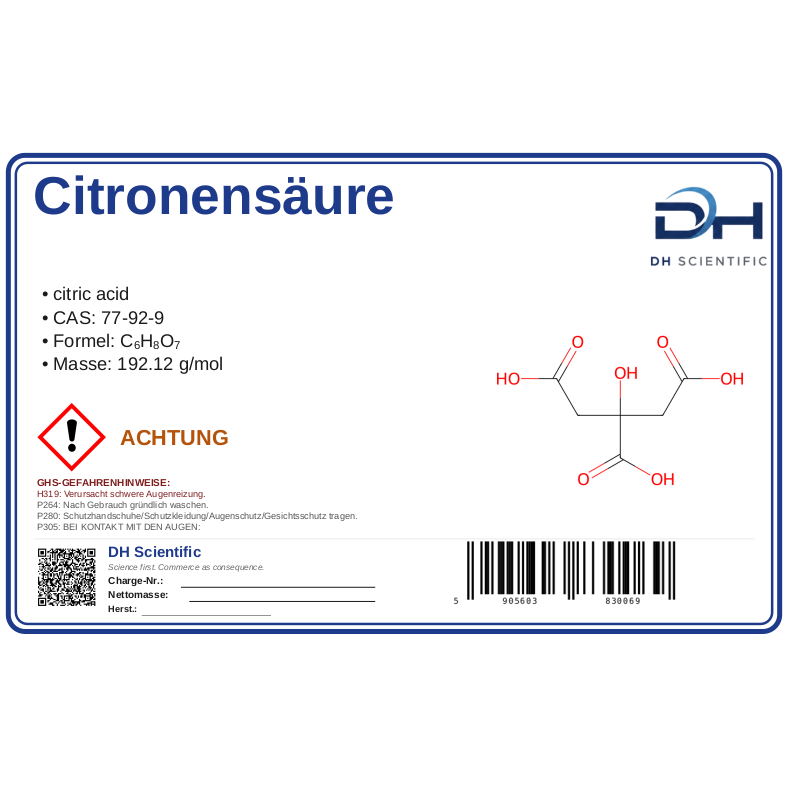


Reviews
There are no reviews yet.