Kwas L-askorbinowy 1000 g – czystości analitycznej preparat techniczny do zastosowań technicznych
EU FoodAdd_1333_2008MolGod Score: Pierwszorzędne
Dodatek do żywności: E300 (EU 1333/2008) | Codex: 300 quantum satis
7,99 €
Kwas L-askorbinowy (C₆H₈O₆) to organiczny związek chemiczny. Stosowany w laboratoriach, przemyśle spożywczym i jako reduktor w reakcjach chemicznych.
🔒 Tryb demo — ta pozycja nie jest na sprzedaż.
Substancja legalna. dhscientific.com to demonstracja platformy MOL-GOD — nic nie sprzedajemy, zamówienia nie są realizowane. Substancje objęte zakazem są tu blokowane automatycznie z kanonu regulacyjnego (porównaj np. Heptachlor).
Begimbetova D; Burska AN; Baltabekova A; Kussainova A; Kukanova A; Fazyl F. 2024. "The Vitamin C Enantiomers Possess a Comparable Potency in the Induction of Oxidative Stress in Cancer Cells but Diffe
📊Bazy widm spektroskopowych — dane inline9 źródełMolGod_SPECDB_2
Widma pobierane na żądanie z 9 źródeł. Każde widmo jest zapisywane w naszej bazie — kolejne otwarcie = zero zapytania do zewnętrznego API. Pobierz JCAMP-DX / CSV / PNG przy każdym widmie bez szukania.
Dane pobierane przez MolGod_Spectra_Remote_Fetcher (JCAMP-DX parser) i zapisywane w tabeli wp_molgod_spectra_cache. Zero duplikatów pobrań, zero zapytań do NIST przy kolejnych otwarciach. Licencje przestrzegane (publikowany tylko deep-link + własna wizualizacja).
Dane pobierane na żywo z wielu źródeł (priority-chain). JCAMP-DX / CSV / PNG dostępne do pobrania pod każdym widmem. ⓘ Jedno źródło ★★☆☆☆
IR — Fourier-transform infrared
Ładowanie IR — Fourier-transform infrared…
MS — Mass spectrometry (EI 70eV)
Ładowanie MS — Mass spectrometry (EI 70eV)…
Predykcja pasm IR / FTIR (grupy funkcyjne)
(1 pasm)
Pasma przewidziane heurystycznie z SMILES (C(C(C1C(=C(C(=O)O1)O)O)O)O) na podstawie tabel Silverstein/Coates/Stuart/Smith. Posortowane malejąco po liczbie falowej (cm⁻¹).
Grupa
Zakres (cm⁻¹)
Mode
Intensywność
Przykłady
C–H alifatyczne (sp3)
2850–3000
C–H stretch
silne
CCCC (butan); CC(C)C (izobutan)
Bibliografia (Chicago)
Coates, John. 2000. "Interpretation of Infrared Spectra, A Practical Approach." In Encyclopedia of Analytical Chemistry, edited by Robert A. Meyers, 10815-10837. Chichester: Wiley.
Stuart, Barbara H. 2004. "Infrared Spectroscopy: Fundamentals and Applications." Chichester: Wiley.
Smith, Brian C. 2018. "Infrared Spectral Interpretation: A Systematic Approach." Boca Raton, FL: CRC Press.
Smith, Brian C. 2011. "Fundamentals of Fourier Transform Infrared Spectroscopy." 2nd ed. Boca Raton, FL: CRC Press.
Larkin, Peter. 2017. "Infrared and Raman Spectroscopy: Principles and Spectral Interpretation." 2nd ed. Amsterdam: Elsevier.
Hesse, Manfred, Herbert Meier, and Bernd Zeeh. 2007. "Spektroskopische Methoden in der organischen Chemie." 8th ed. Stuttgart: Thieme.
Workman, Jerry, and Lois Weyer. 2012. "Practical Guide to Interpretive Near-Infrared Spectroscopy." Boca Raton, FL: CRC Press.
Banwell, Colin N., and Elaine M. McCash. 1994. "Fundamentals of Molecular Spectroscopy." 4th ed. London: McGraw-Hill.
Kalsi, P. S. 2010. "Spectroscopy of Organic Compounds." 6th ed. New Delhi: New Age International.
🎓 Przewodnik interpretacji widm (dla studentów)
Wyjaśnienia każdego pasma w widmie — dlaczego pojawia się tam, gdzie się pojawia, i co świadczy o strukturze.
📚 Bibliografia (Chicago)
Field, Leslie D., Sev Sternhell, and John R. Kalman. 2013. "Organic Structures from Spectra." 5th ed. Chichester: Wiley. Studencki problem-set podręcznik (interpretation guide companion).
Williams, Dudley H., and Ian Fleming. 2008. "Spectroscopic Methods in Organic Chemistry." 6th ed. London: McGraw-Hill. Klasyk narratywnej interpretacji widm — wyjaśnia "dlaczego pik tu".
Crews, Phillip, Jaime Rodríguez, and Marcel Jaspars. 2009. "Organic Structure Analysis." 2nd ed. New York: Oxford University Press. Workflow strukturalnej interpretacji wieloparametrycznej.
McLafferty, Fred W., and František Tureček. 1993. "Interpretation of Mass Spectra." 4th ed. Mill Valley, CA: University Science Books. Mechanizmy fragmentacji MS — McLafferty rearrangement, m/z 29 = CHO.
Reusch, William. 2013. "Virtual Textbook of Organic Chemistry: Spectroscopy." East Lansing, MI: Michigan State University. https://www2.chemistry.msu.edu/faculty/reusch/VirtTxtJml/Spectrpy/spectro.htm. Otwarty dydaktyczny przewodnik po IR/NMR/MS/UV — ideal do wyjaśnień grup funkcyjnych.
Hesse, Manfred, Herbert Meier, and Bernd Zeeh. 2007. "Spektroskopische Methoden in der organischen Chemie." 8th ed. Stuttgart: Thieme. Niemiecki standardowy podręcznik interpretacji widm.
Lampman, Gary M., Donald L. Pavia, George S. Kriz, and James R. Vyvyan. 2010. "Spectroscopy." 4th ed. Belmont, CA: Cengage Learning. Workbook ze sklejonymi narracjami interpretacyjnymi.
Kalsi, P. S. 2010. "Spectroscopy of Organic Compounds." 6th ed. New Delhi: New Age International. Kompletny podręcznik interpretacji widm IR/NMR/MS/UV.
🔎 Wyszukiwanie po widmie (JCAMP-DX)
Wgraj plik JCAMP-DX (.jdx, .dx, .jcm) — system policzy podobieństwo cosinusowe do wszystkich widm w bazie i pokaże TOP 10 dopasowań.
📚 Bibliografia (Chicago)
McLafferty, Fred W., ed. 2018. Wiley Registry of Mass Spectral Data. 11th ed. Hoboken, NJ: Wiley. Referencyjna biblioteka MS (~775k widm).
Stein, Stephen E., and Donald R. Scott. 1994. "Optimization and Testing of Mass Spectral Library Search Algorithms for Compound Identification." Journal of the American Society for Mass Spectrometry 5 (9): 859–866. Algorytm cosine + dot-product NIST MS Search.
McDonald, Robert S., and Paul A. Wilks Jr. 1988. "JCAMP-DX: A Standard Form for Exchange of Infrared Spectra in Computer Readable Form." Applied Spectroscopy 42 (1): 151–162. Specyfikacja JCAMP-DX (rozszerzona do 5.01 dla NMR/MS).
McLafferty, Fred W., and František Tureček. 1993. "Interpretation of Mass Spectra." 4th ed. Mill Valley, CA: University Science Books. Cosine similarity matching i fragmentacja MS — fundament algorytmu wyszukiwania.
Sumner, Lloyd W., Alexander Amberg, Dave Barrett, Michael H. Beale, Richard Beger, Clare A. Daykin, Teresa W.-M. Fan, et al. 2007. "Proposed Minimum Reporting Standards for Chemical Analysis." Metabolomics 3 (3): 211–221. MSI Level 1-4 — standardy poziomu pewności dopasowania widmowego.
Stein, Stephen E. 1999. "An Integrated Method for Spectrum Extraction and Compound Identification from Gas Chromatography/Mass Spectrometry Data." Journal of the American Society for Mass Spectrometry 10 (8): 770–781. Algorytm AMDIS — dekonwolucja + library match (NIST).
Lindon, John C., George E. Tranter, and David W. Koppenaal, eds. 2017. "Encyclopedia of Spectroscopy and Spectrometry." 3rd ed. Amsterdam: Academic Press. Encyklopedyczne hasła dot. spectral library searching.
Smith, Brian C. 2011. "Fundamentals of Fourier Transform Infrared Spectroscopy." 2nd ed. Boca Raton, FL: CRC Press. FT-IR i format JCAMP-DX dla widm transmisyjnych.
Larkin, Peter. 2017. "Infrared and Raman Spectroscopy: Principles and Spectral Interpretation." 2nd ed. Amsterdam: Elsevier. Principles of IR/Raman library matching i preprocessing peakow.
Haynes, William M., ed. 2024. CRC Handbook of Chemistry and Physics. 105th ed. Boca Raton: CRC Press/Taylor & Francis. ISBN 978-1-032-55554-4. ↗
National Institute of Standards and Technology. 2024. "NIST Chemistry WebBook, SRD 69." Gaithersburg, MD: NIST. Accessed 2025-01-01. ↗
Yaws, Carl L. 2014. The Yaws Handbook of Physical Properties for Hydrocarbons and Chemicals. 2nd ed. Oxford: Gulf Professional Publishing.
PubChem. 2024. "PubChem Compound Database." National Library of Medicine, National Institutes of Health. Accessed 2025-01-01. ↗
Marrero, J., and R. Gani. 2001. "Group-Contribution Based Estimation of Pure Component Properties." Fluid Phase Equilibria 183–184: 183–208. ↗
Joback, K. G., and R. C. Reid. 1987. "Estimation of Pure-Component Properties from Group-Contributions." Chemical Engineering Communications 57 (1–6): 233–243. ↗
Sangster, J. 1997. Octanol-Water Partition Coefficients: Fundamentals and Physical Chemistry. Chichester: Wiley. ISBN 978-0-471-97397-3.
Mannhold, Raimund, and Han van de Waterbeemd. 2001. "Substructure and Whole Molecule Approaches for Calculating Log P." Journal of Computer-Aided Molecular Design 15 (4): 337–354. ↗
Perrin, Ditlev D., Boyd Dempsey, and E. P. Serjeant. 1981. pKa Prediction for Organic Acids and Bases. London: Chapman and Hall. ISBN 0-412-21090-5.
Constantinou, Leonidas, and Rafiqul Gani. 1994. "New Group Contribution Method for Estimating Properties of Pure Compounds." AIChE Journal 40 (10): 1697–1710. ↗
Ertl, Peter, Bernhard Rohde, and Paul Selzer. 2000. "Fast Calculation of Molecular Polar Surface Area as a Sum of Fragment-Based Contributions and Its Application to the Prediction of Drug Transport Properties." Journal of Medicinal Chemistry 43 (20): 3714–3717. ↗
🔄 Konwerter jednostek stężeń LIVEMolGod_UNITCONV_1
Wpisz stężenie L-Ascorbic Acid w dowolnej jednostce — reszta obliczy się automatycznie.
Cohen ER, Cvitaš T, Frey JG, Holmström B, Kuchitsu K, Marquardt R, Mills I, Pavese F, Quack M, Stohner J, Strauss HL, Takami M, Thor AJ (2007)
g/L ↔ molarity
c (mol/L) = (g/L) / MW
±0.1% (depends on MW precision)
Cohen ER, Cvitaš T, Frey JG, Holmström B, Kuchitsu K, Marquardt R, Mills I, Pavese F, Quack M, Stohner J, Strauss HL, Takami M, Thor AJ (2007)
mmol/L ↔ molarity
c (mol/L) = mmol/L × 10⁻³
Exact
Cohen ER, Cvitaš T, Frey JG, Holmström B, Kuchitsu K, Marquardt R, Mills I, Pavese F, Quack M, Stohner J, Strauss HL, Takami M, Thor AJ (2007)
Celsius ↔ Kelvin
T(K) = t(°C) + 273.15
±0.01 K (ITS-90 scale)
BIPM (Bureau International des Poids et Mesures) (2019)
Celsius ↔ Fahrenheit
T(°F) = T(°C) × 9/5 + 32
±0.1 °F
Thompson A, Taylor BN (2008)
density-corrected % ↔ molarity
c (mol/L) = (%w/w × ρ × 10) / MW, ρ in g/mL
±0.1% when ρ known to 3 decimals
Cohen ER, Cvitaš T, Frey JG, Holmström B, Kuchitsu K, Marquardt R, Mills I, Pavese F, Quack M, Stohner J, Strauss HL, Takami M, Thor AJ (2007)
📚 Bibliografia (8 źródeł autorytatywnych)
Thompson A, Taylor BN (2008). Guide for the Use of the International System of Units (SI). NIST Special Publication 811 · DOI: 10.6028/NIST.SP.811-2008 → Primary SI standard for US scientific usage
Cohen ER, Cvitaš T, Frey JG, Holmström B, Kuchitsu K, Marquardt R, Mills I, Pavese F, Quack M, Stohner J, Strauss HL, Takami M, Thor AJ (2007). Quantities, Units and Symbols in Physical Chemistry — The IUPAC Green Book. RSC Publishing, 3rd ed. · DOI: 10.1039/9781847557889 · ISBN: 978-0-85404-433-7 → Canonical IUPAC guide for chemistry quantities/units
BIPM (Bureau International des Poids et Mesures) (2019). The International System of Units (SI), 9th edition. BIPM · ↗ → International SI definitions (incl. redefined kilogram 2019)
ISO/IEC (2022). Quantities and units — Part 1: General. International Organization for Standardization — ISO 80000-1:2022 · ↗ → General rules for physical quantities and units
ISO/IEC (2019). Quantities and units — Part 9: Physical chemistry and molecular physics. International Organization for Standardization — ISO 80000-9:2019 · ↗ → Concentration / molality / amount-of-substance conventions
Tiesinga E, Mohr PJ, Newell DB, Taylor BN (2021). CODATA recommended values of the fundamental physical constants: 2018. Rev. Mod. Phys. 93(2):025010 · DOI: 10.1103/RevModPhys.93.025010 → Avogadro, gas constant, molar volume (2019 SI revision)
IUPAC (2019). Compendium of Chemical Terminology — the IUPAC Gold Book (online). IUPAC · DOI: 10.1351/goldbook → Definitions of mass fraction, molality, normality, ppm, activity
Mills IM, Cvitaš T, Homann K, Kallay N, Kuchitsu K (1988). Quantities, Units and Symbols in Physical Chemistry. Blackwell Scientific Publications, 1st ed. · ISBN: 0-632-01773-5 → Historical predecessor of IUPAC Green Book
Rumble, John R., ed. 2023. CRC Handbook of Chemistry and Physics. 104th ed. Boca Raton, FL: CRC Press. [link ↗]
International Association for the Properties of Water and Steam (IAPWS). 1997. "Release on the Static Dielectric Constant of Ordinary Water Substance." IAPWS R8-97. [link ↗]
Reichardt, Christian, and Thomas Welton. 2011. Solvents and Solvent Effects in Organic Chemistry. 4th ed. Weinheim: Wiley-VCH. https://doi.org/10.1002/9783527632220. [link ↗]
Hansen, Charles M. 2007. Hansen Solubility Parameters: A User's Handbook. 2nd ed. Boca Raton, FL: CRC Press. https://doi.org/10.1201/9781420006834. [link ↗]
IFA. n.d. "Water." GESTIS Substance Database. Institut für Arbeitsschutz der Deutschen Gesetzlichen Unfallversicherung. Accessed April 25, 2026. [link ↗]
Rumble, John R., ed. 2023. CRC Handbook of Chemistry and Physics. 104th ed. Boca Raton, FL: CRC Press. [link ↗]
Reichardt, Christian, and Thomas Welton. 2011. Solvents and Solvent Effects in Organic Chemistry. 4th ed. Weinheim: Wiley-VCH. https://doi.org/10.1002/9783527632220. [link ↗]
Snyder, Lloyd R., Joseph J. Kirkland, and John W. Dolan. 2010. Introduction to Modern Liquid Chromatography. 3rd ed. Hoboken, NJ: Wiley. https://doi.org/10.1002/9780470508183. [link ↗]
Smallwood, Ian M. 1996. Handbook of Organic Solvent Properties. London: Arnold. https://doi.org/10.1016/B978-0-340-64578-9.X5000-9. [link ↗]
Reichardt, Christian, and Thomas Welton. 2011. Solvents and Solvent Effects in Organic Chemistry. 4th ed. Weinheim: Wiley-VCH. https://doi.org/10.1002/9783527632220. [link ↗]
Hansen, Charles M. 2007. Hansen Solubility Parameters: A User's Handbook. 2nd ed. Boca Raton, FL: CRC Press. [link ↗]
Rumble, John R., ed. 2023. CRC Handbook of Chemistry and Physics. 104th ed. Boca Raton, FL: CRC Press. [link ↗]
Smallwood, Ian M. 1996. Handbook of Organic Solvent Properties. London: Arnold. [link ↗]
National Institute of Standards and Technology. n.d. "Methane, dichloro- (CAS 75-09-2)." NIST Chemistry WebBook, SRD 69. Accessed April 25, 2026. [link ↗]
Hansen, Charles M. 2007. Hansen Solubility Parameters: A User's Handbook. 2nd ed. Boca Raton, FL: CRC Press. [link ↗]
International Agency for Research on Cancer. 1999. "Dichloromethane." IARC Monographs on the Evaluation of Carcinogenic Risks to Humans 71: 251–315. [link ↗]
Reichardt, Christian, and Thomas Welton. 2011. Solvents and Solvent Effects in Organic Chemistry. 4th ed. Weinheim: Wiley-VCH. [link ↗]
Armarego, Wilfred L. F., and Christina Li Lin Chai. 2009. Purification of Laboratory Chemicals. 6th ed. Oxford: Butterworth-Heinemann. https://doi.org/10.1016/B978-1-85617-567-8.50003-3. [link ↗]
Hansen, Charles M. 2007. Hansen Solubility Parameters: A User's Handbook. 2nd ed. Boca Raton, FL: CRC Press. [link ↗]
National Institute of Standards and Technology. n.d. "Furan, tetrahydro- (CAS 109-99-9)." NIST Chemistry WebBook. Accessed April 25, 2026. [link ↗]
Smallwood, Ian M. 1996. Handbook of Organic Solvent Properties. London: Arnold. [link ↗]
National Institute of Standards and Technology. n.d. "Hexane (CAS 110-54-3)." NIST Chemistry WebBook. Accessed April 25, 2026. [link ↗]
Hansen, Charles M. 2007. Hansen Solubility Parameters: A User's Handbook. 2nd ed. Boca Raton, FL: CRC Press. [link ↗]
Snyder, Lloyd R., Joseph J. Kirkland, and John W. Dolan. 2010. Introduction to Modern Liquid Chromatography. 3rd ed. Hoboken, NJ: Wiley. [link ↗]
Agency for Toxic Substances and Disease Registry. 1999. Toxicological Profile for n-Hexane. Atlanta, GA: U.S. Department of Health and Human Services. [link ↗]
International Agency for Research on Cancer. 1999. "Chloroform." IARC Monographs on the Evaluation of Carcinogenic Risks to Humans 73: 131–182. [link ↗]
National Institute of Standards and Technology. n.d. "Methane, trichloro- (CAS 67-66-3)." NIST Chemistry WebBook. Accessed April 25, 2026. [link ↗]
Hansen, Charles M. 2007. Hansen Solubility Parameters: A User's Handbook. 2nd ed. Boca Raton, FL: CRC Press. [link ↗]
Reichardt, Christian, and Thomas Welton. 2011. Solvents and Solvent Effects in Organic Chemistry. 4th ed. Weinheim: Wiley-VCH. [link ↗]
Teoria rozpuszczalności (zastosowane w przewidywaniu kompatybilności):
Yalkowsky, Samuel H., and Shri C. Valvani. 1980. "Solubility and Partitioning I: Solubility of Nonelectrolytes in Water." Journal of Pharmaceutical Sciences 69 (8): 912–922. https://doi.org/10.1002/jps.2600690814 — General Solubility Equation (GSE): logS = 0.5 − logP − 0.01(MP−25).
Hansen, Charles M. 2007. Hansen Solubility Parameters: A User's Handbook. 2nd ed. Boca Raton, FL: CRC Press. https://doi.org/10.1201/9781420006834 — HSP triplet (dD, dP, dH) + wzór Ra.
Reichardt, Christian, and Thomas Welton. 2011. Solvents and Solvent Effects in Organic Chemistry. 4th ed. Weinheim: Wiley-VCH. https://doi.org/10.1002/9783527632220 — E_T(30) polarity scale, solwatochromia.
Snyder, Lloyd R., Joseph J. Kirkland, and John W. Dolan. 2010. Introduction to Modern Liquid Chromatography. 3rd ed. Hoboken, NJ: Wiley. https://doi.org/10.1002/9780470508183 — Eluotropic series, polarity index.
PubChem Compound Database — CAS 50-81-7 lookup ↗ — logP (XLogP3), water solubility experimental + predicted.
Kompletna bibliografia w akordeonie REFERENCJE (na dole strony) — Chicago Manual of Style 17th ed., Author-Date.
🛡️ Bezpieczeństwo — CAS 50-81-7MolGod_SAFEHUB_MAIN
Informacja o ograniczeniach danych. Informacje dotyczące bezpieczeństwa zawarte na tej stronie mają charakter informacyjny i nie zastępują pełnej karty charakterystyki (SDS). Przed użyciem produktu zapoznaj się z aktualną kartą charakterystyki producenta oraz wytycznymi GHS/CLP. Klasyfikacja CLP dotyczy czystej substancji bulk, nie preparatów handlowych.
Klasyfikacja GHS/CLP — Rozporządzenie (WE) nr 1272/2008 + UN GHS Rev. 9 (2021).
⚠ Uwaga (Warning)
❗GHS07Drażniące / szkodliwe
🚨 Zwroty wskazujące rodzaj zagrożenia (H)
H302 — Działa szkodliwie po połknięciu
🛡 Zwroty określające środki ostrożności (P)
P264 — Dokładnie umyć ręce po użyciu
P270 — Nie jeść, nie pić ani nie palić podczas używania produktu
P301+P312 — W PRZYPADKU POŁKNIĘCIA: W przypadku złego samopoczucia skontaktować się z OŚRODKIEM ZATRUĆ lub lekarzem
P330 — Wypłukać usta
P501 — Zawartość/pojemnik usuwać do upoważnionego punktu zbierania odpadów
⚠ Klasyfikacja na podstawie konsensusu źródeł (PubChem / zgłoszenia dostawców) — nie zweryfikowano względem zharmonizowanej klasyfikacji w załączniku VI (CLP). Zakres zagrożeń może być szerszy niż klasyfikacja urzędowa; przed zastosowaniem zweryfikować z aktualną kartą charakterystyki dostawcy.
Tłumaczenia: Rozporządzenie CLP (WE) 1272/2008, Załącznik III i IV. Dane: PubChem/NLM.
☢️ Dane toksykologiczne (IARC + EPA CTX)
📖 Streszczenie toksykologiczne
Kwas l-askorbinowy (witamina C, CAS 50-81-7) charakteryzuje się wyjątkowo niską toksycznością ostrą. LD50 doustnie u szczura wynosi 11 900 mg/kg masy ciała — wartość niezależnie przytaczana przez NIOSH [1] i bazę PubChem CID 54670067 (dane EPA/OECD) [2]; cross-referencja [1,2]; substancja należy do klasy 5 Hodge'a i Sternera ("praktycznie nieszkodliwa") [3]. Kwas askorbinowy nie jest sklasyfikowany przez IARC [4] i nie figuruje w Aneksie VI CLP (EC 1272/2008) jako substancja CMR [2]. Substancja posiada status GRAS (Generally Recognized As Safe) w USA (FDA 21 CFR 184.1033) i jest dopuszczona jako barwnik/antyoksydant spożywczy E300 w UE (Rozporządzenie WE 1333/2008, Aneks II) [5]. EFSA ustala UL dla witaminy C = 2 000 mg/dobę dla dorosłych; granica oparta na osmotycznej biegunce (LOAEL = 3 000 mg/dobę) z marginesem bezpieczeństwa 1,5 [5]. Przegląd kliniczny (Padayatty i Levine, Oral Diseases 2016) obejmujący 40 lat badań farmakokinetycznych potwierdza bezpieczeństwo przy suplementacji 1 000–2 000 mg/dobę u zdrowych dorosłych bez kamicy nerkowej w wywiadzie [6].
🔖 Cytowania źródłowe (6) — Chicago Notes-Bibliography
U.S. National Institute for Occupational Safety and Health (NIOSH). 2007. NIOSH Pocket Guide to Chemical Hazards: Ascorbic Acid (CAS 50-81-7). DHHS (NIOSH) Pub. No. 2007-151. Rev. 2018. Atlanta: CDC/NIOSH. https://www.cdc.gov/niosh/npg/. [LD50 oral rat = 11 900 mg/kg.]
U.S. National Library of Medicine (NLM) / U.S. Environmental Protection Agency. 2024. "L-Ascorbic Acid (CAS 50-81-7)." PubChem CID 54670067, Compound Summary — Toxicity Data (GHS/OECD). Bethesda, MD: NLM. https://pubchem.ncbi.nlm.nih.gov/compound/54670067.
Hodge, Harold C., and J. Harvey Sterner. 1949. "Tabulation of Toxicity Classes." American Industrial Hygiene Association Quarterly 10(4):93–96. DOI: 10.1080/00968204909344159.
International Agency for Research on Cancer (IARC). 2025. "List of Classifications." Lyon: IARC/WHO. https://monographs.iarc.who.int/list-of-classifications/. [CAS 50-81-7 nie sklasyfikowany.]
EFSA Panel on Food Additives and Nutrient Sources (ANS). 2013. "Scientific Opinion on the Re-Evaluation of Ascorbic Acid (E 300), Sodium Ascorbate (E 301) and Calcium Ascorbate (E 302) as Food Additives." EFSA Journal 11(4):3235. DOI: 10.2903/j.efsa.2013.3235. [UL = 2 000 mg/dobę; open-access.]
Padayatty, Sebastian J., and Mark Levine. 2016. "Vitamin C: The Known and the Unknown and Goldilocks." Oral Diseases 22(6):463–493. DOI: 10.1111/odi.12446. [Peer-reviewed; bezpieczeństwo 1 000–2 000 mg/dobę.]
Format: Chicago Notes-Bibliography (numbered). [n,m] = cross-reference: oba źródła niezależnie potwierdzają tę samą wartość. DOI-links = recenzowane badania naukowe. RESTRICTED = dostęp przez bibliotekę naukową.
Brak indywidualnego wpisu IARC dla tego CAS
Brak osobnej monografii IARC w sprawdzonych wykazach — to NIE jest potwierdzenie braku rakotwórczości. Sprawdź klasyfikację CLP/GHS (sekcja CMR / GHS).
🌍 Ecotoxicology & environmental fate (SDS sec. 8/12)
NOEC (fish):
50 mg/L (Oreochromis niloticus, 21 d)
Source: ECHA REACH dossier / EU RAR — the same verified values as the Safety Data Sheet (SDS), sec. 8/12.
📚 Źródła · Bibliografia (Chicago Notes-Bibliography)
Numeracja [n] odpowiada przypisom górnym w tekście powyżej. [n,m] = cross-referencja: oba źródła niezależnie potwierdzają tę samą wartość.
U.S. National Institute for Occupational Safety and Health (NIOSH). 2007. NIOSH Pocket Guide to Chemical Hazards: Ascorbic Acid (CAS 50-81-7). DHHS (NIOSH) Pub. No. 2007-151. Rev. 2018. Atlanta: CDC/NIOSH. https://www.cdc.gov/niosh/npg/. [LD50 oral rat = 11 900 mg/kg.] 🔗
U.S. National Library of Medicine (NLM) / U.S. Environmental Protection Agency. 2024. "L-Ascorbic Acid (CAS 50-81-7)." PubChem CID 54670067, Compound Summary — Toxicity Data (GHS/OECD). Bethesda, MD: NLM. https://pubchem.ncbi.nlm.nih.gov/compound/54670067. 🔗
Hodge, Harold C., and J. Harvey Sterner. 1949. "Tabulation of Toxicity Classes." American Industrial Hygiene Association Quarterly 10(4):93–96. DOI: 10.1080/00968204909344159. [DOI]
International Agency for Research on Cancer (IARC). 2025. "List of Classifications." Lyon: IARC/WHO. https://monographs.iarc.who.int/list-of-classifications/. [CAS 50-81-7 nie sklasyfikowany.] 🔗
EFSA Panel on Food Additives and Nutrient Sources (ANS). 2013. "Scientific Opinion on the Re-Evaluation of Ascorbic Acid (E 300), Sodium Ascorbate (E 301) and Calcium Ascorbate (E 302) as Food Additives." EFSA Journal 11(4):3235. DOI: 10.2903/j.efsa.2013.3235. [UL = 2 000 mg/dobę; open-access.] [DOI]
Padayatty, Sebastian J., and Mark Levine. 2016. "Vitamin C: The Known and the Unknown and Goldilocks." Oral Diseases 22(6):463–493. DOI: 10.1111/odi.12446. [Peer-reviewed; bezpieczeństwo 1 000–2 000 mg/dobę.] [DOI]
📖 Ogólna literatura toksykologiczna (moduł)
Ke Z; Zhang Y; Jiang X; Luo J; Chen H; Ma Y. 2026. "Ascorbic acid enhances antidepressant-like efficacy of esketamine: Hippocampal TARP-γ8-containing AMPA receptors mediate synaptic modulation." Neurotherapeutics : the journal of the American Society for Experimental NeuroTherapeutics. https://doi.org/10.1016/j.neurot.2025.e00786. [tło tematyczne — CAS niezweryfikowany w tej publikacji] [DOI]
Zou Y; Zhang M; Zhou D; Chi C; Wu F; Ding CF. 2025. "Identification and characterization of chiral vitamin C using ion mobility and theoretical calculation." Analytical and bioanalytical chemistry. https://doi.org/10.1007/s00216-025-05855-7. [DOI]
Tarhouchi S; Hlaibi M. 2024. "Kinetic control aspects and mechanisms in oriented membrane processes for extraction and recovery of ascorbic acid compound." Environmental science and pollution research international. https://doi.org/10.1007/s11356-024-35453-6. [DOI]
Begimbetova D; Burska AN; Baltabekova A; Kussainova A; Kukanova A; Fazyl F. 2024. "The Vitamin C Enantiomers Possess a Comparable Potency in the Induction of Oxidative Stress in Cancer Cells but Differ in Their Toxicity." International journal of molecular sciences. https://doi.org/10.3390/ijms25052531. [DOI]
Li J; Du N; Guan R; Zhao S. 2023. "Construction of a Chiral Fluorescent Probe for Tryptophan Enantiomers/Ascorbic Acid Identification." ACS applied materials & interfaces. https://doi.org/10.1021/acsami.3c02423. [tło tematyczne — CAS niezweryfikowany w tej publikacji] [DOI]
Maneffa AJ, Harrison AB, Radford SJ, Whitehouse AS, Clark JH, Matharu AS.. 2020. "Deep Eutectic Solvents Based on Natural Ascorbic Acid Analogues and Choline Chloride." . https://doi.org/10.1002/open.202000020. [DOI]
el-Hady DA; Gotti R; el-Maali NA. 2008. "Selective determination of catechin, epicatechin and ascorbic acid in human urine using chiral capillary electrophoresis." Journal of separation science. https://doi.org/10.1002/jssc.200700638. [DOI]
Grisar JM; Marciniak G; Bolkenius FN; Verne-Mismer J; Wagner ER. 1995. "Cardioselective ammonium, phosphonium, and sulfonium analogues of alpha-tocopherol and ascorbic acid that inhibit in vitro and ex vivo lipid peroxidation and scavenge superoxide radicals." Journal of medicinal chemistry. https://doi.org/10.1021/jm00015a010. [DOI]
International Agency for Research on Cancer (IARC). 2024. "IARC Monographs on the Identification of Carcinogenic Hazards to Humans." Lyon: IARC. 🔗
U.S. EPA. 2024. "ECOTOX Knowledgebase." Washington, DC: U.S. Environmental Protection Agency. 🔗
ECHA. 2024. "Chemical Safety Assessment." European Chemicals Agency. 🔗
U.S. National Toxicology Program. 2024. Report on Carcinogens. 15th ed. Research Triangle Park, NC: National Institute of Environmental Health Sciences. 🔗
GESTIS. 2024. "GESTIS Substance Database." Institute for Occupational Safety and Health of the German Social Accident Insurance (DGUV). 🔗
U.S. EPA. 2024. "CompTox Chemicals Dashboard." Washington, DC: U.S. Environmental Protection Agency. 🔗
ECHA. 2023. "Regulation (EC) No 1272/2008 on Classification, Labelling and Packaging of Substances and Mixtures (CLP), Annex VI — Harmonised Classification." European Chemicals Agency. 🔗
🆘 Pierwsza pomoc — procedury awaryjneCAS 50-81-7
Brak / None
Klasa zagrożenia: NON_HAZARDOUS
⚠️ WAŻNE:
W razie poważnego incydentu — dzwoń 112 lub Centrum Zatruć: +48 42 631 47 24 (Łódź).
🩹
Kontakt ze skórą
⏱ Tempo: Brak ostrych objawów; ewentualne podrażnienie po >30 min
🔴 Objawy
Brak objawów (witamina jadalna)
Lekkie podrażnienie pyłem przy >100 g
✅ Co robić
Spłucz wodą z mydłem
Krem nawilżający przy suchej skórze
🚑 Karetka: Brak — utrzymujące się objawy >24h skontaktuj lekarza POZ
EFSA 2013 Scientific Opinion; FDA 21 CFR 184.1005
👁️
Kontakt z oczami
⏱ Tempo: Natychmiastowe ustępujące podrażnienie
🔴 Objawy
Łagodne podrażnienie spojówek pyłem
✅ Co robić
Płucz wodą 5–15 min
Konsultacja okulisty jeśli pieczenie >30 min
🚑 Karetka: Brak — chyba że ból utrzymuje się >1h
NIOSH Pocket Guide; ANSI Z358.1-2014
🫁
Wdychanie / drogi oddechowe
⏱ Tempo: n/d
🔴 Objawy
Brak (substancja jadalna)
✅ Co robić
Świeże powietrze przy zauważalnym pyle/zapachu
🚑 Karetka: Brak
NIOSH Pocket Guide
🩺
Połknięcie / droga pokarmowa
⏱ Tempo: n/d
🔴 Objawy
Brak — biegunka osmotyczna >2 g/dzień
Kamica nerkowa przy >10 g/dzień długoterminowo
✅ Co robić
Wypłucz usta wodą
Centrum Zatruć tylko przy spożyciu >50 g (przedawkowanie)
🧰 Apteczka pierwszej pomocy — wymagane wyposażenie
Butelka do przemywania oczu (≥500 mL, ANSI Z358.1)
Saline solution 0.9% NaCl (sterylna, ≥250 mL)
Bandaże jałowe + plastry hipoalergiczne
Lateksowe rękawice ratownicze (rozmiar M/L/XL)
Maska ochronna FFP2/FFP3
Termometr bezkontaktowy
📚 Źródła (Chicago Author-Date)
Goldfrank, Lewis R., Robert S. Hoffman, Mary Ann Howland, Neal A. Lewin, Lewis S. Nelson, and Silas W. Smith. 2019. Goldfrank's Toxicologic Emergencies. McGraw-Hill Education.
Olson, Kent R., Ilene B. Anderson, Neal L. Benowitz, Paul D. Blanc, Richard F. Clark, Thomas E. Kearney, Susan Y. Kim-Katz, and Alan H. B. Wu. 2018. Poisoning & Drug Overdose. McGraw-Hill.
World Health Organization (WHO). 2007. Antidotes for Poisoning by Cyanide (IPCS Evaluation Series 21). International Programme on Chemical Safety, WHO Press. ↗
Howland, Mary Ann, and Robert S. Aaron. 2002. Goldfrank's Antidotes for Pediatric Emergency Care. Lippincott Williams & Wilkins.
Centrum Zatruć Łódź. 2024. Procedury kliniczne w zatruciach ostrych — wytyczne dla ratowników. Centrum Informacji Toksykologicznej. ↗
National Institute for Occupational Safety and Health (NIOSH). 2007. Recommendations for First Aid Procedures for Chemical Exposures (NIOSH Pocket Guide to Chemical Hazards, DHHS Publication No. 2005-149). U.S. Department of Health and Human Services. ↗
United Nations Economic Commission for Europe (UNECE). 2021. Globally Harmonized System of Classification and Labelling of Chemicals (GHS), Revision 9. United Nations. ↗
Brent, Jeffrey. 2009. Fomepizole for the Treatment of Pediatric Ethylene and Diethylene Glycol, Butoxyethanol, and Methanol Poisonings. Clinical Toxicology 48(5): 401–406.
European Society for Paediatric Gastroenterology, Hepatology and Nutrition (ESPGHAN). 2018. Caustic Ingestion in Children — Position Paper. Journal of Pediatric Gastroenterology and Nutrition 66(5): 838–845.
Agency for Toxic Substances and Disease Registry (ATSDR). 2024. Toxicological Profiles — Medical Management Guidelines. U.S. Department of Health and Human Services. ↗
IPCS INCHEM. 2024. International Programme on Chemical Safety — Poisons Information Monographs. WHO/UNEP/ILO. ↗
American National Standards Institute (ANSI). 2014. ANSI Z358.1-2014 — Emergency Eyewash and Shower Equipment. International Safety Equipment Association.
World Health Organization (WHO). 2019. Model List of Essential Medicines, 21st List. WHO.
[link ↗]
U.S. Occupational Safety and Health Administration. 2024. 29 CFR 1910.120 — Hazardous Waste Operations and Emergency Response (HAZWOPER). U.S. Code of Federal Regulations.
[link ↗]
National Fire Protection Association. 2018. NFPA 472: Standard for Competence of Responders to Hazardous Materials/Weapons of Mass Destruction Incidents. NFPA.
[link ↗]
European Parliament and Council. 2012. Directive 2012/18/EU on the Control of Major-Accident Hazards Involving Dangerous Substances (Seveso III). Official Journal of the European Union L 197: 1–37.
[link ↗]
U.S. National Institute for Occupational Safety and Health. 2024. NIOSH Pocket Guide to Chemical Hazards. Centers for Disease Control and Prevention.
[link ↗]
European Chemicals Agency. 2020. Guidance on the Compilation of Safety Data Sheets (SDS), Version 3.1. ECHA.
[link ↗]
Źródła: ECHA · European Pharmacopoeia · WHO Essential Medicines.
Ostatnia weryfikacja: 2026-04-27 09:00:00.
Dane orientacyjne — w sytuacji awaryjnej zawsze stosuj instrukcje dostawcy + lokalne przepisy BHP.
⚠️ Wizualny przewodnik PPE (środki ochrony indywidualnej)Drażniące
🧤 Rękawice
Nitryl standardowy >0.1 mm EN 374-1 typ C
Standardowa ochrona przed dermatologicznym podrażnieniem
👁️ Okulary / gogle
EN 166 D
Ochrona przed cząstkami stałymi i kropelkami; podstawowa kategoria
4 ACH minimum dla otwartych operacji; wyciąg dla CaCl2 stężonych pyłów
📚 Naukowe referencje (Chicago Author-Date)
European Committee for Standardization (CEN). 2016. EN 374-1:2016 — Protective gloves against dangerous chemicals and micro-organisms — Part 1: Terminology and performance requirements for chemical risks. CEN, Brussels. EN 374-1:2016. [link ↗] — Klasyfikacja rękawic chemoodpornych typ A/B/C; testy permeacji JKLPT
European Committee for Standardization (CEN). 2001. EN 166:2001 — Personal eye-protection — Specifications. CEN, Brussels. EN 166:2001. [link ↗] — Markings: B = średnia energia uderzenia, T = ekstremalne temp., 9 = stopione metale i ciała stałe
European Committee for Standardization (CEN). 2009. EN 14605:2005+A1:2009 — Protective clothing against liquid chemicals — Performance requirements for clothing with liquid-tight (Type 3) or spray-tight (Type 4) connections. CEN, Brussels. EN 14605:2009. [link ↗] — Type 3 (jet-tight) i Type 4 (spray-tight) ochrona przed cieczowymi chemikaliami
National Institute for Occupational Safety and Health (NIOSH). 2017. Recommendations for Chemical Protective Clothing: A Companion to the NIOSH Pocket Guide. U.S. Department of Health & Human Services / CDC. [link ↗] — Praktyczny przewodnik doboru CPC per substancja i scenariusz ekspozycji
Occupational Safety and Health Administration (OSHA). 2011. Personal Protective Equipment — General requirements. U.S. Department of Labor — 29 CFR 1910.132. 29 CFR 1910.132. [link ↗] — Pracodawca musi zapewnić PPE + szkolenie + hazard assessment udokumentowane na piśmie
🗄️ Macierz kompatybilności magazynowej (6×6)
Wizualna mapa zgodności klas magazynowych — sprawdź zanim postawisz pojemniki obok siebie. Najedź kursorem na komórkę aby zobaczyć wyjaśnienie i regułę źródłową (NFPA / OSHA / Bretherick / ECHA).
✓
Bezpiecznie (SAFE)!
Ostrożnie (CAUTION)✗
Niezgodne (INCOMPATIBLE)◐
Osobno (SEPARATE)
National Fire Protection Association (NFPA). 2024. NFPA 30: Flammable and Combustible Liquids Code. NFPA, Quincy, MA. NFPA 30 (2024 ed.). [link ↗] — §9.4–9.7 — class-based storage segregation rules (the canonical US lab/industrial reference)
Occupational Safety and Health Administration (OSHA). 2023. 29 CFR 1910.106 — Flammable Liquids. U.S. Department of Labor, Federal Register. 29 CFR 1910.106. [link ↗] — (d)(5)(i)–(iv) — flammable storage cabinet, inside-storage room, and segregation requirements
European Chemicals Agency (ECHA). 2024. Annex VI to Regulation (EC) No 1272/2008 (CLP) — Harmonised Classification and Labelling. ECHA, Helsinki / Official Journal of the European Union. CLP Annex VI. [link ↗] — §2.4–2.5 — EU-level classification driving storage compatibility under REACH/CLP
📋 Pełna lista BDO:bdo.mos.gov.pl ↗
— oficjalny rejestr Ministerstwa Klimatu i Środowiska. Karta Przekazania Odpadu (KPO):wzór BDO
obowiązkowy dla każdej dostawy odpadów niebezpiecznych.
📚 Naukowe referencje (Chicago Author-Date)
European Commission. 2014. Commission Decision 2014/955/EU on the list of waste pursuant to Directive 2008/98/EC. Official Journal of the European Union. Decyzja 2014/955/UE. [link ↗] — European List of Waste (LoW) — kody EWC 6-cyfrowe + gwiazdka dla hazardous
Ministerstwo Klimatu i Środowiska Rzeczypospolitej Polskiej. 2020. Rozporządzenie Ministra Klimatu z dnia 2 stycznia 2020 r. w sprawie katalogu odpadów. Dziennik Ustaw RP 2020 poz. 10. [link ↗] — Polski katalog odpadów — implementacja Decyzji 2014/955/UE
Główny Inspektorat Ochrony Środowiska (GIOŚ). 2024. Baza Danych O Odpadach (BDO) — System rejestracji firm utylizacyjnych. Ministerstwo Klimatu i Środowiska. [link ↗] — Centralny rejestr BDO — pełna lista firm uprawnionych do gospodarki odpadami
Polska — Sejm RP. 2012. Ustawa z dnia 14 grudnia 2012 r. o odpadach. Dz.U. 2013 poz. 21 (z późn. zm.). [link ↗] — Ustawa krajowa — definiuje obowiązki wytwórcy odpadów + BDO registration
Furr, A. Keith, ed.. 2000. CRC Handbook of Laboratory Safety. CRC Press. — Klasyfikacja odpadów lab + procedury segregacji (rozdz. Waste Management); EN 374:2013 standardów rękawic dla osób manipulujących odpadem niebezpiecznym.
Pohanish, Richard P.. 2017. Sittig's Handbook of Toxic and Hazardous Chemicals and Carcinogens. Elsevier. — Per-CAS waste classification + incompatibilities — input do mapowania EWC.
Lewis, Richard J.. 2012. Sax's Dangerous Properties of Industrial Materials. Wiley. — Reaktywność + zgodność magazynowa odpadów (oxidizers vs flammables — separate streams).
NIOSH. 2024. Pocket Guide to Chemical Hazards. U.S. Department of Health and Human Services. [link ↗] — PEL/REL/IDLH per CAS — basis dla wymaganego PPE przy transporcie odpadu (KPO).
OSHA. 2024. Occupational Chemical Database — Hazardous Waste Operations (HAZWOPER). Occupational Safety and Health Administration. [link ↗] — 29 CFR 1910.120 — szkolenia + PPE dla obsługi odpadów niebezpiecznych.
European Parliament and Council. 2008. Directive 2008/98/EC on waste (Waste Framework Directive). Official Journal of the European Union L 312/3. [link ↗] — Hierarchia gospodarki odpadami (prevention → recovery → disposal); definiuje "hazardous waste".
European Parliament and Council. 2009. Regulation (EC) No 1272/2008 (CLP) on classification, labelling and packaging of substances and mixtures. Official Journal of the European Union L 353. [link ↗] — Klasyfikacja CLP H-statements → mapping do EWC * (asterisk = hazardous).
United Nations Economic Commission for Europe (UNECE). 2023. European Agreement concerning the International Carriage of Dangerous Goods by Road (ADR 2025). UNECE. [link ↗] — ADR — wymagania transportu odpadów niebezpiecznych (KPO + UN-numer + klasy 1–9).
IPCS INCHEM. 2024. International Programme on Chemical Safety — Waste Management Guidelines. WHO/UNEP/ILO. [link ↗] — Międzynarodowe wytyczne neutralizacji + utylizacji per CAS.
European Parliament and Council. 2006. Regulation (EC) No 1013/2006 on Shipments of Waste. Official Journal of the European Union L 190: 1–98. [link ↗] — Transgraniczny transfer odpadów niebezpiecznych — wymogi notyfikacji + zgody przed eksportem
📋 Zgodność regulacyjna (compliance checklist)NON_HAZARDOUS6 wymagane12 pozycji
ℹ️ Lista kontrolna obowiązków regulacyjnych dla CAS 50-81-7.
Status oparty na: ADR 2023 (Tabela A), REACH Załącznik XVII, CLP Załącznik VI (klasyfikacja zharmonizowana), hazard class z m14-spill DB, SVHC, GIS oraz NDS PL. Zasada: brak danych = brak twierdzenia (NIE deklarujemy „braku ograniczeń" bez podstawy).
✅SDS (Karta Charakterystyki) dostępnaspełnione
Jak zapewnić zgodność: SPEŁNIONE — karta charakterystyki v15 (PL) dostępna do pobrania na tej stronie. Wymóg: aktualna SDS zgodna z Rozp. 1907/2006 (REACH) Aneks II, format 16-sekcyjny.
Jak zapewnić zgodność: Etykieta musi zawierać: piktogramy GHS, słowo sygnałowe (Niebezpieczeństwo/Uwaga), zwroty H (zagrożenia) i P (środki ostrożności), dane producenta. Wymagane od 2010 (substancje) i 2015 (mieszaniny).
Jak zapewnić zgodność: Pracownicy laboratoryjni: szkolenie wstępne (instruktaż ogólny + stanowiskowy) + okresowe co 5 lat (lub co 3 dla pracowników na stanowiskach inżynieryjno-technicznych). Dokumentacja w aktach osobowych.
⚪Rejestracja BDO (Baza Danych O Odpadach)nie dotyczy
Jak zapewnić zgodność: Zweryfikowana klasyfikacja GHS nie wskazuje klas skutkujących odpadem niebezpiecznym — rejestracja BDO dla tej substancji nie jest wymagana. Kod EWC weryfikuj dla konkretnej postaci odpadu.
Podstawa prawna: Ustawa z 14 grudnia 2012 r. o odpadach (Dz.U. 2013 poz. 21)
❓ADR transport (umowa międzynarodowa)do weryfikacji
Jak zapewnić zgodność: Brak danych ADR w zbiorze MOL-GOD dla tego numeru CAS. NIE zakładaj braku ograniczeń — przed wysyłką zweryfikuj klasyfikację transportową w ADR 2023 (Tabela A) oraz w sekcji 14 karty charakterystyki (SDS).
Podstawa prawna: Umowa europejska ADR 2025 + Ustawa z 19 sierpnia 2011 r. o przewozie towarów niebezpiecznych
Jak zapewnić zgodność: Importerzy/producenci ≥1 tony/rok muszą zarejestrować substancję w ECHA (dossier techniczne + Chemical Safety Report jeśli ≥10 t). Sprawdź ECHA Annex VI / registered substances list.
❓REACH Załącznik XVII (ograniczenia stosowania/marketingu)do weryfikacji
Jak zapewnić zgodność: Brak wpisu w zbiorze klasyfikacji zharmonizowanej (CLP Załącznik VI) dla tego numeru CAS — status poz. 28–30 (zakaz CMR) NIEZWERYFIKOWANY; nie zakładać braku ograniczenia. Zbiór ograniczeń Załącznika XVII również niepełny — sprawdź skonsolidowany Załącznik XVII oraz klasyfikację zharmonizowaną CMR na stronach ECHA.
❓NDS — Najwyższe Dopuszczalne Stężenie w środowisku pracydo weryfikacji
Jak zapewnić zgodność: Brak danych NDS w zbiorze MOL-GOD (zbiór niepełny — ~41 z ~600 substancji wykazu). Nieobecność NIE oznacza braku NDS — sprawdź pełny wykaz Dz.U. 2024 poz. 1017 (Rozp. MRiPS z 4 września 2024 r.), a w razie braku stosuj OEL z dyrektyw EU lub zalecane przez NIOSH/ACGIH.
Podstawa prawna: Rozp. MRiPS z 4 września 2024 r. (Dz.U. 2024 poz. 1017) — NDS i NDSCh
⚪Rejestr GIS (prekursory / psychotropy)nie dotyczy
Jak zapewnić zgodność: Nie figuruje w dostępnym zbiorze roboczym prekursorów (lista niepełna). Nieobecność NIE jest potwierdzeniem — zweryfikuj wobec zał. I Rozp. (WE) 273/2004 i wykazu GIS przed obrotem.
Podstawa prawna: Rozp. (WE) 273/2004 + Ustawa o przeciwdziałaniu narkomanii (Dz.U. 2005 nr 179 poz. 1485)
Jak zapewnić zgodność: SPEŁNIONE — karta w języku polskim (v15) dostępna na tej stronie. Wymóg: SDS w języku polskim dla obrotu w PL (Art. 31 REACH + Ustawa o substancjach chemicznych Art. 17).
Podstawa prawna: Ustawa z 25 lutego 2011 r. o substancjach chemicznych i ich mieszaninach (Dz.U. 2011 nr 63 poz. 322)
European Parliament and Council. 2008. Regulation (EC) No 1272/2008 on classification, labelling and packaging of substances and mixtures (CLP). Official Journal of the European Union L 353/1. CLP Regulation 1272/2008. [link ↗] — Klasyfikacja, oznakowanie i pakowanie substancji + mieszanin (GHS implementation w UE)
European Parliament and Council. 2006. Regulation (EC) No 1907/2006 concerning the Registration, Evaluation, Authorisation and Restriction of Chemicals (REACH). Official Journal of the European Union L 396/1. REACH Regulation 1907/2006. [link ↗] — REACH — rejestracja, ocena i autoryzacja chemikaliów; SVHC; SDS Aneks II
Ministerstwo Rodziny i Polityki Społecznej Rzeczypospolitej Polskiej. 2024. Rozporządzenie Ministra Rodziny i Polityki Społecznej z dnia 4 września 2024 r. w sprawie najwyższych dopuszczalnych stężeń i natężeń czynników szkodliwych dla zdrowia w środowisku pracy. Dziennik Ustaw RP 2024 poz. 1017. [link ↗] — NDS i NDSCh dla ~600 substancji chemicznych — aktualne polskie limity ekspozycji zawodowej
United Nations Economic Commission for Europe (UNECE). 2023. European Agreement concerning the International Carriage of Dangerous Goods by Road (ADR), 2025 Edition. United Nations, Geneva. ADR 2025. [link ↗] — Międzynarodowa umowa drogowego transportu towarów niebezpiecznych — UN numbers, klasy, opakowania
📚 Skonsolidowane referencje naukowe — Chicago Author-Date 10 źródeł
Referencje zebrane ze wszystkich zakładek Safety Hub. CAS: 50-81-7 ·
PubChem ↗
Parlament Europejski i Rada UE. 2008. "Rozporządzenie (WE) nr 1272/2008 w sprawie klasyfikacji, oznakowania i pakowania substancji (CLP)." Dz.Urz. UE L 353. [↗]
GHS, Regulacje
United Nations Economic Commission for Europe (UNECE). 2021. "Globally Harmonized System of Classification and Labelling of Chemicals (GHS), Ninth Revised Edition." United Nations, Geneva. [↗]
GHS
Goldfrank, Lewis R., Robert S. Hoffman, Mary Ann Howland, et al.. 2019. "Goldfrank's Toxicologic Emergencies, 11th ed.." McGraw-Hill Education, New York. ISBN 978-1-25-985961-8.
Pierwsza pomoc, Toksykologia
National Institute for Occupational Safety and Health (NIOSH). 2023. "NIOSH Pocket Guide to Chemical Hazards (DHHS Publ. 2005-149)." U.S. Department of Health and Human Services / CDC, Cincinnati, OH. [↗]
Pierwsza pomoc, PPE, Toksykologia
European Committee for Standardization (CEN). 2016. "EN 374-1:2016 — Protective gloves against dangerous chemicals and micro-organisms." CEN, Brussels. [↗]
PPE
UNECE. 2023. "European Agreement Concerning the International Carriage of Dangerous Goods by Road (ADR 2025)." United Nations, Geneva. [↗]
Utylizacja, Regulacje
National Fire Protection Association (NFPA). 2022. "NFPA 400 — Hazardous Materials Code." NFPA, Quincy, MA. [↗]
Magazynowanie
Urben, P.G. (ed.). 2017. "Bretherick's Handbook of Reactive Chemical Hazards, 8th ed.." Butterworth-Heinemann / Elsevier, Oxford. [↗]
Magazynowanie
Ministerstwo Klimatu i Środowiska RP. 2023. "Baza danych o produktach i opakowaniach oraz o gospodarce odpadami (BDO)." Ministerstwo Klimatu i Środowiska, Warszawa. [↗]
Utylizacja
International Agency for Research on Cancer (IARC / WHO). 2024. "IARC Monographs on the Identification of Carcinogenic Hazards to Humans — List of Classifications." WHO, Lyon. [↗]
Toksykologia
Zakładki z własnymi referencjami (Emergency, PPE, Storage, Waste) zawierają dodatkowe pozycje bibliograficzne wewnątrz swoich sekcji.
Wklej serię powtórzeń pomiarów (CSV lub po jednej liczbie w linii). Kalkulator policzy średnią, odchylenie, 95% CI, wykryje outliery (Grubbs + Dixon Q).
Separator: przecinek, spacja, tab, nowa linia. Min 3 pomiary.
ℹ️ Single-CAS Integrity: Poniższe rozpuszczalniki to narzędzia analityczne (HPLC mobile phase) — NIE są substancją analizowaną. Wartości pokazane w innych akordeonach (MW, GHS, toksykologia) dotyczą bieżącej molekuły, nie tych rozpuszczalników. Wyjątek: Single-CAS Integrity (kategoria "rozpuszczalniki/bufory/metody analityczne").
Faza
Rozpuszczalnik / CAS
Status
Akcja
A
Woda + 10mM bufor wodorowęglanu amonu CAS 7732-18-5
Ponto T, Latter G, Luna G, Leite-Silva V, Wright A, Benson H. Novel Self-Nano-Emulsifying Drug Delivery Systems Containing Astaxanthin for Topical Skin Delivery. Pharmaceutics. 2021;13:649. doi:10.3390/pharmaceutics13050649
Astaxanthin (ASX) is a potent lipophilic antioxidant derived from the natural pigment that gives marine animals their distinctive red-orange colour and confers protection from ultraviolet radiation. Self nano-emulsifying drug delivery systems (SNEDDS) have been successfully developed and evaluated to increase the skin penetration of ASX and target its antioxidant and anti-inflammatory potential to the epidermis and dermis. SNEDDS were prepared using a low-temperature spontaneous emulsification method, and their physical characteristics, stability, antioxidant activity, and skin penetration were characterized. Terpenes (D-limonene, geraniol, and farnesol) were included in the SNEDDS formulations to evaluate their potential skin penetration enhancement. An HPLC assay was developed that allowed ASX recovery from skin tissues and quantification. All SNEDDS formulations had droplets in the 20 nm range, with low polydispersity. ASX stability over 28 days storage in light and dark conditions was improved and antioxidant activity was high. SNEDDS-L1 (no terpene) gave significantly increased ASX penetration to the stratum corneum (SC) and the epidermis-dermis-follicle region (E + D + F) compared to an ASX in oil solution and a commercial ASX facial serum product. The SNEDDS-containing D-limonene gave the highest ASX permeation enhancement, with 3.34- and 3.79-fold the amount in the SC and E + D + F, respectively, compared to a similar applied dose of ASX in oil. We concluded that SNEDDS provide an effective formulation strategy for enhanced skin penetration of a highly lipophilic molecule, and when applied to ASX, have the potential to provide topical formulations for UV protection, anti-aging, and inflammatory conditions of the skin.
Exploring the In Vitro Photoprotective Effect of a Combination of Aspalathus linearis Natural Extracts: First Steps in Developing New Technologies for Photoprotection Strategies
HPLCInternational Journal of Molecular Sciences202593% ✓CC-BYResearch method (specificity, robustness)
Kolumna: C18, 100 x 4.6 mm, 0.45 μm
Faza: mobile phase consisted of a gradient elution using the proportions of solvent…
Detekcja: UV 540 nm
Przepływ: 1.00 mL/min
Temp.: 37.0 °C
Inj.: 200 μL
Gradient: elution using the proportions of solvent A (2% v/v acetic…
Cáceres Estévez I, Haya Rodriguez L, Haro Perdiguero E, Moreno Tovar F, Montalvo Lobo D, Botella L, et al. Exploring the In Vitro Photoprotective Effect of a Combination of Aspalathus linearis Natural Extracts: First Steps in Developing New Technologies for Photoprotection Strategies. International Journal of Molecular Sciences. 2025;26:2330. doi:10.3390/ijms26052330
There is a need for new technologies in photoprotection. The negative effects of solar exposure on the skin have been amply demonstrated and there is an urgency for the development of alternative photoprotective approaches. In this respect, natural extracts represent the most interesting and promising source. Among them, Aspalathus linearis extracts appear to be an excellent candidate due to supporting evidence, their multiple beneficial biological effects, and their robust toxicological profile. Here, we first explored the photoprotective properties of two different Aspalathus linearis extracts (fermented and unfermented) individually, and then in combination, in a simplified model assessing Normal Human Dermal Fibroblast survival after UVB radiation. Surprisingly, we found the fermented extract to be more photoprotective than the unfermented one. In addition, a specific combination of the two extracts showed a synergistic effect. By HPLC and FRAP analyses, we observed that the photoprotective effect did not correlate with the amount of Aspalathus linearis main characteristic metabolites nor with the antioxidant capacity of the ingredients. Finally, an additional photoprotective effect was observed when Aspalathus linearis extracts were combined with a Polypodium leucotomos extract (Fernblock®), a well-known botanical ingredient with demonstrated photoprotection activities. Thus, this work provides a solid scientific basis for the inclusion of this technology in future topical and systemic photoprotective strategies.
Ostera J, Olmos V, Puntarulo S, Bonetto J, Malanga G. High-Performance Liquid Chromatography Quantification of Glyphosate, Aminomethylphosphonic Acid, and Ascorbate in Culture Medium and Microalgal Cells. Bio-protocol. 2025;15:125955-125955. doi:10.21769/BioProtoc.5263
Glyphosate (GLY) is a widely used herbicide that can induce oxidative stress in microalgae and other non-target organisms. The quantification of GLY in surface water is a difficult task, especially in trace-level concentrations, due to its high polarity and susceptibility to biotic and abiotic degradation. Several analytical methods have been developed for GLY quantification. Most of them use high-performance liquid chromatography (HPLC) coupled with detection by mass spectrometry (MS) and include a derivatization step to decrease the polarity of the herbicide to improve detection. This protocol describes an adaptation of an existing protocol for the quantification of GLY and its metabolite aminomethylphosphonic acid (AMPA) in a water-based microalgae culture medium using ultra-high-pressure liquid chromatography (UHPLC) coupled with fluorescence detection (FLR). The principal advantage of this protocol compared with other analytical methods that employ HPLC–MS is its low cost and accessibility since it does not require an MS detector nor radioactively labeled analytical standards. Ascorbic acid (AH-) is one of the most important hydrosoluble non-enzymatic antioxidants in eukaryotic cells and plays a key role in many metabolic pathways of critical importance in plants and algae. In this protocol, we also describe an adaptation of a previously published protocol to quantify AH- in blood samples to be used in microalgal cells exposed to GLY and GLY-based herbicides. The sample preparation procedure for this last protocol is fast, easy, and does not require expensive equipment. It uses an HPLC system coupled with an electrochemical detector (EC) for AH- quantification but may be adapted to be used with a UV-Vis detector.
Key features
• These protocols employ HPLC or UHPLC. The end user should be proficient with this technique and be able to optimize chromatographic parameters as necessary.• The GLY and AMPA quantification protocol, designed upon the method developed by...
Brak interferencji — pik analitu w pełni rozdzielony (Rs ≥ 2.0)
—
Odporność (robustness)
brak danych
RSD < 2% przy ±5% wariacji
RSD < 2% przy małych wariacjach parametrów
—
Legenda:✓ PASS⚠ CAUTION✗ FAIL— NO_DATA
📚 Naukowe referencje (Chicago Author-Date) — kliknij aby rozwinąć
Standardy walidacji metod analitycznych — 4 niezależne źródła (ICH + USP + AOAC + Snyder).
International Conference on Harmonisation (ICH). 2005. Validation of Analytical Procedures: Text and Methodology Q2(R1). ICH Expert Working Group. [link ↗] — Gold-standard ICH guideline — accepted by EMA, FDA, MHLW, NMPA
United States Pharmacopeia (USP) Convention. 2024. USP General Chapter <621> Chromatography. USP-NF 2024 ed. USP. [link ↗]
AOAC International. 2016. Appendix F: Guidelines for Standard Method Performance Requirements. AOAC INTERNATIONAL. [link ↗] — AOAC SMPR — alternative to ICH Q2 for food/dietary supplements
Snyder, Lloyd R., Joseph J. Kirkland, and John W. Dolan. 2010. Introduction to Modern Liquid Chromatography. 3rd ed. John Wiley & Sons. ISBN 978-0-470-16754-0. https://doi.org/10.1002/9780470508183 [link ↗] — Industry standard textbook — Chapter 11 covers method validation
Snyder, L. R., J. J. Kirkland, and J. L. Glajch. 1997. Practical HPLC Method Development. 2nd ed. Wiley. ISBN 978-0-471-00703-6. — Classic method-development reference (DryLab heritage).
Rozet, Eric, et al.. 2013. Analysis of recent pharmaceutical regulatory documents on analytical method validation. https://doi.org/10.1016/j.chroma.2007.03.111 [link ↗] — Comparison of FDA / EMA / ICH validation expectations — used for ICH Q2(R1) interpretation.
Heyden, Yvan Vander, et al.. 2009. Robustness of pharmaceutical liquid chromatographic methods. https://doi.org/10.1016/j.jchromb.2008.10.052 [link ↗] — Plackett-Burman design for robustness — basis of ICH Q2 §3.7.
Dong, Michael W.. 2019. HPLC and UHPLC for Practicing Scientists. 2nd ed. Wiley. ISBN 978-1-119-31378-3. https://doi.org/10.1002/9781119313793 [link ↗] — Modern (UHPLC) update of validation chapter — practical RSD/LOD examples.
Meyer, Veronika R.. 2010. Practical High-Performance Liquid Chromatography. 5th ed. Wiley. ISBN 978-0-470-68218-0. — European pharmacopeial perspective — complements USP/AOAC.
Kazakevich, Yuri V., and Rosario LoBrutto, eds.. 2007. HPLC for Pharmaceutical Scientists. Wiley-Interscience. ISBN 978-0-471-68162-4. https://doi.org/10.1002/9780470087954 [link ↗] — Pharma-focused validation case studies (specificity, robustness).
European Medicines Agency (EMA). 2011. Guideline on bioanalytical method validation EMEA/CHMP/EWP/192217/2009. EMA Committee for Medicinal Products for Human Use. [link ↗] — EMA bioanalytical companion to ICH Q2(R1) for clinical samples.
🔧 Troubleshooting HPLC — drzewo decyzyjne6 typowych problemów
Diagnostyka 12 najczęstszych problemów HPLC z drzewem decyzyjnym (5 kroków per problem). Źródło: Snyder/Kirkland/Dolan 3rd ed. Chapter 17 + LCGC LC Troubleshooting columns 1989-2024.
Poszerzone piki (broad peaks) medium
Objaw: Wszystkie piki na chromatogramie są szersze niż oczekiwane (FWHM > 2× normy)
🔍 Drzewo diagnostyczne:
1. Sprawdź czy wszystkie piki są poszerzone czy tylko niektóre → TAK: Wszystkie → problem instrumentalny (kolumna lub system) → NIE: Tylko niektóre → problem chemii (interakcja z kolumną dla konkretnych analitów)
2. Wymień kolumnę testową — czy problem znika? → TAK: KOLUMNA zużyta — packing zniszczony, void w pierwszych mm. Wymień. → NIE: Problem w systemie LC
3. Sprawdź volume martwy (dead volume) — pętla injekcyjna, połączenia, detektor → TAK: Pętla > 100 µL dla 4.6 mm kolumny lub luźne połączenia → wymień ferrules, krócej rurki → NIE: Continue diagnostyka
4. Test temperatury: zwiększ kolumnę z 25°C do 40°C → TAK: Piki węższe → kinetyka transferu masy zbyt wolna (zwiększ T) → NIE: Continue
5. Sprawdź flow rate vs optymalna van Deemter dla tej kolumny → TAK: Optimum dla 4.6mm/5µm = 1.0 mL/min, dla 2.1mm/3µm = 0.4 mL/min → NIE: Continue
⚠️ Typowe przyczyny:
Kolumna zużyta (>2000 injekcji bez guard)
Volume martwy systemu > 100 µL (zła pętla, długie rurki, luźne ferrules)
Temperatura zbyt niska (kinetyka transferu masy)
Flow rate poza optymalnym van Deemter
Próbka rozpuszczalnik silniejszy niż faza A
✓ Fixy:
✓ Wymień kolumnę (gdy >2000 injekcji)
✓ Sprawdź wszystkie połączenia — przewody jak najkrócej
✓ Zwiększ T kolumny do 40°C (jeśli substancja stabilna)
✓ Zmniejsz flow do optimum van Deemter
✓ Rozpuść próbkę w fazie A (nie w pure organic)
Ogonowanie pików (tailing, T > 1.5) high
Objaw: Piki mają wydłużony "ogon" po stronie późnego eluowania (asymetria T = b/a > 1.5 wg USP)
🔍 Drzewo diagnostyczne:
1. Czy substancja zawiera grupy zasadowe (amino, pirydyna)? → TAK: Tak → silanowe interakcje! Dodaj 0.1% TFA lub 5-10 mM TEA do fazy A. → NIE: Continue
2. Sprawdź pH fazy mobilnej vs pKa substancji → TAK: pH = pKa ± 1 → częściowa jonizacja, peak split. Idź pH ≥ 2 jednostki od pKa. → NIE: Continue
3. Sprawdź wiek kolumny (>1500 injekcji?) → TAK: Tak → silanole odsłonięte (column bleed). Wymień kolumnę z higher endcapping (XTerra, Symmetry). → NIE: Continue
4. Czy próbka zawiera metale (Fe, Cu z fiolek szklanych)? → TAK: Tak → użyj fiolek bezbarwnych typu II lub PFA. EDTA 0.1mM do próbki. → NIE: Continue
✓ Zmniejsz objętość injekcji ≤ 20 µL dla 4.6mm column
Dryf linii bazowej (baseline drift) medium
Objaw: Linia bazowa systematycznie rośnie lub maleje przez >5 minut
🔍 Drzewo diagnostyczne:
1. Czy używasz gradientu (B% rośnie)? → TAK: Tak → różny absorption faz A vs B przy dλ. Solvent change UV-cutoff. Sprawdź % organic UV-absorbance. → NIE: Continue (isokratyczny)
4. Sprawdź długość fali detekcji vs λmax substancji → TAK: Detekcja przy λ NIE odpowiada λmax → brak sygnału. Skanuj DAD 200-400nm. → NIE: Continue
5. Test: injekcj pure standard (znanego stężenia, świeży) → TAK: Standard daje pik → problem z próbką (matryca, derywatyzacja) → NIE: Brak piku też ze standardem → problem systemu (kolumna, faza, gradient)
⚠️ Typowe przyczyny:
Próbka nie wzięta z fiolki (autosampler bug)
Próbka zdegradowana (>24h pH/temp/światło)
Detekcja przy złej długości fali
Faza ruchoma zła (np. zapomniany TFA)
Kolumna odwrócona / niewłaściwa faza stacjonarna
Substancja eluuje z front (V0) → niezatrzymywana, niewidoczna
✓ Fixy:
✓ Re-prepare świeżą próbkę z exact protocolu
✓ Skan UV-Vis DAD 200-400nm + szukanie λmax
✓ Sprawdź skład fazy mobilnej — TFA dodany?
✓ Test reverse direction kolumny (ostrożnie!)
✓ Dla retention <1 min — zmień % B do niższego, MeOH instead of ACN
✓ Sprawdź tabelkę "expected_rt" w wp_molgod_hplc_methods
Ciśnienie zbyt wysokie (pressure too high) critical
Objaw: Ciśnienie pomp > 80% maxa kolumny lub system shutdown z high-pressure error
🔍 Drzewo diagnostyczne:
1. Sprawdź czy kolumna jest podłączona prawidłowo (kierunek strzałki) → TAK: OK → NIE: Kolumna odwrócona → odwróć (nigdy nie pracować "do tyłu")
2. Test: wyłącz kolumnę z systemu, jedź sam pump+detektor → TAK: Ciśnienie spada do <50 bar → problem w kolumnie (zatkana) → NIE: Ciśnienie pozostaje wysokie → in-line filter zatkany, frit zabrudzony
4. Wstecz wymyj kolumnę 50:50 ACN:H2O bez kolumny — czy znika? → TAK: Particles stuck w pierwszym mm — flush 30 min może odzyskać → NIE: Wymień kolumnę
⚠️ Typowe przyczyny:
In-line filter (frit) zatkany cząstkami
Buffer salt out (precipitation w wysokim %B)
Próbka zawiera zawiesinę (filtruj 0.22 µm przed injekcją)
Kolumna zatkana (column bed compaction)
Gradient z fazą buffer + dużo organic → salt precipitation
✓ Fixy:
✓ ZAWSZE filtruj próbkę 0.22 µm PVDF przed injekcją
✓ Wymień in-line filter co 100 injekcji (lub gdy ciśnienie wzrasta >20%)
✓ Flush kolumnę 30 min 50:50 ACN:H2O w odwrotnym kierunku (gdy producent dopuszcza)
✓ Pre-column 4×3mm dla ochrony main column
Piki widmowe (ghost peaks) high
Objaw: Niewyjaśnione piki na chromatogramie nieobecne w kalibracji
🔍 Drzewo diagnostyczne:
1. Test: blank injection (czysty rozp. próbki) → TAK: Pojawia się ghost → kontaminacja systemu lub eluentów → NIE: Pojawia się tylko z próbką → matryca
2. Czy ghost rośnie z gradientem (eluuje przy wysokim %B)? → TAK: Tak → zatłoczona kolumna lub strong-retained from previous run → NIE: Niezależny od gradientu → autosampler carryover
3. Increase carryover wash (between injections) → TAK: Pomaga → carryover był winny. Mocniejszy wash protocol. → NIE: Continue
4. Pure water injection — czy jest pik? → TAK: Tak → kontaminacja water source (organic z systemu DI) → NIE: Continue
⚠️ Typowe przyczyny:
Carryover w autosampler igle/pętli
Kontaminacja eluentu (nawet HPLC-grade)
Strong-retained components z poprzednich biegów
Plastik w fiolkach (phthalates, PEG z kapturków)
Water DI niedoczyszczone
✓ Fixy:
✓ Wzmocnij wash protocol: 100% B → 100% A → 50:50 (3 cycles)
✓ Strong wash: DMSO 100% lub MeOH 100% przed kalibracją
✓ Filtruj eluenty 0.22 µm PTFE w razie wątpliwości
✓ Używaj amber glass + Teflon-line caps dla próbek
✓ Periodic gradient ramp do 100% B przez 10 min (clean-out)
📚 Naukowe referencje (Chicago Author-Date) — kliknij aby rozwinąć
Snyder, Lloyd R., Joseph J. Kirkland, and John W. Dolan. 2010. Introduction to Modern Liquid Chromatography. 3rd ed. John Wiley & Sons. Chapter 17 (Troubleshooting) pp. 559-616. ISBN 978-0-470-16754-0. https://doi.org/10.1002/9780470508183 [link ↗]
Dolan, John W.. 2014. LC Troubleshooting (monthly column 1989-2024). LCGC North America. [link ↗] — John Dolan 35-letnia seria miesięcznych artykułów problemowych
Kromidas, Stavros. 2017. HPLC Made to Measure: A Practical Handbook for Optimization. 2nd ed. Wiley-VCH. ISBN 978-3-527-31377-1. — Praktyczny przewodnik problem-solving dla labs analitycznych
Dolan, John W.. 2013. When to Modify Method Conditions. 192-199. [link ↗] — Decision flow for changing flow rate / temperature / %B vs swapping columns.
Dong, Michael W.. 2019. HPLC and UHPLC for Practicing Scientists. 2nd ed. Wiley. ISBN 978-1-119-31378-3. https://doi.org/10.1002/9781119313793 [link ↗] — Chapter 9 covers troubleshooting modern UHPLC systems (sub-2 µm particles).
Snyder, L. R., J. J. Kirkland, and J. L. Glajch. 1997. Practical HPLC Method Development. 2nd ed. Wiley. ISBN 978-0-471-00703-6. — Method-development companion volume with troubleshooting cross-refs.
Carr, Peter W.. 2009. The new physical chemistry of HPLC. 1764-1772. https://doi.org/10.1016/j.chroma.2008.11.094 [link ↗] — Theoretical basis for diagnosing efficiency losses (mass-transfer, eddy diffusion).
Heyden, Yvan Vander, et al.. 2009. Robustness of pharmaceutical liquid chromatographic methods. 2120-2129. https://doi.org/10.1016/j.jchromb.2008.10.052 [link ↗] — How to diagnose method failures vs. system failures (Plackett-Burman).
Engelhardt, Heinz. 2014. 100 Years of Chromatography. 2nd ed. Wiley-VCH. ISBN 978-3-527-33473-5. — Historical context for ghost-peak phenomenology (silica chemistry).
Stoll, Dwight R., and Peter W. Carr. 2017. Two-Dimensional Liquid Chromatography: A State of the Art Tutorial. 519-531. https://doi.org/10.1021/acs.analchem.6b03506 [link ↗]
Carr, Peter W.. 2009. The new physical chemistry of HPLC. 1764-1772. https://doi.org/10.1016/j.chroma.2008.11.094 [link ↗]
Wu, Naijun, and Anton M. Clausen. 2007. Fundamental and practical aspects of ultrahigh pressure liquid chromatography for fast separations. 1167-1182. https://doi.org/10.1002/jssc.200700026 [link ↗]
Engelhardt, Heinz. 2014. 100 Years of Chromatography. 2nd ed. Wiley-VCH. ISBN 978-3-527-33473-5.
Vivó-Truyols, Gabriel, and Hans-Gerd Janssen. 2010. Probabilistic approach to peak deconvolution in chromatography. 8525-8531. https://doi.org/10.1021/ac101742z [link ↗]
🧪 Rozpuszczalność i kompatybilność z solwentami MolGod_SOLUB_1
Molekuła
L-Ascorbic Acid
Wzór
C6H8O6
logP
-1.60
Masa (g/mol)
176.12
Polarność
Hydrofilowa (polarna)
⚠️ Estymacja HSP (literatura / group contribution). Dane orientacyjne — nie zastępują badań eksperymentalnych.
Teoria rozpuszczalności (zastosowane w przewidywaniu kompatybilności):
Yalkowsky, Samuel H., and Shri C. Valvani. 1980. "Solubility and Partitioning I: Solubility of Nonelectrolytes in Water." Journal of Pharmaceutical Sciences 69 (8): 912–922. https://doi.org/10.1002/jps.2600690814 — General Solubility Equation (GSE): logS = 0.5 − logP − 0.01(MP−25).
Hansen, Charles M. 2007. Hansen Solubility Parameters: A User's Handbook. 2nd ed. CRC Press. https://doi.org/10.1201/9781420006834 — HSP triplet (dD, dP, dH) + wzór Ra.
Stefanis, E., and C. Panayiotou. 2008. "Prediction of Hansen Solubility Parameters with a New Group-Contribution Method." Int J Thermophys 29: 568–585. https://doi.org/10.1007/s10765-008-0415-z
Reichardt, Christian, and Thomas Welton. 2011. Solvents and Solvent Effects in Organic Chemistry. 4th ed. Wiley-VCH. https://doi.org/10.1002/9783527632220 — E_T(30) polarity scale, solwatochromia.
Snyder, Lloyd R., Joseph J. Kirkland, and John W. Dolan. 2010. Introduction to Modern Liquid Chromatography. 3rd ed. Wiley. https://doi.org/10.1002/9780470508183 — Eluotropic series, polarity index.
Van Krevelen, D. W., and K. Te Nijenhuis. 2009. Properties of Polymers. 4th ed. Elsevier. https://doi.org/10.1016/B978-0-08-054819-7.X0001-5 — Hoftyzer–Van Krevelen group contribution dla dD/dP/dH z SMILES.
Marcus, Yizhak. 1998. The Properties of Solvents. Wiley Series in Solution Chemistry, Vol. 4. ISBN 9780471983699 — Kompletny tabularny zestaw 250+ rozpuszczalników (ε, μ, donicity, acceptor numbers).
PubChem Compound Database — CAS 50-81-7 lookup ↗ — logP (XLogP3), water solubility experimental + predicted.
Kompletna bibliografia w akordeonie REFERENCJE (na dole strony) — Chicago Manual of Style 17th ed., Author-Date.
🧮 Kalkulator rozpuszczalności
Rozpuszczalność:—
logS:—
Metoda:—
⚠️ —
Rozpuszczalność vs Temperatura
🌐 Hansen Solubility Sphere (3D)
Im bliżej molekuły (czerwona kula), tym lepszy solwent. · Zaawansowany: etykiety + siatka + osie + pulsacja.
Twoja molekuła
Dobre (Ra < 5)
Średnie (Ra 5-10)
Słabe (Ra > 10)
📚 Źródła danych HSP + Ra
Ke Z; Zhang Y; Jiang X; Luo J; Chen H; Ma Y. 2026. "Ascorbic acid enhances antidepressant-like efficacy of esketamine: Hippocampal TARP-γ8-containing AMPA receptors mediate synaptic modulation." Neurotherapeutics : the journal of the American Society for Experimental NeuroTherapeutics. https://doi.org/10.1016/j.neurot.2025.e00786. [tło tematyczne — CAS niezweryfikowany w tej publikacji] [DOI ↗]
Zou Y; Zhang M; Zhou D; Chi C; Wu F; Ding CF. 2025. "Identification and characterization of chiral vitamin C using ion mobility and theoretical calculation." Analytical and bioanalytical chemistry. https://doi.org/10.1007/s00216-025-05855-7. [DOI ↗]
Tarhouchi S; Hlaibi M. 2024. "Kinetic control aspects and mechanisms in oriented membrane processes for extraction and recovery of ascorbic acid compound." Environmental science and pollution research international. https://doi.org/10.1007/s11356-024-35453-6. [DOI ↗]
Begimbetova D; Burska AN; Baltabekova A; Kussainova A; Kukanova A; Fazyl F. 2024. "The Vitamin C Enantiomers Possess a Comparable Potency in the Induction of Oxidative Stress in Cancer Cells but Differ in Their Toxicity." International journal of molecular sciences. https://doi.org/10.3390/ijms25052531. [DOI ↗]
Li J; Du N; Guan R; Zhao S. 2023. "Construction of a Chiral Fluorescent Probe for Tryptophan Enantiomers/Ascorbic Acid Identification." ACS applied materials & interfaces. https://doi.org/10.1021/acsami.3c02423. [tło tematyczne — CAS niezweryfikowany w tej publikacji] [DOI ↗]
Maneffa AJ, Harrison AB, Radford SJ, Whitehouse AS, Clark JH, Matharu AS.. 2020. "Deep Eutectic Solvents Based on Natural Ascorbic Acid Analogues and Choline Chloride." . https://doi.org/10.1002/open.202000020. [DOI ↗]
el-Hady DA; Gotti R; el-Maali NA. 2008. "Selective determination of catechin, epicatechin and ascorbic acid in human urine using chiral capillary electrophoresis." Journal of separation science. https://doi.org/10.1002/jssc.200700638. [DOI ↗]
Grisar JM; Marciniak G; Bolkenius FN; Verne-Mismer J; Wagner ER. 1995. "Cardioselective ammonium, phosphonium, and sulfonium analogues of alpha-tocopherol and ascorbic acid that inhibit in vitro and ex vivo lipid peroxidation and scavenge superoxide radicals." Journal of medicinal chemistry. https://doi.org/10.1021/jm00015a010. [DOI ↗]
Metoda: Group Contribution (GC) — szybka estymacja δD/δP/δH z logP gdy brak danych eksperymentalnych. Dokładność ±2 MPa^½. Dla precyzji → HSPiP software.
❓ Jak przygotować roztwór standardowy kwasu L-askorbinowego o stężeniu 0,1 mol/L?
Aby przygotować roztwór standardowy kwasu L-askorbinowego (C6H8O6) o stężeniu 0,1 mol/L: 1. Oblicz masę substancji: n = 0,1 mol/L * 1 L = 0,1 mola; m = n * MM = 0,1 mol * 176,12 g/mol = 17,612 g. 2. Odmierz 17,612 g kwasu L-askorbinowego i rozpuść w około 900 mL wody dejonizowanej. 3. Uzupełnij do objętości 1 L wodą dejonizowaną.
Pomocne?
❓ Jak przechowywać kwas L-askorbinowy, aby zachować jego stabilność?
Kwas L-askorbinowy należy przechowywać: 1. W temperaturze pokojowej (15-25°C). 2. W ciemnym miejscu, chroniąc przed bezpośrednim światłem słonecznym. 3. W szczelnie zamkniętym pojemniku, aby ograniczyć kontakt z wilgocią i tlenem.
Pomocne?
❓ Jaka jest odpowiednia metoda analityczna do oznaczania czystości kwasu L-askorbinowego?
Dla kwasu L-askorbinowego (MW 176,12 g/mol) zalecana jest metoda HPLC (high-performance liquid chromatography), która pozwala na precyzyjne oznaczenie czystości i identyfikację ewentualnych zanieczyszczeń. Alternatywnie, można użyć spektroskopii UV-Vis przy λ=240 nm.
Pomocne?
❓ Jakie są potencjalne niezgodności chemiczne kwasu L-askorbinowego w roztworach wodnych?
Kwas L-askorbinowy może reagować z: 1. Silnymi utleniaczami (np. nadtlenkiem wodoru), tworząc produkty uboczne. 2. Zasadami (pH > 4,5), ulegając deprotonacji i zmieniając właściwości analityczne. 3. Jony metali ciężkich (np. Fe³⁺), tworząc kompleksy.
Pomocne?
❓ W jakim celu stosuje się kwas L-askorbinowy w laboratoriach chemicznych?
Kwas L-askorbinowy jest używany jako: 1. Standard w titracjach redoks. 2. Środek przeciwutleniający w syntezach organicznych. 3. Wzorzec wewnętrzny w analizie HPLC.
📊 Automatycznie wyodrębnione tematy z abstraktów 5 publikacji dla CAS 50-81-7.
Algorytm: TF-IDF (Salton & Buckley 1988) — częstość terminu × odwrotna częstość dokumentowa.
vitamin 4
🔍 Szczegóły rankingu (TF-IDF)
Tag
TF
DF
IDF
Score
vitamin
4
4
1.182
4.729
🔗 Sieć cytowań (citation network)5 seed papers
📊 Graf cytowań dla CAS 50-81-7.
Każdy węzeł = praca naukowa, krawędź A→B = praca A cytuje B. Dane z OpenAlex (Priem 2022).
⚡ Pobierz dane sieci
Sieć budowana on-demand z OpenAlex API (cache 24h).
Inne nazwy: kwas L-askorbinowy, witamina C, L-askorbinian
Zastosowania
Używany jako przeciwutleniacz w przemyśle spożywczym – zapobiega utlenianiu produktów.
Stosowany w laboratoriach jako reduktor w analizie chemicznej – działa w reakcjach redoks.
Wykorzystywany do przygotowania roztworów buforowych – pomaga kontrolować pH.
Może służyć do czyszczenia metali – rozpuszcza osady żelaza i miedzi.
Stosowany w doświadczeniach edukacyjnych – pokazuje działanie przeciwutleniaczy.
Specyfikacja
Opakowanie: 1000 g (1 kg). Przechowywać w suchym miejscu, w szczelnym pojemniku, w temperaturze pokojowej. Unikać światła słonecznego. Produkt nie nadaje się do spożycia.
Najczęściej zadawane pytania
Czy kwas L-askorbinowy można używać do oczyszczania powierzchni metalowych?
Tak. Kwas L-askorbinowy działa jako łagodny reduktor. Pomaga usuwać rdzę z drobnych elementów metalowych. Nie koroduje powierzchni tak silnie jak mocne kwasy. Czy wiesz, że jest często używany do czyszczenia antyków bez uszkadzania detali?
Czy kwas L-askorbinowy dobrze rozpuszcza się w wodzie?
Tak. Łatwo rozpuszcza się w wodzie – daje klarowny roztwór. Rozpuszczalność wynosi około 330 g/L w 20°C. Nie rozpuszcza się w tłuszczach. Czy wiesz, że jego rozpuszczalność maleje w zimnej wodzie – dlatego lepiej mieszać go w letniej wodzie?
Czym różni się ten kwas od kwasu cytrynowego przy użyciu w doświadczeniach chemicznych?
Kwas L-askorbinowy to silniejszy przeciwutleniacz niż kwas cytrynowy. Nie działa jako kwas tak mocno, ale lepiej chroni przed utlenianiem. Kwas cytrynowy lepiej chelatuje metale. Oba są bezpieczne w użyciu laboratoryjnym przy ostrożności.
Źródła i literatura
PubChem — National Library of Medicine: Kompletna baza właściwości fizykochemicznych tej substancji (CID 54670067). Zawiera dane spektroskopowe, toksykologiczne i informacje o interakcjach. pubchem.ncbi.nlm.nih.gov
Wikipedia PL: Przegląd zastosowań, metod produkcji i właściwości kwasu L-askorbinowego. pl.wikipedia.org
Karta charakterystyki (SDS): Według rozporządzenia REACH (WE) 1907/2006 — informacje o bezpieczeństwie, klasyfikacji GHS i oznaczeniu substancji.
Rozporządzenie CLP (WE) 1272/2008: Klasyfikacja, oznaczenie i pakowanie substancji chemicznych. H315 (powoduje podrażnienie skóry), H319 (powoduje poważne podrażnienie oczu), P280 (używać rękawic ochronnych).
⚠ UWAGA — ODCZYNNIK CHEMICZNY
Kwas L askorbinowy chemiczny do zastosowań technicznych (C6H8O6) powszechnie znana jako witamina C, kwas askorbinowy to odczynnik chemiczny przeznaczony wyłącznie do zastosowań laboratoryjnych, badawczych i profesjonalnych. Numer CAS: 50-81-7 Numer WE (EC): 200-066-2 Nazwa IUPAC:kwas (5R)-[(1S)-1,2-dihydroksyetylo]-3,4-dihydroksyfuran-2(5H)-on Nazwa łacińska (Farmakopea):Acidum ascorbicum
NIE NADAJE SIĘ DO SPOŻYCIA przez ludzi ani zwierzęta. Produkt nie jest lekiem, suplementem diety, kosmetykiem ani środkiem spożywczym. Jakiekolwiek inne zastosowanie niż laboratoryjne lub przemysłowe jest niezgodne z przeznaczeniem produktu.
Wymagane środki ochrony osobistej: rękawice ochronne, okulary lub gogle, fartuch laboratoryjny, praca w dobrze wentylowanym pomieszczeniu lub pod wyciągiem chemicznym.
Przed użyciem zapoznaj się z kartą charakterystyki substancji (SDS/MSDS) zgodnie z rozporządzeniem REACH (WE) 1907/2006 oraz CLP (WE) 1272/2008. Sprzedaż wyłącznie do celów technicznych.
Reviews
There are no reviews yet.
Be the first to review “Kwas L-askorbinowy 1000 g – czystości analitycznej preparat techniczny do zastosowań technicznych” Cancel reply
Gradient oparty na PubChem XLogP3 + LSS (Snyder et al. 2010, ch. 9).
Kolumna: C18
Bufor: phosphate
Przepływ: 1 mL/min
logP:
-1.6(PubChem XLogP3)
Rampa: 5% → 95% B, 10 min
Całkowity czas analizy: 23 min
t (min)
%A
%B
flow (mL/min)
Komentarz
0
95
5
1
start (równowaga)
2
95
5
1
koniec hold init
12
5
95
1
koniec rampy LSS
17
5
95
1
mycie kolumny
18
95
5
1
powrót do init
23
95
5
1
reekwilibracja
📚 Naukowe referencje (Chicago Author-Date)
Snyder, Lloyd R., John W. Dolan, and Joseph J. Kirkland. 2010. Introduction to Modern Liquid Chromatography. Wiley. — Chapter 9 — gradient elution, LSS theory (cited as Snyder et al. 2010 in tool description).
Schoenmakers, Peter J. 1986. Optimization of Chromatographic Selectivity: A Guide to Method Development. Elsevier. — Numerical optimization of gradient programs.
Snyder, L. R., and J. W. Dolan. 2007. High-Performance Gradient Elution: The Practical Application of the Linear-Solvent-Strength Model. Wiley. — Foundational LSS reference for the %B_init = 5 + 8·logP heuristic implemented here.
Nikitas, Pavlos, and Adrian Pappa-Louisi. 2009. "Retention models for isocratic and gradient elution in reversed-phase liquid chromatography." Journal of Chromatography A 1216: 1737-1755. [DOI ↗] — Modern review of gradient retention models — basis for non-LSS extensions.
Carr, Peter W.. 2009. "The new physical chemistry of HPLC." Journal of Chromatography A 1216: 1764-1772. [DOI ↗]
Dong, Michael W. 2019. HPLC and UHPLC for Practicing Scientists. Wiley. https://doi.org/10.1002/9781119313793. — Modern UHPLC gradient programming, sub-2 µm scaling rules.
Wu, Naijun, and Anton M. Clausen. 2007. "Fundamental and practical aspects of ultrahigh pressure liquid chromatography for fast separations." Journal of Separation Science 30: 1167-1182. [DOI ↗]
Stoll, Dwight R., and Peter W. Carr. 2017. "Two-Dimensional Liquid Chromatography: A State of the Art Tutorial." Analytical Chemistry 89: 519-531. [DOI ↗] — Reference for orthogonal gradient design (2D-LC second dimension).
Dolan, John W.. 2013. "When to Modify Method Conditions." LCGC North America 31: 192-199.
Meyer, Veronika R. 2010. Practical High-Performance Liquid Chromatography. Wiley. — Chapter 7 — practical gradient design with isokratyczny scouting.
Stoll, Dwight R., and Peter W. Carr. 2017. "Two-Dimensional Liquid Chromatography: A State of the Art Tutorial." Analytical Chemistry 89: 519-531. [DOI ↗]
Carr, Peter W.. 2009. "The new physical chemistry of HPLC." Journal of Chromatography A 1216: 1764-1772. [DOI ↗]
Wu, Naijun, and Anton M. Clausen. 2007. "Fundamental and practical aspects of ultrahigh pressure liquid chromatography for fast separations." Journal of Separation Science 30: 1167-1182. [DOI ↗]
Engelhardt, Heinz. 2014. 100 Years of Chromatography. Wiley-VCH.
Vivó-Truyols, Gabriel, and Hans-Gerd Janssen. 2010. "Probabilistic approach to peak deconvolution in chromatography." Analytical Chemistry 82: 8525-8531. [DOI ↗]
REST: /wp-json/molgod/v1/hplc/gradient/50-81-7
🌈 Detektor + długość fali (UV/Vis)243 nm
Związek
Ascorbic acid (Vitamin C)
λmax
243 nm
λmin
220 nm
εmax (M⁻¹·cm⁻¹)
7,700
Rozpuszczalnik (referencja)
water (pH 2)
Sugerowana λ
243 nm
Detektor zalecany
UV
Alternatywy
PDA/DAD, MS, FLD
Źródło danych: Skoog 2017
📚 Naukowe referencje (Chicago Author-Date)17 refs
METODA
Bibliografia metody
Skoog, Douglas A., F. James Holler, and Stanley R. Crouch. 2017. "Principles of Instrumental Analysis." 7th ed. Cengage Learning. ISBN 978-1-305-57721-3.
Perkampus, Heinz-Helmut. 1992. "UV-VIS Spectroscopy and Its Applications." Springer. ISBN 978-3-642-77479-9. →
Sadek, Paul C.. 2002. "The HPLC Solvent Guide." 2nd ed. Wiley-Interscience. ISBN 978-0-471-41138-4.
Snyder, Lloyd R., Joseph J. Kirkland, and John W. Dolan. 2010. "Introduction to Modern Liquid Chromatography." 3rd ed. Wiley. ISBN 978-0-470-16754-0. →
Dong, Michael W.. 2019. "HPLC and UHPLC for Practicing Scientists." 2nd ed. Wiley. ISBN 978-1-119-31378-3. →
Stoll, Dwight R., and Peter W. Carr. 2017. "Two-Dimensional Liquid Chromatography: A State of the Art Tutorial." Analytical Chemistry 89: 519-531 →
Vivó-Truyols, Gabriel, and Hans-Gerd Janssen. 2010. "Probabilistic approach to peak deconvolution in chromatography." Analytical Chemistry 82: 8525-8531 →
Kazakevich, Yuri V., and Rosario LoBrutto, eds.. 2007. "HPLC for Pharmaceutical Scientists." Wiley-Interscience. ISBN 978-0-471-68162-4. →
Kim, Sunghwan, et al.. 2023. "PubChem 2023 update." Nucleic Acids Research 51: D1373-D1380 →
Stoll, Dwight R., and Peter W. Carr. 2017. "Two-Dimensional Liquid Chromatography: A State of the Art Tutorial." Analytical Chemistry 89: 519-531 →
Carr, Peter W.. 2009. "The new physical chemistry of HPLC." Journal of Chromatography A 1216: 1764-1772 →
Wu, Naijun, and Anton M. Clausen. 2007. "Fundamental and practical aspects of ultrahigh pressure liquid chromatography for fast separations." Journal of Separation Science 30: 1167-1182 →
Engelhardt, Heinz. 2014. "100 Years of Chromatography." 2nd ed. Wiley-VCH. ISBN 978-3-527-33473-5.
Vivó-Truyols, Gabriel, and Hans-Gerd Janssen. 2010. "Probabilistic approach to peak deconvolution in chromatography." Analytical Chemistry 82: 8525-8531 →
REST: /wp-json/molgod/v1/hplc/detector/50-81-7
📐 Kalkulator symetrii piku HPLC (USP Tf / As)
Oblicz współczynnik ogonowości USP (T) oraz asymetrię (As) z połówkowych szerokości piku. Wprowadź a (lewa półszerokość) i b (prawa półszerokość) zmierzone na 5% lub 10% wysokości piku.
📚 References (Chicago Author-Date)
USP General Chapter <621>. 2024. "Chromatography." United States Pharmacopeial Convention. [link ↗] — Defines USP Tailing Factor T = (a+b)/(2a) measured at 5% peak height.
International Council for Harmonisation (ICH). 2023. "Validation of Analytical Procedures Q2(R2)." ICH Expert Working Group. [link ↗] — Tailing factor is a system suitability parameter (Section 6).
Foley, Joe P., and John G. Dorsey. 1983. "Equations for calculation of chromatographic figures of merit for ideal and skewed peaks." Analytical Chemistry 55: 730-737 https://doi.org/10.1021/ac00255a033 [link ↗] — Original asymmetry factor As = b/a at 10% height (Foley & Dorsey 1983).
Snyder, Lloyd R., Joseph J. Kirkland, and John W. Dolan. 2010. "Introduction to Modern Liquid Chromatography." Wiley. https://doi.org/10.1002/9780470508183 [link ↗] — Chapter 2.4 — peak shape diagnostics and remedies.
Dolan, John W.. 2003. "Peak tailing and resolution." LCGC North America 21: 610-614 [link ↗] — How tailing factor degrades effective resolution.
Vivó-Truyols, Gabriel, and Hans-Gerd Janssen. 2010. "Probabilistic approach to peak deconvolution in chromatography." Analytical Chemistry 82: 8525-8531 https://doi.org/10.1021/ac101742z [link ↗] — Modern numerical deconvolution for asymmetric peaks.
Kromidas, Stavros. 2017. "HPLC Made to Measure: A Practical Handbook for Optimization." Wiley-VCH. — Practical Tf and As thresholds for routine QC.
Dong, Michael W.. 2019. "HPLC and UHPLC for Practicing Scientists." Wiley. https://doi.org/10.1002/9781119313793 [link ↗]
Heyden, Yvan Vander, et al.. 2009. "Robustness of pharmaceutical liquid chromatographic methods." Journal of Chromatography B 877: 2120-2129 https://doi.org/10.1016/j.jchromb.2008.10.052 [link ↗]
Stoll, Dwight R., and Peter W. Carr. 2017. "Two-Dimensional Liquid Chromatography: A State of the Art Tutorial." Analytical Chemistry 89: 519-531 https://doi.org/10.1021/acs.analchem.6b03506 [link ↗]
Carr, Peter W.. 2009. "The new physical chemistry of HPLC." Journal of Chromatography A 1216: 1764-1772 https://doi.org/10.1016/j.chroma.2008.11.094 [link ↗]
Wu, Naijun, and Anton M. Clausen. 2007. "Fundamental and practical aspects of ultrahigh pressure liquid chromatography for fast separations." Journal of Separation Science 30: 1167-1182 https://doi.org/10.1002/jssc.200700026 [link ↗]
Engelhardt, Heinz. 2014. "100 Years of Chromatography." Wiley-VCH.
Vivó-Truyols, Gabriel, and Hans-Gerd Janssen. 2010. "Probabilistic approach to peak deconvolution in chromatography." Analytical Chemistry 82: 8525-8531 https://doi.org/10.1021/ac101742z [link ↗]
📊 Kalkulator rozdzielczości i liczby półek (Rs, N, H)
Oblicz rozdzielczość Rs, liczbę półek teoretycznych N oraz HETP (H) dla pary pików HPLC. Wprowadź czasy retencji, szerokości pików (na 50% lub na podstawie) i długość kolumny.
📚 References (Chicago Author-Date)
Snyder, Lloyd R., Joseph J. Kirkland, and John W. Dolan. 2010. "Introduction to Modern Liquid Chromatography." 3rd ed. John Wiley & Sons. ISBN 978-0-470-16754-0. https://doi.org/10.1002/9780470508183 [link ↗] — Chapter 2 covers resolution, plate count and HETP fundamentals (Snyder et al. 2010).
USP General Chapter <621>. 2024. "Chromatography." USP-NF 2024 ed. United States Pharmacopeial Convention. [link ↗] — Defines Rs >= 1.5 acceptance criterion and N calculation methods.
Dolan, John W.. 2003. "How much resolution is enough?." LCGC North America 21: 350-353 [link ↗] — Practical guidance on Rs targets for routine method development.
Van Deemter, J. J., F. J. Zuiderweg, and A. Klinkenberg. 1956. "Longitudinal diffusion and resistance to mass transfer as causes of nonideality in chromatography." Chemical Engineering Science 5: 271-289 https://doi.org/10.1016/0009-2509(56)80003-1 [link ↗] — Origin of N = 5.54·(tr/w0.5)² half-height plate count formulation.
Giddings, J. Calvin. 1965. "Dynamics of Chromatography, Part I: Principles and Theory." Marcel Dekker. ISBN 978-0-8247-1357-7. — Resolution equation Rs = (1/4)·√N·(α-1)/α·k/(1+k) (master equation).
Foley, Joe P., and John G. Dorsey. 1983. "Equations for calculation of chromatographic figures of merit for ideal and skewed peaks." Analytical Chemistry 55: 730-737 https://doi.org/10.1021/ac00255a033 [link ↗] — Skewed-peak corrections to apparent N.
Knox, John H.. 1977. "Practical aspects of LC theory." Journal of Chromatographic Science 15: 352-364 https://doi.org/10.1093/chromsci/15.9.352 [link ↗]
Carr, Peter W.. 2009. "The new physical chemistry of HPLC." Journal of Chromatography A 1216: 1764-1772 https://doi.org/10.1016/j.chroma.2008.11.094 [link ↗]
Dong, Michael W.. 2019. "HPLC and UHPLC for Practicing Scientists." 2nd ed. Wiley. ISBN 978-1-119-31378-3. https://doi.org/10.1002/9781119313793 [link ↗]
Stoll, Dwight R., and Peter W. Carr. 2017. "Two-Dimensional Liquid Chromatography: A State of the Art Tutorial." Analytical Chemistry 89: 519-531 https://doi.org/10.1021/acs.analchem.6b03506 [link ↗]
Carr, Peter W.. 2009. "The new physical chemistry of HPLC." Journal of Chromatography A 1216: 1764-1772 https://doi.org/10.1016/j.chroma.2008.11.094 [link ↗]
Wu, Naijun, and Anton M. Clausen. 2007. "Fundamental and practical aspects of ultrahigh pressure liquid chromatography for fast separations." Journal of Separation Science 30: 1167-1182 https://doi.org/10.1002/jssc.200700026 [link ↗]
Engelhardt, Heinz. 2014. "100 Years of Chromatography." 2nd ed. Wiley-VCH. ISBN 978-3-527-33473-5.
Vivó-Truyols, Gabriel, and Hans-Gerd Janssen. 2010. "Probabilistic approach to peak deconvolution in chromatography." Analytical Chemistry 82: 8525-8531 https://doi.org/10.1021/ac101742z [link ↗]
🧪 System Suitability — kalkulator live (USP <621>)
Wprowadź dane z 5-6 wstrzyknięć (areas, tr, tailing, plates) — kalkulator policzy %RSD, średnie i sprawdzi zgodność z USP <621>. Możesz wkleić CSV (po przecinku) lub edytować pojedyncze wartości.
📚 References (Chicago Author-Date)
USP General Chapter <621>. 2024. "Chromatography (System Suitability section)." USP-NF 2024 ed. United States Pharmacopeial Convention. [link ↗] — Defines RSD area < 2%, tailing < 2.0, N > 2000 acceptance criteria.
International Council for Harmonisation (ICH). 2023. "Validation of Analytical Procedures Q2(R2)." ICH Expert Working Group. [link ↗] — Section 5.4 — system suitability is part of method validation.
US Food and Drug Administration (FDA). 2018. "Reviewer Guidance: Validation of Chromatographic Methods." US Food and Drug Administration. [link ↗] — CDER reviewer perspective on chromatographic validation expectations.
Snyder, Lloyd R., Joseph J. Kirkland, and John W. Dolan. 2010. "Introduction to Modern Liquid Chromatography." 3rd ed. Wiley. — Chapter 2 — system suitability fundamentals (RSD, Tf, N).
Heyden, Yvan Vander, et al.. 2009. "Robustness of pharmaceutical liquid chromatographic methods." — Robustness vs. system suitability — design-of-experiments framework.
Rozet, Eric, et al.. 2013. "Analysis of recent pharmaceutical regulatory documents on analytical method validation."
European Medicines Agency (EMA). 2011. "Guideline on bioanalytical method validation EMEA/CHMP/EWP/192217/2009." EMA. [link ↗] — EMA companion guideline with bioanalytical SS criteria.
Dong, Michael W.. 2019. "HPLC and UHPLC for Practicing Scientists." 2nd ed. Wiley. — UHPLC-specific suitability adjustments (n=5 vs. n=6).
Kazakevich, Yuri V., and Rosario LoBrutto, eds.. 2007. "HPLC for Pharmaceutical Scientists." Wiley-Interscience.
AOAC International. 2016. "Appendix F: Guidelines for Standard Method Performance Requirements." AOAC INTERNATIONAL. [link ↗] — Alternative SS thresholds for food/dietary samples.
Stoll, Dwight R., and Peter W. Carr. 2017. "Two-Dimensional Liquid Chromatography: A State of the Art Tutorial."
Carr, Peter W.. 2009. "The new physical chemistry of HPLC."
Wu, Naijun, and Anton M. Clausen. 2007. "Fundamental and practical aspects of ultrahigh pressure liquid chromatography for fast separations."
Engelhardt, Heinz. 2014. "100 Years of Chromatography." 2nd ed. Wiley-VCH.
Vivó-Truyols, Gabriel, and Hans-Gerd Janssen. 2010. "Probabilistic approach to peak deconvolution in chromatography."
⚗️ Jonizacja w funkcji pH (Henderson-Hasselbalch)MolGod_PHION_1
Typ: Kwas · pKa: 4.1 · pKa2: 11.6
pH
% jonowy
% niejonowy
0
0.0 %
100.0 %
2
0.8 %
99.2 %
4
44.3 %
55.7 %
6
98.8 %
1.2 %
8
100.0 %
0.0 %
10
100.0 %
0.0 %
12
100.0 %
0.0 %
14
100.0 %
0.0 %
Źródła dla tej substancji (10)
CRC Handbook 91st ed. Lide, David R., ed. 2010. CRC Handbook of Chemistry and Physics. 91st ed. Boca Raton, FL: CRC Press.
CRC Handbook 105th ed. Haynes, William M., David R. Lide, and Thomas J. Bruno, eds. 2024. CRC Handbook of Chemistry and Physics. 105th ed. Boca Raton, FL: CRC Press.
NIST WebBook — link Linstrom, Peter J., and William G. Mallard, eds. 2024. NIST Chemistry WebBook. NIST Standard Reference Database Number 69. Gaithersburg, MD: National Institute of Standards and Technology.
PubChem CID 54670067 — link Kim, Sunghwan, Jie Chen, Tiejun Cheng, Asta Gindulyte, Jia He, Siqian He, Qingliang Li, et al. 2023. "PubChem 2023 update." Nucleic Acids Research 51 (D1): D1373-D1380. PubChem CID 54670067.
DrugBank DB00126 — link Knox, Craig, Mike Wilson, Christen M. Klinger, Mark Franklin, Eponine Oler, Alex Wilson, Allison Pon, et al. 2024. "DrugBank 6.0: the DrugBank Knowledgebase for 2024." Nucleic Acids Research 52 (D1): D1265-D1275. DrugBank ID DB00126.
ChEMBL CHEMBL196 — link Zdrazil, Barbara, Eloy Felix, Fiona Hunter, Emma J. Manners, James Blackshaw, Sybilla Corbett, Marleen de Veij, et al. 2024. "The ChEMBL Database in 2023." Nucleic Acids Research 52 (D1): D1180-D1192. ChEMBL ID CHEMBL196.
KEGG COMPOUND C00072 — link Kanehisa, Minoru, Miho Furumichi, Yoko Sato, Masayuki Kawashima, and Mari Ishiguro-Watanabe. 2023. "KEGG for taxonomy-based analysis of pathways and genomes." Nucleic Acids Research 51 (D1): D587-D592.
IUPAC Serjeant, E. P., and Boyd Dempsey. 1979. Ionisation Constants of Organic Acids in Aqueous Solution. IUPAC Chemical Data Series No. 23. Oxford: Pergamon Press.
NIST Goldberg, Robert N., Nand Kishore, and Rebecca Lennen. 2002. "Thermodynamic Quantities for the Ionization Reactions of Buffers." Journal of Physical and Chemical Reference Data 31 (2): 231-370.
Bibliografia metody (Chicago)
Henderson, L. J. 1908. "Concerning the Relationship between the Strength of Acids and Their Capacity to Preserve Neutrality." American Journal of Physiology 21 (4): 173-179.
Hasselbalch, K. A. 1917. "Die Berechnung der Wasserstoffzahl des Blutes aus der freien und gebundenen Kohlensäure desselben." Biochemische Zeitschrift 78: 112-144.
Po, Henry N., and N. M. Senozan. 2001. "The Henderson-Hasselbalch Equation: Its History and Limitations." Journal of Chemical Education 78 (11): 1499-1503.
Avdeef, Alex. 2012. "Absorption and Drug Development: Solubility, Permeability, and Charge State." 2nd ed. Wiley.
Avdeef, Alex. 2007. "Solubility of sparingly-soluble ionizable drugs." Advanced Drug Delivery Reviews 59 (7): 568-590.
Volgyi, Gergely, et al. 2007. "Potentiometric and spectrophotometric pKa determination of water-insoluble compounds." Analytica Chimica Acta 583 (2): 418-428.
Fini, Adamo, Giuseppe Fazio, and Giuseppina Feroci. 1997. "Solubility and solubilization properties of non-steroidal anti-inflammatory drugs." Pharmaceutica Acta Helvetiae 70 (4): 305-318.
Mauger, John W., Anthony N. Paruta, and Robert J. Gerraughty. 1972. "Solubilities of sulfadiazine, sulfisomidine, and sulfadimethoxine." Journal of Pharmaceutical Sciences 61 (1): 94-97.
Lyman, Warren J., William F. Reehl, and David H. Rosenblatt. 1990. "Handbook of Chemical Property Estimation Methods." American Chemical Society.
Marcus, Yizhak. 1998. "The Properties of Solvents." Wiley.
Serjeant, E. P., and Boyd Dempsey. 1979. Ionisation Constants of Organic Acids in Aqueous Solution. IUPAC Chemical Data Series No. 23. Oxford: Pergamon Press.
Perrin, Douglas D. 1965. Dissociation Constants of Organic Bases in Aqueous Solution. IUPAC. London: Butterworths.
Goldberg, Robert N., Nand Kishore, and Rebecca Lennen. 2002. "Thermodynamic Quantities for the Ionization Reactions of Buffers." Journal of Physical and Chemical Reference Data 31 (2): 231-370.
Haynes, William M., David R. Lide, and Thomas J. Bruno, eds. 2024. CRC Handbook of Chemistry and Physics. 105th ed. Boca Raton, FL: CRC Press.
Lide, David R., ed. 2010. CRC Handbook of Chemistry and Physics. 91st ed. Boca Raton, FL: CRC Press.
Kim, Sunghwan, Jie Chen, Tiejun Cheng, Asta Gindulyte, Jia He, Siqian He, Qingliang Li, et al. 2023. "PubChem 2023 update." Nucleic Acids Research 51 (D1): D1373-D1380.
Knox, Craig, Mike Wilson, Christen M. Klinger, Mark Franklin, Eponine Oler, Alex Wilson, Allison Pon, et al. 2024. "DrugBank 6.0: the DrugBank Knowledgebase for 2024." Nucleic Acids Research 52 (D1): D1265-D1275.
Zdrazil, Barbara, Eloy Felix, Fiona Hunter, Emma J. Manners, James Blackshaw, Sybilla Corbett, Marleen de Veij, et al. 2024. "The ChEMBL Database in 2023." Nucleic Acids Research 52 (D1): D1180-D1192.
Kanehisa, Minoru, Miho Furumichi, Yoko Sato, Masayuki Kawashima, and Mari Ishiguro-Watanabe. 2023. "KEGG for taxonomy-based analysis of pathways and genomes." Nucleic Acids Research 51 (D1): D587-D592.
Linstrom, Peter J., and William G. Mallard, eds. 2024. NIST Chemistry WebBook. NIST Standard Reference Database Number 69. Gaithersburg, MD: National Institute of Standards and Technology.
Nelson, David L., and Michael M. Cox. 2017. Lehninger Principles of Biochemistry. 7th ed. New York: W. H. Freeman.
Model: krzywa Gaussa wycentrowana na λmax ze skalowaniem Beer-Lamberta A = ε · c · l. Transmitancja T = 10^(-A) · 100%.
📚 Naukowe referencje (Chicago Author-Date)
Ke Z; Zhang Y; Jiang X; Luo J; Chen H; Ma Y. 2026. "Ascorbic acid enhances antidepressant-like efficacy of esketamine: Hippocampal TARP-γ8-containing AMPA receptors mediate synaptic modulation." Neurotherapeutics : the journal of the American Society for Experimental NeuroTherapeutics. https://doi.org/10.1016/j.neurot.2025.e00786. [tło tematyczne — CAS niezweryfikowany w tej publikacji] [DOI]
Zou Y; Zhang M; Zhou D; Chi C; Wu F; Ding CF. 2025. "Identification and characterization of chiral vitamin C using ion mobility and theoretical calculation." Analytical and bioanalytical chemistry. https://doi.org/10.1007/s00216-025-05855-7. [DOI]
Tarhouchi S; Hlaibi M. 2024. "Kinetic control aspects and mechanisms in oriented membrane processes for extraction and recovery of ascorbic acid compound." Environmental science and pollution research international. https://doi.org/10.1007/s11356-024-35453-6. [DOI]
Begimbetova D; Burska AN; Baltabekova A; Kussainova A; Kukanova A; Fazyl F. 2024. "The Vitamin C Enantiomers Possess a Comparable Potency in the Induction of Oxidative Stress in Cancer Cells but Differ in Their Toxicity." International journal of molecular sciences. https://doi.org/10.3390/ijms25052531. [DOI]
Li J; Du N; Guan R; Zhao S. 2023. "Construction of a Chiral Fluorescent Probe for Tryptophan Enantiomers/Ascorbic Acid Identification." ACS applied materials & interfaces. https://doi.org/10.1021/acsami.3c02423. [tło tematyczne — CAS niezweryfikowany w tej publikacji] [DOI]
Maneffa AJ, Harrison AB, Radford SJ, Whitehouse AS, Clark JH, Matharu AS.. 2020. "Deep Eutectic Solvents Based on Natural Ascorbic Acid Analogues and Choline Chloride." . https://doi.org/10.1002/open.202000020. [DOI]
el-Hady DA; Gotti R; el-Maali NA. 2008. "Selective determination of catechin, epicatechin and ascorbic acid in human urine using chiral capillary electrophoresis." Journal of separation science. https://doi.org/10.1002/jssc.200700638. [DOI]
Grisar JM; Marciniak G; Bolkenius FN; Verne-Mismer J; Wagner ER. 1995. "Cardioselective ammonium, phosphonium, and sulfonium analogues of alpha-tocopherol and ascorbic acid that inhibit in vitro and ex vivo lipid peroxidation and scavenge superoxide radicals." Journal of medicinal chemistry. https://doi.org/10.1021/jm00015a010. [DOI]
Linstrom, Peter J., and William G. Mallard, eds. 2023. NIST Chemistry WebBook, NIST Standard Reference Database Number 69. Gaithersburg, MD: National Institute of Standards and Technology. [DOI]
Mayerhöfer, Thomas G., Samir Pahlow, and Jürgen Popp. 2020. "The Bouguer-Beer-Lambert Law: Shining Light on the Obscure." ChemPhysChem 21 (18): 2029-2046. [DOI]
Skoog, Douglas A., F. James Holler, and Stanley R. Crouch. 2017. Principles of Instrumental Analysis. 7th ed. Boston: Cengage Learning. ISBN 978-1-305-57721-3.
Lindon, John C., George E. Tranter, and David W. Koppenaal, eds. 2017. "Encyclopedia of Spectroscopy and Spectrometry." 3rd ed. Amsterdam: Academic Press. ISBN 978-0-12-803224-4.
Field, Leslie D., Sev Sternhell, and John R. Kalman. 2013. "Organic Structures from Spectra." 5th ed. Chichester: Wiley. ISBN 978-1-119-96582-6.
Reusch, William. 2013. "Virtual Textbook of Organic Chemistry: Spectroscopy." East Lansing, MI: Michigan State University.
Lampman, Gary M., Donald L. Pavia, George S. Kriz, and James R. Vyvyan. 2010. "Spectroscopy." 4th ed. Belmont, CA: Cengage Learning. ISBN 978-0-495-88992-9.
Kalsi, P. S. 2010. "Spectroscopy of Organic Compounds." 6th ed. New Delhi: New Age International. ISBN 978-81-224-2032-9.
Williams, Dudley H., and Ian Fleming. 2008. "Spectroscopic Methods in Organic Chemistry." 6th ed. London: McGraw-Hill. ISBN 978-0-07-711559-0.
Sadek, Paul C. 2002. The HPLC Solvent Guide. 2nd ed. Hoboken: Wiley. ISBN 978-0-471-41242-2.
Banwell, Colin N., and Elaine M. McCash. 1994. "Fundamentals of Molecular Spectroscopy." 4th ed. London: McGraw-Hill. ISBN 978-0-07-707976-1.
Perkampus, Heinz-Helmut. 1992. UV-VIS Spectroscopy and Its Applications. Berlin: Springer. https://doi.org/10.1007/978-3-642-77479-9.
Fieser, Louis F. 1949. "Extension of Woodward's Rules for Prediction of Conjugated Diene Absorption." Journal of the American Chemical Society 71 (5): 1854-1857. [DOI]
Woodward, Robert B. 1942. "Structure and the Absorption Spectra of Alpha,Beta-Unsaturated Ketones." Journal of the American Chemical Society 64 (1): 72-75. [DOI]
Beer, August. 1852. "Bestimmung der Absorption des rothen Lichts in farbigen Flüssigkeiten." Annalen der Physik und Chemie 86: 78-88. https://doi.org/10.1002/andp.18521620505.
Lambert, Johann Heinrich. 1760. Photometria. Augsburg: Sumptibus Vidae.
🗃️ database
Kim, Sunghwan, et al. 2023. "PubChem 2023 update." Nucleic Acids Research 51 (D1): D1373-D1380. https://doi.org/10.1093/nar/gkac956. UV spectrum data for CAS 50-81-7 sourced from Hazardous Substances Data Bank (HSDB). PubChem CID: 54670067. Accessed 2026. λ=245 nm
📚 textbook
Dulski, Thomas R.. 2017. "UV/Visible Molecular Absorption Spectrophotometry." Trace Elemental Analysis of Metals: 177-252. https://doi.org/10.1201/9780203735299-5. [DOI]
📚 textbook
Anonymous. 1989. "Some Applications of Uv and Vis Spectrophotometry." Studies in Analytical Chemistry: 260-303. https://doi.org/10.1016/b978-0-444-98882-9.50012-8. [DOI]
📚 textbook
Anonymous. 1989. "Basis of Spectrophotometry in the Uv and Vis Regions." Studies in Analytical Chemistry: 13-46. https://doi.org/10.1016/b978-0-444-98882-9.50005-0. [DOI]
Stereochemia, skręcalność właściwa i rekomendowana kolumna chiralna HPLC dla CAS 50-81-7 (CIP per Cahn-Ingold-Prelog 1966).
Dane predykcyjne — konfiguracja CIP wyznaczona ze struktury SMILES. Skręcalność właściwa i dobór kolumny to wartości szacunkowe. Weryfikuj z ChemSpider/PubChem i spektrum CD przed zastosowaniem analitycznym.
Centra stereogeniczne
2
Konfiguracja
(S) — konfiguracja absolutna (CIP)
Skręcalność właściwa [α]D20
23.00°
(+) prawoskrętne • rozp.: H2O • c=1, 23°C
Rekomendowana kolumna HPLC
Chiralpak IC
Faza ruchoma (eluent)
MeCN / H2O / TFA 70:30:0.1
Bibliografia (Chicago author-date)
Eliel, Ernest L., Samuel H. Wilen, and Lewis N. Mander. 1994. "Stereochemistry of Organic Compounds." New York: Wiley.
Cahn, Robert S., Christopher Ingold, and Vladimir Prelog. 1966. "Specification of Molecular Chirality." Angewandte Chemie International Edition 5 (4): 385-415. https://doi.org/10.1002/anie.196603851.
Francotte, Eric, and Wolfgang Lindner, eds. 2006. "Chirality in Drug Research." Weinheim: Wiley-VCH.
U.S. FDA. 1992. "FDA's Policy Statement for the Development of New Stereoisomeric Drugs." Chirality 4 (5): 338-340. https://doi.org/10.1002/chir.530040513.
Patani, George A., and Edmond J. LaVoie. 1996. "Bioisosterism: A Rational Approach in Drug Design." Chemical Reviews 96 (8): 3147-3176.
Meanwell, Nicholas A. 2011. "Synopsis of Some Recent Tactical Application of Bioisosteres in Drug Design." Journal of Medicinal Chemistry 54 (8): 2529-2591.
Davies, Mark, Michał Nowotka, George Papadatos, et al. 2015. "ChEMBL Web Services: Streamlining Access to Drug Discovery Data and Utilities." Nucleic Acids Research 43 (W1): W612-W620.
Easson, Leslie H., and Edgar Stedman. 1933. "Studies on the relationship between chemical constitution and physiological action: molecular dissymmetry and physiological activity." Biochemical Journal 27 (4): 1257-1266. https://doi.org/10.1042/bj0271257.
Pirkle, William H., and Thomas C. Pochapsky. 1989. "Considerations of chiral recognition relevant to the liquid chromatography separation of enantiomers." Chemical Reviews 89 (2): 347-362. https://doi.org/10.1021/cr00092a006.
Dale, James A., and Harry S. Mosher. 1973. "Nuclear magnetic resonance enantiomer reagents: configurational correlations via nuclear magnetic resonance chemical shifts of diastereomeric mandelate, O-methylmandelate, and α-methoxy-α-trifluoromethylphenylacetate (MTPA) esters." Journal of the American Chemical Society 95 (2): 512-519. https://doi.org/10.1021/ja00783a034.
Beesley, Thomas E., and Raymond P. W. Scott. 1998. Chiral Chromatography. Chichester: John Wiley & Sons.
Allenmark, Stig G. 1991. Chromatographic Enantioseparation: Methods and Applications. 2nd ed. New York: Ellis Horwood.
Wainer, Irving W., ed. 1993. Drug Stereochemistry: Analytical Methods and Pharmacology. 2nd ed. New York: Marcel Dekker.
Aboul-Enein, Hassan Y., and Irving W. Wainer, eds. 1997. The Impact of Stereochemistry on Drug Development and Use. New York: John Wiley & Sons.
Ahuja, Satinder, ed. 2000. Chiral Separations by Liquid Chromatography. ACS Symposium Series 471. Washington, DC: American Chemical Society.
Maier, Norbert M., Pilar Franco, and Wolfgang Lindner. 2001. "Separation of enantiomers: needs, challenges, perspectives." Journal of Chromatography A 906 (1-2): 3-33. https://doi.org/10.1016/S0021-9673(00)00532-X.
Schurig, Volker. 2001. "Separation of enantiomers by gas chromatography." Journal of Chromatography A 906 (1-2): 275-299. https://doi.org/10.1016/S0021-9673(00)00505-7.
Okamoto, Yoshio, and Eiji Yashima. 1998. "Polysaccharide derivatives for chromatographic separation of enantiomers." Angewandte Chemie International Edition 37 (8): 1020-1043. https://doi.org/10.1002/(SICI)1521-3773(19980504)37:8<1020::AID-ANIE1020>3.0.CO;2-5.
Lämmerhofer, Michael. 2010. "Chiral recognition by enantioselective liquid chromatography: mechanisms and modern chiral stationary phases." Journal of Chromatography A 1217 (6): 814-856. https://doi.org/10.1016/j.chroma.2009.10.022.
Caner, Hava, Eli Groner, Liron Levy, and Israel Agranat. 2004. "Trends in the development of chiral drugs." Drug Discovery Today 9 (3): 105-110. https://doi.org/10.1016/S1359-6446(03)02904-0.
Agranat, Israel, Hava Caner, and John Caldwell. 2002. "Putting chirality to work: the strategy of chiral switches." Nature Reviews Drug Discovery 1 (10): 753-768. https://doi.org/10.1038/nrd915.
Crosby, John. 1991. "Synthesis of optically active compounds: a large-scale perspective." Tetrahedron 47 (27): 4789-4846. https://doi.org/10.1016/S0040-4020(01)80950-6.
Nguyen, Lien Ai, Hua He, and Chuong Pham-Huy. 2006. "Chiral drugs: an overview." International Journal of Biomedical Science 2 (2): 85-100.
Eriksson, Tommy, Sven Björkman, and Peter Höglund. 2001. "Clinical pharmacology of thalidomide." European Journal of Clinical Pharmacology 57 (5): 365-376. https://doi.org/10.1007/s002280100320.
Evans, Andrew M. 2007. "Comparative pharmacology of S(+)-ibuprofen and (RS)-ibuprofen." Clinical Rheumatology 20 (Suppl 1): S9-S14. https://doi.org/10.1007/BF03342661.
IUPAC. 1996. "Basic terminology of stereochemistry (IUPAC recommendations 1996)." Pure and Applied Chemistry 68 (12): 2193-2222. https://doi.org/10.1351/pac199668122193.
Mislow, Kurt, and Jay Siegel. 1984. "Stereoisomerism and local chirality." Journal of the American Chemical Society 106 (11): 3319-3328. https://doi.org/10.1021/ja00323a043.
Francotte, Eric R. 2001. "Enantioselective chromatography as a powerful alternative for the preparation of drug enantiomers." Journal of Chromatography A 906 (1-2): 379-397. https://doi.org/10.1016/S0021-9673(00)00951-1.
Welch, Christopher J. 1994. "Evolution of chiral stationary phase design in the Pirkle laboratories." Journal of Chromatography A 666 (1-2): 3-26. https://doi.org/10.1016/0021-9673(94)80367-6.
Armstrong, Daniel W., Yibing Tang, Shengsheng Chen, et al. 1994. "Macrocyclic antibiotics as a new class of chiral selectors for liquid chromatography." Analytical Chemistry 66 (9): 1473-1484. https://doi.org/10.1021/ac00081a019.
Pirkle, William H., Donn W. House, and Jerald M. Finn. 1980. "Broad spectrum resolution of optical isomers using chiral high-performance liquid chromatographic bonded phases." Journal of Chromatography A 192 (1): 143-158. https://doi.org/10.1016/S0021-9673(80)80043-3.
European Directorate for the Quality of Medicines & HealthCare. 2024. European Pharmacopoeia 11.5: Chapter 2.2.7 Optical rotation. Strasbourg: EDQM Council of Europe.
United States Pharmacopeial Convention. 2024. USP-NF General Chapter <781> Optical Rotation. Rockville, MD: USP.
Gal, Joseph. 2017. "Pasteur and the art of chirality." Nature Chemistry 9 (7): 604-605. https://doi.org/10.1038/nchem.2790.
Pasteur, Louis. 1848. "Mémoire sur la relation qui peut exister entre la forme cristalline et la composition chimique, et sur la cause de la polarisation rotatoire." Comptes rendus de l'Académie des sciences 26: 535-538.
Le Bel, Joseph A. 1874. "Sur les relations qui existent entre les formules atomiques des corps organiques et le pouvoir rotatoire de leurs dissolutions." Bulletin de la Société Chimique de France 22: 337-347.
van 't Hoff, Jacobus Henricus. 1874. "Voorstel tot uitbreiding der tegenwoordige in de scheikunde gebruikte structuur-formules in de ruimte, benevens een daarmede samenhangende opmerking omtrent het verband tusschen optisch actief vermogen en chemische constitutie van organische verbindingen." Utrecht: J. Greven.
Bibliografia rozszerzona — 6 źródeł (PubMed/CrossRef/EuropePMC)
PUBZou Y; Zhang M; Zhou D; Chi C; Wu F; Ding CF. 2025. "Identification and characterization of chiral vitamin C using ion mobility and theoretical calculation." Analytical and bioanalytical chemistry. https://doi.org/10.1007/s00216-025-05855-7.
PUBTarhouchi S; Hlaibi M. 2024. "Kinetic control aspects and mechanisms in oriented membrane processes for extraction and recovery of ascorbic acid compound." Environmental science and pollution research international. https://doi.org/10.1007/s11356-024-35453-6.
PUBBegimbetova D; Burska AN; Baltabekova A; Kussainova A; Kukanova A; Fazyl F. 2024. "The Vitamin C Enantiomers Possess a Comparable Potency in the Induction of Oxidative Stress in Cancer Cells but Differ in Their Toxicity." International journal of molecular sciences. https://doi.org/10.3390/ijms25052531.
EURManeffa AJ, Harrison AB, Radford SJ, Whitehouse AS, Clark JH, Matharu AS.. 2020. "Deep Eutectic Solvents Based on Natural Ascorbic Acid Analogues and Choline Chloride." . https://doi.org/10.1002/open.202000020.
PUBel-Hady DA; Gotti R; el-Maali NA. 2008. "Selective determination of catechin, epicatechin and ascorbic acid in human urine using chiral capillary electrophoresis." Journal of separation science. https://doi.org/10.1002/jssc.200700638.
PUBGrisar JM; Marciniak G; Bolkenius FN; Verne-Mismer J; Wagner ER. 1995. "Cardioselective ammonium, phosphonium, and sulfonium analogues of alpha-tocopherol and ascorbic acid that inhibit in vitro and ex vivo lipid peroxidation and scavenge superoxide radicals." Journal of medicinal chemistry. https://doi.org/10.1021/jm00015a010.
📤 Osadź tę molekułę na swojej stronie
Masz bloga, forum lub serwis naukowy? Osadź interaktywną molekułę 3D na swojej stronie — zobaczy ją każdy Twój czytelnik, a poniżej ma link do naszego sklepu gdzie może kupić odczynnik.
🔗 Kod HTML iframe (najłatwiejsze — działa wszędzie)
Skopiuj i wklej w edytorze HTML swojej strony:
Dostosuj width i height do swojego layoutu.
⚙ WordPress Shortcode (dla innych sklepów z MOL-GOD)
🌐 Bezpośredni link (do emaili, czatów, LinkedIn, Twitter)
📋 Licencja: Embed zachowuje link zwrotny do DH Scientific (wymagane — sklep jest źródłem danych). Dane chemiczne pochodzą z PubChem (CC0 — domena publiczna). Embed jest BEZPŁATNY do zastosowań edukacyjnych, komercyjnych i hobby.
📚 REFERENCJE (Bibliografia zbiorcza, Chicago Author-Date) 109 items
Wszystkie źródła naukowe cytowane w akordeonach powyżej dla CAS 50-81-7. Format: Chicago Manual of Style 17th ed., Author-Date system.
AIST. 2026. Spectral Database for Organic Compounds (SDBS): CAS 50-81-7. Tsukuba, Japan: National Institute of Advanced Industrial Science and Technology. https://sdbs.db.aist.go.jp/. (Accessed 2026-11-12.)
PubChem. 2026. PubChem Compound Summary: CAS 50-81-7. Bethesda, MD: National Center for Biotechnology Information (NCBI), National Library of Medicine. https://pubchem.ncbi.nlm.nih.gov/#query=50-81-7. (Accessed 2026-11-12.)
European Chemicals Agency (ECHA). 2024. "Annex VI to Regulation (EC) No 1272/2008 (CLP) — Harmonised Classification and Labelling." ECHA, Helsinki / Official Journal of the European Union. https://echa.europa.eu/regulations/clp/clp-classification.
National Institute for Occupational Safety and Health (NIOSH). 2017. "Recommendations for Chemical Protective Clothing: A Companion to the NIOSH Pocket Guide." U.S. Department of Health & Human Services / CDC. https://www.cdc.gov/niosh/ncpc/default.html.
Connors, Kenneth A., Gordon L. Amidon, and Valentino J. Stella. 1986. Chemical Stability of Pharmaceuticals: A Handbook for Pharmacists, 2nd ed.. New York: Wiley. https://doi.org/10.1002/0471734683.
IARC. 2026. IARC Monographs on the Identification of Carcinogenic Hazards to Humans: CAS 50-81-7. Lyon, France: International Agency for Research on Cancer, World Health Organization. (Accessed 2026-11-12.)
📄 Artykuły naukowe (peer-reviewed)
Stefanis, Emmanuel, and Costas Panayiotou. 2008. "Prediction of Hansen Solubility Parameters with a New Group-Contribution Method." International Journal of Thermophysics 29: 568-585. https://doi.org/10.1007/s10765-008-0415-z.
Stoll, Vincent S., and John S. Blanchard. 1990. "Buffers: Principles and Practice: In Methods in Enzymology, vol. 182." San Diego: Academic Press. https://doi.org/10.1016/0076-6879(90)82008-P.
European Parliament. 2008. "Regulation (EC) No 1272/2008 on Classification, Labelling and Packaging of Substances and Mixtures (CLP)." Official Journal of the European Union L 353: 1–1355.
United Nations. 2021. Globally Harmonized System of Classification and Labelling of Chemicals (GHS). 9th revised ed. ST/SG/AC.10/30/Rev.9. New York and Geneva: United Nations. https://unece.org/ghs-rev9-2021.
U.S. OSHA. 2026. "Occupational Safety and Health Guidance: CAS 50-81-7." Washington, DC: U.S. Occupational Safety and Health Administration. https://www.osha.gov/hazwoper. (Accessed 2026-11-12.)
National Fire Protection Association (2018) — NFPA 472: Standard for Competence of Responders to Hazardous Materials/Weapons of Mass Destruction Incidents https://www.nfpa.org/codes-and-standards/nfpa-472.
U.S. National Institute for Occupational Safety and Health (2024) — NIOSH Pocket Guide to Chemical Hazards https://www.cdc.gov/niosh/npg/.
Snyder, Lloyd R., John W. Dolan, and Joseph J. Kirkland. 2010. Introduction to Modern Liquid Chromatography. Wiley.
Schoenmakers, Peter J.. 1986. Optimization of Chromatographic Selectivity: A Guide to Method Development. Elsevier.
Snyder, L. R., and J. W. Dolan. 2007. High-Performance Gradient Elution: The Practical Application of the Linear-Solvent-Strength Model. Wiley.
Nikitas, Pavlos, and Adrian Pappa-Louisi. 2009. "Retention models for isocratic and gradient elution in reversed-phase liquid chromatography." Journal of Chromatography A 1216: 1737-1755. https://doi.org/10.1016/j.chroma.2008.10.005.
Wu, Naijun, and Anton M. Clausen. 2007. "Fundamental and practical aspects of ultrahigh pressure liquid chromatography for fast separations." Journal of Separation Science 30: 1167-1182. https://doi.org/10.1002/jssc.200700026.
Engelhardt, Heinz. 2014. 100 Years of Chromatography. Wiley-VCH.
Vivó-Truyols, Gabriel, and Hans-Gerd Janssen. 2010. "Probabilistic approach to peak deconvolution in chromatography." Analytical Chemistry 82: 8525-8531. https://doi.org/10.1021/ac101742z.
Van Deemter, J. J., F. J. Zuiderweg, and A. Klinkenberg. 1956. "Longitudinal diffusion and resistance to mass transfer as causes of nonideality in chromatography." https://doi.org/10.1016/0009-2509(56)80003-1.
Giddings, J. Calvin. 1965. "Dynamics of Chromatography, Part I: Principles and Theory." Marcel Dekker.
Wu, Naijun, and Anton M. Clausen. 2007. "Fundamental and practical aspects of ultrahigh pressure liquid chromatography for fast separations." https://doi.org/10.1002/jssc.200700026.
Snyder, L. R., J. J. Kirkland, and J. L. Glajch. 1997. "Practical HPLC Method Development." Wiley.
Vivó-Truyols, Gabriel, and Hans-Gerd Janssen. 2010. "Probabilistic approach to peak deconvolution in chromatography." https://doi.org/10.1021/ac101742z.
Sadek, Paul C.. 2002. "The HPLC Solvent Guide." Wiley-Interscience.
Foley, Joe P., and John G. Dorsey. 1983. "Equations for calculation of chromatographic figures of merit for ideal and skewed peaks." https://doi.org/10.1021/ac00255a033.
Snyder, Lloyd R., Joseph J. Kirkland, and John W. Dolan. 2010. "Introduction to Modern Liquid Chromatography." Wiley. https://doi.org/10.1002/9780470508183.
United States Pharmacopeial Convention. 2024. "USP <621> Chromatography." In United States Pharmacopeia and National Formulary, USP 47-NF 42. Rockville, MD: USP. https://www.uspnf.com/.
International Organization for Standardization. 2017. "ISO/IEC 17025:2017 General Requirements for the Competence of Testing and Calibration Laboratories." Geneva: ISO. https://www.iso.org/standard/66912.html.
Kolthoff, Izaak Maurits, and Philip J. Elving, eds. 1978. Treatise on Analytical Chemistry, Part I: Theory and Practice. 2nd ed. New York: Wiley-Interscience.
Skoog, Douglas A., F. James Holler, and Stanley R. Crouch. 2018. Principles of Instrumental Analysis. 7th ed. Boston: Cengage Learning.
Christian, Gary D., Purnendu K. Dasgupta, and Kevin A. Schug. 2014. Analytical Chemistry. 7th ed. Hoboken, NJ: Wiley.
Snyder, Lloyd R., Joseph J. Kirkland, and John W. Dolan. 2010. "Introduction to Modern Liquid Chromatography." John Wiley & Sons. https://doi.org/10.1002/9780470508183.
U.S. FDA. 2026. "FDA Guidance and Resources: CAS 50-81-7." Silver Spring, MD: U.S. Food and Drug Administration. https://www.fda.gov/media/74954/download. (Accessed 2026-11-12.)
International Organization for Standardization. 1994. "ISO 5725-2:1994 Accuracy (Trueness and Precision) of Measurement Methods and Results — Part 2: Basic Method for the Determination of Repeatability and Reproducibility of a Standard Measurement Method." Geneva: ISO. https://www.iso.org/standard/11834.html.
Grubbs, Frank E. 1950. "Sample Criteria for Testing Outlying Observations." Annals of Mathematical Statistics 21 (1): 27–58.
Dixon, Wilfrid J. 1950. "Analysis of Extreme Values." Annals of Mathematical Statistics 21 (4): 488–506.
Snedecor, George W., and William G. Cochran. 1989. Statistical Methods. 8th ed. Ames, IA: Iowa State University Press.
Student [William Sealy Gosset]. 1908. "The Probable Error of a Mean." Biometrika 6 (1): 1–25.
International Organization for Standardization. 2005. "ISO 3534-1:2006 Statistics — Vocabulary and Symbols — Part 1: General Statistical Terms and Terms Used in Probability." Geneva: ISO. https://www.iso.org/standard/40145.html.
Thompson, Michael, Stephen L. R. Ellison, and Roger Wood. 2002. "Harmonized Guidelines for Single-Laboratory Validation of Methods of Analysis." Pure and Applied Chemistry 74 (5): 835–855.
United Nations Economic Commission for Europe. 2024. European Agreement Concerning the International Carriage of Dangerous Goods by Road (ADR), Applicable as from 1 January 2025 (ECE/TRANS/352). Geneva: UNECE. https://unece.org/transport/dangerous-goods/adr-2025-edition.
Ministerstwo Klimatu i Srodowiska. 2026. "Baza Danych o Odpadach (BDO): CAS 50-81-7." Warszawa: Ministerstwo Klimatu i Srodowiska. https://bdo.mos.gov.pl/. (Accessed 2026-11-12.)
Pohanish, Richard P.. 2017. "Sittig's Handbook of Toxic and Hazardous Chemicals and Carcinogens." Elsevier.
Lewis, Richard J.. 2012. "Sax's Dangerous Properties of Industrial Materials." Wiley.
NIOSH. 2024. "Pocket Guide to Chemical Hazards." U.S. Department of Health and Human Services. https://www.cdc.gov/niosh/npg/.
IPCS INCHEM. 2024. "International Programme on Chemical Safety — Waste Management Guidelines." WHO/UNEP/ILO. https://www.inchem.org/.
International Organization for Standardization. 2017. "ISO/IEC 17025:2017 General requirements for the competence of testing and calibration laboratories." ISO. https://www.iso.org/standard/66912.html.
World Health Organization. 2010. "WHO Good Manufacturing Practices for Pharmaceutical Products: Main Principles (WHO Technical Report Series No. 957, Annex 3)." WHO Press. https://www.who.int/publications/m/item/trs957-annex3.
Pharmaceutical Inspection Co-operation Scheme (PIC/S). 2021. "Guide to Good Manufacturing Practice for Medicinal Products PE 009-15." PIC/S Secretariat, Geneva. https://picscheme.org/en/publications.



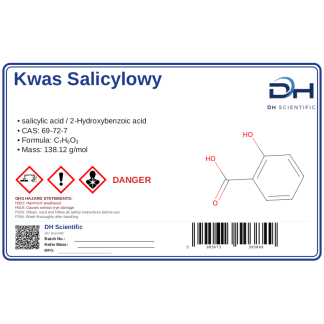
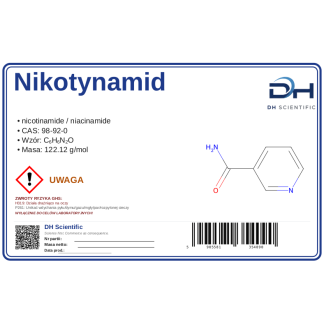
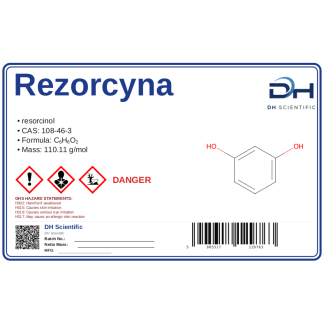
Reviews
There are no reviews yet.