Food additive: E300 (EU 1333/2008) | Codex: 300 quantum satis
7,99 €
Kwas L-askorbinowy (C₆H₈O₆) to organiczny związek chemiczny. Stosowany w laboratoriach, przemyśle spożywczym i jako reduktor w reakcjach chemicznych.
🔒 Demo mode — this item is not for sale.
Legal substance. dhscientific.com is a demonstration of the MOL-GOD platform — we sell nothing and no orders are fulfilled. Banned substances are blocked here automatically from the regulatory canon (compare e.g. Heptachlor).
Begimbetova D; Burska AN; Baltabekova A; Kussainova A; Kukanova A; Fazyl F. 2024. "The Vitamin C Enantiomers Possess a Comparable Potency in the Induction of Oxidative Stress in Cancer Cells but Diffe
Spectra are fetched on demand from 9 sources. Each spectrum is stored in our database — the next time it is opened there are zero requests to the external API. Download JCAMP-DX / CSV / PNG for every spectrum without searching.
Data retrieved via MolGod_Spectra_Remote_Fetcher (JCAMP-DX parser) and stored in the wp_molgod_spectra_cache table. Zero duplicate downloads, zero repeat queries to NIST on subsequent visits. Licensing terms are respected (only a deep link plus our own visualization is published).
Data retrieved live from multiple sources (priority chain). JCAMP-DX / CSV / PNG available for download under each spectrum. ⓘ Single source ★★☆☆☆
IR — Fourier-transform infrared
Loading IR — Fourier-transform infrared…
MS — Mass spectrometry (EI 70eV)
Loading MS — Mass spectrometry (EI 70eV)…
IR / FTIR Band Prediction (Functional Groups)
(1 bands)
Bands predicted heuristically from the SMILES (C(C(C1C(=C(C(=O)O1)O)O)O)O) based on the Silverstein/Coates/Stuart/Smith correlation tables. Sorted in descending order of wavenumber (cm⁻¹).
Group
Range (cm⁻¹)
Mode
Intensity
Examples
C–H alifatyczne (sp3)
2850–3000
C–H stretch
silne
CCCC (butan); CC(C)C (izobutan)
Bibliography (Chicago)
Coates, John. 2000. "Interpretation of Infrared Spectra, A Practical Approach." In Encyclopedia of Analytical Chemistry, edited by Robert A. Meyers, 10815-10837. Chichester: Wiley.
Stuart, Barbara H. 2004. "Infrared Spectroscopy: Fundamentals and Applications." Chichester: Wiley.
Smith, Brian C. 2018. "Infrared Spectral Interpretation: A Systematic Approach." Boca Raton, FL: CRC Press.
Smith, Brian C. 2011. "Fundamentals of Fourier Transform Infrared Spectroscopy." 2nd ed. Boca Raton, FL: CRC Press.
Larkin, Peter. 2017. "Infrared and Raman Spectroscopy: Principles and Spectral Interpretation." 2nd ed. Amsterdam: Elsevier.
Hesse, Manfred, Herbert Meier, and Bernd Zeeh. 2007. "Spektroskopische Methoden in der organischen Chemie." 8th ed. Stuttgart: Thieme.
Workman, Jerry, and Lois Weyer. 2012. "Practical Guide to Interpretive Near-Infrared Spectroscopy." Boca Raton, FL: CRC Press.
Banwell, Colin N., and Elaine M. McCash. 1994. "Fundamentals of Molecular Spectroscopy." 4th ed. London: McGraw-Hill.
Kalsi, P. S. 2010. "Spectroscopy of Organic Compounds." 6th ed. New Delhi: New Age International.
🎓 Spectrum interpretation guide (for students)
Wyjaśnienia każdego pasma w widmie — dlaczego pojawia się tam, gdzie się pojawia, i co świadczy o strukturze.
📚 Bibliography (Chicago)
Field, Leslie D., Sev Sternhell, and John R. Kalman. 2013. "Organic Structures from Spectra." 5th ed. Chichester: Wiley. A student problem-set textbook (interpretation guide companion).
Williams, Dudley H., and Ian Fleming. 2008. "Spectroscopic Methods in Organic Chemistry." 6th ed. London: McGraw-Hill. A classic of narrative spectral interpretation — explains "why the peak is here".
Crews, Phillip, Jaime Rodríguez, and Marcel Jaspars. 2009. "Organic Structure Analysis." 2nd ed. New York: Oxford University Press. A workflow for multi-parameter structural interpretation.
McLafferty, Fred W., and František Tureček. 1993. "Interpretation of Mass Spectra." 4th ed. Mill Valley, CA: University Science Books. MS fragmentation mechanisms — McLafferty rearrangement, m/z 29 = CHO.
Reusch, William. 2013. "Virtual Textbook of Organic Chemistry: Spectroscopy." East Lansing, MI: Michigan State University. https://www2.chemistry.msu.edu/faculty/reusch/VirtTxtJml/Spectrpy/spectro.htm. An open educational guide to IR/NMR/MS/UV — ideal for explaining functional groups.
Hesse, Manfred, Herbert Meier, and Bernd Zeeh. 2007. "Spektroskopische Methoden in der organischen Chemie." 8th ed. Stuttgart: Thieme. The standard German textbook on spectral interpretation.
Lampman, Gary M., Donald L. Pavia, George S. Kriz, and James R. Vyvyan. 2010. "Spectroscopy." 4th ed. Belmont, CA: Cengage Learning. A workbook with integrated interpretive narratives.
Kalsi, P. S. 2010. "Spectroscopy of Organic Compounds." 6th ed. New Delhi: New Age International. A complete textbook on IR/NMR/MS/UV spectral interpretation.
🔎 Spectrum Search (JCAMP-DX)
Upload a JCAMP-DX file (.jdx, .dx, .jcm) — the system will calculate the cosine similarity against all spectra in the database and display the TOP 10 matches.
📚 Bibliography (Chicago)
McLafferty, Fred W., ed. 2018. Wiley Registry of Mass Spectral Data. 11th ed. Hoboken, NJ: Wiley. A reference MS library (~775k spectra).
Stein, Stephen E., and Donald R. Scott. 1994. "Optimization and Testing of Mass Spectral Library Search Algorithms for Compound Identification." Journal of the American Society for Mass Spectrometry 5 (9): 859–866. The cosine + dot-product algorithm of NIST MS Search.
McDonald, Robert S., and Paul A. Wilks Jr. 1988. "JCAMP-DX: A Standard Form for Exchange of Infrared Spectra in Computer Readable Form." Applied Spectroscopy 42 (1): 151–162. The JCAMP-DX specification (extended to 5.01 for NMR/MS).
McLafferty, Fred W., and František Tureček. 1993. "Interpretation of Mass Spectra." 4th ed. Mill Valley, CA: University Science Books. Cosine-similarity matching and MS fragmentation — the foundation of the search algorithm.
Sumner, Lloyd W., Alexander Amberg, Dave Barrett, Michael H. Beale, Richard Beger, Clare A. Daykin, Teresa W.-M. Fan, et al. 2007. "Proposed Minimum Reporting Standards for Chemical Analysis." Metabolomics 3 (3): 211–221. MSI Level 1-4 — confidence-level standards for spectral matching.
Stein, Stephen E. 1999. "An Integrated Method for Spectrum Extraction and Compound Identification from Gas Chromatography/Mass Spectrometry Data." Journal of the American Society for Mass Spectrometry 10 (8): 770–781. The AMDIS algorithm — deconvolution + library match (NIST).
Lindon, John C., George E. Tranter, and David W. Koppenaal, eds. 2017. "Encyclopedia of Spectroscopy and Spectrometry." 3rd ed. Amsterdam: Academic Press. Encyclopedia entries on spectral library searching.
Smith, Brian C. 2011. "Fundamentals of Fourier Transform Infrared Spectroscopy." 2nd ed. Boca Raton, FL: CRC Press. FT-IR and the JCAMP-DX format for transmission spectra.
Larkin, Peter. 2017. "Infrared and Raman Spectroscopy: Principles and Spectral Interpretation." 2nd ed. Amsterdam: Elsevier. Principles of IR/Raman library matching and peak preprocessing.
📐Physical & Chemical Properties (DB)
19 fields MolGod Score: Primary
Haynes, William M., ed. 2024. CRC Handbook of Chemistry and Physics. 105th ed. Boca Raton: CRC Press/Taylor & Francis. ISBN 978-1-032-55554-4. ↗
National Institute of Standards and Technology. 2024. "NIST Chemistry WebBook, SRD 69." Gaithersburg, MD: NIST. Accessed 2025-01-01. ↗
Yaws, Carl L. 2014. The Yaws Handbook of Physical Properties for Hydrocarbons and Chemicals. 2nd ed. Oxford: Gulf Professional Publishing.
PubChem. 2024. "PubChem Compound Database." National Library of Medicine, National Institutes of Health. Accessed 2025-01-01. ↗
Marrero, J., and R. Gani. 2001. "Group-Contribution Based Estimation of Pure Component Properties." Fluid Phase Equilibria 183–184: 183–208. ↗
Joback, K. G., and R. C. Reid. 1987. "Estimation of Pure-Component Properties from Group-Contributions." Chemical Engineering Communications 57 (1–6): 233–243. ↗
Sangster, J. 1997. Octanol-Water Partition Coefficients: Fundamentals and Physical Chemistry. Chichester: Wiley. ISBN 978-0-471-97397-3.
Mannhold, Raimund, and Han van de Waterbeemd. 2001. "Substructure and Whole Molecule Approaches for Calculating Log P." Journal of Computer-Aided Molecular Design 15 (4): 337–354. ↗
Perrin, Ditlev D., Boyd Dempsey, and E. P. Serjeant. 1981. pKa Prediction for Organic Acids and Bases. London: Chapman and Hall. ISBN 0-412-21090-5.
Constantinou, Leonidas, and Rafiqul Gani. 1994. "New Group Contribution Method for Estimating Properties of Pure Compounds." AIChE Journal 40 (10): 1697–1710. ↗
Ertl, Peter, Bernhard Rohde, and Paul Selzer. 2000. "Fast Calculation of Molecular Polar Surface Area as a Sum of Fragment-Based Contributions and Its Application to the Prediction of Drug Transport Properties." Journal of Medicinal Chemistry 43 (20): 3714–3717. ↗
🔄 Concentration unit converter LIVEMolGod_UNITCONV_1
Enter the L-Ascorbic Acid concentration in any unit — the rest will be calculated automatically.
Cohen ER, Cvitaš T, Frey JG, Holmström B, Kuchitsu K, Marquardt R, Mills I, Pavese F, Quack M, Stohner J, Strauss HL, Takami M, Thor AJ (2007)
g/L ↔ molarity
c (mol/L) = (g/L) / MW
±0.1% (depends on MW precision)
Cohen ER, Cvitaš T, Frey JG, Holmström B, Kuchitsu K, Marquardt R, Mills I, Pavese F, Quack M, Stohner J, Strauss HL, Takami M, Thor AJ (2007)
mmol/L ↔ molarity
c (mol/L) = mmol/L × 10⁻³
Exact
Cohen ER, Cvitaš T, Frey JG, Holmström B, Kuchitsu K, Marquardt R, Mills I, Pavese F, Quack M, Stohner J, Strauss HL, Takami M, Thor AJ (2007)
Celsius ↔ Kelvin
T(K) = t(°C) + 273.15
±0.01 K (ITS-90 scale)
BIPM (Bureau International des Poids et Mesures) (2019)
Celsius ↔ Fahrenheit
T(°F) = T(°C) × 9/5 + 32
±0.1 °F
Thompson A, Taylor BN (2008)
density-corrected % ↔ molarity
c (mol/L) = (%w/w × ρ × 10) / MW, ρ in g/mL
±0.1% when ρ known to 3 decimals
Cohen ER, Cvitaš T, Frey JG, Holmström B, Kuchitsu K, Marquardt R, Mills I, Pavese F, Quack M, Stohner J, Strauss HL, Takami M, Thor AJ (2007)
📚 Bibliography (8 authoritative sources)
Thompson A, Taylor BN (2008). Guide for the Use of the International System of Units (SI). NIST Special Publication 811 · DOI: 10.6028/NIST.SP.811-2008 → Primary SI standard for US scientific usage
Cohen ER, Cvitaš T, Frey JG, Holmström B, Kuchitsu K, Marquardt R, Mills I, Pavese F, Quack M, Stohner J, Strauss HL, Takami M, Thor AJ (2007). Quantities, Units and Symbols in Physical Chemistry — The IUPAC Green Book. RSC Publishing, 3rd ed. · DOI: 10.1039/9781847557889 · ISBN: 978-0-85404-433-7 → Canonical IUPAC guide for chemistry quantities/units
BIPM (Bureau International des Poids et Mesures) (2019). The International System of Units (SI), 9th edition. BIPM · ↗ → International SI definitions (incl. redefined kilogram 2019)
ISO/IEC (2022). Quantities and units — Part 1: General. International Organization for Standardization — ISO 80000-1:2022 · ↗ → General rules for physical quantities and units
ISO/IEC (2019). Quantities and units — Part 9: Physical chemistry and molecular physics. International Organization for Standardization — ISO 80000-9:2019 · ↗ → Concentration / molality / amount-of-substance conventions
Tiesinga E, Mohr PJ, Newell DB, Taylor BN (2021). CODATA recommended values of the fundamental physical constants: 2018. Rev. Mod. Phys. 93(2):025010 · DOI: 10.1103/RevModPhys.93.025010 → Avogadro, gas constant, molar volume (2019 SI revision)
IUPAC (2019). Compendium of Chemical Terminology — the IUPAC Gold Book (online). IUPAC · DOI: 10.1351/goldbook → Definitions of mass fraction, molality, normality, ppm, activity
Mills IM, Cvitaš T, Homann K, Kallay N, Kuchitsu K (1988). Quantities, Units and Symbols in Physical Chemistry. Blackwell Scientific Publications, 1st ed. · ISBN: 0-632-01773-5 → Historical predecessor of IUPAC Green Book
Rumble, John R., ed. 2023. CRC Handbook of Chemistry and Physics. 104th ed. Boca Raton, FL: CRC Press. [link ↗]
International Association for the Properties of Water and Steam (IAPWS). 1997. "Release on the Static Dielectric Constant of Ordinary Water Substance." IAPWS R8-97. [link ↗]
Reichardt, Christian, and Thomas Welton. 2011. Solvents and Solvent Effects in Organic Chemistry. 4th ed. Weinheim: Wiley-VCH. https://doi.org/10.1002/9783527632220. [link ↗]
Hansen, Charles M. 2007. Hansen Solubility Parameters: A User's Handbook. 2nd ed. Boca Raton, FL: CRC Press. https://doi.org/10.1201/9781420006834. [link ↗]
IFA. n.d. "Water." GESTIS Substance Database. Institut für Arbeitsschutz der Deutschen Gesetzlichen Unfallversicherung. Accessed April 25, 2026. [link ↗]
Rumble, John R., ed. 2023. CRC Handbook of Chemistry and Physics. 104th ed. Boca Raton, FL: CRC Press. [link ↗]
Reichardt, Christian, and Thomas Welton. 2011. Solvents and Solvent Effects in Organic Chemistry. 4th ed. Weinheim: Wiley-VCH. https://doi.org/10.1002/9783527632220. [link ↗]
Snyder, Lloyd R., Joseph J. Kirkland, and John W. Dolan. 2010. Introduction to Modern Liquid Chromatography. 3rd ed. Hoboken, NJ: Wiley. https://doi.org/10.1002/9780470508183. [link ↗]
Smallwood, Ian M. 1996. Handbook of Organic Solvent Properties. London: Arnold. https://doi.org/10.1016/B978-0-340-64578-9.X5000-9. [link ↗]
Reichardt, Christian, and Thomas Welton. 2011. Solvents and Solvent Effects in Organic Chemistry. 4th ed. Weinheim: Wiley-VCH. https://doi.org/10.1002/9783527632220. [link ↗]
Hansen, Charles M. 2007. Hansen Solubility Parameters: A User's Handbook. 2nd ed. Boca Raton, FL: CRC Press. [link ↗]
Rumble, John R., ed. 2023. CRC Handbook of Chemistry and Physics. 104th ed. Boca Raton, FL: CRC Press. [link ↗]
Smallwood, Ian M. 1996. Handbook of Organic Solvent Properties. London: Arnold. [link ↗]
National Institute of Standards and Technology. n.d. "Methane, dichloro- (CAS 75-09-2)." NIST Chemistry WebBook, SRD 69. Accessed April 25, 2026. [link ↗]
Hansen, Charles M. 2007. Hansen Solubility Parameters: A User's Handbook. 2nd ed. Boca Raton, FL: CRC Press. [link ↗]
International Agency for Research on Cancer. 1999. "Dichloromethane." IARC Monographs on the Evaluation of Carcinogenic Risks to Humans 71: 251–315. [link ↗]
Reichardt, Christian, and Thomas Welton. 2011. Solvents and Solvent Effects in Organic Chemistry. 4th ed. Weinheim: Wiley-VCH. [link ↗]
Armarego, Wilfred L. F., and Christina Li Lin Chai. 2009. Purification of Laboratory Chemicals. 6th ed. Oxford: Butterworth-Heinemann. https://doi.org/10.1016/B978-1-85617-567-8.50003-3. [link ↗]
Hansen, Charles M. 2007. Hansen Solubility Parameters: A User's Handbook. 2nd ed. Boca Raton, FL: CRC Press. [link ↗]
National Institute of Standards and Technology. n.d. "Furan, tetrahydro- (CAS 109-99-9)." NIST Chemistry WebBook. Accessed April 25, 2026. [link ↗]
Smallwood, Ian M. 1996. Handbook of Organic Solvent Properties. London: Arnold. [link ↗]
National Institute of Standards and Technology. n.d. "Hexane (CAS 110-54-3)." NIST Chemistry WebBook. Accessed April 25, 2026. [link ↗]
Hansen, Charles M. 2007. Hansen Solubility Parameters: A User's Handbook. 2nd ed. Boca Raton, FL: CRC Press. [link ↗]
Snyder, Lloyd R., Joseph J. Kirkland, and John W. Dolan. 2010. Introduction to Modern Liquid Chromatography. 3rd ed. Hoboken, NJ: Wiley. [link ↗]
Agency for Toxic Substances and Disease Registry. 1999. Toxicological Profile for n-Hexane. Atlanta, GA: U.S. Department of Health and Human Services. [link ↗]
International Agency for Research on Cancer. 1999. "Chloroform." IARC Monographs on the Evaluation of Carcinogenic Risks to Humans 73: 131–182. [link ↗]
National Institute of Standards and Technology. n.d. "Methane, trichloro- (CAS 67-66-3)." NIST Chemistry WebBook. Accessed April 25, 2026. [link ↗]
Hansen, Charles M. 2007. Hansen Solubility Parameters: A User's Handbook. 2nd ed. Boca Raton, FL: CRC Press. [link ↗]
Reichardt, Christian, and Thomas Welton. 2011. Solvents and Solvent Effects in Organic Chemistry. 4th ed. Weinheim: Wiley-VCH. [link ↗]
Solubility theory (applied in compatibility prediction):
Yalkowsky, Samuel H., and Shri C. Valvani. 1980. "Solubility and Partitioning I: Solubility of Nonelectrolytes in Water." Journal of Pharmaceutical Sciences 69 (8): 912–922. https://doi.org/10.1002/jps.2600690814 — General Solubility Equation (GSE): logS = 0.5 − logP − 0.01(MP−25).
Hansen, Charles M. 2007. Hansen Solubility Parameters: A User's Handbook. 2nd ed. Boca Raton, FL: CRC Press. https://doi.org/10.1201/9781420006834 — HSP triplet (dD, dP, dH) + Ra formula.
Reichardt, Christian, and Thomas Welton. 2011. Solvents and Solvent Effects in Organic Chemistry. 4th ed. Weinheim: Wiley-VCH. https://doi.org/10.1002/9783527632220 — E_T(30) polarity scale, solwatochromia.
Snyder, Lloyd R., Joseph J. Kirkland, and John W. Dolan. 2010. Introduction to Modern Liquid Chromatography. 3rd ed. Hoboken, NJ: Wiley. https://doi.org/10.1002/9780470508183 — Eluotropic series, polarity index.
PubChem Compound Database — CAS 50-81-7 lookup ↗ — logP (XLogP3), water solubility experimental + predicted.
Full bibliography in the REFERENCES accordion (at the bottom of the page) — Chicago Manual of Style 17th ed., Author-Date.
🛡️ Safety — CAS 50-81-7MolGod_SAFEHUB_MAIN
Data limitations notice. The safety information on this page is for reference only and does not replace a full safety data sheet (SDS). Before using the product, consult the manufacturer's current safety data sheet and the GHS/CLP guidance. The CLP classification applies to the pure bulk substance, not to commercial formulations.
GHS/CLP classification — Regulation (EC) No 1272/2008 + UN GHS Rev. 9 (2021).
⚠ Warning
❗GHS07Irritant / harmful
🚨 Hazard statements (H)
H302 — Harmful if swallowed
🛡 Precautionary statements (P)
P264 — Wash thoroughly after handling
P270 — Do not eat, drink or smoke when using this product
P301+P312 — IF SWALLOWED: Call a POISON CENTER or doctor/physician if you feel unwell
P330 — Rinse mouth
P501 — Dispose of contents/container to an approved waste collection point
⚠ Classification based on a consensus of sources (PubChem / supplier notifications) — not verified against the harmonised classification in Annex VI (CLP). The scope of hazards may be broader than the official classification; verify against the supplier's current safety data sheet before use.
Translations: CLP Regulation (EC) 1272/2008, Annexes III and IV. Data: PubChem/NLM.
☢️ Toxicological data (IARC + EPA CTX)
📖 Toxicological summary
Kwas l-askorbinowy (witamina C, CAS 50-81-7) charakteryzuje się wyjątkowo niską toksycznością ostrą. LD50 doustnie u szczura wynosi 11 900 mg/kg masy ciała — wartość niezależnie przytaczana przez NIOSH [1] i bazę PubChem CID 54670067 (dane EPA/OECD) [2]; cross-referencja [1,2]; substancja należy do klasy 5 Hodge'a i Sternera ("praktycznie nieszkodliwa") [3]. Kwas askorbinowy nie jest sklasyfikowany przez IARC [4] i nie figuruje w Aneksie VI CLP (EC 1272/2008) jako substancja CMR [2]. Substancja posiada status GRAS (Generally Recognized As Safe) w USA (FDA 21 CFR 184.1033) i jest dopuszczona jako barwnik/antyoksydant spożywczy E300 w UE (Rozporządzenie WE 1333/2008, Aneks II) [5]. EFSA ustala UL dla witaminy C = 2 000 mg/dobę dla dorosłych; granica oparta na osmotycznej biegunce (LOAEL = 3 000 mg/dobę) z marginesem bezpieczeństwa 1,5 [5]. Przegląd kliniczny (Padayatty i Levine, Oral Diseases 2016) obejmujący 40 lat badań farmakokinetycznych potwierdza bezpieczeństwo przy suplementacji 1 000–2 000 mg/dobę u zdrowych dorosłych bez kamicy nerkowej w wywiadzie [6].
🔖 Source citations (6) — Chicago Notes-Bibliography
U.S. National Institute for Occupational Safety and Health (NIOSH). 2007. NIOSH Pocket Guide to Chemical Hazards: Ascorbic Acid (CAS 50-81-7). DHHS (NIOSH) Pub. No. 2007-151. Rev. 2018. Atlanta: CDC/NIOSH. https://www.cdc.gov/niosh/npg/. [LD50 oral rat = 11 900 mg/kg.]
U.S. National Library of Medicine (NLM) / U.S. Environmental Protection Agency. 2024. "L-Ascorbic Acid (CAS 50-81-7)." PubChem CID 54670067, Compound Summary — Toxicity Data (GHS/OECD). Bethesda, MD: NLM. https://pubchem.ncbi.nlm.nih.gov/compound/54670067.
Hodge, Harold C., and J. Harvey Sterner. 1949. "Tabulation of Toxicity Classes." American Industrial Hygiene Association Quarterly 10(4):93–96. DOI: 10.1080/00968204909344159.
International Agency for Research on Cancer (IARC). 2025. "List of Classifications." Lyon: IARC/WHO. https://monographs.iarc.who.int/list-of-classifications/. [CAS 50-81-7 nie sklasyfikowany.]
EFSA Panel on Food Additives and Nutrient Sources (ANS). 2013. "Scientific Opinion on the Re-Evaluation of Ascorbic Acid (E 300), Sodium Ascorbate (E 301) and Calcium Ascorbate (E 302) as Food Additives." EFSA Journal 11(4):3235. DOI: 10.2903/j.efsa.2013.3235. [UL = 2 000 mg/dobę; open-access.]
Padayatty, Sebastian J., and Mark Levine. 2016. "Vitamin C: The Known and the Unknown and Goldilocks." Oral Diseases 22(6):463–493. DOI: 10.1111/odi.12446. [Peer-reviewed; bezpieczeństwo 1 000–2 000 mg/dobę.]
Format: Chicago Notes-Bibliography (numbered). [n,m] = cross-reference: both sources independently confirm the same value. DOI links = peer-reviewed scientific studies. RESTRICTED = access via a scientific library.
No individual IARC entry for this CAS
No separate IARC monograph in the checked lists — this is NOT confirmation of a lack of carcinogenicity. Check the CLP/GHS classification (CMR / GHS section).
🌍 Ecotoxicology & environmental fate (SDS sec. 8/12)
NOEC (fish):
50 mg/L (Oreochromis niloticus, 21 d)
Source: ECHA REACH dossier / EU RAR — the same verified values as the Safety Data Sheet (SDS), sec. 8/12.
Numbering [n] corresponds to the superscript footnotes in the text above. [n,m] = cross-reference: both sources independently confirm the same value.
U.S. National Institute for Occupational Safety and Health (NIOSH). 2007. NIOSH Pocket Guide to Chemical Hazards: Ascorbic Acid (CAS 50-81-7). DHHS (NIOSH) Pub. No. 2007-151. Rev. 2018. Atlanta: CDC/NIOSH. https://www.cdc.gov/niosh/npg/. [LD50 oral rat = 11 900 mg/kg.] 🔗
U.S. National Library of Medicine (NLM) / U.S. Environmental Protection Agency. 2024. "L-Ascorbic Acid (CAS 50-81-7)." PubChem CID 54670067, Compound Summary — Toxicity Data (GHS/OECD). Bethesda, MD: NLM. https://pubchem.ncbi.nlm.nih.gov/compound/54670067. 🔗
Hodge, Harold C., and J. Harvey Sterner. 1949. "Tabulation of Toxicity Classes." American Industrial Hygiene Association Quarterly 10(4):93–96. DOI: 10.1080/00968204909344159. [DOI]
International Agency for Research on Cancer (IARC). 2025. "List of Classifications." Lyon: IARC/WHO. https://monographs.iarc.who.int/list-of-classifications/. [CAS 50-81-7 nie sklasyfikowany.] 🔗
EFSA Panel on Food Additives and Nutrient Sources (ANS). 2013. "Scientific Opinion on the Re-Evaluation of Ascorbic Acid (E 300), Sodium Ascorbate (E 301) and Calcium Ascorbate (E 302) as Food Additives." EFSA Journal 11(4):3235. DOI: 10.2903/j.efsa.2013.3235. [UL = 2 000 mg/dobę; open-access.] [DOI]
Padayatty, Sebastian J., and Mark Levine. 2016. "Vitamin C: The Known and the Unknown and Goldilocks." Oral Diseases 22(6):463–493. DOI: 10.1111/odi.12446. [Peer-reviewed; bezpieczeństwo 1 000–2 000 mg/dobę.] [DOI]
📖 General toxicological literature (module)
Ke Z; Zhang Y; Jiang X; Luo J; Chen H; Ma Y. 2026. "Ascorbic acid enhances antidepressant-like efficacy of esketamine: Hippocampal TARP-γ8-containing AMPA receptors mediate synaptic modulation." Neurotherapeutics : the journal of the American Society for Experimental NeuroTherapeutics. https://doi.org/10.1016/j.neurot.2025.e00786. [tło tematyczne — CAS niezweryfikowany w tej publikacji] [DOI]
Zou Y; Zhang M; Zhou D; Chi C; Wu F; Ding CF. 2025. "Identification and characterization of chiral vitamin C using ion mobility and theoretical calculation." Analytical and bioanalytical chemistry. https://doi.org/10.1007/s00216-025-05855-7. [DOI]
Tarhouchi S; Hlaibi M. 2024. "Kinetic control aspects and mechanisms in oriented membrane processes for extraction and recovery of ascorbic acid compound." Environmental science and pollution research international. https://doi.org/10.1007/s11356-024-35453-6. [DOI]
Begimbetova D; Burska AN; Baltabekova A; Kussainova A; Kukanova A; Fazyl F. 2024. "The Vitamin C Enantiomers Possess a Comparable Potency in the Induction of Oxidative Stress in Cancer Cells but Differ in Their Toxicity." International journal of molecular sciences. https://doi.org/10.3390/ijms25052531. [DOI]
Li J; Du N; Guan R; Zhao S. 2023. "Construction of a Chiral Fluorescent Probe for Tryptophan Enantiomers/Ascorbic Acid Identification." ACS applied materials & interfaces. https://doi.org/10.1021/acsami.3c02423. [tło tematyczne — CAS niezweryfikowany w tej publikacji] [DOI]
Maneffa AJ, Harrison AB, Radford SJ, Whitehouse AS, Clark JH, Matharu AS.. 2020. "Deep Eutectic Solvents Based on Natural Ascorbic Acid Analogues and Choline Chloride." . https://doi.org/10.1002/open.202000020. [DOI]
el-Hady DA; Gotti R; el-Maali NA. 2008. "Selective determination of catechin, epicatechin and ascorbic acid in human urine using chiral capillary electrophoresis." Journal of separation science. https://doi.org/10.1002/jssc.200700638. [DOI]
Grisar JM; Marciniak G; Bolkenius FN; Verne-Mismer J; Wagner ER. 1995. "Cardioselective ammonium, phosphonium, and sulfonium analogues of alpha-tocopherol and ascorbic acid that inhibit in vitro and ex vivo lipid peroxidation and scavenge superoxide radicals." Journal of medicinal chemistry. https://doi.org/10.1021/jm00015a010. [DOI]
International Agency for Research on Cancer (IARC). 2024. "IARC Monographs on the Identification of Carcinogenic Hazards to Humans." Lyon: IARC. 🔗
U.S. EPA. 2024. "ECOTOX Knowledgebase." Washington, DC: U.S. Environmental Protection Agency. 🔗
ECHA. 2024. "Chemical Safety Assessment." European Chemicals Agency. 🔗
U.S. National Toxicology Program. 2024. Report on Carcinogens. 15th ed. Research Triangle Park, NC: National Institute of Environmental Health Sciences. 🔗
GESTIS. 2024. "GESTIS Substance Database." Institute for Occupational Safety and Health of the German Social Accident Insurance (DGUV). 🔗
U.S. EPA. 2024. "CompTox Chemicals Dashboard." Washington, DC: U.S. Environmental Protection Agency. 🔗
ECHA. 2023. "Regulation (EC) No 1272/2008 on Classification, Labelling and Packaging of Substances and Mixtures (CLP), Annex VI — Harmonised Classification." European Chemicals Agency. 🔗
🆘 First Aid — Emergency ProceduresCAS 50-81-7
None
Hazard class: NON_HAZARDOUS
⚠️ IMPORTANT:
In case of a serious incident — call 112 or the Poison Control Center: +48 42 631 47 24 (Łódź).
🩹
Skin contact
⏱ Timeline: Brak ostrych objawów; ewentualne podrażnienie po >30 min
🔴 Symptoms
Brak objawów (witamina jadalna)
Lekkie podrażnienie pyłem przy >100 g
✅ What to do
Spłucz wodą z mydłem
Krem nawilżający przy suchej skórze
🚑 Ambulance: Brak — utrzymujące się objawy >24h skontaktuj lekarza POZ
Goldfrank, Lewis R., Robert S. Hoffman, Mary Ann Howland, Neal A. Lewin, Lewis S. Nelson, and Silas W. Smith. 2019. Goldfrank's Toxicologic Emergencies. McGraw-Hill Education.
Olson, Kent R., Ilene B. Anderson, Neal L. Benowitz, Paul D. Blanc, Richard F. Clark, Thomas E. Kearney, Susan Y. Kim-Katz, and Alan H. B. Wu. 2018. Poisoning & Drug Overdose. McGraw-Hill.
World Health Organization (WHO). 2007. Antidotes for Poisoning by Cyanide (IPCS Evaluation Series 21). International Programme on Chemical Safety, WHO Press. ↗
Howland, Mary Ann, and Robert S. Aaron. 2002. Goldfrank's Antidotes for Pediatric Emergency Care. Lippincott Williams & Wilkins.
Centrum Zatruć Łódź. 2024. Procedury kliniczne w zatruciach ostrych — wytyczne dla ratowników. Centrum Informacji Toksykologicznej. ↗
National Institute for Occupational Safety and Health (NIOSH). 2007. Recommendations for First Aid Procedures for Chemical Exposures (NIOSH Pocket Guide to Chemical Hazards, DHHS Publication No. 2005-149). U.S. Department of Health and Human Services. ↗
United Nations Economic Commission for Europe (UNECE). 2021. Globally Harmonized System of Classification and Labelling of Chemicals (GHS), Revision 9. United Nations. ↗
Brent, Jeffrey. 2009. Fomepizole for the Treatment of Pediatric Ethylene and Diethylene Glycol, Butoxyethanol, and Methanol Poisonings. Clinical Toxicology 48(5): 401–406.
European Society for Paediatric Gastroenterology, Hepatology and Nutrition (ESPGHAN). 2018. Caustic Ingestion in Children — Position Paper. Journal of Pediatric Gastroenterology and Nutrition 66(5): 838–845.
Agency for Toxic Substances and Disease Registry (ATSDR). 2024. Toxicological Profiles — Medical Management Guidelines. U.S. Department of Health and Human Services. ↗
IPCS INCHEM. 2024. International Programme on Chemical Safety — Poisons Information Monographs. WHO/UNEP/ILO. ↗
American National Standards Institute (ANSI). 2014. ANSI Z358.1-2014 — Emergency Eyewash and Shower Equipment. International Safety Equipment Association.
🚨 Emergency procedure — chemical spillNON_HAZARDOUS
CAS 50-81-7
🥽 PPE — Personal protective equipment
Gloves:standard
📦 Small spill (<1L) — absorbent: dry sweeping
1. Zbierz miotłą
2. Pozostałości spłucz wodą
3. Witamina C — łagodny antyutleniacz spożywczy
World Health Organization (WHO). 2019. Model List of Essential Medicines, 21st List. WHO.
[link ↗]
U.S. Occupational Safety and Health Administration. 2024. 29 CFR 1910.120 — Hazardous Waste Operations and Emergency Response (HAZWOPER). U.S. Code of Federal Regulations.
[link ↗]
National Fire Protection Association. 2018. NFPA 472: Standard for Competence of Responders to Hazardous Materials/Weapons of Mass Destruction Incidents. NFPA.
[link ↗]
European Parliament and Council. 2012. Directive 2012/18/EU on the Control of Major-Accident Hazards Involving Dangerous Substances (Seveso III). Official Journal of the European Union L 197: 1–37.
[link ↗]
U.S. National Institute for Occupational Safety and Health. 2024. NIOSH Pocket Guide to Chemical Hazards. Centers for Disease Control and Prevention.
[link ↗]
European Chemicals Agency. 2020. Guidance on the Compilation of Safety Data Sheets (SDS), Version 3.1. ECHA.
[link ↗]
Sources: ECHA · European Pharmacopoeia · WHO Essential Medicines.
Last verified: 2026-04-27 09:00:00.
Indicative data only — in an emergency, always follow the supplier's instructions and local occupational health and safety (OHS) regulations.
⚠️ Visual PPE guide (personal protective equipment)Irritant
🧤 Gloves
Standard nitrile >0.1 mm EN 374-1 typ C
Standard protection against dermal irritation
👁️ Safety Glasses / Goggles
EN 166 D
Protection against solid particles and droplets; basic category
🥼 Lab Coat / Coverall
Standard cotton lab coat EN 13688
Standard buttoned long sleeve
💨 Ventilation
4 ACH(air changes/hour) General laboratory ventilation
4 ACH minimum for open operations; fume hood for concentrated CaCl2 dusts
📚 Scientific references (Chicago Author-Date)
European Committee for Standardization (CEN). 2016. EN 374-1:2016 — Protective gloves against dangerous chemicals and micro-organisms — Part 1: Terminology and performance requirements for chemical risks. CEN, Brussels. EN 374-1:2016. [link ↗] — Classification of chemical-resistant gloves type A/B/C; JKLPT permeation tests
European Committee for Standardization (CEN). 2001. EN 166:2001 — Personal eye-protection — Specifications. CEN, Brussels. EN 166:2001. [link ↗] — Markings: B = medium-energy impact, T = extreme temperatures, 9 = molten metals and hot solids
European Committee for Standardization (CEN). 2009. EN 14605:2005+A1:2009 — Protective clothing against liquid chemicals — Performance requirements for clothing with liquid-tight (Type 3) or spray-tight (Type 4) connections. CEN, Brussels. EN 14605:2009. [link ↗] — Type 3 (jet-tight) and Type 4 (spray-tight) protection against liquid chemicals
National Institute for Occupational Safety and Health (NIOSH). 2017. Recommendations for Chemical Protective Clothing: A Companion to the NIOSH Pocket Guide. U.S. Department of Health & Human Services / CDC. [link ↗] — Practical guide to CPC (chemical protective clothing) selection per substance and exposure scenario
Occupational Safety and Health Administration (OSHA). 2011. Personal Protective Equipment — General requirements. U.S. Department of Labor — 29 CFR 1910.132. 29 CFR 1910.132. [link ↗] — The employer must provide PPE + training + a documented written hazard assessment
🗄️ Storage compatibility matrix (6×6)
Visual storage compatibility matrix — check before placing containers next to each other. Hover over a cell to see the explanation and the source rule (NFPA / OSHA / Bretherick / ECHA).
✓
Safe (SAFE)!
Caution (CAUTION)✗
Incompatible (INCOMPATIBLE)◐
Separate (SEPARATE)
National Fire Protection Association (NFPA). 2024. NFPA 30: Flammable and Combustible Liquids Code. NFPA, Quincy, MA. NFPA 30 (2024 ed.). [link ↗] — §9.4–9.7 — class-based storage segregation rules (the canonical US lab/industrial reference)
Occupational Safety and Health Administration (OSHA). 2023. 29 CFR 1910.106 — Flammable Liquids. U.S. Department of Labor, Federal Register. 29 CFR 1910.106. [link ↗] — (d)(5)(i)–(iv) — flammable storage cabinet, inside-storage room, and segregation requirements
European Chemicals Agency (ECHA). 2024. Annex VI to Regulation (EC) No 1272/2008 (CLP) — Harmonised Classification and Labelling. ECHA, Helsinki / Official Journal of the European Union. CLP Annex VI. [link ↗] — §2.4–2.5 — EU-level classification driving storage compatibility under REACH/CLP
♻️ Chemical waste disposal (BDO)NON_HAZARDOUS
📋 EWC code (European Waste Catalogue): none
A code with an asterisk (*) = hazardous waste requiring BDO registration + a transport protocol (Waste Transfer Card).
🌍Environmental hazard:
NO
💧Risk of water contamination:
NO
🌱Risk of soil contamination:
YES
🚫NOT down the drain:
NO
🚛HAZMAT transport (ADR):
NO
🏭 Authorized waste disposal companies (BDO) — 3 of 8 total
Remondis Polska sp. z o.o.BDO 000004257
Zawodzie 18, 02-981 Warszawa
Full range of chemical waste — acids, bases, oxidisers, solvents, pharmaceuticals
📋 Full BDO list:bdo.mos.gov.pl ↗
— official register of the Ministry of Climate and Environment. Waste Transfer Card (KPO):BDO template
mandatory for every hazardous waste delivery.
📚 Scientific references (Chicago Author-Date)
European Commission. 2014. Commission Decision 2014/955/EU on the list of waste pursuant to Directive 2008/98/EC. Official Journal of the European Union. Decyzja 2014/955/UE. [link ↗] — European List of Waste (LoW) — 6-digit EWC codes + asterisk for hazardous
Ministerstwo Klimatu i Środowiska Rzeczypospolitej Polskiej. 2020. Rozporządzenie Ministra Klimatu z dnia 2 stycznia 2020 r. w sprawie katalogu odpadów. Dziennik Ustaw RP 2020 poz. 10. [link ↗] — Polish waste catalogue — implementation of Decision 2014/955/EU
Główny Inspektorat Ochrony Środowiska (GIOŚ). 2024. Baza Danych O Odpadach (BDO) — System rejestracji firm utylizacyjnych. Ministerstwo Klimatu i Środowiska. [link ↗] — Central register of the Polish Waste Database (BDO) — full list of companies authorised for waste management
Polska — Sejm RP. 2012. Ustawa z dnia 14 grudnia 2012 r. o odpadach. Dz.U. 2013 poz. 21 (z późn. zm.). [link ↗] — National act — defines the waste producer's obligations + registration in the Polish Waste Database (BDO)
Furr, A. Keith, ed.. 2000. CRC Handbook of Laboratory Safety. CRC Press. — Laboratory waste classification + segregation procedures (Waste Management chapter); EN 374:2013 glove standards for personnel handling hazardous waste.
Pohanish, Richard P.. 2017. Sittig's Handbook of Toxic and Hazardous Chemicals and Carcinogens. Elsevier. — Per-CAS waste classification + incompatibilities — input for EWC mapping.
Lewis, Richard J.. 2012. Sax's Dangerous Properties of Industrial Materials. Wiley. — Reactivity + storage compatibility of waste (oxidisers vs flammables — separate streams).
NIOSH. 2024. Pocket Guide to Chemical Hazards. U.S. Department of Health and Human Services. [link ↗] — PEL/REL/IDLH per CAS — basis for the PPE required during waste transport (KPO — Waste Transfer Card).
OSHA. 2024. Occupational Chemical Database — Hazardous Waste Operations (HAZWOPER). Occupational Safety and Health Administration. [link ↗] — 29 CFR 1910.120 — training + PPE for handling hazardous waste.
European Parliament and Council. 2008. Directive 2008/98/EC on waste (Waste Framework Directive). Official Journal of the European Union L 312/3. [link ↗] — Waste management hierarchy (prevention → recovery → disposal); defines "hazardous waste".
European Parliament and Council. 2009. Regulation (EC) No 1272/2008 (CLP) on classification, labelling and packaging of substances and mixtures. Official Journal of the European Union L 353. [link ↗] — CLP H-statement classification → mapping to EWC * (asterisk = hazardous).
United Nations Economic Commission for Europe (UNECE). 2023. European Agreement concerning the International Carriage of Dangerous Goods by Road (ADR 2025). UNECE. [link ↗] — ADR — requirements for transporting hazardous waste (KPO — Waste Transfer Card + UN number + classes 1–9).
IPCS INCHEM. 2024. International Programme on Chemical Safety — Waste Management Guidelines. WHO/UNEP/ILO. [link ↗] — International guidelines for neutralisation + disposal per CAS.
European Parliament and Council. 2006. Regulation (EC) No 1013/2006 on Shipments of Waste. Official Journal of the European Union L 190: 1–98. [link ↗] — Cross-border transfer of hazardous waste — notification + consent requirements before export
ℹ️ Regulatory obligations checklist for CAS 50-81-7.
Status based on: ADR 2023 (Table A), REACH Annex XVII, CLP Annex VI (harmonised classification), hazard class from the m14-spill DB, SVHC, GIS and the Polish OEL list. Principle: no data = no claim (we do NOT declare "no restrictions" without a basis).
✅SDS (Safety Data Sheet) availablefulfilled
How to comply: FULFILLED — safety data sheet v15 (PL) available for download on this page. Requirement: current SDS compliant with Reg. 1907/2006 (REACH) Annex II, 16-section format.
❌Compliant CLP label (pictograms + signal word + H/P)required
How to comply: The label must include: GHS pictograms, the signal word (Danger/Warning), hazard (H) and precautionary (P) statements, and manufacturer details. Required since 2010 (substances) and 2015 (mixtures).
❌Chemical OSH training (substance-specific)required
How to comply: Laboratory staff: initial training (general induction + job-specific) + refresher training every 5 years (or every 3 for engineering/technical positions). Documentation kept in personnel files.
How to comply: The verified GHS classification does not indicate classes resulting in hazardous waste — BDO registration for this substance is not required. Verify the EWC code for the specific waste form.
Legal basis: Ustawa z 14 grudnia 2012 r. o odpadach (Dz.U. 2013 poz. 21)
❓ADR transport (international agreement)to be verified
How to comply: No ADR data in the MOL-GOD dataset for this CAS number. Do NOT assume there are no restrictions — before shipping, verify the transport classification in ADR 2023 (Table A) and in section 14 of the safety data sheet (SDS).
Legal basis: Umowa europejska ADR 2025 + Ustawa z 19 sierpnia 2011 r. o przewozie towarów niebezpiecznych
🔵REACH registration (>1 t/year EU import)conditional
How to comply: Importers/manufacturers ≥1 tonne/year must register the substance with ECHA (technical dossier + Chemical Safety Report if ≥10 t). Check the ECHA Annex VI / registered substances list.
❓REACH Annex XVII (use/marketing restrictions)to be verified
How to comply: Brak wpisu w zbiorze klasyfikacji zharmonizowanej (CLP Załącznik VI) dla tego numeru CAS — status poz. 28–30 (zakaz CMR) NIEZWERYFIKOWANY; nie zakładać braku ograniczenia. Zbiór ograniczeń Załącznika XVII również niepełny — sprawdź skonsolidowany Załącznik XVII oraz klasyfikację zharmonizowaną CMR na stronach ECHA.
❓OEL — Occupational Exposure Limit in the working environmentto be verified
How to comply: No NDS data in the MOL-GOD dataset (incomplete set — ~41 of ~600 substances in the list). Absence does NOT mean there is no NDS — check the full list in Dz.U. 2024 poz. 1017 (Regulation of the Ministry of Family and Social Policy of 4 September 2024), and where none exists apply the OEL from EU directives or values recommended by NIOSH/ACGIH.
Legal basis: Rozp. MRiPS z 4 września 2024 r. (Dz.U. 2024 poz. 1017) — NDS i NDSCh
How to comply: Does not appear in the available working set of precursors (list incomplete). Absence is NOT a confirmation — verify against Annex I of Reg. (EC) 273/2004 and the GIS list before placing on the market.
Legal basis: Rozp. (WE) 273/2004 + Ustawa o przeciwdziałaniu narkomanii (Dz.U. 2005 nr 179 poz. 1485)
How to comply: FULFILLED — safety data sheet in Polish (v15) available on this page. Requirement: SDS in Polish for trade in PL (Art. 31 REACH + Chemical Substances Act Art. 17).
Legal basis: Ustawa z 25 lutego 2011 r. o substancjach chemicznych i ich mieszaninach (Dz.U. 2011 nr 63 poz. 322)
European Parliament and Council. 2008. Regulation (EC) No 1272/2008 on classification, labelling and packaging of substances and mixtures (CLP). Official Journal of the European Union L 353/1. CLP Regulation 1272/2008. [link ↗] — Classification, labelling and packaging of substances + mixtures (GHS implementation in the EU)
European Parliament and Council. 2006. Regulation (EC) No 1907/2006 concerning the Registration, Evaluation, Authorisation and Restriction of Chemicals (REACH). Official Journal of the European Union L 396/1. REACH Regulation 1907/2006. [link ↗] — REACH — registration, evaluation and authorisation of chemicals; SVHC; SDS Annex II
Ministerstwo Rodziny i Polityki Społecznej Rzeczypospolitej Polskiej. 2024. Rozporządzenie Ministra Rodziny i Polityki Społecznej z dnia 4 września 2024 r. w sprawie najwyższych dopuszczalnych stężeń i natężeń czynników szkodliwych dla zdrowia w środowisku pracy. Dziennik Ustaw RP 2024 poz. 1017. [link ↗] — NDS and NDSCh for ~600 chemical substances — current Polish occupational exposure limits
United Nations Economic Commission for Europe (UNECE). 2023. European Agreement concerning the International Carriage of Dangerous Goods by Road (ADR), 2025 Edition. United Nations, Geneva. ADR 2025. [link ↗] — International agreement on the road transport of dangerous goods — UN numbers, classes, packaging
📚 Consolidated scientific references — Chicago Author-Date 10 sources
References collected from all Safety Hub tabs. CAS: 50-81-7 ·
PubChem ↗
Parlament Europejski i Rada UE. 2008. "Rozporządzenie (WE) nr 1272/2008 w sprawie klasyfikacji, oznakowania i pakowania substancji (CLP)." Dz.Urz. UE L 353. [↗]
GHS, Regulations
United Nations Economic Commission for Europe (UNECE). 2021. "Globally Harmonized System of Classification and Labelling of Chemicals (GHS), Ninth Revised Edition." United Nations, Geneva. [↗]
GHS
Goldfrank, Lewis R., Robert S. Hoffman, Mary Ann Howland, et al.. 2019. "Goldfrank's Toxicologic Emergencies, 11th ed.." McGraw-Hill Education, New York. ISBN 978-1-25-985961-8.
Pierwsza pomoc, Toksykologia
National Institute for Occupational Safety and Health (NIOSH). 2023. "NIOSH Pocket Guide to Chemical Hazards (DHHS Publ. 2005-149)." U.S. Department of Health and Human Services / CDC, Cincinnati, OH. [↗]
Pierwsza pomoc, PPE, Toksykologia
European Committee for Standardization (CEN). 2016. "EN 374-1:2016 — Protective gloves against dangerous chemicals and micro-organisms." CEN, Brussels. [↗]
PPE
UNECE. 2023. "European Agreement Concerning the International Carriage of Dangerous Goods by Road (ADR 2025)." United Nations, Geneva. [↗]
Utylizacja, Regulacje
National Fire Protection Association (NFPA). 2022. "NFPA 400 — Hazardous Materials Code." NFPA, Quincy, MA. [↗]
Magazynowanie
Urben, P.G. (ed.). 2017. "Bretherick's Handbook of Reactive Chemical Hazards, 8th ed.." Butterworth-Heinemann / Elsevier, Oxford. [↗]
Magazynowanie
Ministerstwo Klimatu i Środowiska RP. 2023. "Baza danych o produktach i opakowaniach oraz o gospodarce odpadami (BDO)." Ministerstwo Klimatu i Środowiska, Warszawa. [↗]
Utylizacja
International Agency for Research on Cancer (IARC / WHO). 2024. "IARC Monographs on the Identification of Carcinogenic Hazards to Humans — List of Classifications." WHO, Lyon. [↗]
Toksykologia
Tabs with their own references (Emergency, PPE, Storage, Waste) contain additional bibliographic entries within their respective sections.
Paste a series of replicate measurements (CSV, or one number per line). The calculator computes the mean, standard deviation and 95% CI, and detects outliers (Grubbs + Dixon Q).
Separator: comma, space, tab, new line. Minimum 3 measurements.
📐 Statistical formulas
x̄ = Σxᵢ / n — arithmetic mean
s² = Σ(xᵢ - x̄)² / (n-1) — sample variance
s = √s² — standard deviation
RSD% = (s / x̄) × 100% — relative standard deviation
ℹ️ Single-CAS Integrity: The following solvents are analytical tools (HPLC mobile phase) — NOT the analyte. Values shown in other accordions (MW, GHS, toxicology) refer to the current molecule, not to these solvents. Exception: Single-CAS Integrity (category "solvents/buffers/analytical methods").
Phase
Solvent / CAS
Status
Action
A
Woda + 10mM bufor wodorowęglanu amonu CAS 7732-18-5
Ponto T, Latter G, Luna G, Leite-Silva V, Wright A, Benson H. Novel Self-Nano-Emulsifying Drug Delivery Systems Containing Astaxanthin for Topical Skin Delivery. Pharmaceutics. 2021;13:649. doi:10.3390/pharmaceutics13050649
Astaxanthin (ASX) is a potent lipophilic antioxidant derived from the natural pigment that gives marine animals their distinctive red-orange colour and confers protection from ultraviolet radiation. Self nano-emulsifying drug delivery systems (SNEDDS) have been successfully developed and evaluated to increase the skin penetration of ASX and target its antioxidant and anti-inflammatory potential to the epidermis and dermis. SNEDDS were prepared using a low-temperature spontaneous emulsification method, and their physical characteristics, stability, antioxidant activity, and skin penetration were characterized. Terpenes (D-limonene, geraniol, and farnesol) were included in the SNEDDS formulations to evaluate their potential skin penetration enhancement. An HPLC assay was developed that allowed ASX recovery from skin tissues and quantification. All SNEDDS formulations had droplets in the 20 nm range, with low polydispersity. ASX stability over 28 days storage in light and dark conditions was improved and antioxidant activity was high. SNEDDS-L1 (no terpene) gave significantly increased ASX penetration to the stratum corneum (SC) and the epidermis-dermis-follicle region (E + D + F) compared to an ASX in oil solution and a commercial ASX facial serum product. The SNEDDS-containing D-limonene gave the highest ASX permeation enhancement, with 3.34- and 3.79-fold the amount in the SC and E + D + F, respectively, compared to a similar applied dose of ASX in oil. We concluded that SNEDDS provide an effective formulation strategy for enhanced skin penetration of a highly lipophilic molecule, and when applied to ASX, have the potential to provide topical formulations for UV protection, anti-aging, and inflammatory conditions of the skin.
Exploring the In Vitro Photoprotective Effect of a Combination of Aspalathus linearis Natural Extracts: First Steps in Developing New Technologies for Photoprotection Strategies
HPLCInternational Journal of Molecular Sciences202593% ✓CC-BYResearch method (specificity, robustness)
Column: C18, 100 x 4.6 mm, 0.45 μm
Phase: mobile phase consisted of a gradient elution using the proportions of solvent…
Detection: UV 540 nm
Flow: 1.00 mL/min
Temp.: 37.0 °C
Inj.: 200 μL
Gradient: elution using the proportions of solvent A (2% v/v acetic…
Cáceres Estévez I, Haya Rodriguez L, Haro Perdiguero E, Moreno Tovar F, Montalvo Lobo D, Botella L, et al. Exploring the In Vitro Photoprotective Effect of a Combination of Aspalathus linearis Natural Extracts: First Steps in Developing New Technologies for Photoprotection Strategies. International Journal of Molecular Sciences. 2025;26:2330. doi:10.3390/ijms26052330
There is a need for new technologies in photoprotection. The negative effects of solar exposure on the skin have been amply demonstrated and there is an urgency for the development of alternative photoprotective approaches. In this respect, natural extracts represent the most interesting and promising source. Among them, Aspalathus linearis extracts appear to be an excellent candidate due to supporting evidence, their multiple beneficial biological effects, and their robust toxicological profile. Here, we first explored the photoprotective properties of two different Aspalathus linearis extracts (fermented and unfermented) individually, and then in combination, in a simplified model assessing Normal Human Dermal Fibroblast survival after UVB radiation. Surprisingly, we found the fermented extract to be more photoprotective than the unfermented one. In addition, a specific combination of the two extracts showed a synergistic effect. By HPLC and FRAP analyses, we observed that the photoprotective effect did not correlate with the amount of Aspalathus linearis main characteristic metabolites nor with the antioxidant capacity of the ingredients. Finally, an additional photoprotective effect was observed when Aspalathus linearis extracts were combined with a Polypodium leucotomos extract (Fernblock®), a well-known botanical ingredient with demonstrated photoprotection activities. Thus, this work provides a solid scientific basis for the inclusion of this technology in future topical and systemic photoprotective strategies.
Ostera J, Olmos V, Puntarulo S, Bonetto J, Malanga G. High-Performance Liquid Chromatography Quantification of Glyphosate, Aminomethylphosphonic Acid, and Ascorbate in Culture Medium and Microalgal Cells. Bio-protocol. 2025;15:125955-125955. doi:10.21769/BioProtoc.5263
Glyphosate (GLY) is a widely used herbicide that can induce oxidative stress in microalgae and other non-target organisms. The quantification of GLY in surface water is a difficult task, especially in trace-level concentrations, due to its high polarity and susceptibility to biotic and abiotic degradation. Several analytical methods have been developed for GLY quantification. Most of them use high-performance liquid chromatography (HPLC) coupled with detection by mass spectrometry (MS) and include a derivatization step to decrease the polarity of the herbicide to improve detection. This protocol describes an adaptation of an existing protocol for the quantification of GLY and its metabolite aminomethylphosphonic acid (AMPA) in a water-based microalgae culture medium using ultra-high-pressure liquid chromatography (UHPLC) coupled with fluorescence detection (FLR). The principal advantage of this protocol compared with other analytical methods that employ HPLC–MS is its low cost and accessibility since it does not require an MS detector nor radioactively labeled analytical standards. Ascorbic acid (AH-) is one of the most important hydrosoluble non-enzymatic antioxidants in eukaryotic cells and plays a key role in many metabolic pathways of critical importance in plants and algae. In this protocol, we also describe an adaptation of a previously published protocol to quantify AH- in blood samples to be used in microalgal cells exposed to GLY and GLY-based herbicides. The sample preparation procedure for this last protocol is fast, easy, and does not require expensive equipment. It uses an HPLC system coupled with an electrochemical detector (EC) for AH- quantification but may be adapted to be used with a UV-Vis detector.
Key features
• These protocols employ HPLC or UHPLC. The end user should be proficient with this technique and be able to optimize chromatographic parameters as necessary.• The GLY and AMPA quantification protocol, designed upon the method developed by...
International Conference on Harmonisation (ICH). 2005. Validation of Analytical Procedures: Text and Methodology Q2(R1). ICH Expert Working Group. [link ↗] — Gold-standard ICH guideline — accepted by EMA, FDA, MHLW, NMPA
United States Pharmacopeia (USP) Convention. 2024. USP General Chapter <621> Chromatography. USP-NF 2024 ed. USP. [link ↗]
AOAC International. 2016. Appendix F: Guidelines for Standard Method Performance Requirements. AOAC INTERNATIONAL. [link ↗] — AOAC SMPR — alternative to ICH Q2 for food/dietary supplements
Snyder, Lloyd R., Joseph J. Kirkland, and John W. Dolan. 2010. Introduction to Modern Liquid Chromatography. 3rd ed. John Wiley & Sons. ISBN 978-0-470-16754-0. https://doi.org/10.1002/9780470508183 [link ↗] — Industry standard textbook — Chapter 11 covers method validation
Snyder, L. R., J. J. Kirkland, and J. L. Glajch. 1997. Practical HPLC Method Development. 2nd ed. Wiley. ISBN 978-0-471-00703-6. — Classic method-development reference (DryLab heritage).
Rozet, Eric, et al.. 2013. Analysis of recent pharmaceutical regulatory documents on analytical method validation. https://doi.org/10.1016/j.chroma.2007.03.111 [link ↗] — Comparison of FDA / EMA / ICH validation expectations — used for ICH Q2(R1) interpretation.
Heyden, Yvan Vander, et al.. 2009. Robustness of pharmaceutical liquid chromatographic methods. https://doi.org/10.1016/j.jchromb.2008.10.052 [link ↗] — Plackett-Burman design for robustness — basis of ICH Q2 §3.7.
Dong, Michael W.. 2019. HPLC and UHPLC for Practicing Scientists. 2nd ed. Wiley. ISBN 978-1-119-31378-3. https://doi.org/10.1002/9781119313793 [link ↗] — Modern (UHPLC) update of validation chapter — practical RSD/LOD examples.
Meyer, Veronika R.. 2010. Practical High-Performance Liquid Chromatography. 5th ed. Wiley. ISBN 978-0-470-68218-0. — European pharmacopeial perspective — complements USP/AOAC.
Kazakevich, Yuri V., and Rosario LoBrutto, eds.. 2007. HPLC for Pharmaceutical Scientists. Wiley-Interscience. ISBN 978-0-471-68162-4. https://doi.org/10.1002/9780470087954 [link ↗] — Pharma-focused validation case studies (specificity, robustness).
European Medicines Agency (EMA). 2011. Guideline on bioanalytical method validation EMEA/CHMP/EWP/192217/2009. EMA Committee for Medicinal Products for Human Use. [link ↗] — EMA bioanalytical companion to ICH Q2(R1) for clinical samples.
🔧 HPLC troubleshooting — decision tree6 common problems
Diagnostics for the 12 most common HPLC problems with a decision tree (5 steps per problem). Source: Snyder/Kirkland/Dolan 3rd ed. Chapter 17 + LCGC LC Troubleshooting columns 1989-2024.
Broad peaks medium
Symptom: All peaks on the chromatogram are wider than expected (FWHM > 2× normal)
🔍 Diagnostic tree:
1. Check whether all peaks are broadened or only some → YES: All → instrumental problem (column or system) → NO: Only some → chemistry problem (interaction with the column for specific analytes)
2. Swap in a test column — does the problem disappear? → YES: COLUMN worn out — packing damaged, void in the first few mm. Replace it. → NO: Problem in the LC system
3. Check the dead volume — injection loop, connections, detector → YES: Loop > 100 µL for a 4.6 mm column or loose connections → replace ferrules, shorten tubing → NO: Continue diagnostics
4. Temperature test: raise the column from 25°C to 40°C → YES: Narrower peaks → mass-transfer kinetics too slow (increase T) → NO: Continue
5. Check flow rate vs the optimal van Deemter value for this column → YES: Optimum for 4.6mm/5µm = 1.0 mL/min, for 2.1mm/3µm = 0.4 mL/min → NO: Continue
⚠️ Common causes:
Column worn out (>2000 injections without a guard)
System dead volume > 100 µL (wrong loop, long tubing, loose ferrules)
Temperature too low (mass-transfer kinetics)
Flow rate outside the van Deemter optimum
Sample solvent stronger than mobile phase A
✓ Fixes:
✓ Replace the column (when >2000 injections)
✓ Check all connections — keep tubing as short as possible
✓ Increase column T to 40°C (if the substance is stable)
✓ Reduce flow to the van Deemter optimum
✓ Dissolve the sample in mobile phase A (not in pure organic)
Peak tailing (T > 1.5) high
Symptom: Peaks have an extended "tail" on the late-elution side (asymmetry T = b/a > 1.5 per USP)
🔍 Diagnostic tree:
1. Does the substance contain basic groups (amino, pyridine)? → YES: Yes → silanol interactions! Add 0.1% TFA or 5-10 mM TEA to mobile phase A. → NO: Continue
2. Check the mobile-phase pH vs the substance pKa → YES: pH = pKa ± 1 → partial ionization, peak split. Move pH ≥ 2 units away from pKa. → NO: Continue
3. Check the column age (>1500 injections?) → YES: Yes → exposed silanols (column bleed). Replace with a column with higher endcapping (XTerra, Symmetry). → NO: Continue
4. Does the sample contain metals (Fe, Cu from glass vials)? → YES: Yes → use type II clear vials or PFA. Add 0.1mM EDTA to the sample. → NO: Continue
⚠️ Common causes:
Silanol interactions (basic analyte + silica gel free silanols)
pH at the boundary of the analyte pKa (peak split)
Old column (column bleed, high silanol activity)
Metals in the sample (chelation → tailing)
Column overload (>50 µg on a 4.6mm column)
✓ Fixes:
✓ Add 0.1% TFA (UV) or 0.1% formic acid (LC-MS) to mobile phase A
✓ Choose a column with high-purity endcapping: Waters XBridge BEH, Phenomenex Kinetex
✓ Work at pH ≥ 2 units away from pKa
✓ Add 0.1mM EDTA to the sample (Fe/Cu chelation)
✓ Reduce the injection volume to ≤ 20 µL for a 4.6mm column
Baseline drift medium
Symptom: The baseline rises or falls systematically for >5 minutes
🔍 Diagnostic tree:
1. Are you running a gradient (B% increasing)? → YES: Yes → different absorption of phases A vs B at dλ. Solvent change in UV cutoff. Check the % organic UV absorbance. → NO: Continue (isocratic)
2. Check the column temperature — is it stable to ±0.5°C? → YES: Yes (stable) → continue → NO: Unstable → turn on the column thermostat (>25°C controlled)
3. Test: turn off the autosampler, run pump+column+detector alone → YES: Drift disappears → autosampler contamination (clean the needle, septum) → NO: Continue
4. Check the lamp age (D2 for UV) → YES: Yes (>1500 hours) → replace the lamp → NO: Continue
⚠️ Common causes:
Gradient elution with different UV cutoff of the phases
Unstable column T
Autosampler contamination of the needle/septum
Old UV lamp (>1500h)
Detector flow cell fouled
Column not equilibrated (<10 column volumes)
✓ Fixes:
✓ Pre-equilibrate the column for 10-15 column volumes at 100% A
✓ Column thermostat on, T 30-40°C stable
✓ Clean the detector flow cell with 50:50 ACN:H2O
✓ Replace the D2 lamp if >1500h
✓ Use baseline subtraction (Chromeleon, Empower native function)
No peak / lost peak critical
Symptom: The expected analyte peak does not appear on the chromatogram
🔍 Diagnostic tree:
1. Did the injection actually take place? → YES: Check the autosampler log, pump pressure (should drop during injection) → NO: Autosampler problem → check the loop, needle, sample in the vial
2. Is the sample in the vial (correct volume, not evaporated)? → YES: Continue → NO: No sample — re-pipette
4. Check the detection wavelength vs the substance λmax → YES: Detection at λ does NOT match λmax → no signal. Scan DAD 200-400nm. → NO: Continue
5. Test: inject a pure standard (of known concentration, fresh) → YES: The standard gives a peak → problem with the sample (matrix, derivatization) → NO: No peak even with the standard → system problem (column, phase, gradient)
⚠️ Common causes:
Sample not drawn from the vial (autosampler bug)
Sample degraded (>24h pH/temp/light)
Detection at the wrong wavelength
Wrong mobile phase (e.g. forgotten TFA)
Column reversed / wrong stationary phase
Substance elutes at the front (V0) → unretained, not visible
✓ Fixes:
✓ Re-prepare a fresh sample per the exact protocol
✓ UV-Vis DAD scan 200-400nm + search for λmax
✓ Check the mobile-phase composition — was TFA added?
✓ Test the reverse column direction (carefully!)
✓ For retention <1 min — lower the % B, MeOH instead of ACN
✓ Check the "expected_rt" table in wp_molgod_hplc_methods
Pressure too high critical
Symptom: Pump pressure > 80% of the column max or system shutdown with a high-pressure error
🔍 Diagnostic tree:
1. Check that the column is connected correctly (arrow direction) → YES: OK → NO: Column reversed → flip it (never run it "backwards")
2. Test: remove the column from the system, run pump+detector alone → YES: Pressure drops to <50 bar → problem in the column (clogged) → NO: Pressure stays high → in-line filter clogged, frit fouled
3. Check the pre-column filter (in-line frit) → YES: Fouled and brown → replace it → NO: Continue
4. Back-flush the column with 50:50 ACN:H2O without the column — does it disappear? → YES: Particles stuck in the first mm — a 30 min flush may recover it → NO: Replace the column
⚠️ Common causes:
In-line filter (frit) clogged with particles
Buffer salting out (precipitation at high %B)
Sample contains suspended matter (filter 0.22 µm before injection)
Column clogged (column bed compaction)
Gradient with a buffer phase + high organic → salt precipitation
✓ Fixes:
✓ ALWAYS filter the sample through 0.22 µm PVDF before injection
✓ Replace the in-line filter every 100 injections (or when pressure rises >20%)
✓ Do NOT use >20mM phosphate buffer + >70% ACN (the salt precipitates)
✓ Flush the column for 30 min with 50:50 ACN:H2O in the reverse direction (when the manufacturer allows it)
✓ Pre-column 4×3mm to protect the main column
Ghost peaks high
Symptom: Unexplained peaks on the chromatogram absent from the calibration
🔍 Diagnostic tree:
1. Test: blank injection (pure sample solvent) → YES: A ghost appears → contamination of the system or eluents → NO: Appears only with the sample → matrix
2. Does the ghost grow with the gradient (elutes at high %B)? → YES: Yes → overloaded column or strong-retained from a previous run → NO: Independent of the gradient → autosampler carryover
3. Increase carryover wash (between injections) → YES: Helps → carryover was to blame. Use a stronger wash protocol. → NO: Continue
4. Pure water injection — is there a peak? → YES: Yes → contamination of the water source (organics from the DI system) → NO: Continue
⚠️ Common causes:
Carryover in the autosampler needle/loop
Eluent contamination (even HPLC-grade)
Strong-retained components from previous runs
Plastic in the vials (phthalates, PEG from the caps)
Insufficiently purified DI water
✓ Fixes:
✓ Strengthen the wash protocol: 100% B → 100% A → 50:50 (3 cycles)
✓ Strong wash: 100% DMSO or 100% MeOH before calibration
✓ Filter the eluents through 0.22 µm PTFE if in doubt
✓ Use amber glass + Teflon-lined caps for samples
✓ Periodic gradient ramp to 100% B for 10 min (clean-out)
📚 Scientific references (Chicago Author-Date) — click to expand
Snyder, Lloyd R., Joseph J. Kirkland, and John W. Dolan. 2010. Introduction to Modern Liquid Chromatography. 3rd ed. John Wiley & Sons. Chapter 17 (Troubleshooting) pp. 559-616. ISBN 978-0-470-16754-0. https://doi.org/10.1002/9780470508183 [link ↗]
Dolan, John W.. 2014. LC Troubleshooting (monthly column 1989-2024). LCGC North America. [link ↗] — John Dolan 35-letnia seria miesięcznych artykułów problemowych
Kromidas, Stavros. 2017. HPLC Made to Measure: A Practical Handbook for Optimization. 2nd ed. Wiley-VCH. ISBN 978-3-527-31377-1. — Praktyczny przewodnik problem-solving dla labs analitycznych
Dolan, John W.. 2013. When to Modify Method Conditions. 192-199. [link ↗] — Decision flow for changing flow rate / temperature / %B vs swapping columns.
Dong, Michael W.. 2019. HPLC and UHPLC for Practicing Scientists. 2nd ed. Wiley. ISBN 978-1-119-31378-3. https://doi.org/10.1002/9781119313793 [link ↗] — Chapter 9 covers troubleshooting modern UHPLC systems (sub-2 µm particles).
Snyder, L. R., J. J. Kirkland, and J. L. Glajch. 1997. Practical HPLC Method Development. 2nd ed. Wiley. ISBN 978-0-471-00703-6. — Method-development companion volume with troubleshooting cross-refs.
Carr, Peter W.. 2009. The new physical chemistry of HPLC. 1764-1772. https://doi.org/10.1016/j.chroma.2008.11.094 [link ↗] — Theoretical basis for diagnosing efficiency losses (mass-transfer, eddy diffusion).
Heyden, Yvan Vander, et al.. 2009. Robustness of pharmaceutical liquid chromatographic methods. 2120-2129. https://doi.org/10.1016/j.jchromb.2008.10.052 [link ↗] — How to diagnose method failures vs. system failures (Plackett-Burman).
Engelhardt, Heinz. 2014. 100 Years of Chromatography. 2nd ed. Wiley-VCH. ISBN 978-3-527-33473-5. — Historical context for ghost-peak phenomenology (silica chemistry).
Stoll, Dwight R., and Peter W. Carr. 2017. Two-Dimensional Liquid Chromatography: A State of the Art Tutorial. 519-531. https://doi.org/10.1021/acs.analchem.6b03506 [link ↗]
Carr, Peter W.. 2009. The new physical chemistry of HPLC. 1764-1772. https://doi.org/10.1016/j.chroma.2008.11.094 [link ↗]
Wu, Naijun, and Anton M. Clausen. 2007. Fundamental and practical aspects of ultrahigh pressure liquid chromatography for fast separations. 1167-1182. https://doi.org/10.1002/jssc.200700026 [link ↗]
Engelhardt, Heinz. 2014. 100 Years of Chromatography. 2nd ed. Wiley-VCH. ISBN 978-3-527-33473-5.
Vivó-Truyols, Gabriel, and Hans-Gerd Janssen. 2010. Probabilistic approach to peak deconvolution in chromatography. 8525-8531. https://doi.org/10.1021/ac101742z [link ↗]
🧪 Solubility and solvent compatibility MolGod_SOLUB_1
Molecule
L-Ascorbic Acid
Formula
C6H8O6
logP
-1.60
Mass (g/mol)
176.12
Polarity
Hydrophilic (polar)
⚠️ HSP estimate (literature / group contribution). Indicative data — does not replace experimental studies.
Solubility theory (applied in compatibility prediction):
Yalkowsky, Samuel H., and Shri C. Valvani. 1980. "Solubility and Partitioning I: Solubility of Nonelectrolytes in Water." Journal of Pharmaceutical Sciences 69 (8): 912–922. https://doi.org/10.1002/jps.2600690814 — General Solubility Equation (GSE): logS = 0.5 − logP − 0.01(MP−25).
Hansen, Charles M. 2007. Hansen Solubility Parameters: A User's Handbook. 2nd ed. CRC Press. https://doi.org/10.1201/9781420006834 — HSP triplet (dD, dP, dH) + Ra formula.
Stefanis, E., and C. Panayiotou. 2008. "Prediction of Hansen Solubility Parameters with a New Group-Contribution Method." Int J Thermophys 29: 568–585. https://doi.org/10.1007/s10765-008-0415-z
Reichardt, Christian, and Thomas Welton. 2011. Solvents and Solvent Effects in Organic Chemistry. 4th ed. Wiley-VCH. https://doi.org/10.1002/9783527632220 — E_T(30) polarity scale, solwatochromia.
Snyder, Lloyd R., Joseph J. Kirkland, and John W. Dolan. 2010. Introduction to Modern Liquid Chromatography. 3rd ed. Wiley. https://doi.org/10.1002/9780470508183 — Eluotropic series, polarity index.
Van Krevelen, D. W., and K. Te Nijenhuis. 2009. Properties of Polymers. 4th ed. Elsevier. https://doi.org/10.1016/B978-0-08-054819-7.X0001-5 — Hoftyzer–Van Krevelen group contribution dla dD/dP/dH z SMILES.
Marcus, Yizhak. 1998. The Properties of Solvents. Wiley Series in Solution Chemistry, Vol. 4. ISBN 9780471983699 — Complete tabular set of 250+ solvents (ε, μ, donicity, acceptor numbers).
PubChem Compound Database — CAS 50-81-7 lookup ↗ — logP (XLogP3), water solubility experimental + predicted.
Full bibliography in the REFERENCES accordion (at the bottom of the page) — Chicago Manual of Style 17th ed., Author-Date.
🧮 Solubility calculator
Solubility:—
logS:—
Method:—
⚠️ —
Solubility vs temperature
🌐 Hansen Solubility Sphere (3D)
The closer to the molecule (red sphere), the better the solvent. · Advanced: labels + grid + axes + pulsation.
Your molecule
Good (Ra < 5)
Medium (Ra 5-10)
Weak (Ra > 10)
📚 HSP + Ra data sources
Ke Z; Zhang Y; Jiang X; Luo J; Chen H; Ma Y. 2026. "Ascorbic acid enhances antidepressant-like efficacy of esketamine: Hippocampal TARP-γ8-containing AMPA receptors mediate synaptic modulation." Neurotherapeutics : the journal of the American Society for Experimental NeuroTherapeutics. https://doi.org/10.1016/j.neurot.2025.e00786. [tło tematyczne — CAS niezweryfikowany w tej publikacji] [DOI ↗]
Zou Y; Zhang M; Zhou D; Chi C; Wu F; Ding CF. 2025. "Identification and characterization of chiral vitamin C using ion mobility and theoretical calculation." Analytical and bioanalytical chemistry. https://doi.org/10.1007/s00216-025-05855-7. [DOI ↗]
Tarhouchi S; Hlaibi M. 2024. "Kinetic control aspects and mechanisms in oriented membrane processes for extraction and recovery of ascorbic acid compound." Environmental science and pollution research international. https://doi.org/10.1007/s11356-024-35453-6. [DOI ↗]
Begimbetova D; Burska AN; Baltabekova A; Kussainova A; Kukanova A; Fazyl F. 2024. "The Vitamin C Enantiomers Possess a Comparable Potency in the Induction of Oxidative Stress in Cancer Cells but Differ in Their Toxicity." International journal of molecular sciences. https://doi.org/10.3390/ijms25052531. [DOI ↗]
Li J; Du N; Guan R; Zhao S. 2023. "Construction of a Chiral Fluorescent Probe for Tryptophan Enantiomers/Ascorbic Acid Identification." ACS applied materials & interfaces. https://doi.org/10.1021/acsami.3c02423. [tło tematyczne — CAS niezweryfikowany w tej publikacji] [DOI ↗]
Maneffa AJ, Harrison AB, Radford SJ, Whitehouse AS, Clark JH, Matharu AS.. 2020. "Deep Eutectic Solvents Based on Natural Ascorbic Acid Analogues and Choline Chloride." . https://doi.org/10.1002/open.202000020. [DOI ↗]
el-Hady DA; Gotti R; el-Maali NA. 2008. "Selective determination of catechin, epicatechin and ascorbic acid in human urine using chiral capillary electrophoresis." Journal of separation science. https://doi.org/10.1002/jssc.200700638. [DOI ↗]
Grisar JM; Marciniak G; Bolkenius FN; Verne-Mismer J; Wagner ER. 1995. "Cardioselective ammonium, phosphonium, and sulfonium analogues of alpha-tocopherol and ascorbic acid that inhibit in vitro and ex vivo lipid peroxidation and scavenge superoxide radicals." Journal of medicinal chemistry. https://doi.org/10.1021/jm00015a010. [DOI ↗]
Method: Group Contribution (GC) — rapid δD/δP/δH estimation from logP when experimental data are unavailable. Accuracy ±2 MPa^½. For higher precision → HSPiP software.
❓ Jak przygotować roztwór standardowy kwasu L-askorbinowego o stężeniu 0,1 mol/L?
Aby przygotować roztwór standardowy kwasu L-askorbinowego (C6H8O6) o stężeniu 0,1 mol/L: 1. Oblicz masę substancji: n = 0,1 mol/L * 1 L = 0,1 mola; m = n * MM = 0,1 mol * 176,12 g/mol = 17,612 g. 2. Odmierz 17,612 g kwasu L-askorbinowego i rozpuść w około 900 mL wody dejonizowanej. 3. Uzupełnij do objętości 1 L wodą dejonizowaną.
Helpful?
❓ Jak przechowywać kwas L-askorbinowy, aby zachować jego stabilność?
Kwas L-askorbinowy należy przechowywać: 1. W temperaturze pokojowej (15-25°C). 2. W ciemnym miejscu, chroniąc przed bezpośrednim światłem słonecznym. 3. W szczelnie zamkniętym pojemniku, aby ograniczyć kontakt z wilgocią i tlenem.
Helpful?
❓ Jaka jest odpowiednia metoda analityczna do oznaczania czystości kwasu L-askorbinowego?
Dla kwasu L-askorbinowego (MW 176,12 g/mol) zalecana jest metoda HPLC (high-performance liquid chromatography), która pozwala na precyzyjne oznaczenie czystości i identyfikację ewentualnych zanieczyszczeń. Alternatywnie, można użyć spektroskopii UV-Vis przy λ=240 nm.
Helpful?
❓ Jakie są potencjalne niezgodności chemiczne kwasu L-askorbinowego w roztworach wodnych?
Kwas L-askorbinowy może reagować z: 1. Silnymi utleniaczami (np. nadtlenkiem wodoru), tworząc produkty uboczne. 2. Zasadami (pH > 4,5), ulegając deprotonacji i zmieniając właściwości analityczne. 3. Jony metali ciężkich (np. Fe³⁺), tworząc kompleksy.
Helpful?
❓ W jakim celu stosuje się kwas L-askorbinowy w laboratoriach chemicznych?
Kwas L-askorbinowy jest używany jako: 1. Standard w titracjach redoks. 2. Środek przeciwutleniający w syntezach organicznych. 3. Wzorzec wewnętrzny w analizie HPLC.
📊 Automatically extracted topics from the abstracts of 5 publications for CAS 50-81-7.
Algorithm: TF-IDF (Salton & Buckley 1988) — term frequency × inverse document frequency.
vitamin 4
🔍 Ranking details (TF-IDF)
Tag
TF
DF
IDF
Score
vitamin
4
4
1.182
4.729
🔗 Citation network5 seed papers
📊 Citation graph for CAS 50-81-7.
Each node = a research paper; an A→B edge = paper A cites B. Data from OpenAlex (Priem 2022).
⚡ Fetch network data
Network built on-demand from the OpenAlex API (24h cache).
Inne nazwy: kwas L-askorbinowy, witamina C, L-askorbinian
Zastosowania
Używany jako przeciwutleniacz w przemyśle spożywczym – zapobiega utlenianiu produktów.
Stosowany w laboratoriach jako reduktor w analizie chemicznej – działa w reakcjach redoks.
Wykorzystywany do przygotowania roztworów buforowych – pomaga kontrolować pH.
Może służyć do czyszczenia metali – rozpuszcza osady żelaza i miedzi.
Stosowany w doświadczeniach edukacyjnych – pokazuje działanie przeciwutleniaczy.
Specyfikacja
Opakowanie: 1000 g (1 kg). Przechowywać w suchym miejscu, w szczelnym pojemniku, w temperaturze pokojowej. Unikać światła słonecznego. Produkt nie nadaje się do spożycia.
Najczęściej zadawane pytania
Czy kwas L-askorbinowy można używać do oczyszczania powierzchni metalowych?
Tak. Kwas L-askorbinowy działa jako łagodny reduktor. Pomaga usuwać rdzę z drobnych elementów metalowych. Nie koroduje powierzchni tak silnie jak mocne kwasy. Czy wiesz, że jest często używany do czyszczenia antyków bez uszkadzania detali?
Czy kwas L-askorbinowy dobrze rozpuszcza się w wodzie?
Tak. Łatwo rozpuszcza się w wodzie – daje klarowny roztwór. Rozpuszczalność wynosi około 330 g/L w 20°C. Nie rozpuszcza się w tłuszczach. Czy wiesz, że jego rozpuszczalność maleje w zimnej wodzie – dlatego lepiej mieszać go w letniej wodzie?
Czym różni się ten kwas od kwasu cytrynowego przy użyciu w doświadczeniach chemicznych?
Kwas L-askorbinowy to silniejszy przeciwutleniacz niż kwas cytrynowy. Nie działa jako kwas tak mocno, ale lepiej chroni przed utlenianiem. Kwas cytrynowy lepiej chelatuje metale. Oba są bezpieczne w użyciu laboratoryjnym przy ostrożności.
Źródła i literatura
PubChem — National Library of Medicine: Kompletna baza właściwości fizykochemicznych tej substancji (CID 54670067). Zawiera dane spektroskopowe, toksykologiczne i informacje o interakcjach. pubchem.ncbi.nlm.nih.gov
Wikipedia PL: Przegląd zastosowań, metod produkcji i właściwości kwasu L-askorbinowego. pl.wikipedia.org
Karta charakterystyki (SDS): Według rozporządzenia REACH (WE) 1907/2006 — informacje o bezpieczeństwie, klasyfikacji GHS i oznaczeniu substancji.
Rozporządzenie CLP (WE) 1272/2008: Klasyfikacja, oznaczenie i pakowanie substancji chemicznych. H315 (powoduje podrażnienie skóry), H319 (powoduje poważne podrażnienie oczu), P280 (używać rękawic ochronnych).
⚠ UWAGA — ODCZYNNIK CHEMICZNY
Kwas L askorbinowy chemiczny do zastosowań technicznych (C6H8O6) powszechnie znana jako witamina C, kwas askorbinowy to odczynnik chemiczny przeznaczony wyłącznie do zastosowań laboratoryjnych, badawczych i profesjonalnych. Numer CAS: 50-81-7 Numer WE (EC): 200-066-2 Nazwa IUPAC:kwas (5R)-[(1S)-1,2-dihydroksyetylo]-3,4-dihydroksyfuran-2(5H)-on Nazwa łacińska (Farmakopea):Acidum ascorbicum
NIE NADAJE SIĘ DO SPOŻYCIA przez ludzi ani zwierzęta. Produkt nie jest lekiem, suplementem diety, kosmetykiem ani środkiem spożywczym. Jakiekolwiek inne zastosowanie niż laboratoryjne lub przemysłowe jest niezgodne z przeznaczeniem produktu.
Wymagane środki ochrony osobistej: rękawice ochronne, okulary lub gogle, fartuch laboratoryjny, praca w dobrze wentylowanym pomieszczeniu lub pod wyciągiem chemicznym.
Przed użyciem zapoznaj się z kartą charakterystyki substancji (SDS/MSDS) zgodnie z rozporządzeniem REACH (WE) 1907/2006 oraz CLP (WE) 1272/2008. Sprzedaż wyłącznie do celów technicznych.
Reviews
There are no reviews yet.
Be the first to review “ascorbic acid” Cancel reply
Gradient based on PubChem XLogP3 + LSS (Snyder et al. 2010, ch. 9).
Column: C18
Buffer: phosphate
Flow: 1 mL/min
logP:
-1.6(PubChem XLogP3)
Ramp: 5% → 95% B, 10 min
Total analysis time: 23 min
t (min)
%A
%B
flow (mL/min)
Comment
0
95
5
1
start (equilibrium)
2
95
5
1
end of initial hold
12
5
95
1
end of LSS ramp
17
5
95
1
column wash
18
95
5
1
return to init
23
95
5
1
re-equilibration
📚 Scientific references (Chicago Author-Date)
Snyder, Lloyd R., John W. Dolan, and Joseph J. Kirkland. 2010. Introduction to Modern Liquid Chromatography. Wiley. — Chapter 9 — gradient elution, LSS theory (cited as Snyder et al. 2010 in tool description).
Schoenmakers, Peter J. 1986. Optimization of Chromatographic Selectivity: A Guide to Method Development. Elsevier. — Numerical optimization of gradient programs.
Snyder, L. R., and J. W. Dolan. 2007. High-Performance Gradient Elution: The Practical Application of the Linear-Solvent-Strength Model. Wiley. — Foundational LSS reference for the %B_init = 5 + 8·logP heuristic implemented here.
Nikitas, Pavlos, and Adrian Pappa-Louisi. 2009. "Retention models for isocratic and gradient elution in reversed-phase liquid chromatography." Journal of Chromatography A 1216: 1737-1755. [DOI ↗] — Modern review of gradient retention models — basis for non-LSS extensions.
Carr, Peter W.. 2009. "The new physical chemistry of HPLC." Journal of Chromatography A 1216: 1764-1772. [DOI ↗]
Dong, Michael W. 2019. HPLC and UHPLC for Practicing Scientists. Wiley. https://doi.org/10.1002/9781119313793. — Modern UHPLC gradient programming, sub-2 µm scaling rules.
Wu, Naijun, and Anton M. Clausen. 2007. "Fundamental and practical aspects of ultrahigh pressure liquid chromatography for fast separations." Journal of Separation Science 30: 1167-1182. [DOI ↗]
Stoll, Dwight R., and Peter W. Carr. 2017. "Two-Dimensional Liquid Chromatography: A State of the Art Tutorial." Analytical Chemistry 89: 519-531. [DOI ↗] — Reference for orthogonal gradient design (2D-LC second dimension).
Dolan, John W.. 2013. "When to Modify Method Conditions." LCGC North America 31: 192-199.
Meyer, Veronika R. 2010. Practical High-Performance Liquid Chromatography. Wiley. — Chapter 7 — practical gradient design with isokratyczny scouting.
Stoll, Dwight R., and Peter W. Carr. 2017. "Two-Dimensional Liquid Chromatography: A State of the Art Tutorial." Analytical Chemistry 89: 519-531. [DOI ↗]
Carr, Peter W.. 2009. "The new physical chemistry of HPLC." Journal of Chromatography A 1216: 1764-1772. [DOI ↗]
Wu, Naijun, and Anton M. Clausen. 2007. "Fundamental and practical aspects of ultrahigh pressure liquid chromatography for fast separations." Journal of Separation Science 30: 1167-1182. [DOI ↗]
Engelhardt, Heinz. 2014. 100 Years of Chromatography. Wiley-VCH.
Vivó-Truyols, Gabriel, and Hans-Gerd Janssen. 2010. "Probabilistic approach to peak deconvolution in chromatography." Analytical Chemistry 82: 8525-8531. [DOI ↗]
Skoog, Douglas A., F. James Holler, and Stanley R. Crouch. 2017. "Principles of Instrumental Analysis." 7th ed. Cengage Learning. ISBN 978-1-305-57721-3.
Perkampus, Heinz-Helmut. 1992. "UV-VIS Spectroscopy and Its Applications." Springer. ISBN 978-3-642-77479-9. →
Sadek, Paul C.. 2002. "The HPLC Solvent Guide." 2nd ed. Wiley-Interscience. ISBN 978-0-471-41138-4.
Snyder, Lloyd R., Joseph J. Kirkland, and John W. Dolan. 2010. "Introduction to Modern Liquid Chromatography." 3rd ed. Wiley. ISBN 978-0-470-16754-0. →
Dong, Michael W.. 2019. "HPLC and UHPLC for Practicing Scientists." 2nd ed. Wiley. ISBN 978-1-119-31378-3. →
Stoll, Dwight R., and Peter W. Carr. 2017. "Two-Dimensional Liquid Chromatography: A State of the Art Tutorial." Analytical Chemistry 89: 519-531 →
Vivó-Truyols, Gabriel, and Hans-Gerd Janssen. 2010. "Probabilistic approach to peak deconvolution in chromatography." Analytical Chemistry 82: 8525-8531 →
Kazakevich, Yuri V., and Rosario LoBrutto, eds.. 2007. "HPLC for Pharmaceutical Scientists." Wiley-Interscience. ISBN 978-0-471-68162-4. →
Kim, Sunghwan, et al.. 2023. "PubChem 2023 update." Nucleic Acids Research 51: D1373-D1380 →
Stoll, Dwight R., and Peter W. Carr. 2017. "Two-Dimensional Liquid Chromatography: A State of the Art Tutorial." Analytical Chemistry 89: 519-531 →
Carr, Peter W.. 2009. "The new physical chemistry of HPLC." Journal of Chromatography A 1216: 1764-1772 →
Wu, Naijun, and Anton M. Clausen. 2007. "Fundamental and practical aspects of ultrahigh pressure liquid chromatography for fast separations." Journal of Separation Science 30: 1167-1182 →
Engelhardt, Heinz. 2014. "100 Years of Chromatography." 2nd ed. Wiley-VCH. ISBN 978-3-527-33473-5.
Vivó-Truyols, Gabriel, and Hans-Gerd Janssen. 2010. "Probabilistic approach to peak deconvolution in chromatography." Analytical Chemistry 82: 8525-8531 →
REST: /wp-json/molgod/v1/hplc/detector/50-81-7
📐 HPLC peak symmetry calculator (USP Tf / As)
Calculate the USP tailing factor (Tf) and asymmetry (As) from the peak half-widths. Enter a (left half-width) and b (right half-width) measured at 5% or 10% of peak height.
📚 References (Chicago Author-Date)
USP General Chapter <621>. 2024. "Chromatography." United States Pharmacopeial Convention. [link ↗] — Defines USP Tailing Factor T = (a+b)/(2a) measured at 5% peak height.
International Council for Harmonisation (ICH). 2023. "Validation of Analytical Procedures Q2(R2)." ICH Expert Working Group. [link ↗] — Tailing factor is a system suitability parameter (Section 6).
Foley, Joe P., and John G. Dorsey. 1983. "Equations for calculation of chromatographic figures of merit for ideal and skewed peaks." Analytical Chemistry 55: 730-737 https://doi.org/10.1021/ac00255a033 [link ↗] — Original asymmetry factor As = b/a at 10% height (Foley & Dorsey 1983).
Snyder, Lloyd R., Joseph J. Kirkland, and John W. Dolan. 2010. "Introduction to Modern Liquid Chromatography." Wiley. https://doi.org/10.1002/9780470508183 [link ↗] — Chapter 2.4 — peak shape diagnostics and remedies.
Dolan, John W.. 2003. "Peak tailing and resolution." LCGC North America 21: 610-614 [link ↗] — How tailing factor degrades effective resolution.
Vivó-Truyols, Gabriel, and Hans-Gerd Janssen. 2010. "Probabilistic approach to peak deconvolution in chromatography." Analytical Chemistry 82: 8525-8531 https://doi.org/10.1021/ac101742z [link ↗] — Modern numerical deconvolution for asymmetric peaks.
Kromidas, Stavros. 2017. "HPLC Made to Measure: A Practical Handbook for Optimization." Wiley-VCH. — Practical Tf and As thresholds for routine QC.
Dong, Michael W.. 2019. "HPLC and UHPLC for Practicing Scientists." Wiley. https://doi.org/10.1002/9781119313793 [link ↗]
Heyden, Yvan Vander, et al.. 2009. "Robustness of pharmaceutical liquid chromatographic methods." Journal of Chromatography B 877: 2120-2129 https://doi.org/10.1016/j.jchromb.2008.10.052 [link ↗]
Stoll, Dwight R., and Peter W. Carr. 2017. "Two-Dimensional Liquid Chromatography: A State of the Art Tutorial." Analytical Chemistry 89: 519-531 https://doi.org/10.1021/acs.analchem.6b03506 [link ↗]
Carr, Peter W.. 2009. "The new physical chemistry of HPLC." Journal of Chromatography A 1216: 1764-1772 https://doi.org/10.1016/j.chroma.2008.11.094 [link ↗]
Wu, Naijun, and Anton M. Clausen. 2007. "Fundamental and practical aspects of ultrahigh pressure liquid chromatography for fast separations." Journal of Separation Science 30: 1167-1182 https://doi.org/10.1002/jssc.200700026 [link ↗]
Engelhardt, Heinz. 2014. "100 Years of Chromatography." Wiley-VCH.
Vivó-Truyols, Gabriel, and Hans-Gerd Janssen. 2010. "Probabilistic approach to peak deconvolution in chromatography." Analytical Chemistry 82: 8525-8531 https://doi.org/10.1021/ac101742z [link ↗]
📊 Resolution and plate count calculator (Rs, N, H)
Calculate the resolution Rs, the number of theoretical plates N and HETP (H) for a pair of HPLC peaks. Enter the retention times, peak widths (at 50% or at the base) and the column length.
📚 References (Chicago Author-Date)
Snyder, Lloyd R., Joseph J. Kirkland, and John W. Dolan. 2010. "Introduction to Modern Liquid Chromatography." 3rd ed. John Wiley & Sons. ISBN 978-0-470-16754-0. https://doi.org/10.1002/9780470508183 [link ↗] — Chapter 2 covers resolution, plate count and HETP fundamentals (Snyder et al. 2010).
USP General Chapter <621>. 2024. "Chromatography." USP-NF 2024 ed. United States Pharmacopeial Convention. [link ↗] — Defines Rs >= 1.5 acceptance criterion and N calculation methods.
Dolan, John W.. 2003. "How much resolution is enough?." LCGC North America 21: 350-353 [link ↗] — Practical guidance on Rs targets for routine method development.
Van Deemter, J. J., F. J. Zuiderweg, and A. Klinkenberg. 1956. "Longitudinal diffusion and resistance to mass transfer as causes of nonideality in chromatography." Chemical Engineering Science 5: 271-289 https://doi.org/10.1016/0009-2509(56)80003-1 [link ↗] — Origin of N = 5.54·(tr/w0.5)² half-height plate count formulation.
Giddings, J. Calvin. 1965. "Dynamics of Chromatography, Part I: Principles and Theory." Marcel Dekker. ISBN 978-0-8247-1357-7. — Resolution equation Rs = (1/4)·√N·(α-1)/α·k/(1+k) (master equation).
Foley, Joe P., and John G. Dorsey. 1983. "Equations for calculation of chromatographic figures of merit for ideal and skewed peaks." Analytical Chemistry 55: 730-737 https://doi.org/10.1021/ac00255a033 [link ↗] — Skewed-peak corrections to apparent N.
Knox, John H.. 1977. "Practical aspects of LC theory." Journal of Chromatographic Science 15: 352-364 https://doi.org/10.1093/chromsci/15.9.352 [link ↗]
Carr, Peter W.. 2009. "The new physical chemistry of HPLC." Journal of Chromatography A 1216: 1764-1772 https://doi.org/10.1016/j.chroma.2008.11.094 [link ↗]
Dong, Michael W.. 2019. "HPLC and UHPLC for Practicing Scientists." 2nd ed. Wiley. ISBN 978-1-119-31378-3. https://doi.org/10.1002/9781119313793 [link ↗]
Stoll, Dwight R., and Peter W. Carr. 2017. "Two-Dimensional Liquid Chromatography: A State of the Art Tutorial." Analytical Chemistry 89: 519-531 https://doi.org/10.1021/acs.analchem.6b03506 [link ↗]
Carr, Peter W.. 2009. "The new physical chemistry of HPLC." Journal of Chromatography A 1216: 1764-1772 https://doi.org/10.1016/j.chroma.2008.11.094 [link ↗]
Wu, Naijun, and Anton M. Clausen. 2007. "Fundamental and practical aspects of ultrahigh pressure liquid chromatography for fast separations." Journal of Separation Science 30: 1167-1182 https://doi.org/10.1002/jssc.200700026 [link ↗]
Engelhardt, Heinz. 2014. "100 Years of Chromatography." 2nd ed. Wiley-VCH. ISBN 978-3-527-33473-5.
Vivó-Truyols, Gabriel, and Hans-Gerd Janssen. 2010. "Probabilistic approach to peak deconvolution in chromatography." Analytical Chemistry 82: 8525-8531 https://doi.org/10.1021/ac101742z [link ↗]
🧪 System Suitability — live calculator (USP <621>)
Enter data from 5–6 injections (areas, tR, tailing, plates) — the calculator computes %RSD and means and checks compliance with USP <621>. You can paste CSV (comma-separated) or edit individual values.
📚 References (Chicago Author-Date)
USP General Chapter <621>. 2024. "Chromatography (System Suitability section)." USP-NF 2024 ed. United States Pharmacopeial Convention. [link ↗] — Defines RSD area < 2%, tailing < 2.0, N > 2000 acceptance criteria.
International Council for Harmonisation (ICH). 2023. "Validation of Analytical Procedures Q2(R2)." ICH Expert Working Group. [link ↗] — Section 5.4 — system suitability is part of method validation.
US Food and Drug Administration (FDA). 2018. "Reviewer Guidance: Validation of Chromatographic Methods." US Food and Drug Administration. [link ↗] — CDER reviewer perspective on chromatographic validation expectations.
Snyder, Lloyd R., Joseph J. Kirkland, and John W. Dolan. 2010. "Introduction to Modern Liquid Chromatography." 3rd ed. Wiley. — Chapter 2 — system suitability fundamentals (RSD, Tf, N).
Heyden, Yvan Vander, et al.. 2009. "Robustness of pharmaceutical liquid chromatographic methods." — Robustness vs. system suitability — design-of-experiments framework.
Rozet, Eric, et al.. 2013. "Analysis of recent pharmaceutical regulatory documents on analytical method validation."
European Medicines Agency (EMA). 2011. "Guideline on bioanalytical method validation EMEA/CHMP/EWP/192217/2009." EMA. [link ↗] — EMA companion guideline with bioanalytical SS criteria.
Dong, Michael W.. 2019. "HPLC and UHPLC for Practicing Scientists." 2nd ed. Wiley. — UHPLC-specific suitability adjustments (n=5 vs. n=6).
Kazakevich, Yuri V., and Rosario LoBrutto, eds.. 2007. "HPLC for Pharmaceutical Scientists." Wiley-Interscience.
AOAC International. 2016. "Appendix F: Guidelines for Standard Method Performance Requirements." AOAC INTERNATIONAL. [link ↗] — Alternative SS thresholds for food/dietary samples.
Stoll, Dwight R., and Peter W. Carr. 2017. "Two-Dimensional Liquid Chromatography: A State of the Art Tutorial."
Carr, Peter W.. 2009. "The new physical chemistry of HPLC."
Wu, Naijun, and Anton M. Clausen. 2007. "Fundamental and practical aspects of ultrahigh pressure liquid chromatography for fast separations."
Engelhardt, Heinz. 2014. "100 Years of Chromatography." 2nd ed. Wiley-VCH.
Vivó-Truyols, Gabriel, and Hans-Gerd Janssen. 2010. "Probabilistic approach to peak deconvolution in chromatography."
⚗️ Jonizacja w funkcji pH (Henderson-Hasselbalch)MolGod_PHION_1
Typ: Kwas · pKa: 4.1 · pKa2: 11.6
pH
% jonowy
% niejonowy
0
0.0 %
100.0 %
2
0.8 %
99.2 %
4
44.3 %
55.7 %
6
98.8 %
1.2 %
8
100.0 %
0.0 %
10
100.0 %
0.0 %
12
100.0 %
0.0 %
14
100.0 %
0.0 %
Źródła dla tej substancji (10)
CRC Handbook 91st ed. Lide, David R., ed. 2010. CRC Handbook of Chemistry and Physics. 91st ed. Boca Raton, FL: CRC Press.
CRC Handbook 105th ed. Haynes, William M., David R. Lide, and Thomas J. Bruno, eds. 2024. CRC Handbook of Chemistry and Physics. 105th ed. Boca Raton, FL: CRC Press.
NIST WebBook — link Linstrom, Peter J., and William G. Mallard, eds. 2024. NIST Chemistry WebBook. NIST Standard Reference Database Number 69. Gaithersburg, MD: National Institute of Standards and Technology.
PubChem CID 54670067 — link Kim, Sunghwan, Jie Chen, Tiejun Cheng, Asta Gindulyte, Jia He, Siqian He, Qingliang Li, et al. 2023. "PubChem 2023 update." Nucleic Acids Research 51 (D1): D1373-D1380. PubChem CID 54670067.
DrugBank DB00126 — link Knox, Craig, Mike Wilson, Christen M. Klinger, Mark Franklin, Eponine Oler, Alex Wilson, Allison Pon, et al. 2024. "DrugBank 6.0: the DrugBank Knowledgebase for 2024." Nucleic Acids Research 52 (D1): D1265-D1275. DrugBank ID DB00126.
ChEMBL CHEMBL196 — link Zdrazil, Barbara, Eloy Felix, Fiona Hunter, Emma J. Manners, James Blackshaw, Sybilla Corbett, Marleen de Veij, et al. 2024. "The ChEMBL Database in 2023." Nucleic Acids Research 52 (D1): D1180-D1192. ChEMBL ID CHEMBL196.
KEGG COMPOUND C00072 — link Kanehisa, Minoru, Miho Furumichi, Yoko Sato, Masayuki Kawashima, and Mari Ishiguro-Watanabe. 2023. "KEGG for taxonomy-based analysis of pathways and genomes." Nucleic Acids Research 51 (D1): D587-D592.
IUPAC Serjeant, E. P., and Boyd Dempsey. 1979. Ionisation Constants of Organic Acids in Aqueous Solution. IUPAC Chemical Data Series No. 23. Oxford: Pergamon Press.
NIST Goldberg, Robert N., Nand Kishore, and Rebecca Lennen. 2002. "Thermodynamic Quantities for the Ionization Reactions of Buffers." Journal of Physical and Chemical Reference Data 31 (2): 231-370.
Bibliografia metody (Chicago)
Henderson, L. J. 1908. "Concerning the Relationship between the Strength of Acids and Their Capacity to Preserve Neutrality." American Journal of Physiology 21 (4): 173-179.
Hasselbalch, K. A. 1917. "Die Berechnung der Wasserstoffzahl des Blutes aus der freien und gebundenen Kohlensäure desselben." Biochemische Zeitschrift 78: 112-144.
Po, Henry N., and N. M. Senozan. 2001. "The Henderson-Hasselbalch Equation: Its History and Limitations." Journal of Chemical Education 78 (11): 1499-1503.
Avdeef, Alex. 2012. "Absorption and Drug Development: Solubility, Permeability, and Charge State." 2nd ed. Wiley.
Avdeef, Alex. 2007. "Solubility of sparingly-soluble ionizable drugs." Advanced Drug Delivery Reviews 59 (7): 568-590.
Volgyi, Gergely, et al. 2007. "Potentiometric and spectrophotometric pKa determination of water-insoluble compounds." Analytica Chimica Acta 583 (2): 418-428.
Fini, Adamo, Giuseppe Fazio, and Giuseppina Feroci. 1997. "Solubility and solubilization properties of non-steroidal anti-inflammatory drugs." Pharmaceutica Acta Helvetiae 70 (4): 305-318.
Mauger, John W., Anthony N. Paruta, and Robert J. Gerraughty. 1972. "Solubilities of sulfadiazine, sulfisomidine, and sulfadimethoxine." Journal of Pharmaceutical Sciences 61 (1): 94-97.
Lyman, Warren J., William F. Reehl, and David H. Rosenblatt. 1990. "Handbook of Chemical Property Estimation Methods." American Chemical Society.
Marcus, Yizhak. 1998. "The Properties of Solvents." Wiley.
Serjeant, E. P., and Boyd Dempsey. 1979. Ionisation Constants of Organic Acids in Aqueous Solution. IUPAC Chemical Data Series No. 23. Oxford: Pergamon Press.
Perrin, Douglas D. 1965. Dissociation Constants of Organic Bases in Aqueous Solution. IUPAC. London: Butterworths.
Goldberg, Robert N., Nand Kishore, and Rebecca Lennen. 2002. "Thermodynamic Quantities for the Ionization Reactions of Buffers." Journal of Physical and Chemical Reference Data 31 (2): 231-370.
Haynes, William M., David R. Lide, and Thomas J. Bruno, eds. 2024. CRC Handbook of Chemistry and Physics. 105th ed. Boca Raton, FL: CRC Press.
Lide, David R., ed. 2010. CRC Handbook of Chemistry and Physics. 91st ed. Boca Raton, FL: CRC Press.
Kim, Sunghwan, Jie Chen, Tiejun Cheng, Asta Gindulyte, Jia He, Siqian He, Qingliang Li, et al. 2023. "PubChem 2023 update." Nucleic Acids Research 51 (D1): D1373-D1380.
Knox, Craig, Mike Wilson, Christen M. Klinger, Mark Franklin, Eponine Oler, Alex Wilson, Allison Pon, et al. 2024. "DrugBank 6.0: the DrugBank Knowledgebase for 2024." Nucleic Acids Research 52 (D1): D1265-D1275.
Zdrazil, Barbara, Eloy Felix, Fiona Hunter, Emma J. Manners, James Blackshaw, Sybilla Corbett, Marleen de Veij, et al. 2024. "The ChEMBL Database in 2023." Nucleic Acids Research 52 (D1): D1180-D1192.
Kanehisa, Minoru, Miho Furumichi, Yoko Sato, Masayuki Kawashima, and Mari Ishiguro-Watanabe. 2023. "KEGG for taxonomy-based analysis of pathways and genomes." Nucleic Acids Research 51 (D1): D587-D592.
Linstrom, Peter J., and William G. Mallard, eds. 2024. NIST Chemistry WebBook. NIST Standard Reference Database Number 69. Gaithersburg, MD: National Institute of Standards and Technology.
Nelson, David L., and Michael M. Cox. 2017. Lehninger Principles of Biochemistry. 7th ed. New York: W. H. Freeman.
Model: Gaussian curve centered at λmax, scaled with the Beer-Lambert law A = ε · c · l. Transmittance T = 10^(-A) · 100%.
📚 Scientific references (Chicago Author-Date)
Ke Z; Zhang Y; Jiang X; Luo J; Chen H; Ma Y. 2026. "Ascorbic acid enhances antidepressant-like efficacy of esketamine: Hippocampal TARP-γ8-containing AMPA receptors mediate synaptic modulation." Neurotherapeutics : the journal of the American Society for Experimental NeuroTherapeutics. https://doi.org/10.1016/j.neurot.2025.e00786. [tło tematyczne — CAS niezweryfikowany w tej publikacji] [DOI]
Zou Y; Zhang M; Zhou D; Chi C; Wu F; Ding CF. 2025. "Identification and characterization of chiral vitamin C using ion mobility and theoretical calculation." Analytical and bioanalytical chemistry. https://doi.org/10.1007/s00216-025-05855-7. [DOI]
Tarhouchi S; Hlaibi M. 2024. "Kinetic control aspects and mechanisms in oriented membrane processes for extraction and recovery of ascorbic acid compound." Environmental science and pollution research international. https://doi.org/10.1007/s11356-024-35453-6. [DOI]
Begimbetova D; Burska AN; Baltabekova A; Kussainova A; Kukanova A; Fazyl F. 2024. "The Vitamin C Enantiomers Possess a Comparable Potency in the Induction of Oxidative Stress in Cancer Cells but Differ in Their Toxicity." International journal of molecular sciences. https://doi.org/10.3390/ijms25052531. [DOI]
Li J; Du N; Guan R; Zhao S. 2023. "Construction of a Chiral Fluorescent Probe for Tryptophan Enantiomers/Ascorbic Acid Identification." ACS applied materials & interfaces. https://doi.org/10.1021/acsami.3c02423. [tło tematyczne — CAS niezweryfikowany w tej publikacji] [DOI]
Maneffa AJ, Harrison AB, Radford SJ, Whitehouse AS, Clark JH, Matharu AS.. 2020. "Deep Eutectic Solvents Based on Natural Ascorbic Acid Analogues and Choline Chloride." . https://doi.org/10.1002/open.202000020. [DOI]
el-Hady DA; Gotti R; el-Maali NA. 2008. "Selective determination of catechin, epicatechin and ascorbic acid in human urine using chiral capillary electrophoresis." Journal of separation science. https://doi.org/10.1002/jssc.200700638. [DOI]
Grisar JM; Marciniak G; Bolkenius FN; Verne-Mismer J; Wagner ER. 1995. "Cardioselective ammonium, phosphonium, and sulfonium analogues of alpha-tocopherol and ascorbic acid that inhibit in vitro and ex vivo lipid peroxidation and scavenge superoxide radicals." Journal of medicinal chemistry. https://doi.org/10.1021/jm00015a010. [DOI]
Linstrom, Peter J., and William G. Mallard, eds. 2023. NIST Chemistry WebBook, NIST Standard Reference Database Number 69. Gaithersburg, MD: National Institute of Standards and Technology. [DOI]
Mayerhöfer, Thomas G., Samir Pahlow, and Jürgen Popp. 2020. "The Bouguer-Beer-Lambert Law: Shining Light on the Obscure." ChemPhysChem 21 (18): 2029-2046. [DOI]
Skoog, Douglas A., F. James Holler, and Stanley R. Crouch. 2017. Principles of Instrumental Analysis. 7th ed. Boston: Cengage Learning. ISBN 978-1-305-57721-3.
Lindon, John C., George E. Tranter, and David W. Koppenaal, eds. 2017. "Encyclopedia of Spectroscopy and Spectrometry." 3rd ed. Amsterdam: Academic Press. ISBN 978-0-12-803224-4.
Field, Leslie D., Sev Sternhell, and John R. Kalman. 2013. "Organic Structures from Spectra." 5th ed. Chichester: Wiley. ISBN 978-1-119-96582-6.
Reusch, William. 2013. "Virtual Textbook of Organic Chemistry: Spectroscopy." East Lansing, MI: Michigan State University.
Lampman, Gary M., Donald L. Pavia, George S. Kriz, and James R. Vyvyan. 2010. "Spectroscopy." 4th ed. Belmont, CA: Cengage Learning. ISBN 978-0-495-88992-9.
Kalsi, P. S. 2010. "Spectroscopy of Organic Compounds." 6th ed. New Delhi: New Age International. ISBN 978-81-224-2032-9.
Williams, Dudley H., and Ian Fleming. 2008. "Spectroscopic Methods in Organic Chemistry." 6th ed. London: McGraw-Hill. ISBN 978-0-07-711559-0.
Sadek, Paul C. 2002. The HPLC Solvent Guide. 2nd ed. Hoboken: Wiley. ISBN 978-0-471-41242-2.
Banwell, Colin N., and Elaine M. McCash. 1994. "Fundamentals of Molecular Spectroscopy." 4th ed. London: McGraw-Hill. ISBN 978-0-07-707976-1.
Perkampus, Heinz-Helmut. 1992. UV-VIS Spectroscopy and Its Applications. Berlin: Springer. https://doi.org/10.1007/978-3-642-77479-9.
Fieser, Louis F. 1949. "Extension of Woodward's Rules for Prediction of Conjugated Diene Absorption." Journal of the American Chemical Society 71 (5): 1854-1857. [DOI]
Woodward, Robert B. 1942. "Structure and the Absorption Spectra of Alpha,Beta-Unsaturated Ketones." Journal of the American Chemical Society 64 (1): 72-75. [DOI]
Beer, August. 1852. "Bestimmung der Absorption des rothen Lichts in farbigen Flüssigkeiten." Annalen der Physik und Chemie 86: 78-88. https://doi.org/10.1002/andp.18521620505.
Lambert, Johann Heinrich. 1760. Photometria. Augsburg: Sumptibus Vidae.
🗃️ database
Kim, Sunghwan, et al. 2023. "PubChem 2023 update." Nucleic Acids Research 51 (D1): D1373-D1380. https://doi.org/10.1093/nar/gkac956. UV spectrum data for CAS 50-81-7 sourced from Hazardous Substances Data Bank (HSDB). PubChem CID: 54670067. Accessed 2026. λ=245 nm
📚 textbook
Dulski, Thomas R.. 2017. "UV/Visible Molecular Absorption Spectrophotometry." Trace Elemental Analysis of Metals: 177-252. https://doi.org/10.1201/9780203735299-5. [DOI]
📚 textbook
Anonymous. 1989. "Some Applications of Uv and Vis Spectrophotometry." Studies in Analytical Chemistry: 260-303. https://doi.org/10.1016/b978-0-444-98882-9.50012-8. [DOI]
📚 textbook
Anonymous. 1989. "Basis of Spectrophotometry in the Uv and Vis Regions." Studies in Analytical Chemistry: 13-46. https://doi.org/10.1016/b978-0-444-98882-9.50005-0. [DOI]
Stereochemia, skręcalność właściwa i rekomendowana kolumna chiralna HPLC dla CAS 50-81-7 (CIP per Cahn-Ingold-Prelog 1966).
Predictive data — CIP configuration derived from the SMILES structure. Specific rotation and column selection are estimated values. Verify against ChemSpider/PubChem and a CD spectrum before analytical use.
Centra stereogeniczne
2
Konfiguracja
(S) — konfiguracja absolutna (CIP)
Skręcalność właściwa [α]D20
23.00°
(+) prawoskrętne • rozp.: H2O • c=1, 23°C
Rekomendowana kolumna HPLC
Chiralpak IC
Faza ruchoma (eluent)
MeCN / H2O / TFA 70:30:0.1
Bibliography (Chicago author-date)
Eliel, Ernest L., Samuel H. Wilen, and Lewis N. Mander. 1994. "Stereochemistry of Organic Compounds." New York: Wiley.
Cahn, Robert S., Christopher Ingold, and Vladimir Prelog. 1966. "Specification of Molecular Chirality." Angewandte Chemie International Edition 5 (4): 385-415. https://doi.org/10.1002/anie.196603851.
Francotte, Eric, and Wolfgang Lindner, eds. 2006. "Chirality in Drug Research." Weinheim: Wiley-VCH.
U.S. FDA. 1992. "FDA's Policy Statement for the Development of New Stereoisomeric Drugs." Chirality 4 (5): 338-340. https://doi.org/10.1002/chir.530040513.
Patani, George A., and Edmond J. LaVoie. 1996. "Bioisosterism: A Rational Approach in Drug Design." Chemical Reviews 96 (8): 3147-3176.
Meanwell, Nicholas A. 2011. "Synopsis of Some Recent Tactical Application of Bioisosteres in Drug Design." Journal of Medicinal Chemistry 54 (8): 2529-2591.
Davies, Mark, Michał Nowotka, George Papadatos, et al. 2015. "ChEMBL Web Services: Streamlining Access to Drug Discovery Data and Utilities." Nucleic Acids Research 43 (W1): W612-W620.
Easson, Leslie H., and Edgar Stedman. 1933. "Studies on the relationship between chemical constitution and physiological action: molecular dissymmetry and physiological activity." Biochemical Journal 27 (4): 1257-1266. https://doi.org/10.1042/bj0271257.
Pirkle, William H., and Thomas C. Pochapsky. 1989. "Considerations of chiral recognition relevant to the liquid chromatography separation of enantiomers." Chemical Reviews 89 (2): 347-362. https://doi.org/10.1021/cr00092a006.
Dale, James A., and Harry S. Mosher. 1973. "Nuclear magnetic resonance enantiomer reagents: configurational correlations via nuclear magnetic resonance chemical shifts of diastereomeric mandelate, O-methylmandelate, and α-methoxy-α-trifluoromethylphenylacetate (MTPA) esters." Journal of the American Chemical Society 95 (2): 512-519. https://doi.org/10.1021/ja00783a034.
Beesley, Thomas E., and Raymond P. W. Scott. 1998. Chiral Chromatography. Chichester: John Wiley & Sons.
Allenmark, Stig G. 1991. Chromatographic Enantioseparation: Methods and Applications. 2nd ed. New York: Ellis Horwood.
Wainer, Irving W., ed. 1993. Drug Stereochemistry: Analytical Methods and Pharmacology. 2nd ed. New York: Marcel Dekker.
Aboul-Enein, Hassan Y., and Irving W. Wainer, eds. 1997. The Impact of Stereochemistry on Drug Development and Use. New York: John Wiley & Sons.
Ahuja, Satinder, ed. 2000. Chiral Separations by Liquid Chromatography. ACS Symposium Series 471. Washington, DC: American Chemical Society.
Maier, Norbert M., Pilar Franco, and Wolfgang Lindner. 2001. "Separation of enantiomers: needs, challenges, perspectives." Journal of Chromatography A 906 (1-2): 3-33. https://doi.org/10.1016/S0021-9673(00)00532-X.
Schurig, Volker. 2001. "Separation of enantiomers by gas chromatography." Journal of Chromatography A 906 (1-2): 275-299. https://doi.org/10.1016/S0021-9673(00)00505-7.
Okamoto, Yoshio, and Eiji Yashima. 1998. "Polysaccharide derivatives for chromatographic separation of enantiomers." Angewandte Chemie International Edition 37 (8): 1020-1043. https://doi.org/10.1002/(SICI)1521-3773(19980504)37:8<1020::AID-ANIE1020>3.0.CO;2-5.
Lämmerhofer, Michael. 2010. "Chiral recognition by enantioselective liquid chromatography: mechanisms and modern chiral stationary phases." Journal of Chromatography A 1217 (6): 814-856. https://doi.org/10.1016/j.chroma.2009.10.022.
Caner, Hava, Eli Groner, Liron Levy, and Israel Agranat. 2004. "Trends in the development of chiral drugs." Drug Discovery Today 9 (3): 105-110. https://doi.org/10.1016/S1359-6446(03)02904-0.
Agranat, Israel, Hava Caner, and John Caldwell. 2002. "Putting chirality to work: the strategy of chiral switches." Nature Reviews Drug Discovery 1 (10): 753-768. https://doi.org/10.1038/nrd915.
Crosby, John. 1991. "Synthesis of optically active compounds: a large-scale perspective." Tetrahedron 47 (27): 4789-4846. https://doi.org/10.1016/S0040-4020(01)80950-6.
Nguyen, Lien Ai, Hua He, and Chuong Pham-Huy. 2006. "Chiral drugs: an overview." International Journal of Biomedical Science 2 (2): 85-100.
Eriksson, Tommy, Sven Björkman, and Peter Höglund. 2001. "Clinical pharmacology of thalidomide." European Journal of Clinical Pharmacology 57 (5): 365-376. https://doi.org/10.1007/s002280100320.
Evans, Andrew M. 2007. "Comparative pharmacology of S(+)-ibuprofen and (RS)-ibuprofen." Clinical Rheumatology 20 (Suppl 1): S9-S14. https://doi.org/10.1007/BF03342661.
IUPAC. 1996. "Basic terminology of stereochemistry (IUPAC recommendations 1996)." Pure and Applied Chemistry 68 (12): 2193-2222. https://doi.org/10.1351/pac199668122193.
Mislow, Kurt, and Jay Siegel. 1984. "Stereoisomerism and local chirality." Journal of the American Chemical Society 106 (11): 3319-3328. https://doi.org/10.1021/ja00323a043.
Francotte, Eric R. 2001. "Enantioselective chromatography as a powerful alternative for the preparation of drug enantiomers." Journal of Chromatography A 906 (1-2): 379-397. https://doi.org/10.1016/S0021-9673(00)00951-1.
Welch, Christopher J. 1994. "Evolution of chiral stationary phase design in the Pirkle laboratories." Journal of Chromatography A 666 (1-2): 3-26. https://doi.org/10.1016/0021-9673(94)80367-6.
Armstrong, Daniel W., Yibing Tang, Shengsheng Chen, et al. 1994. "Macrocyclic antibiotics as a new class of chiral selectors for liquid chromatography." Analytical Chemistry 66 (9): 1473-1484. https://doi.org/10.1021/ac00081a019.
Pirkle, William H., Donn W. House, and Jerald M. Finn. 1980. "Broad spectrum resolution of optical isomers using chiral high-performance liquid chromatographic bonded phases." Journal of Chromatography A 192 (1): 143-158. https://doi.org/10.1016/S0021-9673(80)80043-3.
European Directorate for the Quality of Medicines & HealthCare. 2024. European Pharmacopoeia 11.5: Chapter 2.2.7 Optical rotation. Strasbourg: EDQM Council of Europe.
United States Pharmacopeial Convention. 2024. USP-NF General Chapter <781> Optical Rotation. Rockville, MD: USP.
Gal, Joseph. 2017. "Pasteur and the art of chirality." Nature Chemistry 9 (7): 604-605. https://doi.org/10.1038/nchem.2790.
Pasteur, Louis. 1848. "Mémoire sur la relation qui peut exister entre la forme cristalline et la composition chimique, et sur la cause de la polarisation rotatoire." Comptes rendus de l'Académie des sciences 26: 535-538.
Le Bel, Joseph A. 1874. "Sur les relations qui existent entre les formules atomiques des corps organiques et le pouvoir rotatoire de leurs dissolutions." Bulletin de la Société Chimique de France 22: 337-347.
van 't Hoff, Jacobus Henricus. 1874. "Voorstel tot uitbreiding der tegenwoordige in de scheikunde gebruikte structuur-formules in de ruimte, benevens een daarmede samenhangende opmerking omtrent het verband tusschen optisch actief vermogen en chemische constitutie van organische verbindingen." Utrecht: J. Greven.
PUBZou Y; Zhang M; Zhou D; Chi C; Wu F; Ding CF. 2025. "Identification and characterization of chiral vitamin C using ion mobility and theoretical calculation." Analytical and bioanalytical chemistry. https://doi.org/10.1007/s00216-025-05855-7.
PUBTarhouchi S; Hlaibi M. 2024. "Kinetic control aspects and mechanisms in oriented membrane processes for extraction and recovery of ascorbic acid compound." Environmental science and pollution research international. https://doi.org/10.1007/s11356-024-35453-6.
PUBBegimbetova D; Burska AN; Baltabekova A; Kussainova A; Kukanova A; Fazyl F. 2024. "The Vitamin C Enantiomers Possess a Comparable Potency in the Induction of Oxidative Stress in Cancer Cells but Differ in Their Toxicity." International journal of molecular sciences. https://doi.org/10.3390/ijms25052531.
EURManeffa AJ, Harrison AB, Radford SJ, Whitehouse AS, Clark JH, Matharu AS.. 2020. "Deep Eutectic Solvents Based on Natural Ascorbic Acid Analogues and Choline Chloride." . https://doi.org/10.1002/open.202000020.
PUBel-Hady DA; Gotti R; el-Maali NA. 2008. "Selective determination of catechin, epicatechin and ascorbic acid in human urine using chiral capillary electrophoresis." Journal of separation science. https://doi.org/10.1002/jssc.200700638.
PUBGrisar JM; Marciniak G; Bolkenius FN; Verne-Mismer J; Wagner ER. 1995. "Cardioselective ammonium, phosphonium, and sulfonium analogues of alpha-tocopherol and ascorbic acid that inhibit in vitro and ex vivo lipid peroxidation and scavenge superoxide radicals." Journal of medicinal chemistry. https://doi.org/10.1021/jm00015a010.
📤 Embed this molecule on your site
Have a blog, forum or scientific service? Embed the interactive 3D molecule on your website — every reader will see it, with a link below to our shop where they can buy the reagent.
🔗 HTML iframe code (easiest — works everywhere)
Copy and paste into your site's HTML editor:
Adjust width and height to your layout.
⚙ WordPress Shortcode (for other shops with MOL-GOD)
🌐 Direct link (for emails, chats, LinkedIn, Twitter)
When you share the link, Facebook/LinkedIn/Discord will automatically fetch the image preview:
📋 License: The embed keeps a backlink to DH Scientific (required — the shop is the data source). Chemical data comes from PubChem (CC0 — public domain). The embed is FREE for educational, commercial and hobby use.
📚 REFERENCES (Aggregate bibliography, Chicago Author-Date) 109 items
All scientific sources cited in the accordions above for CAS 50-81-7. Format: Chicago Manual of Style 17th ed., Author-Date system.
AIST. 2026. Spectral Database for Organic Compounds (SDBS): CAS 50-81-7. Tsukuba, Japan: National Institute of Advanced Industrial Science and Technology. https://sdbs.db.aist.go.jp/. (Accessed 2026-11-12.)
PubChem. 2026. PubChem Compound Summary: CAS 50-81-7. Bethesda, MD: National Center for Biotechnology Information (NCBI), National Library of Medicine. https://pubchem.ncbi.nlm.nih.gov/#query=50-81-7. (Accessed 2026-11-12.)
European Chemicals Agency (ECHA). 2024. "Annex VI to Regulation (EC) No 1272/2008 (CLP) — Harmonised Classification and Labelling." ECHA, Helsinki / Official Journal of the European Union. https://echa.europa.eu/regulations/clp/clp-classification.
National Institute for Occupational Safety and Health (NIOSH). 2017. "Recommendations for Chemical Protective Clothing: A Companion to the NIOSH Pocket Guide." U.S. Department of Health & Human Services / CDC. https://www.cdc.gov/niosh/ncpc/default.html.
Connors, Kenneth A., Gordon L. Amidon, and Valentino J. Stella. 1986. Chemical Stability of Pharmaceuticals: A Handbook for Pharmacists, 2nd ed.. New York: Wiley. https://doi.org/10.1002/0471734683.
IARC. 2026. IARC Monographs on the Identification of Carcinogenic Hazards to Humans: CAS 50-81-7. Lyon, France: International Agency for Research on Cancer, World Health Organization. (Accessed 2026-11-12.)
📄 Scientific articles (peer-reviewed)
Stefanis, Emmanuel, and Costas Panayiotou. 2008. "Prediction of Hansen Solubility Parameters with a New Group-Contribution Method." International Journal of Thermophysics 29: 568-585. https://doi.org/10.1007/s10765-008-0415-z.
Stoll, Vincent S., and John S. Blanchard. 1990. "Buffers: Principles and Practice: In Methods in Enzymology, vol. 182." San Diego: Academic Press. https://doi.org/10.1016/0076-6879(90)82008-P.
European Parliament. 2008. "Regulation (EC) No 1272/2008 on Classification, Labelling and Packaging of Substances and Mixtures (CLP)." Official Journal of the European Union L 353: 1–1355.
United Nations. 2021. Globally Harmonized System of Classification and Labelling of Chemicals (GHS). 9th revised ed. ST/SG/AC.10/30/Rev.9. New York and Geneva: United Nations. https://unece.org/ghs-rev9-2021.
U.S. OSHA. 2026. "Occupational Safety and Health Guidance: CAS 50-81-7." Washington, DC: U.S. Occupational Safety and Health Administration. https://www.osha.gov/hazwoper. (Accessed 2026-11-12.)
National Fire Protection Association (2018) — NFPA 472: Standard for Competence of Responders to Hazardous Materials/Weapons of Mass Destruction Incidents https://www.nfpa.org/codes-and-standards/nfpa-472.
U.S. National Institute for Occupational Safety and Health (2024) — NIOSH Pocket Guide to Chemical Hazards https://www.cdc.gov/niosh/npg/.
Snyder, Lloyd R., John W. Dolan, and Joseph J. Kirkland. 2010. Introduction to Modern Liquid Chromatography. Wiley.
Schoenmakers, Peter J.. 1986. Optimization of Chromatographic Selectivity: A Guide to Method Development. Elsevier.
Snyder, L. R., and J. W. Dolan. 2007. High-Performance Gradient Elution: The Practical Application of the Linear-Solvent-Strength Model. Wiley.
Nikitas, Pavlos, and Adrian Pappa-Louisi. 2009. "Retention models for isocratic and gradient elution in reversed-phase liquid chromatography." Journal of Chromatography A 1216: 1737-1755. https://doi.org/10.1016/j.chroma.2008.10.005.
Wu, Naijun, and Anton M. Clausen. 2007. "Fundamental and practical aspects of ultrahigh pressure liquid chromatography for fast separations." Journal of Separation Science 30: 1167-1182. https://doi.org/10.1002/jssc.200700026.
Engelhardt, Heinz. 2014. 100 Years of Chromatography. Wiley-VCH.
Vivó-Truyols, Gabriel, and Hans-Gerd Janssen. 2010. "Probabilistic approach to peak deconvolution in chromatography." Analytical Chemistry 82: 8525-8531. https://doi.org/10.1021/ac101742z.
Van Deemter, J. J., F. J. Zuiderweg, and A. Klinkenberg. 1956. "Longitudinal diffusion and resistance to mass transfer as causes of nonideality in chromatography." https://doi.org/10.1016/0009-2509(56)80003-1.
Giddings, J. Calvin. 1965. "Dynamics of Chromatography, Part I: Principles and Theory." Marcel Dekker.
Wu, Naijun, and Anton M. Clausen. 2007. "Fundamental and practical aspects of ultrahigh pressure liquid chromatography for fast separations." https://doi.org/10.1002/jssc.200700026.
Snyder, L. R., J. J. Kirkland, and J. L. Glajch. 1997. "Practical HPLC Method Development." Wiley.
Vivó-Truyols, Gabriel, and Hans-Gerd Janssen. 2010. "Probabilistic approach to peak deconvolution in chromatography." https://doi.org/10.1021/ac101742z.
Sadek, Paul C.. 2002. "The HPLC Solvent Guide." Wiley-Interscience.
Foley, Joe P., and John G. Dorsey. 1983. "Equations for calculation of chromatographic figures of merit for ideal and skewed peaks." https://doi.org/10.1021/ac00255a033.
Snyder, Lloyd R., Joseph J. Kirkland, and John W. Dolan. 2010. "Introduction to Modern Liquid Chromatography." Wiley. https://doi.org/10.1002/9780470508183.
United States Pharmacopeial Convention. 2024. "USP <621> Chromatography." In United States Pharmacopeia and National Formulary, USP 47-NF 42. Rockville, MD: USP. https://www.uspnf.com/.
International Organization for Standardization. 2017. "ISO/IEC 17025:2017 General Requirements for the Competence of Testing and Calibration Laboratories." Geneva: ISO. https://www.iso.org/standard/66912.html.
Kolthoff, Izaak Maurits, and Philip J. Elving, eds. 1978. Treatise on Analytical Chemistry, Part I: Theory and Practice. 2nd ed. New York: Wiley-Interscience.
Skoog, Douglas A., F. James Holler, and Stanley R. Crouch. 2018. Principles of Instrumental Analysis. 7th ed. Boston: Cengage Learning.
Christian, Gary D., Purnendu K. Dasgupta, and Kevin A. Schug. 2014. Analytical Chemistry. 7th ed. Hoboken, NJ: Wiley.
Snyder, Lloyd R., Joseph J. Kirkland, and John W. Dolan. 2010. "Introduction to Modern Liquid Chromatography." John Wiley & Sons. https://doi.org/10.1002/9780470508183.
U.S. FDA. 2026. "FDA Guidance and Resources: CAS 50-81-7." Silver Spring, MD: U.S. Food and Drug Administration. https://www.fda.gov/media/74954/download. (Accessed 2026-11-12.)
International Organization for Standardization. 1994. "ISO 5725-2:1994 Accuracy (Trueness and Precision) of Measurement Methods and Results — Part 2: Basic Method for the Determination of Repeatability and Reproducibility of a Standard Measurement Method." Geneva: ISO. https://www.iso.org/standard/11834.html.
Grubbs, Frank E. 1950. "Sample Criteria for Testing Outlying Observations." Annals of Mathematical Statistics 21 (1): 27–58.
Dixon, Wilfrid J. 1950. "Analysis of Extreme Values." Annals of Mathematical Statistics 21 (4): 488–506.
Snedecor, George W., and William G. Cochran. 1989. Statistical Methods. 8th ed. Ames, IA: Iowa State University Press.
Student [William Sealy Gosset]. 1908. "The Probable Error of a Mean." Biometrika 6 (1): 1–25.
International Organization for Standardization. 2005. "ISO 3534-1:2006 Statistics — Vocabulary and Symbols — Part 1: General Statistical Terms and Terms Used in Probability." Geneva: ISO. https://www.iso.org/standard/40145.html.
Thompson, Michael, Stephen L. R. Ellison, and Roger Wood. 2002. "Harmonized Guidelines for Single-Laboratory Validation of Methods of Analysis." Pure and Applied Chemistry 74 (5): 835–855.
United Nations Economic Commission for Europe. 2024. European Agreement Concerning the International Carriage of Dangerous Goods by Road (ADR), Applicable as from 1 January 2025 (ECE/TRANS/352). Geneva: UNECE. https://unece.org/transport/dangerous-goods/adr-2025-edition.
Ministerstwo Klimatu i Srodowiska. 2026. "Baza Danych o Odpadach (BDO): CAS 50-81-7." Warszawa: Ministerstwo Klimatu i Srodowiska. https://bdo.mos.gov.pl/. (Accessed 2026-11-12.)
Pohanish, Richard P.. 2017. "Sittig's Handbook of Toxic and Hazardous Chemicals and Carcinogens." Elsevier.
Lewis, Richard J.. 2012. "Sax's Dangerous Properties of Industrial Materials." Wiley.
NIOSH. 2024. "Pocket Guide to Chemical Hazards." U.S. Department of Health and Human Services. https://www.cdc.gov/niosh/npg/.
IPCS INCHEM. 2024. "International Programme on Chemical Safety — Waste Management Guidelines." WHO/UNEP/ILO. https://www.inchem.org/.
International Organization for Standardization. 2017. "ISO/IEC 17025:2017 General requirements for the competence of testing and calibration laboratories." ISO. https://www.iso.org/standard/66912.html.
World Health Organization. 2010. "WHO Good Manufacturing Practices for Pharmaceutical Products: Main Principles (WHO Technical Report Series No. 957, Annex 3)." WHO Press. https://www.who.int/publications/m/item/trs957-annex3.
Pharmaceutical Inspection Co-operation Scheme (PIC/S). 2021. "Guide to Good Manufacturing Practice for Medicinal Products PE 009-15." PIC/S Secretariat, Geneva. https://picscheme.org/en/publications.



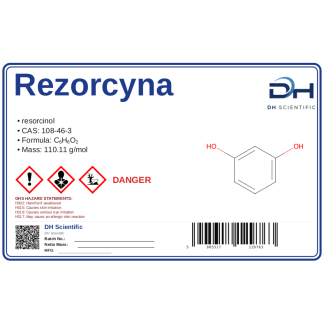
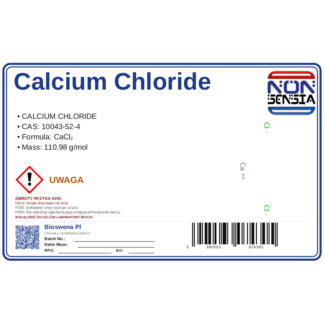
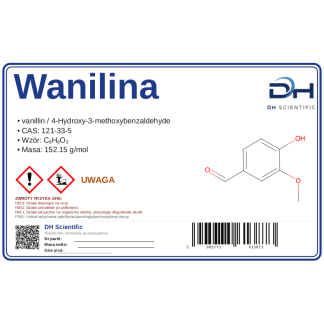
Reviews
There are no reviews yet.