Legal substance. dhscientific.com is a demonstration of the MOL-GOD platform — we sell nothing and no orders are fulfilled. Banned substances are blocked here automatically from the regulatory canon (compare e.g. Heptachlor).
Data sources: PubChem (NLM/NIH) Last updated: 2026-11-10
📊Physicochemical properties
Quick Reference
Formula:C2H4
MW:28.05 g/mol
CAS:74-85-1
Appearance:Colorless gas
Odour:Sweet
Odour:Sweet
Detailed Properties
Property
Value
Unit
Conditions
Source
Melting Point (mp)
-169.11 °C (-272.4 °F)
1 atm
Boiling Point (bp)
-103.72 °C (-154.7 °F)
1 atm
Flash Point
-100.00 °C (-148 °F)
closed cup
Water Solubility
0.131
g/L
25 °C (77 °F)
🔬 Advanced Properties
Chemical Identifiers
SMILES:C=C
Data sources:
PubChem, NIST Chemistry WebBook, CRC Handbook of Chemistry and Physics (103rd ed.)
Last updated: 2026-07-11
Regulatory status of the substance
This substance is subject to regulatory requirements: hazardous waste management (BDO register). Details in the \"Regulatory Status (REACH/ECHA/CLP)\" section and on the SDS. Regulatory information — does not restrict purchase in this store.
📚 The book bibliography is awaiting generation. Curated general textbooks are available below; CAS-specific Google Books can be fetched from the admin panel.
National Institute of Standards and Technology. 2024. "NIST Chemistry WebBook, SRD 69." Gaithersburg, MD: NIST. Accessed 2025-01-01. ↗
Spectral Database for Organic Structure Determination (SDBS). 2024. National Institute of Advanced Industrial Science and Technology (AIST), Japan. Accessed 2025-01-01. ↗
Ulrich, Eldon L., Hideo Akutsu, John F. Doreleijers, Yoko Harano, Yannis E. Ioannidis, Jundong Lin, Miron Livny, et al. 2008. "BioMagResBank." Nucleic Acids Research 36 (D1): D402–D408. [DOI ↗]
Horai, Hisayuki, Masanori Arita, Shigehiko Kanaya, Yoshito Nihei, Tasuku Ikeda, Kazuhiro Suwa, Yuya Ojima, et al. 2010. "MassBank: A Public Repository for Sharing Mass Spectral Data for Life Sciences." Journal of Mass Spectrometry 45 (7): 703–714. [DOI ↗]
Linstrom, P.J., and W.G. Mallard, eds. 2024. NIST Chemistry WebBook, NIST Standard Reference Database Number 69. Gaithersburg, MD: National Institute of Standards and Technology. ↗
McDonald, M. Shane, Mike McAvoy, and Ajit Bhalerao. 1988. "JCAMP-DX: A Standard Form for Exchange of Infrared Spectra in Computer Readable Form." Applied Spectroscopy 42 (1): 151–162. [DOI ↗]
PubChem. 2024. "PubChem Compound Database." National Library of Medicine, National Institutes of Health. Accessed 2025-01-01. ↗
Spectra are fetched on demand from 9 sources. Each spectrum is stored in our database — the next time it is opened there are zero requests to the external API. Download JCAMP-DX / CSV / PNG for every spectrum without searching.
Data retrieved via MolGod_Spectra_Remote_Fetcher (JCAMP-DX parser) and stored in the wp_molgod_spectra_cache table. Zero duplicate downloads, zero repeat queries to NIST on subsequent visits. Licensing terms are respected (only a deep link plus our own visualization is published).
Data retrieved live from multiple sources (priority chain). JCAMP-DX / CSV / PNG available for download under each spectrum.
IR — Fourier-transform infrared
Loading IR — Fourier-transform infrared…
MS — Mass spectrometry (EI 70eV)
Loading MS — Mass spectrometry (EI 70eV)…
🧮 DFT vs experiment comparison (IR)
Overlay of the experimental IR spectrum on the theoretically calculated spectrum using the B3LYP/6-31G* method (scaling factor 0.9614, Scott & Radom 1996).
Experimental DFT (theoretical)
Full theoretical data (geometry, frequencies): NIST CCCBDB ↗
📚 Bibliography (Chicago)
Becke, Axel D. 1993. "Density-Functional Thermochemistry. III. The Role of Exact Exchange." Journal of Chemical Physics 98 (7): 5648–5652. Definition of the B3LYP functional.
Scott, Anthony P., and Leo Radom. 1996. "Harmonic Vibrational Frequencies: An Evaluation of Hartree–Fock, Møller–Plesset, Quadratic Configuration Interaction, Density Functional Theory, and Semiempirical Scale Factors." Journal of Physical Chemistry 100 (41): 16502–16513. Scaling factors for DFT (e.g., 0.9614 for B3LYP/6-31G*).
Merrick, Jeffrey P., Damian Moran, and Leo Radom. 2007. "An Evaluation of Harmonic Vibrational Frequency Scale Factors." Journal of Physical Chemistry A 111 (45): 11683–11700. An update to Scott & Radom — scale factors for newer DFT functionals.
Lee, Chengteh, Weitao Yang, and Robert G. Parr. 1988. "Development of the Colle-Salvetti Correlation-Energy Formula into a Functional of the Electron Density." Physical Review B 37 (2): 785–789. The LYP correlation — complements Becke 1993 for B3LYP.
Hehre, Warren J., Robert Ditchfield, and John A. Pople. 1972. "Self-Consistent Molecular Orbital Methods. XII. Further Extensions of Gaussian-Type Basis Sets." Journal of Chemical Physics 56 (5): 2257–2261. Definition of the 6-31G* basis set (split-valence + polarization).
Johnson, Russell D., III, ed. 2022. "NIST Computational Chemistry Comparison and Benchmark Database (CCCBDB)." NIST Standard Reference Database 101, Release 22. https://cccbdb.nist.gov. Benchmark for theoretical values — the fallback link in the widget.
Cramer, Christopher J. 2004. "Essentials of Computational Chemistry: Theories and Models." 2nd ed. Chichester: Wiley. A textbook on DFT methods and vibrational frequency calculations.
Jensen, Frank. 2017. "Introduction to Computational Chemistry." 3rd ed. Chichester: Wiley. Modern computational chemistry — basis sets and methods for vibrational spectra.
Foresman, James B., and Æleen Frisch. 2015. "Exploring Chemistry with Electronic Structure Methods." 3rd ed. Wallingford, CT: Gaussian, Inc. A practical Gaussian guide — IR + Raman + NMR from DFT.
🎓 Spectrum interpretation guide (for students)
Wyjaśnienia każdego pasma w widmie — dlaczego pojawia się tam, gdzie się pojawia, i co świadczy o strukturze.
IR (infrared) (20 peaks)
The IR (infrared) spectrum contains 20 identified bands. The analysis below explains what each one means structurally and why it appears in that particular range.
C–H stretch (=C–H, aromatic/olefinic)CH_arom● high
C–H bend (CH3, CH2 — methyl/methylene)CH3/CH2● high
Band "C–H bend (CH3, CH2 — methyl/methylene)" appears in cases: 1,445.2 cm⁻¹ (weak (w)). This is the stretching vibration of aliphatic sp³ C–H bonds. Present in virtually every organic compound with an alkyl chain.
C–H out-of-plane bend (vinyl, alkene)C=CH_oop● medium
Band "C–H out-of-plane bend (vinyl, alkene)" appears in cases: 912.1 cm⁻¹ (medium (m)), 949.6 cm⁻¹ (strong (s)), 987.2 cm⁻¹ (strong (s)). The functional group is identified based on its characteristic range (Pavia/Silverstein) — the precise physical mechanism depends on the nearest chemical neighbors.
📚 Bibliography (Chicago)
Field, Leslie D., Sev Sternhell, and John R. Kalman. 2013. "Organic Structures from Spectra." 5th ed. Chichester: Wiley. A student problem-set textbook (interpretation guide companion).
Williams, Dudley H., and Ian Fleming. 2008. "Spectroscopic Methods in Organic Chemistry." 6th ed. London: McGraw-Hill. A classic of narrative spectral interpretation — explains "why the peak is here".
Crews, Phillip, Jaime Rodríguez, and Marcel Jaspars. 2009. "Organic Structure Analysis." 2nd ed. New York: Oxford University Press. A workflow for multi-parameter structural interpretation.
McLafferty, Fred W., and František Tureček. 1993. "Interpretation of Mass Spectra." 4th ed. Mill Valley, CA: University Science Books. MS fragmentation mechanisms — McLafferty rearrangement, m/z 29 = CHO.
Reusch, William. 2013. "Virtual Textbook of Organic Chemistry: Spectroscopy." East Lansing, MI: Michigan State University. https://www2.chemistry.msu.edu/faculty/reusch/VirtTxtJml/Spectrpy/spectro.htm. An open educational guide to IR/NMR/MS/UV — ideal for explaining functional groups.
Hesse, Manfred, Herbert Meier, and Bernd Zeeh. 2007. "Spektroskopische Methoden in der organischen Chemie." 8th ed. Stuttgart: Thieme. The standard German textbook on spectral interpretation.
Lampman, Gary M., Donald L. Pavia, George S. Kriz, and James R. Vyvyan. 2010. "Spectroscopy." 4th ed. Belmont, CA: Cengage Learning. A workbook with integrated interpretive narratives.
Kalsi, P. S. 2010. "Spectroscopy of Organic Compounds." 6th ed. New Delhi: New Age International. A complete textbook on IR/NMR/MS/UV spectral interpretation.
🔎 Spectrum Search (JCAMP-DX)
Upload a JCAMP-DX file (.jdx, .dx, .jcm) — the system will calculate the cosine similarity against all spectra in the database and display the TOP 10 matches.
📚 Bibliography (Chicago)
McLafferty, Fred W., ed. 2018. Wiley Registry of Mass Spectral Data. 11th ed. Hoboken, NJ: Wiley. A reference MS library (~775k spectra).
Stein, Stephen E., and Donald R. Scott. 1994. "Optimization and Testing of Mass Spectral Library Search Algorithms for Compound Identification." Journal of the American Society for Mass Spectrometry 5 (9): 859–866. The cosine + dot-product algorithm of NIST MS Search.
McDonald, Robert S., and Paul A. Wilks Jr. 1988. "JCAMP-DX: A Standard Form for Exchange of Infrared Spectra in Computer Readable Form." Applied Spectroscopy 42 (1): 151–162. The JCAMP-DX specification (extended to 5.01 for NMR/MS).
McLafferty, Fred W., and František Tureček. 1993. "Interpretation of Mass Spectra." 4th ed. Mill Valley, CA: University Science Books. Cosine-similarity matching and MS fragmentation — the foundation of the search algorithm.
Sumner, Lloyd W., Alexander Amberg, Dave Barrett, Michael H. Beale, Richard Beger, Clare A. Daykin, Teresa W.-M. Fan, et al. 2007. "Proposed Minimum Reporting Standards for Chemical Analysis." Metabolomics 3 (3): 211–221. MSI Level 1-4 — confidence-level standards for spectral matching.
Stein, Stephen E. 1999. "An Integrated Method for Spectrum Extraction and Compound Identification from Gas Chromatography/Mass Spectrometry Data." Journal of the American Society for Mass Spectrometry 10 (8): 770–781. The AMDIS algorithm — deconvolution + library match (NIST).
Lindon, John C., George E. Tranter, and David W. Koppenaal, eds. 2017. "Encyclopedia of Spectroscopy and Spectrometry." 3rd ed. Amsterdam: Academic Press. Encyclopedia entries on spectral library searching.
Smith, Brian C. 2011. "Fundamentals of Fourier Transform Infrared Spectroscopy." 2nd ed. Boca Raton, FL: CRC Press. FT-IR and the JCAMP-DX format for transmission spectra.
Larkin, Peter. 2017. "Infrared and Raman Spectroscopy: Principles and Spectral Interpretation." 2nd ed. Amsterdam: Elsevier. Principles of IR/Raman library matching and peak preprocessing.
📐Physical & Chemical Properties (DB)
6 fields MolGod Score: No source
Haynes, William M., ed. 2024. CRC Handbook of Chemistry and Physics. 105th ed. Boca Raton: CRC Press/Taylor & Francis. ISBN 978-1-032-55554-4. ↗
National Institute of Standards and Technology. 2024. "NIST Chemistry WebBook, SRD 69." Gaithersburg, MD: NIST. Accessed 2025-01-01. ↗
Yaws, Carl L. 2014. The Yaws Handbook of Physical Properties for Hydrocarbons and Chemicals. 2nd ed. Oxford: Gulf Professional Publishing.
PubChem. 2024. "PubChem Compound Database." National Library of Medicine, National Institutes of Health. Accessed 2025-01-01. ↗
Marrero, J., and R. Gani. 2001. "Group-Contribution Based Estimation of Pure Component Properties." Fluid Phase Equilibria 183–184: 183–208. ↗
Joback, K. G., and R. C. Reid. 1987. "Estimation of Pure-Component Properties from Group-Contributions." Chemical Engineering Communications 57 (1–6): 233–243. ↗
Sangster, J. 1997. Octanol-Water Partition Coefficients: Fundamentals and Physical Chemistry. Chichester: Wiley. ISBN 978-0-471-97397-3.
Mannhold, Raimund, and Han van de Waterbeemd. 2001. "Substructure and Whole Molecule Approaches for Calculating Log P." Journal of Computer-Aided Molecular Design 15 (4): 337–354. ↗
Perrin, Ditlev D., Boyd Dempsey, and E. P. Serjeant. 1981. pKa Prediction for Organic Acids and Bases. London: Chapman and Hall. ISBN 0-412-21090-5.
Constantinou, Leonidas, and Rafiqul Gani. 1994. "New Group Contribution Method for Estimating Properties of Pure Compounds." AIChE Journal 40 (10): 1697–1710. ↗
Ertl, Peter, Bernhard Rohde, and Paul Selzer. 2000. "Fast Calculation of Molecular Polar Surface Area as a Sum of Fragment-Based Contributions and Its Application to the Prediction of Drug Transport Properties." Journal of Medicinal Chemistry 43 (20): 3714–3717. ↗
🔄 Concentration unit converter LIVEMolGod_UNITCONV_1
Enter the Ethylene concentration in any unit — the rest will be calculated automatically.
Cohen ER, Cvitaš T, Frey JG, Holmström B, Kuchitsu K, Marquardt R, Mills I, Pavese F, Quack M, Stohner J, Strauss HL, Takami M, Thor AJ (2007)
g/L ↔ molarity
c (mol/L) = (g/L) / MW
±0.1% (depends on MW precision)
Cohen ER, Cvitaš T, Frey JG, Holmström B, Kuchitsu K, Marquardt R, Mills I, Pavese F, Quack M, Stohner J, Strauss HL, Takami M, Thor AJ (2007)
mmol/L ↔ molarity
c (mol/L) = mmol/L × 10⁻³
Exact
Cohen ER, Cvitaš T, Frey JG, Holmström B, Kuchitsu K, Marquardt R, Mills I, Pavese F, Quack M, Stohner J, Strauss HL, Takami M, Thor AJ (2007)
Celsius ↔ Kelvin
T(K) = t(°C) + 273.15
±0.01 K (ITS-90 scale)
BIPM (Bureau International des Poids et Mesures) (2019)
Celsius ↔ Fahrenheit
T(°F) = T(°C) × 9/5 + 32
±0.1 °F
Thompson A, Taylor BN (2008)
density-corrected % ↔ molarity
c (mol/L) = (%w/w × ρ × 10) / MW, ρ in g/mL
±0.1% when ρ known to 3 decimals
Cohen ER, Cvitaš T, Frey JG, Holmström B, Kuchitsu K, Marquardt R, Mills I, Pavese F, Quack M, Stohner J, Strauss HL, Takami M, Thor AJ (2007)
📚 Bibliography (8 authoritative sources)
Thompson A, Taylor BN (2008). Guide for the Use of the International System of Units (SI). NIST Special Publication 811 · DOI: 10.6028/NIST.SP.811-2008 → Primary SI standard for US scientific usage
Cohen ER, Cvitaš T, Frey JG, Holmström B, Kuchitsu K, Marquardt R, Mills I, Pavese F, Quack M, Stohner J, Strauss HL, Takami M, Thor AJ (2007). Quantities, Units and Symbols in Physical Chemistry — The IUPAC Green Book. RSC Publishing, 3rd ed. · DOI: 10.1039/9781847557889 · ISBN: 978-0-85404-433-7 → Canonical IUPAC guide for chemistry quantities/units
BIPM (Bureau International des Poids et Mesures) (2019). The International System of Units (SI), 9th edition. BIPM · ↗ → International SI definitions (incl. redefined kilogram 2019)
ISO/IEC (2022). Quantities and units — Part 1: General. International Organization for Standardization — ISO 80000-1:2022 · ↗ → General rules for physical quantities and units
ISO/IEC (2019). Quantities and units — Part 9: Physical chemistry and molecular physics. International Organization for Standardization — ISO 80000-9:2019 · ↗ → Concentration / molality / amount-of-substance conventions
Tiesinga E, Mohr PJ, Newell DB, Taylor BN (2021). CODATA recommended values of the fundamental physical constants: 2018. Rev. Mod. Phys. 93(2):025010 · DOI: 10.1103/RevModPhys.93.025010 → Avogadro, gas constant, molar volume (2019 SI revision)
IUPAC (2019). Compendium of Chemical Terminology — the IUPAC Gold Book (online). IUPAC · DOI: 10.1351/goldbook → Definitions of mass fraction, molality, normality, ppm, activity
Mills IM, Cvitaš T, Homann K, Kallay N, Kuchitsu K (1988). Quantities, Units and Symbols in Physical Chemistry. Blackwell Scientific Publications, 1st ed. · ISBN: 0-632-01773-5 → Historical predecessor of IUPAC Green Book
Solvent compatibilityMolGod_SOLV_1
Estimate based on water solubility and logP. Indicative data — does not replace experimental studies.
Rumble, John R., ed. 2023. CRC Handbook of Chemistry and Physics. 104th ed. Boca Raton, FL: CRC Press. [link ↗]
International Association for the Properties of Water and Steam (IAPWS). 1997. "Release on the Static Dielectric Constant of Ordinary Water Substance." IAPWS R8-97. [link ↗]
Reichardt, Christian, and Thomas Welton. 2011. Solvents and Solvent Effects in Organic Chemistry. 4th ed. Weinheim: Wiley-VCH. https://doi.org/10.1002/9783527632220. [link ↗]
Hansen, Charles M. 2007. Hansen Solubility Parameters: A User's Handbook. 2nd ed. Boca Raton, FL: CRC Press. https://doi.org/10.1201/9781420006834. [link ↗]
IFA. n.d. "Water." GESTIS Substance Database. Institut für Arbeitsschutz der Deutschen Gesetzlichen Unfallversicherung. Accessed April 25, 2026. [link ↗]
Rumble, John R., ed. 2023. CRC Handbook of Chemistry and Physics. 104th ed. Boca Raton, FL: CRC Press. [link ↗]
Reichardt, Christian, and Thomas Welton. 2011. Solvents and Solvent Effects in Organic Chemistry. 4th ed. Weinheim: Wiley-VCH. https://doi.org/10.1002/9783527632220. [link ↗]
Snyder, Lloyd R., Joseph J. Kirkland, and John W. Dolan. 2010. Introduction to Modern Liquid Chromatography. 3rd ed. Hoboken, NJ: Wiley. https://doi.org/10.1002/9780470508183. [link ↗]
Smallwood, Ian M. 1996. Handbook of Organic Solvent Properties. London: Arnold. https://doi.org/10.1016/B978-0-340-64578-9.X5000-9. [link ↗]
Reichardt, Christian, and Thomas Welton. 2011. Solvents and Solvent Effects in Organic Chemistry. 4th ed. Weinheim: Wiley-VCH. https://doi.org/10.1002/9783527632220. [link ↗]
Hansen, Charles M. 2007. Hansen Solubility Parameters: A User's Handbook. 2nd ed. Boca Raton, FL: CRC Press. [link ↗]
Rumble, John R., ed. 2023. CRC Handbook of Chemistry and Physics. 104th ed. Boca Raton, FL: CRC Press. [link ↗]
Smallwood, Ian M. 1996. Handbook of Organic Solvent Properties. London: Arnold. [link ↗]
National Institute of Standards and Technology. n.d. "Methane, dichloro- (CAS 75-09-2)." NIST Chemistry WebBook, SRD 69. Accessed April 25, 2026. [link ↗]
Hansen, Charles M. 2007. Hansen Solubility Parameters: A User's Handbook. 2nd ed. Boca Raton, FL: CRC Press. [link ↗]
International Agency for Research on Cancer. 1999. "Dichloromethane." IARC Monographs on the Evaluation of Carcinogenic Risks to Humans 71: 251–315. [link ↗]
Reichardt, Christian, and Thomas Welton. 2011. Solvents and Solvent Effects in Organic Chemistry. 4th ed. Weinheim: Wiley-VCH. [link ↗]
Armarego, Wilfred L. F., and Christina Li Lin Chai. 2009. Purification of Laboratory Chemicals. 6th ed. Oxford: Butterworth-Heinemann. https://doi.org/10.1016/B978-1-85617-567-8.50003-3. [link ↗]
Hansen, Charles M. 2007. Hansen Solubility Parameters: A User's Handbook. 2nd ed. Boca Raton, FL: CRC Press. [link ↗]
National Institute of Standards and Technology. n.d. "Furan, tetrahydro- (CAS 109-99-9)." NIST Chemistry WebBook. Accessed April 25, 2026. [link ↗]
Smallwood, Ian M. 1996. Handbook of Organic Solvent Properties. London: Arnold. [link ↗]
National Institute of Standards and Technology. n.d. "Hexane (CAS 110-54-3)." NIST Chemistry WebBook. Accessed April 25, 2026. [link ↗]
Hansen, Charles M. 2007. Hansen Solubility Parameters: A User's Handbook. 2nd ed. Boca Raton, FL: CRC Press. [link ↗]
Snyder, Lloyd R., Joseph J. Kirkland, and John W. Dolan. 2010. Introduction to Modern Liquid Chromatography. 3rd ed. Hoboken, NJ: Wiley. [link ↗]
Agency for Toxic Substances and Disease Registry. 1999. Toxicological Profile for n-Hexane. Atlanta, GA: U.S. Department of Health and Human Services. [link ↗]
International Agency for Research on Cancer. 1999. "Chloroform." IARC Monographs on the Evaluation of Carcinogenic Risks to Humans 73: 131–182. [link ↗]
National Institute of Standards and Technology. n.d. "Methane, trichloro- (CAS 67-66-3)." NIST Chemistry WebBook. Accessed April 25, 2026. [link ↗]
Hansen, Charles M. 2007. Hansen Solubility Parameters: A User's Handbook. 2nd ed. Boca Raton, FL: CRC Press. [link ↗]
Reichardt, Christian, and Thomas Welton. 2011. Solvents and Solvent Effects in Organic Chemistry. 4th ed. Weinheim: Wiley-VCH. [link ↗]
Solubility theory (applied in compatibility prediction):
Yalkowsky, Samuel H., and Shri C. Valvani. 1980. "Solubility and Partitioning I: Solubility of Nonelectrolytes in Water." Journal of Pharmaceutical Sciences 69 (8): 912–922. https://doi.org/10.1002/jps.2600690814 — General Solubility Equation (GSE): logS = 0.5 − logP − 0.01(MP−25).
Hansen, Charles M. 2007. Hansen Solubility Parameters: A User's Handbook. 2nd ed. Boca Raton, FL: CRC Press. https://doi.org/10.1201/9781420006834 — HSP triplet (dD, dP, dH) + Ra formula.
Reichardt, Christian, and Thomas Welton. 2011. Solvents and Solvent Effects in Organic Chemistry. 4th ed. Weinheim: Wiley-VCH. https://doi.org/10.1002/9783527632220 — E_T(30) polarity scale, solwatochromia.
Snyder, Lloyd R., Joseph J. Kirkland, and John W. Dolan. 2010. Introduction to Modern Liquid Chromatography. 3rd ed. Hoboken, NJ: Wiley. https://doi.org/10.1002/9780470508183 — Eluotropic series, polarity index.
PubChem Compound Database — CAS 74-85-1 lookup ↗ — logP (XLogP3), water solubility experimental + predicted.
Full bibliography in the REFERENCES accordion (at the bottom of the page) — Chicago Manual of Style 17th ed., Author-Date.
🛡️ Safety — CAS 74-85-1MolGod_SAFEHUB_MAIN
Data limitations notice. The safety information on this page is for reference only and does not replace a full safety data sheet (SDS). Before using the product, consult the manufacturer's current safety data sheet and the GHS/CLP guidance. The CLP classification applies to the pure bulk substance, not to commercial formulations.
GHS/CLP classification — Regulation (EC) No 1272/2008 + UN GHS Rev. 9 (2021).
⚠️ Danger
🔥GHS02Flammable⛽GHS04Gases under pressure❗GHS07Irritant / harmful
🚨 Hazard statements (H)
H220 — Extremely flammable gas
H336 — May cause drowsiness or dizziness
🛡 Precautionary statements (P)
P203 — Obtain, read and follow all safety instructions before use
✓ Harmonised classification pursuant to Annex VI of the CLP Regulation (EC) 1272/2008 (official, binding classification). Index number: 601-010-00-3.
Reference (Chicago): European Chemicals Agency. "ethylene, Index No. 601-010-00-3." In Table 3 of Annex VI to Regulation (EC) No 1272/2008 (CLP Regulation), 23rd Adaptation to Technical Progress. Helsinki: European Chemicals Agency, 2026. https://echa.europa.eu/information-on-chemicals/annex-vi-to-clp.
⚠ IARC — Group 3:
not classifiable as to carcinogenicity to humans (evaluated by IARC).
(Independent assessment of carcinogenicity evidence by IARC/WHO — supplements the CLP classification above.)
Reference (Chicago): IARC. 2026. IARC Monographs on the Identification of Carcinogenic Hazards to Humans: CAS 74-85-1. Lyon, France: International Agency for Research on Cancer, World Health Organization. https://monographs.iarc.who.int/list-of-classifications/. (Accessed 2026-11-12.)
Classification from the local MOL-GOD list (snapshot) — unverified against the current IARC list. Verify
Translations: CLP Regulation (EC) 1272/2008, Annexes III and IV. Data: PubChem/NLM.
☢️ Toxicological data (IARC + EPA CTX)
🧬 IARC Carcinogen Classification
IARC classification:
Group 3 [2,6]
Classification from a local MOL-GOD snapshot — unverified against the current IARC list (verify).
🌍 Ecotoxicology & environmental fate (SDS sec. 8/12)
The codes below are additional supplier self-classifications (self-classification, ECHA C&L / PubChem notifications) — supplementary to the binding harmonized Annex VI classification above; they may be redundant.
International Agency for Research on Cancer (IARC). 2024. "IARC Monographs on the Identification of Carcinogenic Hazards to Humans." Lyon: IARC. 🔗
U.S. EPA. 2024. "ECOTOX Knowledgebase." Washington, DC: U.S. Environmental Protection Agency. 🔗
ECHA. 2024. "Chemical Safety Assessment." European Chemicals Agency. 🔗
U.S. National Toxicology Program. 2024. Report on Carcinogens. 15th ed. Research Triangle Park, NC: National Institute of Environmental Health Sciences. 🔗
GESTIS. 2024. "GESTIS Substance Database." Institute for Occupational Safety and Health of the German Social Accident Insurance (DGUV). 🔗
U.S. EPA. 2024. "CompTox Chemicals Dashboard." Washington, DC: U.S. Environmental Protection Agency. 🔗
ECHA. 2023. "Regulation (EC) No 1272/2008 on Classification, Labelling and Packaging of Substances and Mixtures (CLP), Annex VI — Harmonised Classification." European Chemicals Agency. 🔗
Leist, Marcel, et al. 2014. "Consensus Report on the Future of Animal-Free Systemic Toxicity Testing." ALTEX 31 (3): 341–356. [DOI]
Hartung, Thomas. 2009. "Toxicology for the Twenty-First Century." Nature 460 (7252): 208–212. [DOI]
Lenga, Robert E., ed. 2008. The Sigma-Aldrich Library of Chemical Safety Data. 2nd ed. Milwaukee: Sigma-Aldrich.
Slikker, William Jr., et al. 2004. "Dose-Dependent Terminal and Tissue Residues After Chronic Exposure." Toxicological Sciences 81 (2): 253–279. [DOI]
Calabrese, Edward J., and Linda A. Baldwin. 2003. "Toxicology Rethinks Its Central Belief." Nature 421 (6924): 691–692. [DOI]
Hodge, Harold C., and J. Harvey Sterner. 1949. "Tabulation of Toxicity Classes." American Industrial Hygiene Association Quarterly 10 (4): 93–96. [DOI]
🚨 Emergency procedure — chemical spillFlammable
CAS 74-85-1GHS:H220H336💨 Ventilation
🥽 PPE — Personal protective equipment
Gloves:chemically resistant (select per SDS section 8)
⚠️ GENERIC procedure derived from the GHS classification (no curated data for this CAS). Always follow the supplier's current Safety Data Sheet (SDS).

1. Remove ignition sources; no sparking or open flames.
2. Ventilate to disperse vapors; use grounded, spark-proof tools.
3. Cover with a non-combustible absorbent; collect into a vented / UN container.
4. Wash the area with water; treat residues and absorbent as hazardous waste.

Additional properties from GHS:
• irritant — avoid skin/eye contact and dust inhalation
🛢️ Large spill (>1L) ⚠️ Hazardous material
1. Evacuate; eliminate all ignition sources, monitor vapor concentration (LEL).
2. Full antistatic PPE; spark-proof equipment. Extinguishing: foam/powder/CO2 — NOT a water jet.
3. Collect mechanically into a labeled UN container; hand over to an authorized company (Polish Waste Database, BDO).
4. Report the incident per the OHS procedure; on release to the environment notify the Regional Environmental Inspectorate (WIOŚ).
🩹 First aid
🧴 Skin
1. Remove contaminated clothing.
2. Rinse the skin with plenty of water for ≥15 min.
👁️ Eyes
1. Rinse with water for ≥15 min, eyelids held open; remove contact lenses.
2. See an ophthalmologist if irritation persists.
🫁 Inhalation
1. Move the casualty to fresh air, comfortable position.
2. If short of breath — oxygen / doctor.
🍽️ Ingestion
1. Rinse the mouth with water; do NOT induce vomiting.
2. Poison Control Center: +48 42 631 47 24.
🌍 Environment:
Water: Medium; Soil: Low; ❌ Do not release into drains; Waste Code: 16 05 06*
📚 Scientific references (Chicago Author-Date) — 8
European Chemicals Agency (ECHA). 2020. Guidance on the Compilation of Safety Data Sheets — Section 6: Accidental Release Measures. ECHA.
[link ↗]
European Parliament and Council. 2008. Regulation (EC) No 1272/2008 (CLP) — Hazard classes and H-statements. Official Journal of the European Union L 353.
[link ↗]
National Institute for Occupational Safety and Health (NIOSH). 2023. Pocket Guide to Chemical Hazards — NIOSH Pocket Guide to Chemical Hazards. CDC.
[link ↗]
U.S. Occupational Safety and Health Administration. 2024. 29 CFR 1910.120 — Hazardous Waste Operations and Emergency Response (HAZWOPER). U.S. Code of Federal Regulations.
[link ↗]
National Fire Protection Association. 2018. NFPA 472: Standard for Competence of Responders to Hazardous Materials/Weapons of Mass Destruction Incidents. NFPA.
[link ↗]
European Parliament and Council. 2012. Directive 2012/18/EU on the Control of Major-Accident Hazards Involving Dangerous Substances (Seveso III). Official Journal of the European Union L 197: 1–37.
[link ↗]
U.S. National Institute for Occupational Safety and Health. 2024. NIOSH Pocket Guide to Chemical Hazards. Centers for Disease Control and Prevention.
[link ↗]
European Chemicals Agency. 2020. Guidance on the Compilation of Safety Data Sheets (SDS), Version 3.1. ECHA.
[link ↗]
Sources: GHS/CLP classification (PubChem/SDS) — generic fallback · ECHA Guidance on SDS (section 6) · NIOSH Pocket Guide.
Indicative data only — in an emergency, always follow the supplier's instructions and local occupational health and safety (OHS) regulations.
🔥 Visual PPE guide (personal protective equipment)Flammable
🧤 Gloves
Nitrile (chemical-resistant + ESD) >0.2 mm EN 374-1 + EN 16350 (ESD)
NO latex (static); no metal parts
👁️ Safety Glasses / Goggles
EN 166 B
Standard splash protection
🥼 Lab Coat / Coverall
ESD lab coat (anti-static, 100% cotton or Nomex) EN 1149-5 (ESD) + EN ISO 11612 (limited flame spread)
No synthetic fabrics (nylon, polyester) — melting in a fire
💨 Ventilation
6 ACH(air changes/hour) ATEX zone 1/2 ventilation + 6 ACH
No ignition sources (open flame, hot plate, sparks); LEL monitor
📚 Scientific references (Chicago Author-Date)
European Committee for Standardization (CEN). 2016. EN 374-1:2016 — Protective gloves against dangerous chemicals and micro-organisms — Part 1: Terminology and performance requirements for chemical risks. CEN, Brussels. EN 374-1:2016. [link ↗] — Classification of chemical-resistant gloves type A/B/C; JKLPT permeation tests
European Committee for Standardization (CEN). 2001. EN 166:2001 — Personal eye-protection — Specifications. CEN, Brussels. EN 166:2001. [link ↗] — Markings: B = medium-energy impact, T = extreme temperatures, 9 = molten metals and hot solids
European Committee for Standardization (CEN). 2009. EN 14605:2005+A1:2009 — Protective clothing against liquid chemicals — Performance requirements for clothing with liquid-tight (Type 3) or spray-tight (Type 4) connections. CEN, Brussels. EN 14605:2009. [link ↗] — Type 3 (jet-tight) and Type 4 (spray-tight) protection against liquid chemicals
National Institute for Occupational Safety and Health (NIOSH). 2017. Recommendations for Chemical Protective Clothing: A Companion to the NIOSH Pocket Guide. U.S. Department of Health & Human Services / CDC. [link ↗] — Practical guide to CPC (chemical protective clothing) selection per substance and exposure scenario
Occupational Safety and Health Administration (OSHA). 2011. Personal Protective Equipment — General requirements. U.S. Department of Labor — 29 CFR 1910.132. 29 CFR 1910.132. [link ↗] — The employer must provide PPE + training + a documented written hazard assessment
♻️ Chemical waste disposal (BDO)Flammable⚠️ BDO required
📋 Full BDO list:bdo.mos.gov.pl ↗
— official register of the Ministry of Climate and Environment. Waste Transfer Card (KPO):BDO template
mandatory for every hazardous waste delivery.
📚 Scientific references (Chicago Author-Date)
European Commission. 2014. Commission Decision 2014/955/EU on the list of waste pursuant to Directive 2008/98/EC. Official Journal of the European Union. Decyzja 2014/955/UE. [link ↗] — European List of Waste (LoW) — 6-digit EWC codes + asterisk for hazardous
Ministerstwo Klimatu i Środowiska Rzeczypospolitej Polskiej. 2020. Rozporządzenie Ministra Klimatu z dnia 2 stycznia 2020 r. w sprawie katalogu odpadów. Dziennik Ustaw RP 2020 poz. 10. [link ↗] — Polish waste catalogue — implementation of Decision 2014/955/EU
Główny Inspektorat Ochrony Środowiska (GIOŚ). 2024. Baza Danych O Odpadach (BDO) — System rejestracji firm utylizacyjnych. Ministerstwo Klimatu i Środowiska. [link ↗] — Central register of the Polish Waste Database (BDO) — full list of companies authorised for waste management
Polska — Sejm RP. 2012. Ustawa z dnia 14 grudnia 2012 r. o odpadach. Dz.U. 2013 poz. 21 (z późn. zm.). [link ↗] — National act — defines the waste producer's obligations + registration in the Polish Waste Database (BDO)
Furr, A. Keith, ed.. 2000. CRC Handbook of Laboratory Safety. CRC Press. — Laboratory waste classification + segregation procedures (Waste Management chapter); EN 374:2013 glove standards for personnel handling hazardous waste.
Pohanish, Richard P.. 2017. Sittig's Handbook of Toxic and Hazardous Chemicals and Carcinogens. Elsevier. — Per-CAS waste classification + incompatibilities — input for EWC mapping.
Lewis, Richard J.. 2012. Sax's Dangerous Properties of Industrial Materials. Wiley. — Reactivity + storage compatibility of waste (oxidisers vs flammables — separate streams).
NIOSH. 2024. Pocket Guide to Chemical Hazards. U.S. Department of Health and Human Services. [link ↗] — PEL/REL/IDLH per CAS — basis for the PPE required during waste transport (KPO — Waste Transfer Card).
OSHA. 2024. Occupational Chemical Database — Hazardous Waste Operations (HAZWOPER). Occupational Safety and Health Administration. [link ↗] — 29 CFR 1910.120 — training + PPE for handling hazardous waste.
European Parliament and Council. 2008. Directive 2008/98/EC on waste (Waste Framework Directive). Official Journal of the European Union L 312/3. [link ↗] — Waste management hierarchy (prevention → recovery → disposal); defines "hazardous waste".
European Parliament and Council. 2009. Regulation (EC) No 1272/2008 (CLP) on classification, labelling and packaging of substances and mixtures. Official Journal of the European Union L 353. [link ↗] — CLP H-statement classification → mapping to EWC * (asterisk = hazardous).
United Nations Economic Commission for Europe (UNECE). 2023. European Agreement concerning the International Carriage of Dangerous Goods by Road (ADR 2025). UNECE. [link ↗] — ADR — requirements for transporting hazardous waste (KPO — Waste Transfer Card + UN number + classes 1–9).
IPCS INCHEM. 2024. International Programme on Chemical Safety — Waste Management Guidelines. WHO/UNEP/ILO. [link ↗] — International guidelines for neutralisation + disposal per CAS.
European Parliament and Council. 2006. Regulation (EC) No 1013/2006 on Shipments of Waste. Official Journal of the European Union L 190: 1–98. [link ↗] — Cross-border transfer of hazardous waste — notification + consent requirements before export
ℹ️ Regulatory obligations checklist for CAS 74-85-1.
Status based on: ADR 2023 (Table A), REACH Annex XVII, CLP Annex VI (harmonised classification), hazard class from the m14-spill DB, SVHC, GIS and the Polish OEL list. Principle: no data = no claim (we do NOT declare "no restrictions" without a basis).
✅SDS (Safety Data Sheet) availablefulfilled
How to comply: FULFILLED — safety data sheet v13 (PL) available for download on this page. Requirement: current SDS compliant with Reg. 1907/2006 (REACH) Annex II, 16-section format.
❌Compliant CLP label (pictograms + signal word + H/P)required
How to comply: The label must include: GHS pictograms, the signal word (Danger/Warning), hazard (H) and precautionary (P) statements, and manufacturer details. Required since 2010 (substances) and 2015 (mixtures). For this substance a HARMONISED CLASSIFICATION applies (CLP Annex VI) — see below; it takes precedence over self-classification.
❌Chemical OSH training (substance-specific)required
How to comply: Laboratory staff: initial training (general induction + job-specific) + refresher training every 5 years (or every 3 for engineering/technical positions). Documentation kept in personnel files.
How to comply: BDO registration is mandatory for producers of hazardous waste. A Waste Transfer Card (KPO) is required for every consignment. Annual report due by 15 March of the following year.
Legal basis: Ustawa z 14 grudnia 2012 r. o odpadach (Dz.U. 2013 poz. 21)
❓ADR transport (international agreement)to be verified
How to comply: No ADR data in the MOL-GOD dataset for this CAS number. Do NOT assume there are no restrictions — before shipping, verify the transport classification in ADR 2023 (Table A) and in section 14 of the safety data sheet (SDS).
Legal basis: Umowa europejska ADR 2025 + Ustawa z 19 sierpnia 2011 r. o przewozie towarów niebezpiecznych
🔵REACH registration (>1 t/year EU import)conditional
How to comply: Importers/manufacturers ≥1 tonne/year must register the substance with ECHA (technical dossier + Chemical Safety Report if ≥10 t). Check the ECHA Annex VI / registered substances list.
⚪REACH Annex XVII (use/marketing restrictions)not applicable
How to comply: Zweryfikowano wobec klasyfikacji zharmonizowanej (CLP Załącznik VI): substancja NIE ma klasyfikacji CMR kat. 1A/1B, więc NIE podlega ogólnemu zakazowi sprzedaży ogółowi społeczeństwa z poz. 28–30 Załącznika XVII. UWAGA: szczegółowe (nie-CMR) pozycje Załącznika XVII nie są objęte zbiorem MOL-GOD (zbiór niepełny) — przy wątpliwości sprawdź skonsolidowany Załącznik XVII na stronach ECHA.
❓OEL — Occupational Exposure Limit in the working environmentto be verified
How to comply: No NDS data in the MOL-GOD dataset (incomplete set — ~41 of ~600 substances in the list). Absence does NOT mean there is no NDS — check the full list in Dz.U. 2024 poz. 1017 (Regulation of the Ministry of Family and Social Policy of 4 September 2024), and where none exists apply the OEL from EU directives or values recommended by NIOSH/ACGIH.
Legal basis: Rozp. MRiPS z 4 września 2024 r. (Dz.U. 2024 poz. 1017) — NDS i NDSCh
How to comply: Does not appear in the available working set of precursors (list incomplete). Absence is NOT a confirmation — verify against Annex I of Reg. (EC) 273/2004 and the GIS list before placing on the market.
Legal basis: Rozp. (WE) 273/2004 + Ustawa o przeciwdziałaniu narkomanii (Dz.U. 2005 nr 179 poz. 1485)
How to comply: FULFILLED — safety data sheet in Polish (v13) available on this page. Requirement: SDS in Polish for trade in PL (Art. 31 REACH + Chemical Substances Act Art. 17).
Legal basis: Ustawa z 25 lutego 2011 r. o substancjach chemicznych i ich mieszaninach (Dz.U. 2011 nr 63 poz. 322)
European Parliament and Council. 2008. Regulation (EC) No 1272/2008 on classification, labelling and packaging of substances and mixtures (CLP). Official Journal of the European Union L 353/1. CLP Regulation 1272/2008. [link ↗] — Classification, labelling and packaging of substances + mixtures (GHS implementation in the EU)
European Parliament and Council. 2006. Regulation (EC) No 1907/2006 concerning the Registration, Evaluation, Authorisation and Restriction of Chemicals (REACH). Official Journal of the European Union L 396/1. REACH Regulation 1907/2006. [link ↗] — REACH — registration, evaluation and authorisation of chemicals; SVHC; SDS Annex II
Ministerstwo Rodziny i Polityki Społecznej Rzeczypospolitej Polskiej. 2024. Rozporządzenie Ministra Rodziny i Polityki Społecznej z dnia 4 września 2024 r. w sprawie najwyższych dopuszczalnych stężeń i natężeń czynników szkodliwych dla zdrowia w środowisku pracy. Dziennik Ustaw RP 2024 poz. 1017. [link ↗] — NDS and NDSCh for ~600 chemical substances — current Polish occupational exposure limits
United Nations Economic Commission for Europe (UNECE). 2023. European Agreement concerning the International Carriage of Dangerous Goods by Road (ADR), 2025 Edition. United Nations, Geneva. ADR 2025. [link ↗] — International agreement on the road transport of dangerous goods — UN numbers, classes, packaging
📚 Consolidated scientific references — Chicago Author-Date 10 sources
References collected from all Safety Hub tabs. CAS: 74-85-1 ·
PubChem ↗
Parlament Europejski i Rada UE. 2008. "Rozporządzenie (WE) nr 1272/2008 w sprawie klasyfikacji, oznakowania i pakowania substancji (CLP)." Dz.Urz. UE L 353. [↗]
GHS, Regulations
United Nations Economic Commission for Europe (UNECE). 2021. "Globally Harmonized System of Classification and Labelling of Chemicals (GHS), Ninth Revised Edition." United Nations, Geneva. [↗]
GHS
Goldfrank, Lewis R., Robert S. Hoffman, Mary Ann Howland, et al.. 2019. "Goldfrank's Toxicologic Emergencies, 11th ed.." McGraw-Hill Education, New York. ISBN 978-1-25-985961-8.
Pierwsza pomoc, Toksykologia
National Institute for Occupational Safety and Health (NIOSH). 2023. "NIOSH Pocket Guide to Chemical Hazards (DHHS Publ. 2005-149)." U.S. Department of Health and Human Services / CDC, Cincinnati, OH. [↗]
Pierwsza pomoc, PPE, Toksykologia
European Committee for Standardization (CEN). 2016. "EN 374-1:2016 — Protective gloves against dangerous chemicals and micro-organisms." CEN, Brussels. [↗]
PPE
UNECE. 2023. "European Agreement Concerning the International Carriage of Dangerous Goods by Road (ADR 2025)." United Nations, Geneva. [↗]
Utylizacja, Regulacje
National Fire Protection Association (NFPA). 2022. "NFPA 400 — Hazardous Materials Code." NFPA, Quincy, MA. [↗]
Magazynowanie
Urben, P.G. (ed.). 2017. "Bretherick's Handbook of Reactive Chemical Hazards, 8th ed.." Butterworth-Heinemann / Elsevier, Oxford. [↗]
Magazynowanie
Ministerstwo Klimatu i Środowiska RP. 2023. "Baza danych o produktach i opakowaniach oraz o gospodarce odpadami (BDO)." Ministerstwo Klimatu i Środowiska, Warszawa. [↗]
Utylizacja
International Agency for Research on Cancer (IARC / WHO). 2024. "IARC Monographs on the Identification of Carcinogenic Hazards to Humans — List of Classifications." WHO, Lyon. [↗]
Toksykologia
Tabs with their own references (Emergency, PPE, Storage, Waste) contain additional bibliographic entries within their respective sections.
Paste a series of replicate measurements (CSV, or one number per line). The calculator computes the mean, standard deviation and 95% CI, and detects outliers (Grubbs + Dixon Q).
Separator: comma, space, tab, new line. Minimum 3 measurements.
📐 Statistical formulas
x̄ = Σxᵢ / n — arithmetic mean
s² = Σ(xᵢ - x̄)² / (n-1) — sample variance
s = √s² — standard deviation
RSD% = (s / x̄) × 100% — relative standard deviation
Source: ICH Q2(R2) Validation of Analytical Procedures ·
ICH PDF ↗
🔬 HPLC/GC methods (3 methods)
📄
Identification of Phenolic Compounds in the Invasive Plants Staghorn Sumac and Himalayan Balsam: Impact of Time and Solvent on the Extraction of Phenolics and Extract Evaluation on Germination Inhibition
Phase: mobile phases were used to separate the phenolic compounds: A (0
Detection: UV 530 nm
Flow: 0.60 mL/min
Temp.: 20.0 °C
Inj.: 20 μL
Gradient: program described by Mikulic-Petkovsek et al
Mikulic-Petkovsek M, Ravnjak E, Rusjan D. Identification of Phenolic Compounds in the Invasive Plants Staghorn Sumac and Himalayan Balsam: Impact of Time and Solvent on the Extraction of Phenolics and Extract Evaluation on Germination Inhibition. Plants. 2024;13:3339. doi:10.3390/plants13233339
An HPLC-MS-DAD analysis of phenolic compounds was carried out on the extracts of staghorn sumac (Rhus typhina L.) and Himalayan balsam (Impatiens glandulifera Royle). This study focuses on the influence of solvent type and extraction time on the phenolic extraction efficiency from both invasive plants. Methanol extraction resulted in a 4.2 times higher content of hydroxybenzoic acids, a 3.7 times higher content of hydroxycinnamic acids, a 3.2 times higher content of flavanols, a 9.6 times higher content of flavanones, and an 8.7 times higher content of flavonols in the Himalayan balsam extract compared to aqueous extraction. Anthocyanins were only detected in the alcohol-based extraction. In comparison, the aqueous extraction from staghorn sumac resulted in a higher yield of total hydroxybenzoic acids, hydroxycinnamic acids, and flavonols, while the methanol extraction resulted in a 1.4-fold lower total polyphenolic content compared to the aqueous extraction. The type of solvent had no significant effect on the total content of flavanols in staghorn sumac. Extraction time considerably affected the total phenolic content in both plant extracts. After 84 h of extraction, the staghorn sumac extract showed a 3.5-fold increase in the total phenolic content compared to the initial measurement. In contrast, the Himalayan balsam extract showed a 40% decrease in the total phenolic content after 84 h. The Himalayan balsam extract reduced the germination of perennial ryegrass seeds by 55%, while the staghorn sumac extract reduced it by 80%. Both extracts also inhibited shoot and root growth of perennial ryegrass, although the Himalayan balsam extract at a concentration of 0.125 g/mL stimulated root growth of perennial ryegrass. The strategic use of invasive alien plants could be an effective approach to control their spread in the environment, potentially reducing management costs. The effectiveness of this approach depends largely on the type and content of allelochemicals pr...
Standardization of Juniperus macrocarpa Sibt. & Sm. and Juniperus excelsa M. Bieb. Extracts with Carbohydrate Digestive Enzyme Inhibitory and Antioxidant Activities
HPLCIranian Journal of Pharmaceutical Research202190% ✓CC-BYResearch method (specificity, robustness)
Column: CN, 5 μm
Phase: mobile phase contained 10% solvent A (acetonitrile:water: formic acid, 50:50:0
Detection: UV 735 nm
Flow: 1.00 mL/min
Temp.: 25.0 °C
Inj.: 20 μL
Gradient: system was started from the mobile phase contained 10% solvent…
Gök H, Orhan N, Özüpek B, Pekacar S, Selvi Ş, Orhan D. Standardization of Juniperus macrocarpa Sibt. & Sm. and Juniperus excelsa M. Bieb. Extracts with Carbohydrate Digestive Enzyme Inhibitory and Antioxidant Activities. Iranian Journal of Pharmaceutical Research : IJPR. 2021;20:441-455. doi:10.22037/ijpr.2021.114838.15055
Juniperus species growing in Turkey are used for various medicinal purposes in traditional folk medicine. We aimed to evaluate in-vitro antidiabetic (α-glucosidase and α-amylase inhibition assays), antiobesity (pancreatic lipase inhibition assay), and antioxidant (ABTS and DPPH radical scavenging activities, ferric reducing activity, metal chelating activity, and phosphomolybdenum assay) activities of the extracts obtained from branches, leaves, and fruits of Juniperus macrocarpa and Juniperus excelsa. The branch (IC50 = 67.1 ± 1.7 µg/mL) and leaf ethyl acetate extracts (IC50 = 83.4 ± 0.8 µg/mL) of J. macrocarpa exhibited the strongest activity on the α-glucosidase enzyme. Besides that, J. excelsa leaf methanol extract exerted remarkable α-amylase inhibitory activity (IC50 = 950.1 ± 3.5 µg/mL). Only J. macrocarpa branch and J. excelsa leaf ethyl acetate extract slightly inhibited pancreatic lipase enzyme with 2963.3 ± 736.4 and 2343 ± 557.8 µg/mL IC50 values, respectively. The RP-HPLC-DAD analysis results demonstrated that the more active J. macrocarpa extracts are richer in agathisflavone, amentoflavone, and umbelliferone than J. excelsa extracts. With this study, it is concluded that J. macrocarpa branch and leaf ethyl acetate extracts may be a new source of α-glucosidase enzyme inhibitory activity and agathisflavone, amentoflavone can be used in the standardization of the extracts.
Phytochemical Characterization of Saudi Mint and Its Mediating Effect on the Production of Silver Nanoparticles and Its Antimicrobial and Antioxidant Activities
Phase: mobile phase, two buffers were used: buffer A (military Q water and…
Detection: UV 280 nm
Flow: 0.90 mL/min
Temp.: 30.0 °C
Inj.: 5 μL
Qanash H, Bazaid A, Binsaleh N, Alharbi B, Alshammari N, Qahl S, et al. Phytochemical Characterization of Saudi Mint and Its Mediating Effect on the Production of Silver Nanoparticles and Its Antimicrobial and Antioxidant Activities. Plants. 2023;12:2177. doi:10.3390/plants12112177
The green synthesis of nanoparticles (NPs) is attracting enormous attention as a new area of study that encompasses the development and discovery of new agents for their utilization in different fields, such as pharmaceuticals and food. Nowadays, the use of plants, particularly medicinal plants, for the creation of NPs has emerged as a safe, ecofriendly, rapid, and simple approach. Therefore, the present study aimed to use the Saudi mint plant as a medicinal plant for the synthesis of silver nanoparticles (AgNPs) and to evaluate the antimicrobial and antioxidant activities of AgNPs compared to mint extract (ME). A phenolic and flavonoid analysis that was conducted by using HPLC indicated the presence of numerous compounds in the ME. Through an HPLC analysis, chlorogenic acid at a concentration of 7144.66 µg/mL was the main detected component in the ME, while catechin, gallic acid, naringenin, ellagic acid, rutin, daidzein, cinnamic acid, and hesperetin were identified in varying concentrations. AgNPs were synthesized by using ME and were confirmed via UV–visible spectroscopy at 412 nm of the maximum absorption. The mean diameter of the synthesized AgNPs was measured by TEM to be 17.77 nm. Spectra obtained by using energy-dispersive X-ray spectroscopy indicated that silver was the main element formation in the created AgNPs. The presence of various functional groups, analyzed by using Fourier transform infrared spectroscopy (FTIR), indicated that the mint extract was responsible for reducing Ag+ to Ag0. The spherical structure of the synthesized AgNPs was confirmed by X-ray diffraction (XRD). Furthermore, the ME showed reduced antimicrobial activity (a zone of inhibition of 30, 24, 27, 29, and 22 mm) compared with the synthesized AgNPs (a zone of inhibition of 33, 25, 30, 32, 32, and 27 mm) against B. subtilis, E. faecalis, E. coli, P. vulgaris, and C. albicans, respectively. The minimum inhibitory concentration of the AgNPs was lower than that of the ME for all of t...
Saudi mintplant natural productsilver nanoparticles (AgNPs)antimicrobialantioxidant
International Conference on Harmonisation (ICH). 2005. Validation of Analytical Procedures: Text and Methodology Q2(R1). ICH Expert Working Group. [link ↗] — Gold-standard ICH guideline — accepted by EMA, FDA, MHLW, NMPA
United States Pharmacopeia (USP) Convention. 2024. USP General Chapter <621> Chromatography. USP-NF 2024 ed. USP. [link ↗]
AOAC International. 2016. Appendix F: Guidelines for Standard Method Performance Requirements. AOAC INTERNATIONAL. [link ↗] — AOAC SMPR — alternative to ICH Q2 for food/dietary supplements
Snyder, Lloyd R., Joseph J. Kirkland, and John W. Dolan. 2010. Introduction to Modern Liquid Chromatography. 3rd ed. John Wiley & Sons. ISBN 978-0-470-16754-0. https://doi.org/10.1002/9780470508183 [link ↗] — Industry standard textbook — Chapter 11 covers method validation
Snyder, L. R., J. J. Kirkland, and J. L. Glajch. 1997. Practical HPLC Method Development. 2nd ed. Wiley. ISBN 978-0-471-00703-6. — Classic method-development reference (DryLab heritage).
Rozet, Eric, et al.. 2013. Analysis of recent pharmaceutical regulatory documents on analytical method validation. https://doi.org/10.1016/j.chroma.2007.03.111 [link ↗] — Comparison of FDA / EMA / ICH validation expectations — used for ICH Q2(R1) interpretation.
Heyden, Yvan Vander, et al.. 2009. Robustness of pharmaceutical liquid chromatographic methods. https://doi.org/10.1016/j.jchromb.2008.10.052 [link ↗] — Plackett-Burman design for robustness — basis of ICH Q2 §3.7.
Dong, Michael W.. 2019. HPLC and UHPLC for Practicing Scientists. 2nd ed. Wiley. ISBN 978-1-119-31378-3. https://doi.org/10.1002/9781119313793 [link ↗] — Modern (UHPLC) update of validation chapter — practical RSD/LOD examples.
Meyer, Veronika R.. 2010. Practical High-Performance Liquid Chromatography. 5th ed. Wiley. ISBN 978-0-470-68218-0. — European pharmacopeial perspective — complements USP/AOAC.
Kazakevich, Yuri V., and Rosario LoBrutto, eds.. 2007. HPLC for Pharmaceutical Scientists. Wiley-Interscience. ISBN 978-0-471-68162-4. https://doi.org/10.1002/9780470087954 [link ↗] — Pharma-focused validation case studies (specificity, robustness).
European Medicines Agency (EMA). 2011. Guideline on bioanalytical method validation EMEA/CHMP/EWP/192217/2009. EMA Committee for Medicinal Products for Human Use. [link ↗] — EMA bioanalytical companion to ICH Q2(R1) for clinical samples.
🔧 HPLC troubleshooting — decision tree6 common problems
Diagnostics for the 12 most common HPLC problems with a decision tree (5 steps per problem). Source: Snyder/Kirkland/Dolan 3rd ed. Chapter 17 + LCGC LC Troubleshooting columns 1989-2024.
Broad peaks medium
Symptom: All peaks on the chromatogram are wider than expected (FWHM > 2× normal)
🔍 Diagnostic tree:
1. Check whether all peaks are broadened or only some → YES: All → instrumental problem (column or system) → NO: Only some → chemistry problem (interaction with the column for specific analytes)
2. Swap in a test column — does the problem disappear? → YES: COLUMN worn out — packing damaged, void in the first few mm. Replace it. → NO: Problem in the LC system
3. Check the dead volume — injection loop, connections, detector → YES: Loop > 100 µL for a 4.6 mm column or loose connections → replace ferrules, shorten tubing → NO: Continue diagnostics
4. Temperature test: raise the column from 25°C to 40°C → YES: Narrower peaks → mass-transfer kinetics too slow (increase T) → NO: Continue
5. Check flow rate vs the optimal van Deemter value for this column → YES: Optimum for 4.6mm/5µm = 1.0 mL/min, for 2.1mm/3µm = 0.4 mL/min → NO: Continue
⚠️ Common causes:
Column worn out (>2000 injections without a guard)
System dead volume > 100 µL (wrong loop, long tubing, loose ferrules)
Temperature too low (mass-transfer kinetics)
Flow rate outside the van Deemter optimum
Sample solvent stronger than mobile phase A
✓ Fixes:
✓ Replace the column (when >2000 injections)
✓ Check all connections — keep tubing as short as possible
✓ Increase column T to 40°C (if the substance is stable)
✓ Reduce flow to the van Deemter optimum
✓ Dissolve the sample in mobile phase A (not in pure organic)
Peak tailing (T > 1.5) high
Symptom: Peaks have an extended "tail" on the late-elution side (asymmetry T = b/a > 1.5 per USP)
🔍 Diagnostic tree:
1. Does the substance contain basic groups (amino, pyridine)? → YES: Yes → silanol interactions! Add 0.1% TFA or 5-10 mM TEA to mobile phase A. → NO: Continue
2. Check the mobile-phase pH vs the substance pKa → YES: pH = pKa ± 1 → partial ionization, peak split. Move pH ≥ 2 units away from pKa. → NO: Continue
3. Check the column age (>1500 injections?) → YES: Yes → exposed silanols (column bleed). Replace with a column with higher endcapping (XTerra, Symmetry). → NO: Continue
4. Does the sample contain metals (Fe, Cu from glass vials)? → YES: Yes → use type II clear vials or PFA. Add 0.1mM EDTA to the sample. → NO: Continue
⚠️ Common causes:
Silanol interactions (basic analyte + silica gel free silanols)
pH at the boundary of the analyte pKa (peak split)
Old column (column bleed, high silanol activity)
Metals in the sample (chelation → tailing)
Column overload (>50 µg on a 4.6mm column)
✓ Fixes:
✓ Add 0.1% TFA (UV) or 0.1% formic acid (LC-MS) to mobile phase A
✓ Choose a column with high-purity endcapping: Waters XBridge BEH, Phenomenex Kinetex
✓ Work at pH ≥ 2 units away from pKa
✓ Add 0.1mM EDTA to the sample (Fe/Cu chelation)
✓ Reduce the injection volume to ≤ 20 µL for a 4.6mm column
Baseline drift medium
Symptom: The baseline rises or falls systematically for >5 minutes
🔍 Diagnostic tree:
1. Are you running a gradient (B% increasing)? → YES: Yes → different absorption of phases A vs B at dλ. Solvent change in UV cutoff. Check the % organic UV absorbance. → NO: Continue (isocratic)
2. Check the column temperature — is it stable to ±0.5°C? → YES: Yes (stable) → continue → NO: Unstable → turn on the column thermostat (>25°C controlled)
3. Test: turn off the autosampler, run pump+column+detector alone → YES: Drift disappears → autosampler contamination (clean the needle, septum) → NO: Continue
4. Check the lamp age (D2 for UV) → YES: Yes (>1500 hours) → replace the lamp → NO: Continue
⚠️ Common causes:
Gradient elution with different UV cutoff of the phases
Unstable column T
Autosampler contamination of the needle/septum
Old UV lamp (>1500h)
Detector flow cell fouled
Column not equilibrated (<10 column volumes)
✓ Fixes:
✓ Pre-equilibrate the column for 10-15 column volumes at 100% A
✓ Column thermostat on, T 30-40°C stable
✓ Clean the detector flow cell with 50:50 ACN:H2O
✓ Replace the D2 lamp if >1500h
✓ Use baseline subtraction (Chromeleon, Empower native function)
No peak / lost peak critical
Symptom: The expected analyte peak does not appear on the chromatogram
🔍 Diagnostic tree:
1. Did the injection actually take place? → YES: Check the autosampler log, pump pressure (should drop during injection) → NO: Autosampler problem → check the loop, needle, sample in the vial
2. Is the sample in the vial (correct volume, not evaporated)? → YES: Continue → NO: No sample — re-pipette
4. Check the detection wavelength vs the substance λmax → YES: Detection at λ does NOT match λmax → no signal. Scan DAD 200-400nm. → NO: Continue
5. Test: inject a pure standard (of known concentration, fresh) → YES: The standard gives a peak → problem with the sample (matrix, derivatization) → NO: No peak even with the standard → system problem (column, phase, gradient)
⚠️ Common causes:
Sample not drawn from the vial (autosampler bug)
Sample degraded (>24h pH/temp/light)
Detection at the wrong wavelength
Wrong mobile phase (e.g. forgotten TFA)
Column reversed / wrong stationary phase
Substance elutes at the front (V0) → unretained, not visible
✓ Fixes:
✓ Re-prepare a fresh sample per the exact protocol
✓ UV-Vis DAD scan 200-400nm + search for λmax
✓ Check the mobile-phase composition — was TFA added?
✓ Test the reverse column direction (carefully!)
✓ For retention <1 min — lower the % B, MeOH instead of ACN
✓ Check the "expected_rt" table in wp_molgod_hplc_methods
Pressure too high critical
Symptom: Pump pressure > 80% of the column max or system shutdown with a high-pressure error
🔍 Diagnostic tree:
1. Check that the column is connected correctly (arrow direction) → YES: OK → NO: Column reversed → flip it (never run it "backwards")
2. Test: remove the column from the system, run pump+detector alone → YES: Pressure drops to <50 bar → problem in the column (clogged) → NO: Pressure stays high → in-line filter clogged, frit fouled
3. Check the pre-column filter (in-line frit) → YES: Fouled and brown → replace it → NO: Continue
4. Back-flush the column with 50:50 ACN:H2O without the column — does it disappear? → YES: Particles stuck in the first mm — a 30 min flush may recover it → NO: Replace the column
⚠️ Common causes:
In-line filter (frit) clogged with particles
Buffer salting out (precipitation at high %B)
Sample contains suspended matter (filter 0.22 µm before injection)
Column clogged (column bed compaction)
Gradient with a buffer phase + high organic → salt precipitation
✓ Fixes:
✓ ALWAYS filter the sample through 0.22 µm PVDF before injection
✓ Replace the in-line filter every 100 injections (or when pressure rises >20%)
✓ Do NOT use >20mM phosphate buffer + >70% ACN (the salt precipitates)
✓ Flush the column for 30 min with 50:50 ACN:H2O in the reverse direction (when the manufacturer allows it)
✓ Pre-column 4×3mm to protect the main column
Ghost peaks high
Symptom: Unexplained peaks on the chromatogram absent from the calibration
🔍 Diagnostic tree:
1. Test: blank injection (pure sample solvent) → YES: A ghost appears → contamination of the system or eluents → NO: Appears only with the sample → matrix
2. Does the ghost grow with the gradient (elutes at high %B)? → YES: Yes → overloaded column or strong-retained from a previous run → NO: Independent of the gradient → autosampler carryover
3. Increase carryover wash (between injections) → YES: Helps → carryover was to blame. Use a stronger wash protocol. → NO: Continue
4. Pure water injection — is there a peak? → YES: Yes → contamination of the water source (organics from the DI system) → NO: Continue
⚠️ Common causes:
Carryover in the autosampler needle/loop
Eluent contamination (even HPLC-grade)
Strong-retained components from previous runs
Plastic in the vials (phthalates, PEG from the caps)
Insufficiently purified DI water
✓ Fixes:
✓ Strengthen the wash protocol: 100% B → 100% A → 50:50 (3 cycles)
✓ Strong wash: 100% DMSO or 100% MeOH before calibration
✓ Filter the eluents through 0.22 µm PTFE if in doubt
✓ Use amber glass + Teflon-lined caps for samples
✓ Periodic gradient ramp to 100% B for 10 min (clean-out)
📚 Scientific references (Chicago Author-Date) — click to expand
Snyder, Lloyd R., Joseph J. Kirkland, and John W. Dolan. 2010. Introduction to Modern Liquid Chromatography. 3rd ed. John Wiley & Sons. Chapter 17 (Troubleshooting) pp. 559-616. ISBN 978-0-470-16754-0. https://doi.org/10.1002/9780470508183 [link ↗]
Dolan, John W.. 2014. LC Troubleshooting (monthly column 1989-2024). LCGC North America. [link ↗] — John Dolan 35-letnia seria miesięcznych artykułów problemowych
Kromidas, Stavros. 2017. HPLC Made to Measure: A Practical Handbook for Optimization. 2nd ed. Wiley-VCH. ISBN 978-3-527-31377-1. — Praktyczny przewodnik problem-solving dla labs analitycznych
Dolan, John W.. 2013. When to Modify Method Conditions. 192-199. [link ↗] — Decision flow for changing flow rate / temperature / %B vs swapping columns.
Dong, Michael W.. 2019. HPLC and UHPLC for Practicing Scientists. 2nd ed. Wiley. ISBN 978-1-119-31378-3. https://doi.org/10.1002/9781119313793 [link ↗] — Chapter 9 covers troubleshooting modern UHPLC systems (sub-2 µm particles).
Snyder, L. R., J. J. Kirkland, and J. L. Glajch. 1997. Practical HPLC Method Development. 2nd ed. Wiley. ISBN 978-0-471-00703-6. — Method-development companion volume with troubleshooting cross-refs.
Carr, Peter W.. 2009. The new physical chemistry of HPLC. 1764-1772. https://doi.org/10.1016/j.chroma.2008.11.094 [link ↗] — Theoretical basis for diagnosing efficiency losses (mass-transfer, eddy diffusion).
Heyden, Yvan Vander, et al.. 2009. Robustness of pharmaceutical liquid chromatographic methods. 2120-2129. https://doi.org/10.1016/j.jchromb.2008.10.052 [link ↗] — How to diagnose method failures vs. system failures (Plackett-Burman).
Engelhardt, Heinz. 2014. 100 Years of Chromatography. 2nd ed. Wiley-VCH. ISBN 978-3-527-33473-5. — Historical context for ghost-peak phenomenology (silica chemistry).
Stoll, Dwight R., and Peter W. Carr. 2017. Two-Dimensional Liquid Chromatography: A State of the Art Tutorial. 519-531. https://doi.org/10.1021/acs.analchem.6b03506 [link ↗]
Carr, Peter W.. 2009. The new physical chemistry of HPLC. 1764-1772. https://doi.org/10.1016/j.chroma.2008.11.094 [link ↗]
Wu, Naijun, and Anton M. Clausen. 2007. Fundamental and practical aspects of ultrahigh pressure liquid chromatography for fast separations. 1167-1182. https://doi.org/10.1002/jssc.200700026 [link ↗]
Engelhardt, Heinz. 2014. 100 Years of Chromatography. 2nd ed. Wiley-VCH. ISBN 978-3-527-33473-5.
Vivó-Truyols, Gabriel, and Hans-Gerd Janssen. 2010. Probabilistic approach to peak deconvolution in chromatography. 8525-8531. https://doi.org/10.1021/ac101742z [link ↗]
📚 Technical FAQ — Ethylene (5)MolGod_TECHFAQ_1
❓ Jak przygotować roztwór standardowy etylenu (C2H4) o stężeniu 1 mM?
Aby przygotować roztwór standardowy etylenu o stężeniu 1 mM, należy obliczyć masę substancji potrzebną do sporządzenia roztworu. Masa molowa etylenu wynosi 28.05 g/mol. Dla 1 litra roztworu (1 dm³) o stężeniu 1 mM (1 mmol/dm³): masa etylenu = 1 mmol * 28.05 g/mol = 0.02805 g. Rozpuścić 0.02805 g etylenu w odpowiednim rozpuszczalniku (np. heksanie) i uzupełnić do objętości 1 litra.
Helpful?
❓ Jak przechowywać etylen, aby zachować jego stabilność?
Etylen należy przechowywać w temperaturze poniżej -60°C (np. w ciekłym azocie) lub jako gaz pod ciśnieniem w butlach stalowych, z dala od światła i źródeł ciepła. Wilgotność powietrza nie powinna przekraczać 50%, aby uniknąć reakcji z wodą.
Helpful?
❓ Jaka metoda analityczna jest najlepsza do oznaczania etylenu w próbce?
Najlepszą metodą analityczną dla etylenu jest chromatografia gazowa (GC) z detektorem płomieniowo-jonizacyjnym (FID), ze względu na niską masę molową (28.05 g/mol) i lotność substancji. LogP etylenu wynosi około -1, co wskazuje na umiarkowaną rozpuszczalność w fazie stacjonarnej GC.
Helpful?
❓ Jakie są główne reakcje i niezgodności chemiczne etylenu?
Etylen jest bardzo reaktywnym alkenem. Reaguje z utleniaczami (np. nadtlenkiem wodoru), tworząc epoksydy, oraz z halogenkami (np. Cl2), dając dihalogenki. Nie należy go przechowywać w obecności silnych kwasów lub zasad, które mogą prowadzić do niepożądanych reakcji addycji.
Helpful?
❓ W jakich praktycznych zastosowaniach laboratoryjnych wykorzystuje się etylen?
Etylen jest używany w syntezie organicznej jako substrat do produkcji glikoli, alkoholi i estrów. W laboratoriach stosuje się go również do polimeryzacji (np. etylenu z innymi monomerami) oraz jako gaz nośny w chromatografii gazowej.
This database contains only serious industrial and laboratory incidents (CSB, EPA RMP, Bretherick). The absence of a record does NOT mean the substance is safe — the database is incomplete.
Historical Incidents (1)
1989-10-23
Pasadena, Texas, USA (Phillips 66 Houston Chemical Complex, HCC)
Catastrophic
explosion
Podczas konserwacji reaktora HDPE settling leg (rurociag 22") doszlo do otwarcia zaworu DEMCO w trakcie procedury maintenance. Uwolnienie ~38 ton mieszaniny etylen/izobutan/wodor stworzylo chmure gazowo-powietrzna, ktora zaplonila po ~90 sekundach (zrodlo nieustalone definitywnie). VCE o sile 2.4 ton TNT, zniszczyl HDPE complex.
Root cause:
Single-block valve zamiast double-block-and-bleed. Procedury LO/TO niewlasciwe (compressed air zasilajacy aktuatory zaworow podlaczony do "open" zamiast "close" portow). Brak gas detection w okolicy reactora. Unauthorized work przy non-routine maintenance.
Lessons learned:
Double-block-and-bleed valve standard dla high-pressure reactor isolation. Kierunek pneumatic actuators musi byc fail-safe. OSHA PSM standard 29 CFR 1910.119 (1992) jest bezposrednim wynikiem tego incydentu.
U.S. Department of Labor, Occupational Safety and Health Administration. 1990. The Phillips 66 Company Houston Chemical Complex Explosion and Fire. Washington, DC: OSHA.
Atherton, John, and Frederic Gil. 2008. Incidents That Define Process Safety. Hoboken, NJ: Wiley-AIChE.
Khan, Faisal I., and S. A. Abbasi. 1999. "Major Accidents in Process Industries and an Analysis of Causes and Consequences." Journal of Loss Prevention in the Process Industries 12 (5): 361-378.
📚 Incident data sources
U.S. Chemical Safety and Hazard Investigation Board (CSB). 2024. "CSB Incident Investigation Reports." Washington, DC: CSB. 🔗
U.S. EPA / NOAA. 2024. "CAMEO Chemicals Database." Washington, DC: U.S. Environmental Protection Agency. 🔗
BARPI (French Bureau for Analysis of Industrial Risks and Pollutions). 2024. "ARIA Database of Industrial Accident Reports." Saint-Denis: BARPI/DGPR. 🔗
U.S. OSHA. 2024. "OSHA Accident Investigation Reports." Washington, DC: Occupational Safety and Health Administration. 🔗
Urben, Peter G., ed. 2017. Bretherick's Handbook of Reactive Chemical Hazards. 8th ed. Oxford: Elsevier. ISBN 978-0-08-100971-2.
Mannan, Sam, ed. 2005. Lees' Loss Prevention in the Process Industries. 3rd ed. Oxford: Elsevier. ISBN 978-0-7506-7555-0.
Hollnagel, Erik. 2004. Barriers and Accident Prevention. Aldershot: Ashgate. ISBN 978-0-7546-2271-9.
Kletz, Trevor A. 2003. "Lessons from Disasters — How Organizations Have No Memory and Accidents Recur." Process Safety and Environmental Protection 81 (4): 283–287. 🔗
📚 Scientific literature overview — CAS 74-85-1MolGod_LITHUB_MAIN
📊 Automatically extracted topics from the abstracts of 11 publications for CAS 74-85-1.
Algorithm: TF-IDF (Salton & Buckley 1988) — term frequency × inverse document frequency.
Gradient based on PubChem XLogP3 + LSS (Snyder et al. 2010, ch. 9).
Column: C18
Buffer: phosphate
Flow: 1 mL/min
logP:
1.2(PubChem XLogP3)
Ramp: 15% → 95% B, 15 min
Total analysis time: 28 min
t (min)
%A
%B
flow (mL/min)
Comment
0
85
15
1
start (equilibrium)
2
85
15
1
end of initial hold
17
5
95
1
end of LSS ramp
22
5
95
1
column wash
23
85
15
1
return to init
28
85
15
1
re-equilibration
📚 Scientific references (Chicago Author-Date)
Snyder, Lloyd R., John W. Dolan, and Joseph J. Kirkland. 2010. Introduction to Modern Liquid Chromatography. Wiley. — Chapter 9 — gradient elution, LSS theory (cited as Snyder et al. 2010 in tool description).
Schoenmakers, Peter J. 1986. Optimization of Chromatographic Selectivity: A Guide to Method Development. Elsevier. — Numerical optimization of gradient programs.
Snyder, L. R., and J. W. Dolan. 2007. High-Performance Gradient Elution: The Practical Application of the Linear-Solvent-Strength Model. Wiley. — Foundational LSS reference for the %B_init = 5 + 8·logP heuristic implemented here.
Nikitas, Pavlos, and Adrian Pappa-Louisi. 2009. "Retention models for isocratic and gradient elution in reversed-phase liquid chromatography." Journal of Chromatography A 1216: 1737-1755. [DOI ↗] — Modern review of gradient retention models — basis for non-LSS extensions.
Carr, Peter W.. 2009. "The new physical chemistry of HPLC." Journal of Chromatography A 1216: 1764-1772. [DOI ↗]
Dong, Michael W. 2019. HPLC and UHPLC for Practicing Scientists. Wiley. https://doi.org/10.1002/9781119313793. — Modern UHPLC gradient programming, sub-2 µm scaling rules.
Wu, Naijun, and Anton M. Clausen. 2007. "Fundamental and practical aspects of ultrahigh pressure liquid chromatography for fast separations." Journal of Separation Science 30: 1167-1182. [DOI ↗]
Stoll, Dwight R., and Peter W. Carr. 2017. "Two-Dimensional Liquid Chromatography: A State of the Art Tutorial." Analytical Chemistry 89: 519-531. [DOI ↗] — Reference for orthogonal gradient design (2D-LC second dimension).
Dolan, John W.. 2013. "When to Modify Method Conditions." LCGC North America 31: 192-199.
Meyer, Veronika R. 2010. Practical High-Performance Liquid Chromatography. Wiley. — Chapter 7 — practical gradient design with isokratyczny scouting.
Stoll, Dwight R., and Peter W. Carr. 2017. "Two-Dimensional Liquid Chromatography: A State of the Art Tutorial." Analytical Chemistry 89: 519-531. [DOI ↗]
Carr, Peter W.. 2009. "The new physical chemistry of HPLC." Journal of Chromatography A 1216: 1764-1772. [DOI ↗]
Wu, Naijun, and Anton M. Clausen. 2007. "Fundamental and practical aspects of ultrahigh pressure liquid chromatography for fast separations." Journal of Separation Science 30: 1167-1182. [DOI ↗]
Engelhardt, Heinz. 2014. 100 Years of Chromatography. Wiley-VCH.
Vivó-Truyols, Gabriel, and Hans-Gerd Janssen. 2010. "Probabilistic approach to peak deconvolution in chromatography." Analytical Chemistry 82: 8525-8531. [DOI ↗]
REST: /wp-json/molgod/v1/hplc/gradient/74-85-1
📐 HPLC peak symmetry calculator (USP Tf / As)
Calculate the USP tailing factor (Tf) and asymmetry (As) from the peak half-widths. Enter a (left half-width) and b (right half-width) measured at 5% or 10% of peak height.
📚 References (Chicago Author-Date)
USP General Chapter <621>. 2024. "Chromatography." United States Pharmacopeial Convention. [link ↗] — Defines USP Tailing Factor T = (a+b)/(2a) measured at 5% peak height.
International Council for Harmonisation (ICH). 2023. "Validation of Analytical Procedures Q2(R2)." ICH Expert Working Group. [link ↗] — Tailing factor is a system suitability parameter (Section 6).
Foley, Joe P., and John G. Dorsey. 1983. "Equations for calculation of chromatographic figures of merit for ideal and skewed peaks." Analytical Chemistry 55: 730-737 https://doi.org/10.1021/ac00255a033 [link ↗] — Original asymmetry factor As = b/a at 10% height (Foley & Dorsey 1983).
Snyder, Lloyd R., Joseph J. Kirkland, and John W. Dolan. 2010. "Introduction to Modern Liquid Chromatography." Wiley. https://doi.org/10.1002/9780470508183 [link ↗] — Chapter 2.4 — peak shape diagnostics and remedies.
Dolan, John W.. 2003. "Peak tailing and resolution." LCGC North America 21: 610-614 [link ↗] — How tailing factor degrades effective resolution.
Vivó-Truyols, Gabriel, and Hans-Gerd Janssen. 2010. "Probabilistic approach to peak deconvolution in chromatography." Analytical Chemistry 82: 8525-8531 https://doi.org/10.1021/ac101742z [link ↗] — Modern numerical deconvolution for asymmetric peaks.
Kromidas, Stavros. 2017. "HPLC Made to Measure: A Practical Handbook for Optimization." Wiley-VCH. — Practical Tf and As thresholds for routine QC.
Dong, Michael W.. 2019. "HPLC and UHPLC for Practicing Scientists." Wiley. https://doi.org/10.1002/9781119313793 [link ↗]
Heyden, Yvan Vander, et al.. 2009. "Robustness of pharmaceutical liquid chromatographic methods." Journal of Chromatography B 877: 2120-2129 https://doi.org/10.1016/j.jchromb.2008.10.052 [link ↗]
Stoll, Dwight R., and Peter W. Carr. 2017. "Two-Dimensional Liquid Chromatography: A State of the Art Tutorial." Analytical Chemistry 89: 519-531 https://doi.org/10.1021/acs.analchem.6b03506 [link ↗]
Carr, Peter W.. 2009. "The new physical chemistry of HPLC." Journal of Chromatography A 1216: 1764-1772 https://doi.org/10.1016/j.chroma.2008.11.094 [link ↗]
Wu, Naijun, and Anton M. Clausen. 2007. "Fundamental and practical aspects of ultrahigh pressure liquid chromatography for fast separations." Journal of Separation Science 30: 1167-1182 https://doi.org/10.1002/jssc.200700026 [link ↗]
Engelhardt, Heinz. 2014. "100 Years of Chromatography." Wiley-VCH.
Vivó-Truyols, Gabriel, and Hans-Gerd Janssen. 2010. "Probabilistic approach to peak deconvolution in chromatography." Analytical Chemistry 82: 8525-8531 https://doi.org/10.1021/ac101742z [link ↗]
📊 Resolution and plate count calculator (Rs, N, H)
Calculate the resolution Rs, the number of theoretical plates N and HETP (H) for a pair of HPLC peaks. Enter the retention times, peak widths (at 50% or at the base) and the column length.
📚 References (Chicago Author-Date)
Snyder, Lloyd R., Joseph J. Kirkland, and John W. Dolan. 2010. "Introduction to Modern Liquid Chromatography." 3rd ed. John Wiley & Sons. ISBN 978-0-470-16754-0. https://doi.org/10.1002/9780470508183 [link ↗] — Chapter 2 covers resolution, plate count and HETP fundamentals (Snyder et al. 2010).
USP General Chapter <621>. 2024. "Chromatography." USP-NF 2024 ed. United States Pharmacopeial Convention. [link ↗] — Defines Rs >= 1.5 acceptance criterion and N calculation methods.
Dolan, John W.. 2003. "How much resolution is enough?." LCGC North America 21: 350-353 [link ↗] — Practical guidance on Rs targets for routine method development.
Van Deemter, J. J., F. J. Zuiderweg, and A. Klinkenberg. 1956. "Longitudinal diffusion and resistance to mass transfer as causes of nonideality in chromatography." Chemical Engineering Science 5: 271-289 https://doi.org/10.1016/0009-2509(56)80003-1 [link ↗] — Origin of N = 5.54·(tr/w0.5)² half-height plate count formulation.
Giddings, J. Calvin. 1965. "Dynamics of Chromatography, Part I: Principles and Theory." Marcel Dekker. ISBN 978-0-8247-1357-7. — Resolution equation Rs = (1/4)·√N·(α-1)/α·k/(1+k) (master equation).
Foley, Joe P., and John G. Dorsey. 1983. "Equations for calculation of chromatographic figures of merit for ideal and skewed peaks." Analytical Chemistry 55: 730-737 https://doi.org/10.1021/ac00255a033 [link ↗] — Skewed-peak corrections to apparent N.
Knox, John H.. 1977. "Practical aspects of LC theory." Journal of Chromatographic Science 15: 352-364 https://doi.org/10.1093/chromsci/15.9.352 [link ↗]
Carr, Peter W.. 2009. "The new physical chemistry of HPLC." Journal of Chromatography A 1216: 1764-1772 https://doi.org/10.1016/j.chroma.2008.11.094 [link ↗]
Dong, Michael W.. 2019. "HPLC and UHPLC for Practicing Scientists." 2nd ed. Wiley. ISBN 978-1-119-31378-3. https://doi.org/10.1002/9781119313793 [link ↗]
Stoll, Dwight R., and Peter W. Carr. 2017. "Two-Dimensional Liquid Chromatography: A State of the Art Tutorial." Analytical Chemistry 89: 519-531 https://doi.org/10.1021/acs.analchem.6b03506 [link ↗]
Carr, Peter W.. 2009. "The new physical chemistry of HPLC." Journal of Chromatography A 1216: 1764-1772 https://doi.org/10.1016/j.chroma.2008.11.094 [link ↗]
Wu, Naijun, and Anton M. Clausen. 2007. "Fundamental and practical aspects of ultrahigh pressure liquid chromatography for fast separations." Journal of Separation Science 30: 1167-1182 https://doi.org/10.1002/jssc.200700026 [link ↗]
Engelhardt, Heinz. 2014. "100 Years of Chromatography." 2nd ed. Wiley-VCH. ISBN 978-3-527-33473-5.
Vivó-Truyols, Gabriel, and Hans-Gerd Janssen. 2010. "Probabilistic approach to peak deconvolution in chromatography." Analytical Chemistry 82: 8525-8531 https://doi.org/10.1021/ac101742z [link ↗]
🧪 System Suitability — live calculator (USP <621>)
Enter data from 5–6 injections (areas, tR, tailing, plates) — the calculator computes %RSD and means and checks compliance with USP <621>. You can paste CSV (comma-separated) or edit individual values.
📚 References (Chicago Author-Date)
USP General Chapter <621>. 2024. "Chromatography (System Suitability section)." USP-NF 2024 ed. United States Pharmacopeial Convention. [link ↗] — Defines RSD area < 2%, tailing < 2.0, N > 2000 acceptance criteria.
International Council for Harmonisation (ICH). 2023. "Validation of Analytical Procedures Q2(R2)." ICH Expert Working Group. [link ↗] — Section 5.4 — system suitability is part of method validation.
US Food and Drug Administration (FDA). 2018. "Reviewer Guidance: Validation of Chromatographic Methods." US Food and Drug Administration. [link ↗] — CDER reviewer perspective on chromatographic validation expectations.
Snyder, Lloyd R., Joseph J. Kirkland, and John W. Dolan. 2010. "Introduction to Modern Liquid Chromatography." 3rd ed. Wiley. — Chapter 2 — system suitability fundamentals (RSD, Tf, N).
Heyden, Yvan Vander, et al.. 2009. "Robustness of pharmaceutical liquid chromatographic methods." — Robustness vs. system suitability — design-of-experiments framework.
Rozet, Eric, et al.. 2013. "Analysis of recent pharmaceutical regulatory documents on analytical method validation."
European Medicines Agency (EMA). 2011. "Guideline on bioanalytical method validation EMEA/CHMP/EWP/192217/2009." EMA. [link ↗] — EMA companion guideline with bioanalytical SS criteria.
Dong, Michael W.. 2019. "HPLC and UHPLC for Practicing Scientists." 2nd ed. Wiley. — UHPLC-specific suitability adjustments (n=5 vs. n=6).
Kazakevich, Yuri V., and Rosario LoBrutto, eds.. 2007. "HPLC for Pharmaceutical Scientists." Wiley-Interscience.
AOAC International. 2016. "Appendix F: Guidelines for Standard Method Performance Requirements." AOAC INTERNATIONAL. [link ↗] — Alternative SS thresholds for food/dietary samples.
Stoll, Dwight R., and Peter W. Carr. 2017. "Two-Dimensional Liquid Chromatography: A State of the Art Tutorial."
Carr, Peter W.. 2009. "The new physical chemistry of HPLC."
Wu, Naijun, and Anton M. Clausen. 2007. "Fundamental and practical aspects of ultrahigh pressure liquid chromatography for fast separations."
Engelhardt, Heinz. 2014. "100 Years of Chromatography." 2nd ed. Wiley-VCH.
Vivó-Truyols, Gabriel, and Hans-Gerd Janssen. 2010. "Probabilistic approach to peak deconvolution in chromatography."
Have a blog, forum or scientific service? Embed the interactive 3D molecule on your website — every reader will see it, with a link below to our shop where they can buy the reagent.
🔗 HTML iframe code (easiest — works everywhere)
Copy and paste into your site's HTML editor:
Adjust width and height to your layout.
⚙ WordPress Shortcode (for other shops with MOL-GOD)
🌐 Direct link (for emails, chats, LinkedIn, Twitter)
When you share the link, Facebook/LinkedIn/Discord will automatically fetch the image preview:
📋 License: The embed keeps a backlink to DH Scientific (required — the shop is the data source). Chemical data comes from PubChem (CC0 — public domain). The embed is FREE for educational, commercial and hobby use.
📚 REFERENCES (Aggregate bibliography, Chicago Author-Date) 107 items
All scientific sources cited in the accordions above for CAS 74-85-1. Format: Chicago Manual of Style 17th ed., Author-Date system.
AIST. 2026. Spectral Database for Organic Compounds (SDBS): CAS 74-85-1. Tsukuba, Japan: National Institute of Advanced Industrial Science and Technology. https://sdbs.db.aist.go.jp/. (Accessed 2026-11-12.)
PubChem. 2026. PubChem Compound Summary: CAS 74-85-1. Bethesda, MD: National Center for Biotechnology Information (NCBI), National Library of Medicine. https://pubchem.ncbi.nlm.nih.gov/#query=74-85-1. (Accessed 2026-11-12.)
European Chemicals Agency (ECHA). 2024. "Annex VI to Regulation (EC) No 1272/2008 (CLP) — Harmonised Classification and Labelling." ECHA, Helsinki / Official Journal of the European Union. https://echa.europa.eu/regulations/clp/clp-classification.
National Institute for Occupational Safety and Health (NIOSH). 2017. "Recommendations for Chemical Protective Clothing: A Companion to the NIOSH Pocket Guide." U.S. Department of Health & Human Services / CDC. https://www.cdc.gov/niosh/ncpc/default.html.
Connors, Kenneth A., Gordon L. Amidon, and Valentino J. Stella. 1986. Chemical Stability of Pharmaceuticals: A Handbook for Pharmacists, 2nd ed.. New York: Wiley. https://doi.org/10.1002/0471734683.
Rumble, John R., ed. 2019. CRC Handbook of Chemistry and Physics: 100th Edition. Boca Raton, FL: CRC Press. https://hbcp.chemnetbase.com/.
IARC. 2026. IARC Monographs on the Identification of Carcinogenic Hazards to Humans: CAS 74-85-1. Lyon, France: International Agency for Research on Cancer, World Health Organization. https://monographs.iarc.who.int/list-of-classifications/. (Accessed 2026-11-12.)
📄 Scientific articles (peer-reviewed)
Stefanis, Emmanuel, and Costas Panayiotou. 2008. "Prediction of Hansen Solubility Parameters with a New Group-Contribution Method." International Journal of Thermophysics 29: 568-585. https://doi.org/10.1007/s10765-008-0415-z.
Stoll, Vincent S., and John S. Blanchard. 1990. "Buffers: Principles and Practice: In Methods in Enzymology, vol. 182." San Diego: Academic Press. https://doi.org/10.1016/0076-6879(90)82008-P.
European Parliament. 2008. "Regulation (EC) No 1272/2008 on Classification, Labelling and Packaging of Substances and Mixtures (CLP)." Official Journal of the European Union L 353: 1–1355.
United Nations. 2021. Globally Harmonized System of Classification and Labelling of Chemicals (GHS). 9th revised ed. ST/SG/AC.10/30/Rev.9. New York and Geneva: United Nations. https://unece.org/ghs-rev9-2021.
U.S. OSHA. 2026. "Occupational Safety and Health Guidance: CAS 74-85-1." Washington, DC: U.S. Occupational Safety and Health Administration. https://www.osha.gov/hazwoper. (Accessed 2026-11-12.)
National Fire Protection Association (2018) — NFPA 472: Standard for Competence of Responders to Hazardous Materials/Weapons of Mass Destruction Incidents https://www.nfpa.org/codes-and-standards/nfpa-472.
U.S. National Institute for Occupational Safety and Health (2024) — NIOSH Pocket Guide to Chemical Hazards https://www.cdc.gov/niosh/npg/.
Snyder, Lloyd R., John W. Dolan, and Joseph J. Kirkland. 2010. Introduction to Modern Liquid Chromatography. Wiley.
Schoenmakers, Peter J.. 1986. Optimization of Chromatographic Selectivity: A Guide to Method Development. Elsevier.
Snyder, L. R., and J. W. Dolan. 2007. High-Performance Gradient Elution: The Practical Application of the Linear-Solvent-Strength Model. Wiley.
Nikitas, Pavlos, and Adrian Pappa-Louisi. 2009. "Retention models for isocratic and gradient elution in reversed-phase liquid chromatography." Journal of Chromatography A 1216: 1737-1755. https://doi.org/10.1016/j.chroma.2008.10.005.
Wu, Naijun, and Anton M. Clausen. 2007. "Fundamental and practical aspects of ultrahigh pressure liquid chromatography for fast separations." Journal of Separation Science 30: 1167-1182. https://doi.org/10.1002/jssc.200700026.
Engelhardt, Heinz. 2014. 100 Years of Chromatography. Wiley-VCH.
Vivó-Truyols, Gabriel, and Hans-Gerd Janssen. 2010. "Probabilistic approach to peak deconvolution in chromatography." Analytical Chemistry 82: 8525-8531. https://doi.org/10.1021/ac101742z.
Van Deemter, J. J., F. J. Zuiderweg, and A. Klinkenberg. 1956. "Longitudinal diffusion and resistance to mass transfer as causes of nonideality in chromatography." https://doi.org/10.1016/0009-2509(56)80003-1.
Giddings, J. Calvin. 1965. "Dynamics of Chromatography, Part I: Principles and Theory." Marcel Dekker.
Wu, Naijun, and Anton M. Clausen. 2007. "Fundamental and practical aspects of ultrahigh pressure liquid chromatography for fast separations." https://doi.org/10.1002/jssc.200700026.
Snyder, L. R., J. J. Kirkland, and J. L. Glajch. 1997. "Practical HPLC Method Development." Wiley.
Vivó-Truyols, Gabriel, and Hans-Gerd Janssen. 2010. "Probabilistic approach to peak deconvolution in chromatography." https://doi.org/10.1021/ac101742z.
Sadek, Paul C.. 2002. "The HPLC Solvent Guide." Wiley-Interscience.
Foley, Joe P., and John G. Dorsey. 1983. "Equations for calculation of chromatographic figures of merit for ideal and skewed peaks." https://doi.org/10.1021/ac00255a033.
Snyder, Lloyd R., Joseph J. Kirkland, and John W. Dolan. 2010. "Introduction to Modern Liquid Chromatography." Wiley. https://doi.org/10.1002/9780470508183.
United States Pharmacopeial Convention. 2024. "USP <621> Chromatography." In United States Pharmacopeia and National Formulary, USP 47-NF 42. Rockville, MD: USP. https://www.uspnf.com/.
International Organization for Standardization. 2017. "ISO/IEC 17025:2017 General Requirements for the Competence of Testing and Calibration Laboratories." Geneva: ISO. https://www.iso.org/standard/66912.html.
Kolthoff, Izaak Maurits, and Philip J. Elving, eds. 1978. Treatise on Analytical Chemistry, Part I: Theory and Practice. 2nd ed. New York: Wiley-Interscience.
Skoog, Douglas A., F. James Holler, and Stanley R. Crouch. 2018. Principles of Instrumental Analysis. 7th ed. Boston: Cengage Learning.
Christian, Gary D., Purnendu K. Dasgupta, and Kevin A. Schug. 2014. Analytical Chemistry. 7th ed. Hoboken, NJ: Wiley.
Snyder, Lloyd R., Joseph J. Kirkland, and John W. Dolan. 2010. "Introduction to Modern Liquid Chromatography." John Wiley & Sons. https://doi.org/10.1002/9780470508183.
U.S. FDA. 2026. "FDA Guidance and Resources: CAS 74-85-1." Silver Spring, MD: U.S. Food and Drug Administration. https://www.fda.gov/media/74954/download. (Accessed 2026-11-12.)
International Organization for Standardization. 1994. "ISO 5725-2:1994 Accuracy (Trueness and Precision) of Measurement Methods and Results — Part 2: Basic Method for the Determination of Repeatability and Reproducibility of a Standard Measurement Method." Geneva: ISO. https://www.iso.org/standard/11834.html.
Grubbs, Frank E. 1950. "Sample Criteria for Testing Outlying Observations." Annals of Mathematical Statistics 21 (1): 27–58.
Dixon, Wilfrid J. 1950. "Analysis of Extreme Values." Annals of Mathematical Statistics 21 (4): 488–506.
Snedecor, George W., and William G. Cochran. 1989. Statistical Methods. 8th ed. Ames, IA: Iowa State University Press.
Student [William Sealy Gosset]. 1908. "The Probable Error of a Mean." Biometrika 6 (1): 1–25.
International Organization for Standardization. 2005. "ISO 3534-1:2006 Statistics — Vocabulary and Symbols — Part 1: General Statistical Terms and Terms Used in Probability." Geneva: ISO. https://www.iso.org/standard/40145.html.
Thompson, Michael, Stephen L. R. Ellison, and Roger Wood. 2002. "Harmonized Guidelines for Single-Laboratory Validation of Methods of Analysis." Pure and Applied Chemistry 74 (5): 835–855.
United Nations Economic Commission for Europe. 2024. European Agreement Concerning the International Carriage of Dangerous Goods by Road (ADR), Applicable as from 1 January 2025 (ECE/TRANS/352). Geneva: UNECE. https://unece.org/transport/dangerous-goods/adr-2025-edition.
Ministerstwo Klimatu i Srodowiska. 2026. "Baza Danych o Odpadach (BDO): CAS 74-85-1." Warszawa: Ministerstwo Klimatu i Srodowiska. https://bdo.mos.gov.pl/. (Accessed 2026-11-12.)
Pohanish, Richard P.. 2017. "Sittig's Handbook of Toxic and Hazardous Chemicals and Carcinogens." Elsevier.
Lewis, Richard J.. 2012. "Sax's Dangerous Properties of Industrial Materials." Wiley.
NIOSH. 2024. "Pocket Guide to Chemical Hazards." U.S. Department of Health and Human Services. https://www.cdc.gov/niosh/npg/.
IPCS INCHEM. 2024. "International Programme on Chemical Safety — Waste Management Guidelines." WHO/UNEP/ILO. https://www.inchem.org/.
International Organization for Standardization. 2017. "ISO/IEC 17025:2017 General requirements for the competence of testing and calibration laboratories." ISO. https://www.iso.org/standard/66912.html.
World Health Organization. 2010. "WHO Good Manufacturing Practices for Pharmaceutical Products: Main Principles (WHO Technical Report Series No. 957, Annex 3)." WHO Press. https://www.who.int/publications/m/item/trs957-annex3.
Pharmaceutical Inspection Co-operation Scheme (PIC/S). 2021. "Guide to Good Manufacturing Practice for Medicinal Products PE 009-15." PIC/S Secretariat, Geneva. https://picscheme.org/en/publications.


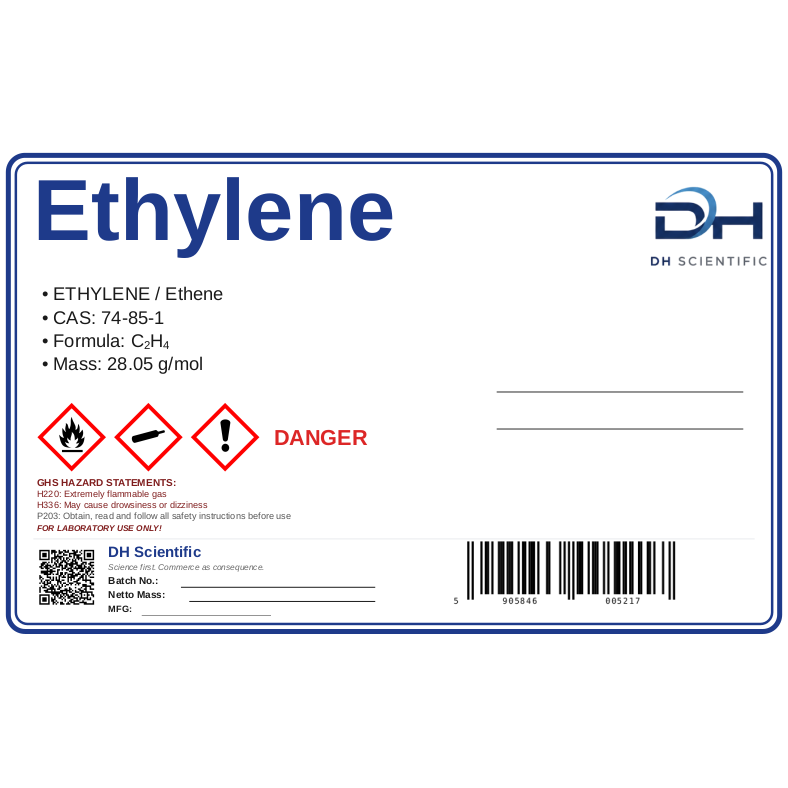


Reviews
There are no reviews yet.