Kwas octowy lodowaty (CH3COOH) CAS 64-19-7

Dodatek do żywności: E260 (EU 1333/2008) | Codex: 260
quantum satis

0,99 

🔒 Tryb demo — ta pozycja nie jest na sprzedaż.

Substancja legalna. dhscientific.com to demonstracja platformy MOL-GOD — nic nie sprzedajemy, zamówienia nie są realizowane. Substancje objęte zakazem są tu blokowane automatycznie z kanonu regulacyjnego (porównaj np. Heptachlor).

Audyt Twojej karty SDS — za darmo → · Kontakt

MolGod_SDSCARD_1
REACH 2020/878
v14 · 26.07.2026
🧬 Wizualizator molekuły 3D
Ładowanie molekuły...
Model 3D Kwas octowy, CAS 64-19-7, wzór sumaryczny C2H4O2, masa molowa 60.05 g/mol

Dane transkrybowane z rejestrów regulacyjnych i literatury fachowej, z podaniem źródła i wydania. Nie zastępują karty charakterystyki dostawcy. Pola bez zapisanego źródła oznaczone jako takie.

Przegląd chemiczny: Kwas octowyMolGod_OVERVIEW_1
Wzór sumarycznyC2H4O2[1]
Masa cząsteczkowa60.05 g/mol[1]
Temperatura topnienia16.64 °C[1][2]
Temperatura wrzenia117.9 °C (760 mmHg)[1][2]
Gęstość1.0492 g/cm³[1][2]
LogP (lipofilowość)-0.17[1]
pKa4.756
Nazwa IUPACacetic acid[1]
SMILESCC(=O)O[1]
InChIKeyQTBSBXVTEAMEQO-UHFFFAOYSA-N[1]

Synonimy: Acetic acid · Ethanoic acid

Źródła danych: PubChem (NLM/NIH), Reid, Prausnitz, Poling 4th ed. (1987)
Last updated: 2026-08-05

📚 Naukowe referencje (Chicago Author-Date) (2 źródeł)
  1. PubChem. National Center for Biotechnology Information (NIH/NLM), chemical compound database. dotyczy: Wzór sumaryczny · Masa cząsteczkowa · Temperatura topnienia · Temperatura wrzenia · Gęstość · LogP (lipofilowość) · Nazwa IUPAC · SMILES · InChIKey
  2. DECHEMA, PTB, and BAM. CHEMSAFE - Database of Evaluated Safety Characteristics for the Avoidance of Explosions. Frankfurt am Main: DECHEMA e.V.; Braunschweig/Berlin: Physikalisch-Technische Bundesanstalt and Bundesanstalt fur Materialforschung und -prufung. dotyczy: Temperatura topnienia · Temperatura wrzenia · Gęstość

BADANIA NAUKOWE

[1]PubMed2025
Che Z, Huang J, Wen S et al.. (2025). "Lactobacillus rhamnosus B16 regulates lipid metabolism homeostasis by producing acetic acid.". Journal of translational medicine. https://doi.org/10.1186/s12967-
[2]PubMed2025
Mao YQ, Song SY, Xu Q et al.. (2025). "Dietary fiber pectin supplement attenuates atherosclerosis through promoting Akkermansia-related acetic acid metabolism.". Phytomedicine : international journal
[3]PubMed2025
Lee J, Ko IG, Lee M et al.. (2025). "Adenosine A(2A) receptor agonist polydeoxyribonucleotide ameliorates acetic acid-induced ulcerative colitis via modulating PI3K/Akt/VEGF signaling pathway.". Europ
[4]PubMed2025
Khattab SMR, Katahira M, Watanabe T. (2025). "Engineering Saccharomyces cerevisiae for ethanol production from glycerol, xylose, acetic acid, and glucose.". Bioresource technology. https://doi.org/10.
[5]Europe PMC2019
et al.. (2019). "RIFM fragrance ingredient safety assessment, acetic acid, CAS Registry Number 64-19-7.". https://doi.org/10.1016/j.fct.2019.110828
📚 Naukowe referencje (Chicago Author-Date) 5 refs · 2 baz

MOLEKUŁA Bibliografia per-CAS (live z 13+ baz)

Źródła: db:pubmed (4) · db:Europe PMC (1)

  1. db:pubmed Che Z, Huang J, Wen S et al.. (2025). "Lactobacillus rhamnosus B16 regulates lipid metabolism homeostasis by producing acetic acid.". Journal of translational medicine. https://doi.org/10.1186/s12967-025-07228-1
  2. db:pubmed Mao YQ, Song SY, Xu Q et al.. (2025). "Dietary fiber pectin supplement attenuates atherosclerosis through promoting Akkermansia-related acetic acid metabolism.". Phytomedicine : international journal of phytotherapy and phytopharmacology. https://doi.org/10.1016/j.phymed.2025.157373
  3. db:pubmed Lee J, Ko IG, Lee M et al.. (2025). "Adenosine A(2A) receptor agonist polydeoxyribonucleotide ameliorates acetic acid-induced ulcerative colitis via modulating PI3K/Akt/VEGF signaling pathway.". European journal of pharmacology. https://doi.org/10.1016/j.ejphar.2025.178072
  4. db:pubmed Khattab SMR, Katahira M, Watanabe T. (2025). "Engineering Saccharomyces cerevisiae for ethanol production from glycerol, xylose, acetic acid, and glucose.". Bioresource technology. https://doi.org/10.1016/j.biortech.2025.132921
  5. db:Europe PMC et al.. (2019). "RIFM fragrance ingredient safety assessment, acetic acid, CAS Registry Number 64-19-7.". https://doi.org/10.1016/j.fct.2019.110828
📊 Właściwości fizykochemiczne

Szybki przegląd

Wzór: C2H4O2
MW: 60.05 g/mol
CAS: 64-19-7
Wygląd: Przezroczysta, bezbarwna ciecz
Zapach: Ostry

Właściwości szczegółowe

Uzupełnienie tabeli „Właściwości fizykochemiczne (baza danych)” poniżej — powtórzone wartości pokazujemy tylko raz.

Właściwość Wartość Jednostka Warunki Źródło
Współczynnik załamania światła (nD) 1.3716[1] 20 °C, D-line Reid, Prausnitz, Poling 4th ed. (1987)
🔬 Właściwości zaawansowane

Identyfikatory chemiczne

SMILES: CC(=O)O

Źródła danych: Reid, Prausnitz, Poling 4th ed. (1987) (ISBN 9780070517998)

Ostatnia aktualizacja: 2026-06-24

📚 Naukowe referencje (Chicago Author-Date) (1 źródeł)
  1. PubChem. National Center for Biotechnology Information (NIH/NLM), chemical compound database. dotyczy: Współczynnik załamania światła (nD)
Status regulacyjny substancji
Ta substancja podlega wymogom regulacyjnym: gospodarka odpadami niebezpiecznymi (BDO); transport towarow niebezpiecznych (ADR/RID/IMDG). Szczegoly w sekcji "Status regulacyjny (REACH/ECHA/CLP)" oraz na karcie SDS. Informacja regulacyjna — nie ogranicza zakupu w sklepie.
🧮 Kalkulator stechiometrycznyMolGod_STOICH_1
🔍 Identyfikatory zewnętrzneMolGod_EXTID_1
14 z 16 systemów ID88%
BazaIdentyfikatorAkcje
CAS Registry Number64-19-7Otwórz →
PubChem CID176[1]Otwórz →
InChIKeyQTBSBXVTEAMEQO-UHFFFAOYSA-N[1]Otwórz →
InChIInChI=1S/C2H4O2/c1-2(3)4/h1H3,(H,3,4)[1]
SMILESCC(=O)O[1]
EC Number200-580-7[2]Otwórz →
DrugBankDB03166Otwórz →
KEGG CompoundD00010Otwórz →
HMDBHMDB0000042Otwórz →
ChemSpider171[3]Otwórz →
MeSH UID (NLM)D019342Otwórz →
UNII (FDA)Q40Q9N063POtwórz →
NSC Number (NCI)132953Otwórz →
WikiData QIDQ47512Otwórz →

Źródła: PubChem (NIH), Wikidata SPARQL, KEGG, ChEMBL (EBI), CompTox CTX (EPA).

📚 Naukowe referencje (Chicago Author-Date) (3 źródeł)
  1. PubChem. National Center for Biotechnology Information (NIH/NLM), chemical compound database. dotyczy: PubChem CID · InChIKey · InChI · SMILES
  2. ECHA. EC Inventory — EINECS, ELINCS, NLP and List Numbers assigned under REACH. Helsinki: European Chemicals Agency. dotyczy: EC Number
  3. ChemSpider. Royal Society of Chemistry, chemical structure database. dotyczy: ChemSpider
📡 Spektroskopia — CAS 64-19-7MolGod_SPECHUB_MAIN
📊 Widma (NMR, IR, MS, UV-Vis) (1)

Dostępne typy widm: IR

Widmo IR (KBr, 4000-400 cm⁻¹)

440 punktów danych · Źródło: NIST WebBook · NIST ↗ · 📥 JCAMP-DX
🎓 Przewodnik interpretacji widm (dla studentów)
Jak czytać widmo IR
  • 3200-3600 cm⁻¹ — rozciąganie O-H (szeroki pik = wiązanie wodorowe)
  • 2850-3000 cm⁻¹ — rozciąganie C-H (sp³)
  • 1650-1750 cm⁻¹ — rozciąganie C=O (ketony, aldehydy, estry)
  • 1400-1600 cm⁻¹ — drgania pierścienia aromatycznego
  • 1000-1300 cm⁻¹ — rozciąganie C-O (etery, alkohole)
  • Brak absorpcji = brak grupy funkcyjnej → porównaj z referencją

Źródła: LibreTexts ↗, Silverstein (Spectrometric ID) ↗

📚 Naukowe referencje (Chicago Author-Date) (7 źródeł)
  1. National Institute of Standards and Technology. 2024. "NIST Chemistry WebBook, SRD 69." Gaithersburg, MD: NIST. Accessed 2025-01-01.
  2. Spectral Database for Organic Structure Determination (SDBS). 2024. National Institute of Advanced Industrial Science and Technology (AIST), Japan. Accessed 2025-01-01.
  3. Ulrich, Eldon L., Hideo Akutsu, John F. Doreleijers, Yoko Harano, Yannis E. Ioannidis, Jundong Lin, Miron Livny, et al. 2008. "BioMagResBank." Nucleic Acids Research 36 (D1): D402–D408. [DOI ↗]
  4. Horai, Hisayuki, Masanori Arita, Shigehiko Kanaya, Yoshito Nihei, Tasuku Ikeda, Kazuhiro Suwa, Yuya Ojima, et al. 2010. "MassBank: A Public Repository for Sharing Mass Spectral Data for Life Sciences." Journal of Mass Spectrometry 45 (7): 703–714. [DOI ↗]
  5. Linstrom, P.J., and W.G. Mallard, eds. 2024. NIST Chemistry WebBook, NIST Standard Reference Database Number 69. Gaithersburg, MD: National Institute of Standards and Technology.
  6. McDonald, M. Shane, Mike McAvoy, and Ajit Bhalerao. 1988. "JCAMP-DX: A Standard Form for Exchange of Infrared Spectra in Computer Readable Form." Applied Spectroscopy 42 (1): 151–162. [DOI ↗]
  7. PubChem. 2024. "PubChem Compound Database." National Library of Medicine, National Institutes of Health. Accessed 2025-01-01.
📐 Właściwości fizykochemiczne (baza danych) 23 fields MolGod Score: Pierwszorzędne
Property Value Unit Conditions Source
Temperatura topnienia 16.64 [1][2] °C 1 atm Reid, Prausnitz, Poling 4th ed. (1987)
Temperatura wrzenia 117.9 [1][2] °C 760 mmHg Reid, Prausnitz, Poling 4th ed. (1987)
Rozpuszczalność w wodzie miscible opis jakościowy (bez wartości liczbowej) Reid, Prausnitz, Poling 4th ed. (1987)
Gęstość (ρ) 1.0492 [1][2] g/cm³ 20°C Reid, Prausnitz, Poling 4th ed. (1987)
Współczynnik załamania (n_D) 1.3716 [2] 20°C, sodium D Reid, Prausnitz, Poling 4th ed. (1987)
Lepkość (η) 1.056 cP 25°C Reid, Prausnitz, Poling 4th ed. (1987)
Prężność pary 15.7 [1] mmHg 25°C Reid, Prausnitz, Poling 4th ed. (1987)
Temperatura zapłonu 39 [1][2] °C closed cup Brak źródła pierwotnego
Temperatura samozapłonu 463 °C in air Brak źródła pierwotnego
pKa₁ 4.756 Brak źródła pierwotnego
logP (oktanol/woda) -0.17 [3] Brak źródła pierwotnego
logD (pH 7) -2.7 pH 7 Reid, Prausnitz, Poling 4th ed. (1987)
Stała dielektryczna (ε) 6.2 Reid, Prausnitz, Poling 4th ed. (1987)
Napięcie powierzchniowe 27.1 mN/m Reid, Prausnitz, Poling 4th ed. (1987)
Ciepło właściwe (cp) 2.043 J/(g·K) Reid, Prausnitz, Poling 4th ed. (1987)
Przewodność cieplna (k) 0.158 W/(m·K) Reid, Prausnitz, Poling 4th ed. (1987)
Moment dipolowy (μ) 1.7 D Reid, Prausnitz, Poling 4th ed. (1987)
ΔH parowania 23.7 kJ/mol Reid, Prausnitz, Poling 4th ed. (1987)
ΔH topnienia 11.73 kJ/mol at mp Reid, Prausnitz, Poling 4th ed. (1987)
Temperatura krytyczna (Tc) 318.8 °C critical point Reid, Prausnitz, Poling 4th ed. (1987)
Ciśnienie krytyczne (Pc) 57.9 bar critical point Reid, Prausnitz, Poling 4th ed. (1987)
Czynnik acentryczny (ω) 0.447 Pitzer Reid, Prausnitz, Poling 4th ed. (1987)
Rozpuszczalność w etanolu miscible opis jakościowy (bez wartości liczbowej) Reid, Prausnitz, Poling 4th ed. (1987)
📚 Naukowe referencje (Chicago Author-Date) (3 źródeł)
  1. DECHEMA, PTB, and BAM. CHEMSAFE - Database of Evaluated Safety Characteristics for the Avoidance of Explosions. Frankfurt am Main: DECHEMA e.V.; Braunschweig/Berlin: Physikalisch-Technische Bundesanstalt and Bundesanstalt fur Materialforschung und -prufung. dotyczy: Temperatura topnienia · Temperatura wrzenia · Gęstość (ρ) · Prężność pary · Temperatura zapłonu
  2. PubChem. National Center for Biotechnology Information (NIH/NLM), chemical compound database. dotyczy: Temperatura topnienia · Temperatura wrzenia · Gęstość (ρ) · Współczynnik załamania (n_D) · Temperatura zapłonu
  3. Sangster, J. "Octanol-Water Partition Coefficients of Simple Organic Compounds." Journal of Physical and Chemical Reference Data 18, no. 3 (1989): 1111-1229. dotyczy: logP (oktanol/woda)

Wartości fizykochemiczne pochodzą z niezależnych, recenzowanych źródeł wymienionych powyżej.

🔄 Konwerter jednostek stężeń LIVE MolGod_UNITCONV_1

Wpisz stężenie Kwas octowy w dowolnej jednostce — reszta obliczy się automatycznie.

MW: 60.05 g/mol · IUPAC Gold Book ↗

⚗️ Wzory konwersji + cytacje (per formuła)
KonwersjaWzórDokładnośćŹródło
% (w/v) ↔ molarityc (mol/L) = (% × 10) / MW±0.5% rel. when density ≈ 1.0 g/mLIUPAC (2019)
millimolar ↔ molarc (mol/L) = mM × 10⁻³ExactCohen ER, Cvitaš T, Frey JG, Holmström B, Kuchitsu K, Marquardt R, Mills I, Pavese F, Quack M, Stohner J, Strauss HL, Takami M, Thor AJ (2007)
molarity (mol/L)c = n/V = (m/MW)/V±0.1% (depends on MW precision)IUPAC (2019)
parts per million (mg/L) ↔ molarityc (mol/L) = ppm / (1000 × MW); equivalently ppm = mg/L for dilute aqueous±1% (density-independent for dilute solutions)IUPAC (2019)
mg/mL ↔ molarityc (mol/L) = (mg/mL × 1000) / MW / 1000 = mg/mL / MW × 1±0.2%Cohen ER, Cvitaš T, Frey JG, Holmström B, Kuchitsu K, Marquardt R, Mills I, Pavese F, Quack M, Stohner J, Strauss HL, Takami M, Thor AJ (2007)
g/L ↔ molarityc (mol/L) = (g/L) / MW±0.1% (depends on MW precision)Cohen ER, Cvitaš T, Frey JG, Holmström B, Kuchitsu K, Marquardt R, Mills I, Pavese F, Quack M, Stohner J, Strauss HL, Takami M, Thor AJ (2007)
mmol/L ↔ molarityc (mol/L) = mmol/L × 10⁻³ExactCohen ER, Cvitaš T, Frey JG, Holmström B, Kuchitsu K, Marquardt R, Mills I, Pavese F, Quack M, Stohner J, Strauss HL, Takami M, Thor AJ (2007)
Celsius ↔ KelvinT(K) = t(°C) + 273.15±0.01 K (ITS-90 scale)BIPM (Bureau International des Poids et Mesures) (2019)
Celsius ↔ FahrenheitT(°F) = T(°C) × 9/5 + 32±0.1 °FThompson A, Taylor BN (2008)
density-corrected % ↔ molarityc (mol/L) = (%w/w × ρ × 10) / MW, ρ in g/mL±0.1% when ρ known to 3 decimalsCohen ER, Cvitaš T, Frey JG, Holmström B, Kuchitsu K, Marquardt R, Mills I, Pavese F, Quack M, Stohner J, Strauss HL, Takami M, Thor AJ (2007)
📚 Bibliografia (8 źródeł autorytatywnych)
  1. Thompson A, Taylor BN (2008). Guide for the Use of the International System of Units (SI). NIST Special Publication 811 · DOI: 10.6028/NIST.SP.811-2008
    → Primary SI standard for US scientific usage
  2. Cohen ER, Cvitaš T, Frey JG, Holmström B, Kuchitsu K, Marquardt R, Mills I, Pavese F, Quack M, Stohner J, Strauss HL, Takami M, Thor AJ (2007). Quantities, Units and Symbols in Physical Chemistry — The IUPAC Green Book. RSC Publishing, 3rd ed. · DOI: 10.1039/9781847557889 · ISBN: 978-0-85404-433-7
    → Canonical IUPAC guide for chemistry quantities/units
  3. BIPM (Bureau International des Poids et Mesures) (2019). The International System of Units (SI), 9th edition. BIPM ·
    → International SI definitions (incl. redefined kilogram 2019)
  4. ISO/IEC (2022). Quantities and units — Part 1: General. International Organization for Standardization — ISO 80000-1:2022 ·
    → General rules for physical quantities and units
  5. ISO/IEC (2019). Quantities and units — Part 9: Physical chemistry and molecular physics. International Organization for Standardization — ISO 80000-9:2019 ·
    → Concentration / molality / amount-of-substance conventions
  6. Tiesinga E, Mohr PJ, Newell DB, Taylor BN (2021). CODATA recommended values of the fundamental physical constants: 2018. Rev. Mod. Phys. 93(2):025010 · DOI: 10.1103/RevModPhys.93.025010
    → Avogadro, gas constant, molar volume (2019 SI revision)
  7. IUPAC (2019). Compendium of Chemical Terminology — the IUPAC Gold Book (online). IUPAC · DOI: 10.1351/goldbook
    → Definitions of mass fraction, molality, normality, ppm, activity
  8. Mills IM, Cvitaš T, Homann K, Kallay N, Kuchitsu K (1988). Quantities, Units and Symbols in Physical Chemistry. Blackwell Scientific Publications, 1st ed. · ISBN: 0-632-01773-5
    → Historical predecessor of IUPAC Green Book
🧪 Kreator przygotowania roztworu WIZARD MolGod_PREP_1
① Wybierz stężenie
② Objętość docelowa
③ Rozpuszczalnik

Obliczenia wg: IUPAC Gold Book ↗, Merck ↗

🔬 Przewodnik kontroli czystości Kontrola jakości

Verify reagent purity using standardized analytical methods. Select a test method below and enter your measurement results for automated calculation.

🛡️ Bezpieczeństwo — CAS 64-19-7MolGod_SAFEHUB_MAIN
Informacja o ograniczeniach danych. Informacje dotyczące bezpieczeństwa zawarte na tej stronie mają charakter informacyjny i nie zastępują pełnej karty charakterystyki (SDS). Przed użyciem produktu zapoznaj się z aktualną kartą charakterystyki producenta oraz wytycznymi GHS/CLP. Klasyfikacja CLP dotyczy czystej substancji bulk, nie preparatów handlowych.

Klasyfikacja GHS/CLP — Rozporządzenie (WE) nr 1272/2008 + UN GHS Rev. 9 (2021).

⚠️ Niebezpieczeństwo (Danger)
GHS02 — Łatwopalne
GHS02 Łatwopalne
GHS05 — Żrące
GHS05 Żrące

🚨 Zwroty wskazujące rodzaj zagrożenia (H)

  • H226 — Łatwopalna ciecz i pary
  • H314 — Powoduje poważne oparzenia skóry oraz uszkodzenia oczu

🛡 Zwroty określające środki ostrożności (P)

  • P210 — Przechowywać z dala od źródeł ciepła, gorących powierzchni, źródeł iskrzenia, otwartego ognia i innych źródeł zapłonu. Nie palić
  • P233 — Przechowywać pojemnik szczelnie zamknięty
  • P240 — Uziemić i połączyć pojemnik i sprzęt odbiorczy
  • P260 — Nie wdychać pyłu/dymu/gazu/mgły/par/rozpylonej cieczy
  • P264 — Dokładnie umyć ręce po użyciu
  • P280 — Stosować rękawice ochronne / odzież ochronną / ochronę oczu / ochronę twarzy
  • P301+P330+P331 — W PRZYPADKU POŁKNIĘCIA: Wypłukać usta; NIE wywoływać wymiotów
  • P303+P361+P353 — W PRZYPADKU KONTAKTU ZE SKÓRĄ (lub z włosami): Natychmiast zdjąć całą zanieczyszczoną odzież; Spłukać skórę pod strumieniem wody lub prysznicem
  • P304+P340 — W PRZYPADKU DOSTANIA SIĘ DO DRÓG ODDECHOWYCH: Wyprowadzić lub wynieść poszkodowanego na świeże powietrze i zapewnić mu warunki do swobodnego oddychania
  • P305+P351+P338 — W PRZYPADKU DOSTANIA SIĘ DO OCZU: Ostrożnie płukać wodą przez kilka minut; Wyjąć soczewki kontaktowe, jeżeli są i można je łatwo usunąć. Kontynuować płukanie
  • P310 — Natychmiast skontaktować się z OŚRODKIEM ZATRUĆ lub lekarzem
  • P321 — Zastosować określone leczenie
  • P363 — Wyprać zanieczyszczoną odzież przed ponownym użyciem
  • P370+P378 — W przypadku pożaru: Użyć odpowiednich środków do gaszenia
  • P403+P235 — Przechowywać w dobrze wentylowanym miejscu: Przechowywać w chłodnym miejscu
  • P405 — Przechowywać pod zamknięciem
  • P501 — Zawartość/pojemnik usuwać do upoważnionego punktu zbierania odpadów

✓ Klasyfikacja zharmonizowana zgodnie z załącznikiem VI do rozporządzenia CLP (WE) 1272/2008 (klasyfikacja urzędowa, wiążąca). Numer indeksowy: 607-002-00-6.

Referencja (Chicago): European Chemicals Agency. "acetic acid ... %, Index No. 607-002-00-6." In Table 3 of Annex VI to Regulation (EC) No 1272/2008 (CLP Regulation), 23rd Adaptation to Technical Progress (harmonised list as of 2026-07-07). Helsinki: European Chemicals Agency, 2026. https://echa.europa.eu/information-on-chemicals/annex-vi-to-clp.

Tłumaczenia: Rozporządzenie CLP (WE) 1272/2008, Załącznik III i IV. Dane: PubChem/NLM.

📚 Skonsolidowane referencje naukowe — Chicago Author-Date 10 źródeł

Referencje zebrane ze wszystkich zakładek Safety Hub. CAS: 64-19-7 · PubChem ↗

  1. Parlament Europejski i Rada UE. 2008. "Rozporządzenie (WE) nr 1272/2008 w sprawie klasyfikacji, oznakowania i pakowania substancji (CLP)." Dz.Urz. UE L 353. [↗] GHS, Regulacje
  2. United Nations Economic Commission for Europe (UNECE). 2021. "Globally Harmonized System of Classification and Labelling of Chemicals (GHS), Ninth Revised Edition." United Nations, Geneva. [↗] GHS
  3. Goldfrank, Lewis R., Robert S. Hoffman, Mary Ann Howland, et al.. 2019. "Goldfrank's Toxicologic Emergencies, 11th ed.." McGraw-Hill Education, New York. ISBN 978-1-25-985961-8. Pierwsza pomoc, Toksykologia
  4. National Institute for Occupational Safety and Health (NIOSH). 2023. "NIOSH Pocket Guide to Chemical Hazards (DHHS Publ. 2005-149)." U.S. Department of Health and Human Services / CDC, Cincinnati, OH. [↗] Pierwsza pomoc, PPE, Toksykologia
  5. European Committee for Standardization (CEN). 2016. "EN 374-1:2016 — Protective gloves against dangerous chemicals and micro-organisms." CEN, Brussels. [↗] PPE
  6. UNECE. 2023. "European Agreement Concerning the International Carriage of Dangerous Goods by Road (ADR 2025)." United Nations, Geneva. [↗] Utylizacja, Regulacje
  7. National Fire Protection Association (NFPA). 2022. "NFPA 400 — Hazardous Materials Code." NFPA, Quincy, MA. [↗] Magazynowanie
  8. Urben, P.G. (ed.). 2017. "Bretherick's Handbook of Reactive Chemical Hazards, 8th ed.." Butterworth-Heinemann / Elsevier, Oxford. [↗] Magazynowanie
  9. Ministerstwo Klimatu i Środowiska RP. 2023. "Baza danych o produktach i opakowaniach oraz o gospodarce odpadami (BDO)." Ministerstwo Klimatu i Środowiska, Warszawa. [↗] Utylizacja
  10. International Agency for Research on Cancer (IARC / WHO). 2024. "IARC Monographs on the Identification of Carcinogenic Hazards to Humans — List of Classifications." WHO, Lyon. [↗] Toksykologia

Zakładki z własnymi referencjami (Emergency, PPE, Storage, Waste) zawierają dodatkowe pozycje bibliograficzne wewnątrz swoich sekcji.

📈 Statystyka analityczna (t-test · RSD · Grubbs · Q-Dixon) ICH Q2

Wklej serię powtórzeń pomiarów (CSV lub po jednej liczbie w linii). Kalkulator policzy średnią, odchylenie, 95% CI, wykryje outliery (Grubbs + Dixon Q).

Separator: przecinek, spacja, tab, nowa linia. Min 3 pomiary.
📐 Formuły statystyczne
  • x̄ = Σxᵢ / n — średnia arytmetyczna
  • s² = Σ(xᵢ - x̄)² / (n-1) — wariancja próby
  • s = √s² — odchylenie standardowe
  • RSD% = (s / x̄) × 100% — względne odchylenie
  • CI₉₅ = x̄ ± t(0.05, n-1) × s / √n — Student's t
  • G = |xᵢ - x̄| / s — test Grubbsa
  • Q = |xsuspect - xnearest| / |xmax - xmin| — Dixon Q-test

Źródło: ICH Q2(R2) Validation of Analytical Procedures · ICH PDF ↗

🧪 Kalkulator receptur buforów UNIKALNE

Wybierz bufor z listy 20 popularnych systemów → wprowadź docelowe pH → otrzymasz dokładny przepis z masami do odważenia.

Krok 1: Wybierz system buforowy

📜 Historia przepisów (ostatnie 10)
🚚 Klasyfikacja transportowa (ADR / IATA / IMDG) UN 2789
UN Number
UN 2789
Acetic acid, glacial
Corrosive Flammable
Źródło: ADR 2025 Tabela A (adr_dangerous_goods.json)

🛣️ ADR Transport drogowy

Klasa:
8
Zagrożenia poboczne:
3
Grupa pakowania:
II
Nazwa wysyłkowa:
Acetic acid, glacial
Kod tunelowy:
(D/E)
Limited Quantity (L):
1

✈️ IATA Transport lotniczy

Klasa:
8
Instrukcje pakowania:
851 / 855
Max ilość (PAX):
1 L
Max ilość (CAO):
30 L

🚢 IMDG Transport morski

Klasa:
8
EmS Code:
F-E, S-C
📊 Walidacja metody HPLC (ICH Q2(R1)) PARTIAL

3 of 3 critical metrics need experimental data

Parametr Wartość Jednostka Kryterium ICH Q2 Status
Linearność (R²) brak danych unitless R² ≥ 0.999 (≥0.99 dla bioanalitycznej)
LOD (S/N = 3:1) brak danych ng/mL S/N ≥ 3:1 (najniższe wykrywalne stężenie)
LOQ (S/N = 10:1) brak danych ng/mL S/N ≥ 10:1 (LOQ ≥ 3×LOD typowo)
Precyzja (RSD intraday, n=6) brak danych % RSD RSD ≤ 2% (intraday) / ≤ 3% (interday) dla API
Dokładność (recovery, 3 poziomy) brak danych % (target 100±2%) Recovery 98-102% (target 100%)
Zakres liniowości brak danych np. 0.1-100 ng/mL Min. 80-120% nominalnego stężenia
Selektywność/Specyficzność brak danych qualitative Brak interferencji — pik analitu w pełni rozdzielony (Rs ≥ 2.0)
Odporność (robustness) brak danych RSD < 2% przy ±5% wariacji RSD < 2% przy małych wariacjach parametrów
Legenda: ✓ PASS ⚠ CAUTION ✗ FAIL — NO_DATA
📚 Naukowe referencje (Chicago Author-Date) — kliknij aby rozwinąć

Standardy walidacji metod analitycznych — 4 niezależne źródła (ICH + USP + AOAC + Snyder).

  1. International Conference on Harmonisation (ICH). 2005. Validation of Analytical Procedures: Text and Methodology Q2(R1). ICH Expert Working Group. [link ↗] — Gold-standard ICH guideline — accepted by EMA, FDA, MHLW, NMPA
  2. United States Pharmacopeia (USP) Convention. 2024. USP General Chapter <621> Chromatography. USP-NF 2024 ed. USP. [link ↗]
  3. AOAC International. 2016. Appendix F: Guidelines for Standard Method Performance Requirements. AOAC INTERNATIONAL. [link ↗] — AOAC SMPR — alternative to ICH Q2 for food/dietary supplements
  4. Snyder, Lloyd R., Joseph J. Kirkland, and John W. Dolan. 2010. Introduction to Modern Liquid Chromatography. 3rd ed. John Wiley & Sons. ISBN 978-0-470-16754-0. https://doi.org/10.1002/9780470508183 [link ↗] — Industry standard textbook — Chapter 11 covers method validation
  5. Snyder, L. R., J. J. Kirkland, and J. L. Glajch. 1997. Practical HPLC Method Development. 2nd ed. Wiley. ISBN 978-0-471-00703-6. — Classic method-development reference (DryLab heritage).
  6. Rozet, Eric, et al.. 2013. Analysis of recent pharmaceutical regulatory documents on analytical method validation. https://doi.org/10.1016/j.chroma.2007.03.111 [link ↗] — Comparison of FDA / EMA / ICH validation expectations — used for ICH Q2(R1) interpretation.
  7. Heyden, Yvan Vander, et al.. 2009. Robustness of pharmaceutical liquid chromatographic methods. https://doi.org/10.1016/j.jchromb.2008.10.052 [link ↗] — Plackett-Burman design for robustness — basis of ICH Q2 §3.7.
  8. Dong, Michael W.. 2019. HPLC and UHPLC for Practicing Scientists. 2nd ed. Wiley. ISBN 978-1-119-31378-3. https://doi.org/10.1002/9781119313793 [link ↗] — Modern (UHPLC) update of validation chapter — practical RSD/LOD examples.
  9. Meyer, Veronika R.. 2010. Practical High-Performance Liquid Chromatography. 5th ed. Wiley. ISBN 978-0-470-68218-0. — European pharmacopeial perspective — complements USP/AOAC.
  10. Kazakevich, Yuri V., and Rosario LoBrutto, eds.. 2007. HPLC for Pharmaceutical Scientists. Wiley-Interscience. ISBN 978-0-471-68162-4. https://doi.org/10.1002/9780470087954 [link ↗] — Pharma-focused validation case studies (specificity, robustness).
  11. European Medicines Agency (EMA). 2011. Guideline on bioanalytical method validation EMEA/CHMP/EWP/192217/2009. EMA Committee for Medicinal Products for Human Use. [link ↗] — EMA bioanalytical companion to ICH Q2(R1) for clinical samples.

· ⚠ Ostrzeżenia regulacyjne SVHC/REACH ↑

🔧 Troubleshooting HPLC — drzewo decyzyjne 6 typowych problemów

Diagnostyka 6 najczęstszych problemów HPLC z drzewem decyzyjnym (5 kroków per problem). Źródło: Snyder/Kirkland/Dolan 3rd ed. Chapter 17 + LCGC LC Troubleshooting columns 1989-2024.

Poszerzone piki (broad peaks) medium

Objaw: Wszystkie piki na chromatogramie są szersze niż oczekiwane (FWHM > 2× normy)

🔍 Drzewo diagnostyczne:
  1. 1. Sprawdź czy wszystkie piki są poszerzone czy tylko niektóre
    → TAK: Wszystkie → problem instrumentalny (kolumna lub system)
    → NIE: Tylko niektóre → problem chemii (interakcja z kolumną dla konkretnych analitów)
  2. 2. Wymień kolumnę testową — czy problem znika?
    → TAK: KOLUMNA zużyta — packing zniszczony, void w pierwszych mm. Wymień.
    → NIE: Problem w systemie LC
  3. 3. Sprawdź volume martwy (dead volume) — pętla injekcyjna, połączenia, detektor
    → TAK: Pętla > 100 µL dla 4.6 mm kolumny lub luźne połączenia → wymień ferrules, krócej rurki
    → NIE: Continue diagnostyka
  4. 4. Test temperatury: zwiększ kolumnę z 25°C do 40°C
    → TAK: Piki węższe → kinetyka transferu masy zbyt wolna (zwiększ T)
    → NIE: Continue
  5. 5. Sprawdź flow rate vs optymalna van Deemter dla tej kolumny
    → TAK: Optimum dla 4.6mm/5µm = 1.0 mL/min, dla 2.1mm/3µm = 0.4 mL/min
    → NIE: Continue
⚠️ Typowe przyczyny:
  • Kolumna zużyta (>2000 injekcji bez guard)
  • Volume martwy systemu > 100 µL (zła pętla, długie rurki, luźne ferrules)
  • Temperatura zbyt niska (kinetyka transferu masy)
  • Flow rate poza optymalnym van Deemter
  • Próbka rozpuszczalnik silniejszy niż faza A
✓ Fixy:
  • ✓ Wymień kolumnę (gdy >2000 injekcji)
  • ✓ Sprawdź wszystkie połączenia — przewody jak najkrócej
  • ✓ Zwiększ T kolumny do 40°C (jeśli substancja stabilna)
  • ✓ Zmniejsz flow do optimum van Deemter
  • ✓ Rozpuść próbkę w fazie A (nie w pure organic)
Ogonowanie pików (tailing, T > 1.5) high

Objaw: Piki mają wydłużony "ogon" po stronie późnego eluowania (asymetria T = b/a > 1.5 wg USP)

🔍 Drzewo diagnostyczne:
  1. 1. Czy substancja zawiera grupy zasadowe (amino, pirydyna)?
    → TAK: Tak → silanowe interakcje! Dodaj 0.1% TFA lub 5-10 mM TEA do fazy A.
    → NIE: Continue
  2. 2. Sprawdź pH fazy mobilnej vs pKa substancji
    → TAK: pH = pKa ± 1 → częściowa jonizacja, peak split. Idź pH ≥ 2 jednostki od pKa.
    → NIE: Continue
  3. 3. Sprawdź wiek kolumny (>1500 injekcji?)
    → TAK: Tak → silanole odsłonięte (column bleed). Wymień kolumnę z higher endcapping (XTerra, Symmetry).
    → NIE: Continue
  4. 4. Czy próbka zawiera metale (Fe, Cu z fiolek szklanych)?
    → TAK: Tak → użyj fiolek bezbarwnych typu II lub PFA. EDTA 0.1mM do próbki.
    → NIE: Continue
⚠️ Typowe przyczyny:
  • Silanowe interakcje (zasadowy analit + silikażel free silanols)
  • pH na granicy pKa analitu (peak split)
  • Stara kolumna (column bleed, high silanol activity)
  • Metale w próbce (chelatacja → tailing)
  • Overload kolumny (>50 µg na 4.6mm column)
✓ Fixy:
  • ✓ Dodaj 0.1% TFA (UV) lub 0.1% formic acid (LC-MS) do fazy A
  • ✓ Wybierz kolumnę z high-purity endcapping: Waters XBridge BEH, Phenomenex Kinetex
  • ✓ Pracuj pH ≥ 2 jednostki od pKa
  • ✓ EDTA 0.1mM do próbki (chelatacja Fe/Cu)
  • ✓ Zmniejsz objętość injekcji ≤ 20 µL dla 4.6mm column
Dryf linii bazowej (baseline drift) medium

Objaw: Linia bazowa systematycznie rośnie lub maleje przez >5 minut

🔍 Drzewo diagnostyczne:
  1. 1. Czy używasz gradientu (B% rośnie)?
    → TAK: Tak → różny absorption faz A vs B przy dλ. Solvent change UV-cutoff. Sprawdź % organic UV-absorbance.
    → NIE: Continue (isokratyczny)
  2. 2. Sprawdź temperaturę kolumny — czy stabilna ±0.5°C?
    → TAK: Tak (stabilna) → continue
    → NIE: Niestabilna → włącz column thermostat (>25°C kontrolowane)
  3. 3. Test: wyłącz autosampler, jedź sam pump+kolumna+detektor
    → TAK: Drift znika → autosampler kontaminacja (czyszczenie igły, septum)
    → NIE: Continue
  4. 4. Sprawdź wiek lampy (D2 dla UV)
    → TAK: Tak (>1500 godzin) → wymień lampę
    → NIE: Continue
⚠️ Typowe przyczyny:
  • Gradient elution z różnym UV-cutoff faz
  • Niestabilna T kolumny
  • Autosampler kontaminacja igły/septum
  • Lampa UV stara (>1500h)
  • Detektor flow cell zabrudzona
  • Kolumna nie ekwilibrowana (<10 column volumes)
✓ Fixy:
  • ✓ Pre-equilibrate kolumnę 10-15 column volumes przy 100% A
  • ✓ Termostat kolumny on, T 30-40°C stabilne
  • ✓ Czyść flow cell detector roztworem 50:50 ACN:H2O
  • ✓ Wymień lampę D2 jeśli >1500h
  • ✓ Użyj baseline subtraction (chromeleon, Empower native function)
Brak piku / utracony pik (no peak) critical

Objaw: Spodziewany pik analitu nie pojawia się na chromatogramie

🔍 Drzewo diagnostyczne:
  1. 1. Czy injekcja faktycznie się wykonała?
    → TAK: Sprawdź log autosamplera, ciśnienie pump (powinno spadać przy injekcji)
    → NIE: Autosampler problem → sprawdź pętlę, igłę, próbkę w fiolce
  2. 2. Czy próbka jest w fiolce (objętość prawidłowa, nie wypiła)?
    → TAK: Continue
    → NIE: Brak próbki — re-pipetuj
  3. 3. Stabilność próbki — przygotowana >24h temu?
    → TAK: Tak → degradacja. Re-prepare świeżą próbkę.
    → NIE: Continue
  4. 4. Sprawdź długość fali detekcji vs λmax substancji
    → TAK: Detekcja przy λ NIE odpowiada λmax → brak sygnału. Skanuj DAD 200-400nm.
    → NIE: Continue
  5. 5. Test: injekcj pure standard (znanego stężenia, świeży)
    → TAK: Standard daje pik → problem z próbką (matryca, derywatyzacja)
    → NIE: Brak piku też ze standardem → problem systemu (kolumna, faza, gradient)
⚠️ Typowe przyczyny:
  • Próbka nie wzięta z fiolki (autosampler bug)
  • Próbka zdegradowana (>24h pH/temp/światło)
  • Detekcja przy złej długości fali
  • Faza ruchoma zła (np. zapomniany TFA)
  • Kolumna odwrócona / niewłaściwa faza stacjonarna
  • Substancja eluuje z front (V0) → niezatrzymywana, niewidoczna
✓ Fixy:
  • ✓ Re-prepare świeżą próbkę z exact protocolu
  • ✓ Skan UV-Vis DAD 200-400nm + szukanie λmax
  • ✓ Sprawdź skład fazy mobilnej — TFA dodany?
  • ✓ Test reverse direction kolumny (ostrożnie!)
  • ✓ Dla retention <1 min — zmień % B do niższego, MeOH instead of ACN
  • ✓ Sprawdź oczekiwany czas retencji w bazie metod wtyczki
Ciśnienie zbyt wysokie (pressure too high) critical

Objaw: Ciśnienie pomp > 80% maxa kolumny lub system shutdown z high-pressure error

🔍 Drzewo diagnostyczne:
  1. 1. Sprawdź czy kolumna jest podłączona prawidłowo (kierunek strzałki)
    → TAK: OK
    → NIE: Kolumna odwrócona → odwróć (nigdy nie pracować "do tyłu")
  2. 2. Test: wyłącz kolumnę z systemu, jedź sam pump+detektor
    → TAK: Ciśnienie spada do <50 bar → problem w kolumnie (zatkana)
    → NIE: Ciśnienie pozostaje wysokie → in-line filter zatkany, frit zabrudzony
  3. 3. Sprawdź pre-column filter (in-line frit)
    → TAK: Zabrudzony brunatny → wymień
    → NIE: Continue
  4. 4. Wstecz wymyj kolumnę 50:50 ACN:H2O bez kolumny — czy znika?
    → TAK: Particles stuck w pierwszym mm — flush 30 min może odzyskać
    → NIE: Wymień kolumnę
⚠️ Typowe przyczyny:
  • In-line filter (frit) zatkany cząstkami
  • Buffer salt out (precipitation w wysokim %B)
  • Próbka zawiera zawiesinę (filtruj 0.22 µm przed injekcją)
  • Kolumna zatkana (column bed compaction)
  • Gradient z fazą buffer + dużo organic → salt precipitation
✓ Fixy:
  • ✓ ZAWSZE filtruj próbkę 0.22 µm PVDF przed injekcją
  • ✓ Wymień in-line filter co 100 injekcji (lub gdy ciśnienie wzrasta >20%)
  • ✓ NIE używaj >20mM phosphate buffer + >70% ACN (sól wytrąca)
  • ✓ Flush kolumnę 30 min 50:50 ACN:H2O w odwrotnym kierunku (gdy producent dopuszcza)
  • ✓ Pre-column 4×3mm dla ochrony main column
Piki widmowe (ghost peaks) high

Objaw: Niewyjaśnione piki na chromatogramie nieobecne w kalibracji

🔍 Drzewo diagnostyczne:
  1. 1. Test: blank injection (czysty rozp. próbki)
    → TAK: Pojawia się ghost → kontaminacja systemu lub eluentów
    → NIE: Pojawia się tylko z próbką → matryca
  2. 2. Czy ghost rośnie z gradientem (eluuje przy wysokim %B)?
    → TAK: Tak → zatłoczona kolumna lub strong-retained from previous run
    → NIE: Niezależny od gradientu → autosampler carryover
  3. 3. Increase carryover wash (between injections)
    → TAK: Pomaga → carryover był winny. Mocniejszy wash protocol.
    → NIE: Continue
  4. 4. Pure water injection — czy jest pik?
    → TAK: Tak → kontaminacja water source (organic z systemu DI)
    → NIE: Continue
⚠️ Typowe przyczyny:
  • Carryover w autosampler igle/pętli
  • Kontaminacja eluentu (nawet HPLC-grade)
  • Strong-retained components z poprzednich biegów
  • Plastik w fiolkach (phthalates, PEG z kapturków)
  • Water DI niedoczyszczone
✓ Fixy:
  • ✓ Wzmocnij wash protocol: 100% B → 100% A → 50:50 (3 cycles)
  • ✓ Strong wash: DMSO 100% lub MeOH 100% przed kalibracją
  • ✓ Filtruj eluenty 0.22 µm PTFE w razie wątpliwości
  • ✓ Używaj amber glass + Teflon-line caps dla próbek
  • ✓ Periodic gradient ramp do 100% B przez 10 min (clean-out)
📚 Naukowe referencje (Chicago Author-Date) — kliknij aby rozwinąć
  1. Snyder, Lloyd R., Joseph J. Kirkland, and John W. Dolan. 2010. Introduction to Modern Liquid Chromatography. 3rd ed. John Wiley & Sons. Chapter 17 (Troubleshooting) pp. 559-616. ISBN 978-0-470-16754-0. https://doi.org/10.1002/9780470508183 [link ↗]
  2. Dolan, John W.. 2014. LC Troubleshooting (monthly column 1989-2024). LCGC North America. [link ↗] — John Dolan 35-letnia seria miesięcznych artykułów problemowych
  3. Kromidas, Stavros. 2017. HPLC Made to Measure: A Practical Handbook for Optimization. 2nd ed. Wiley-VCH. ISBN 978-3-527-31377-1. — Praktyczny przewodnik problem-solving dla labs analitycznych
  4. Dolan, John W.. 2013. When to Modify Method Conditions. 192-199. [link ↗] — Decision flow for changing flow rate / temperature / %B vs swapping columns.
  5. Dong, Michael W.. 2019. HPLC and UHPLC for Practicing Scientists. 2nd ed. Wiley. ISBN 978-1-119-31378-3. https://doi.org/10.1002/9781119313793 [link ↗] — Chapter 9 covers troubleshooting modern UHPLC systems (sub-2 µm particles).
  6. Meyer, Veronika R.. 2010. Practical High-Performance Liquid Chromatography. 5th ed. Wiley. ISBN 978-0-470-68218-0. — Solid step-by-step problem isolation chapter (eluents, columns, instruments).
  7. Snyder, L. R., J. J. Kirkland, and J. L. Glajch. 1997. Practical HPLC Method Development. 2nd ed. Wiley. ISBN 978-0-471-00703-6. — Method-development companion volume with troubleshooting cross-refs.
  8. Carr, Peter W.. 2009. The new physical chemistry of HPLC. 1764-1772. https://doi.org/10.1016/j.chroma.2008.11.094 [link ↗] — Theoretical basis for diagnosing efficiency losses (mass-transfer, eddy diffusion).
  9. Heyden, Yvan Vander, et al.. 2009. Robustness of pharmaceutical liquid chromatographic methods. 2120-2129. https://doi.org/10.1016/j.jchromb.2008.10.052 [link ↗] — How to diagnose method failures vs. system failures (Plackett-Burman).
  10. Engelhardt, Heinz. 2014. 100 Years of Chromatography. 2nd ed. Wiley-VCH. ISBN 978-3-527-33473-5. — Historical context for ghost-peak phenomenology (silica chemistry).
🧪 Rozpuszczalność i kompatybilność z solwentami MolGod_SOLUB_1
Molekuła
Kwas octowy
Wzór
C2H4O2
logP (XLogP3)
-0.17
Masa (g/mol)
60.05
Polarność
Hydrofilowa (polarna)

⚠️ Estymacja HSP (literatura / group contribution). Dane orientacyjne — nie zastępują badań eksperymentalnych.

Ra < R₀ = dobra mieszalność · Ra < 1,5×R₀ = graniczna · powyżej = słaba (R₀ — promień sfery Hansena tej molekuły) Dla tej molekuły R₀ = 8.

Solwent Kompat. Ra Wizual GC-MS HPLC Zastosowania Referencje
Water (H₂O)miesza się30.0
✗ NieA (aqueous) (RP)
buforhodowla komórkowaanalitycznyekstrakcja (hydrofilna)
Ethanol (EtOH)+ Dobra6.5
✗ NieA/B modifier (RP/NP)
ekstrakcjaspektroskopia (UV-Vis)syntezamodyfikator HPLC
Methanol (MeOH)~ Śr.9.9
✗ NieA/B (RP) (RP)
HPLC (eluent)LC-MSKarl FischerUV-transparent do 205 nm
Acetone+ Dobra7.2
✗ NieB modifier (NP)
GC headspacekrystalizacjaodtłuszczaniesynteza
Acetonitrile (ACN)− Słaba12.5
✗ NieB (RP) (RP)
eluent HPLC (złoty standard)LC-MS (wolny cut-off UV 190 nm)analiza peptydów
DMSO~ Śr.11.9
✗ NieN/A (N/A)
NMR (d6-DMSO)biologia komórkowa (krioprezerwacja)dostarczanie lekówsynteza
THF+ Dobra7.5
✗ NieB (NP) (NP)
GPC/SEC (analiza polimerów)synteza Grignardametaloorganiczne
DCM (CH₂Cl₂)~ Śr.10.6
✓ TakB (NP) (NP)
ekstrakcjaNP-HPLCGC-MSkrystalizacja (anty-solwent)
Chloroform (CHCl₃)~ Śr.11.3
✓ TakN/A (toxic) (N/A)
NMR (CDCl3)ekstrakcja lipidów (metoda Folcha)NP-TLC
Hexane− Słaba15.7
✓ TakA (NP) (NP)
NP-HPLCekstrakcja olejów (lipidy)GC-MSTLC (NP)
Toluene− Słaba15.0
✓ TakB (NP) (NP)
NMR (d8-toluene)syntezasuszenie azeotropowe Dean-Stark
📚 Naukowe referencje dla solwentów (Chicago Author-Date) — kliknij aby rozwinąć

11 solwentów · 54 pełnych cytowań (NIST/CRC/IARC/Hansen/Reichardt/Smallwood/Wypych/Armarego/Snyder/GESTIS) — poniżej.

Water (H₂O)
  1. NIST — NIST Chemistry WebBook — Water (CAS 7732-18-5)
  2. CRC — CRC Handbook of Chemistry and Physics, 104th ed., Sec. 8 (Properties of Water)
  3. IAPWS — IAPWS Release on Static Dielectric Constant of Water
  4. Reichardt 2011 — Solvents and Solvent Effects in Organic Chemistry
  5. GESTIS — GESTIS Substance Database — Water
Ethanol (EtOH)
  1. NIST — NIST Chemistry WebBook — Ethanol (CAS 64-17-5)
  2. CRC — CRC Handbook — Ethanol physical constants
  3. Snyder & Kirkland — Modern Liquid Chromatography — Ethanol eluotropic
  4. Smallwood — Handbook of Organic Solvent Properties — Ethanol
  5. GESTIS — GESTIS Substance Database — Ethanol
Methanol (MeOH)
  1. NIST — NIST Chemistry WebBook — Methanol (CAS 67-56-1)
  2. CRC — CRC Handbook — Methanol physical constants
  3. Snyder & Kirkland — Modern Liquid Chromatography — MeOH eluotropic, eo=0.95
  4. GESTIS — GESTIS Substance Database — Methanol
Acetone
  1. NIST — NIST Chemistry WebBook — Acetone (CAS 67-64-1)
  2. CRC — CRC Handbook — Acetone physical & thermodynamic constants
  3. Hansen 2007 — Hansen Solubility Parameters — Acetone (dD=15.5, dP=10.4, dH=7.0)
  4. Smallwood — Handbook of Organic Solvent Properties — Acetone
  5. GESTIS — GESTIS Substance Database — Acetone
Acetonitrile (ACN)
  1. NIST — NIST Chemistry WebBook — Acetonitrile (CAS 75-05-8)
  2. CRC — CRC Handbook — Acetonitrile constants
  3. Snyder & Kirkland — Modern Liquid Chromatography — ACN gold-standard HPLC eluent
  4. Reichardt 2011 — Solvents and Solvent Effects — ACN dipolar aprotic
  5. GESTIS — GESTIS Substance Database — Acetonitrile
DMSO
  1. NIST — NIST Chemistry WebBook — DMSO (CAS 67-68-5)
  2. Wypych 2019 — Handbook of Solvents Vol. 1 — DMSO comprehensive properties
  3. Hansen 2007 — HSP — DMSO (dD=18.4, dP=16.4, dH=10.2)
  4. Reichardt 2011 — Solvents and Solvent Effects — DMSO E_T(30)=45.1, dipolar aprotic
  5. GESTIS — GESTIS Substance Database — DMSO
THF
  1. NIST — NIST Chemistry WebBook — THF (CAS 109-99-9)
  2. Armarego 2009 — Purification of Laboratory Chemicals — THF drying & peroxide test
  3. Hansen 2007 — Hansen Solubility Parameters — THF (dD=16.8, dP=5.7, dH=8.0)
  4. Smallwood — Handbook of Organic Solvent Properties — THF
  5. GESTIS — GESTIS Substance Database — Tetrahydrofuran
DCM (CH₂Cl₂)
  1. NIST — NIST Chemistry WebBook — Dichloromethane (CAS 75-09-2)
  2. IARC 71 — IARC Monograph 71 — DCM (Group 2A carcinogen)
  3. Hansen 2007 — Hansen Solubility Parameters — DCM (dD=18.2, dP=6.3, dH=6.1)
  4. Reichardt 2011 — Solvents and Solvent Effects — DCM polarity index
  5. GESTIS — GESTIS Substance Database — Dichloromethane
Chloroform (CHCl₃)
  1. NIST — NIST Chemistry WebBook — Chloroform (CAS 67-66-3)
  2. IARC 73 — IARC Monograph 73 — Chloroform (Group 2B carcinogen)
  3. Hansen 2007 — Hansen Solubility Parameters — CHCl3 (dD=17.8, dP=3.1, dH=5.7)
  4. Reichardt 2011 — Solvents and Solvent Effects — CHCl3 H-bond donor strength
  5. GESTIS — GESTIS Substance Database — Chloroform
n-Hexane
  1. NIST — NIST Chemistry WebBook — n-Hexane (CAS 110-54-3)
  2. ATSDR n-Hexane — ATSDR Toxicological Profile for n-Hexane — neuropatia obwodowa (n-Heksan NIE jest kancerogenem IARC)
  3. Hansen 2007 — Hansen Solubility Parameters — n-Hexane (dD=14.9, dP=0, dH=0)
  4. Snyder & Kirkland — Modern Liquid Chromatography — n-Hexane NP standard, eo=0.00
  5. GESTIS — GESTIS Substance Database — n-Hexane
Toluene
  1. NIST — NIST Chemistry WebBook — Toluene (CAS 108-88-3)
  2. IARC 71 — IARC Monograph 71 — Toluene
  3. Hansen 2007 — Hansen Solubility Parameters — Toluene (dD=18.0, dP=1.4, dH=2.0)
  4. Smallwood — Handbook of Organic Solvent Properties — Toluene
  5. GESTIS — GESTIS Substance Database — Toluene
Teoria rozpuszczalności (zastosowane w przewidywaniu kompatybilności):
  1. Yalkowsky, Samuel H., and Shri C. Valvani. 1980. "Solubility and Partitioning I: Solubility of Nonelectrolytes in Water." Journal of Pharmaceutical Sciences 69 (8): 912–922. https://doi.org/10.1002/jps.2600690814 — General Solubility Equation (GSE): logS = 0.5 − logP − 0.01(MP−25).
  2. Hansen, Charles M. 2007. Hansen Solubility Parameters: A User's Handbook. 2nd ed. CRC Press. https://doi.org/10.1201/9781420006834 — HSP triplet (dD, dP, dH) + wzór Ra.
  3. Stefanis, E., and C. Panayiotou. 2008. "Prediction of Hansen Solubility Parameters with a New Group-Contribution Method." Int J Thermophys 29: 568–585. https://doi.org/10.1007/s10765-008-0415-z
  4. Reichardt, Christian, and Thomas Welton. 2011. Solvents and Solvent Effects in Organic Chemistry. 4th ed. Wiley-VCH. https://doi.org/10.1002/9783527632220 — E_T(30) polarity scale, solwatochromia.
  5. Snyder, Lloyd R., Joseph J. Kirkland, and John W. Dolan. 2010. Introduction to Modern Liquid Chromatography. 3rd ed. Wiley. https://doi.org/10.1002/9780470508183 — Eluotropic series, polarity index.
  6. Van Krevelen, D. W., and K. Te Nijenhuis. 2009. Properties of Polymers. 4th ed. Elsevier. https://doi.org/10.1016/B978-0-08-054819-7.X0001-5 — Hoftyzer–Van Krevelen group contribution dla dD/dP/dH z SMILES.
  7. Marcus, Yizhak. 1998. The Properties of Solvents. Wiley Series in Solution Chemistry, Vol. 4. ISBN 9780471983699 — Kompletny tabularny zestaw 250+ rozpuszczalników (ε, μ, donicity, acceptor numbers).
  8. PubChem Compound Database — CAS 64-19-7 lookup ↗ — logP (XLogP3), water solubility experimental + predicted.

Kompletna bibliografia w akordeonie REFERENCJE (na dole strony) — Chicago Manual of Style 17th ed., Author-Date.

🧮 Kalkulatory laboratoryjne (8) MolGod_LABCALC_1
Rozcieńczenie (C₁V₁=C₂V₂)
Molarność (M=n/V)
pH Bufor (Henderson-Hasselbalch)
Beer-Lambert (A=εcl)
Masa → Mole
Stężenie % → M
ppm → mg/L
Temperatura C↔F↔K

Formuły zweryfikowane: IUPAC Gold Book ↗, DOI ↗

📊 Bazy widm spektroskopowych MolGod_SPECDB_3
📋 Generator protokołu laboratoryjnego MolGod_PROTOCOL_1

Protokół wygenerowany na podstawie: GHS SDS, Aldrich Lab Guide ↗

🏷️ Generator etykiety (QR) MolGod_LABEL_1
Kwas octowy lodowaty• Acetic acid / Ethanoic acid• CAS: 64-19-7• Wzór: C2H4O2• Masa: 60.05 g/molNIEBEZPIECZEŃSTWOZwroty wskazujące rodzaj zagrożenia (H):H226: Łatwopalna ciecz i paryH314: Powoduje poważne oparzenia skóry oraz uszkodzenia oczuP301+P330+P331 P303+P361+P353 P304+P340 P305+P351+P338 P370+P378 P310 P321 P363P280 P501 P403+P235 P405 P210 P233 P240 P260 P264DH ScientificScience first. Commerce as consequence.Nr partii: Masa netto: Data prod.:
🧪 Asystent przygotowania roztworu (Smart Prep) MolGod_PREP_2

Wpisz co chcesz przygotować — wygeneruję SOP

Przykłady poniżej — kliknij żeby wstawić:
Gotowe przepisy:
📚 Przegląd literatury naukowej — CAS 64-19-7MolGod_LITHUB_MAIN
⭐ Najważniejsze odkrycia (literatura naukowa) 6 publikacji
🏆 CAS 64-19-7 — multi-criteria ranking (W12): 30% cytowania · 20% recency · 20% topic · 15% historical · 15% open access.
  1. #1
    Kolbe, H. (1845) · Annalen der Chemie und Pharmacie
    Dlaczego ważne: Must-cite (kanon) · 280 cytowań · praca historyczna (1845)
    SCORE 10.4 Historyczna MUST-CITE Cytowań: 280 DOI ↗
  2. #2
    Yoneda, N.; Kusano, S.; Yasui, M.; Pujado, P.; Wilcher, S. (2014) · Applied Catalysis A: General
    Dlaczego ważne: Must-cite (kanon) · 380 cytowań
    SCORE 9.74 Przemysł MUST-CITE Cytowań: 380 DOI ↗
  3. #3
    Cheung, H.; Tanke, R.S.; Torrence, G.P. (2003) · Ullmann's Encyclopedia of Industrial Chemistry
    Dlaczego ważne: Must-cite (kanon) · 420 cytowań
    SCORE 8.67 Przemysł MUST-CITE Cytowań: 420 DOI ↗
  4. #4
    Rao, P.S.; Gerald, B. (2016) · Comprehensive Reviews in Food Science and Food Safety
    Dlaczego ważne: Must-cite (kanon) · 140 cytowań · przegląd
    SCORE 8.25 Przegląd MUST-CITE Cytowań: 140 DOI ↗
  5. #5
    Mato, S.; Suárez-Quiñones, T.; Centeno, M.A.; Odriozola, J.A. (2008) · Food Chemistry
    Dlaczego ważne: Must-cite (kanon) · 140 cytowań
    SCORE 8.05 Analityka MUST-CITE Cytowań: 140 DOI ↗
  6. #6
    Frenzel, T.; Miller, A.; Engel, K.H. (2010) · Journal of Agricultural and Food Chemistry
    Dlaczego ważne: Must-cite (kanon) · 140 cytowań
    SCORE 6.45 Analityka MUST-CITE Cytowań: 140 DOI ↗
📈 Gradient HPLC — optymalizator (LSS) SZABLON

Gradient oparty na PubChem XLogP3 + LSS (Snyder et al. 2010, ch. 9).

  • Kolumna: C18
  • Bufor: phosphate
  • Przepływ: 1 mL/min
  • logP: -0.2 (PubChem XLogP3)
  • Rampa: 5% → 95% B, 10 min
  • Całkowity czas analizy: 23 min
t (min) %A %B flow (mL/min) Komentarz
0 95 5 1 start (równowaga)
2 95 5 1 koniec hold init
12 5 95 1 koniec rampy LSS
17 5 95 1 mycie kolumny
18 95 5 1 powrót do init
23 95 5 1 reekwilibracja
📚 Naukowe referencje (Chicago Author-Date)
  1. Snyder, Lloyd R., John W. Dolan, and Joseph J. Kirkland. 2010. Introduction to Modern Liquid Chromatography. Wiley. — Chapter 9 — gradient elution, LSS theory (cited as Snyder et al. 2010 in tool description).
  2. Schoenmakers, Peter J. 1986. Optimization of Chromatographic Selectivity: A Guide to Method Development. Elsevier. — Numerical optimization of gradient programs.
  3. Snyder, L. R., and J. W. Dolan. 2007. High-Performance Gradient Elution: The Practical Application of the Linear-Solvent-Strength Model. Wiley. — Foundational LSS reference for the %B_init = 5 + 8·logP heuristic implemented here.
  4. Nikitas, Pavlos, and Adrian Pappa-Louisi. 2009. "Retention models for isocratic and gradient elution in reversed-phase liquid chromatography." Journal of Chromatography A 1216: 1737-1755. [DOI ↗] — Modern review of gradient retention models — basis for non-LSS extensions.
  5. Carr, Peter W.. 2009. "The new physical chemistry of HPLC." Journal of Chromatography A 1216: 1764-1772. [DOI ↗]
  6. Dong, Michael W. 2019. HPLC and UHPLC for Practicing Scientists. Wiley. https://doi.org/10.1002/9781119313793. — Modern UHPLC gradient programming, sub-2 µm scaling rules.
  7. Wu, Naijun, and Anton M. Clausen. 2007. "Fundamental and practical aspects of ultrahigh pressure liquid chromatography for fast separations." Journal of Separation Science 30: 1167-1182. [DOI ↗]
  8. Stoll, Dwight R., and Peter W. Carr. 2017. "Two-Dimensional Liquid Chromatography: A State of the Art Tutorial." Analytical Chemistry 89: 519-531. [DOI ↗] — Reference for orthogonal gradient design (2D-LC second dimension).
  9. Dolan, John W.. 2013. "When to Modify Method Conditions." LCGC North America 31: 192-199.
  10. Meyer, Veronika R. 2010. Practical High-Performance Liquid Chromatography. Wiley. — Chapter 7 — practical gradient design with isokratyczny scouting.

REST: /wp-json/molgod/v1/hplc/gradient/64-19-7

🌈 Detektor + długość fali (UV/Vis) 208 nm
ZwiązekAcetic acid
λmax208 nm
λmin195 nm
εmax (M⁻¹·cm⁻¹)32
Rozpuszczalnik (referencja)water
Sugerowana λ208 nm
Detektor zalecanyELSD
AlternatywyRID, MS, CAD

Źródło danych: Pavia 2014 (n→π*)

⚠ Kompatybilność z mobilną fazą

  • warning λ=208 nm w pobliżu cutoff Methanol (205 nm) — możliwy szum bazowy i drift, użyj wyższej czystości reagentów.
  • critical λ=208 nm < UV cutoff Ethanol (210 nm) — solwent absorbuje, pomiar niemożliwy.
  • warning λ=208 nm w pobliżu cutoff n-Hexane (200 nm) — możliwy szum bazowy i drift, użyj wyższej czystości reagentów.
  • critical λ=208 nm < UV cutoff Tetrahydrofuran (THF) (220 nm) — solwent absorbuje, pomiar niemożliwy.
  • critical λ=208 nm < UV cutoff Diethyl ether (218 nm) — solwent absorbuje, pomiar niemożliwy.
  • critical λ=208 nm < UV cutoff Dichloromethane (232 nm) — solwent absorbuje, pomiar niemożliwy.
  • critical λ=208 nm < UV cutoff Acetic acid (1%) (230 nm) — solwent absorbuje, pomiar niemożliwy.
  • critical λ=208 nm < UV cutoff 0.1% TFA in water (210 nm) — solwent absorbuje, pomiar niemożliwy.
  • warning λ=208 nm w pobliżu cutoff 20 mM phosphate pH 7 (200 nm) — możliwy szum bazowy i drift, użyj wyższej czystości reagentów.
  • advisory Praca poniżej 220 nm wymaga: solwentów HPLC-grade, odgazowania mobilnej fazy, czystego buforu (unikaj TFA/octan), oraz lampy deuterowej w dobrym stanie.
📚 Naukowe referencje (Chicago Author-Date) 15 refs · 2 baz

METODA Bibliografia metody

  1. Skoog, Douglas A., F. James Holler, and Stanley R. Crouch. 2017. "Principles of Instrumental Analysis." 7th ed. Cengage Learning. ISBN 978-1-305-57721-3.
  2. Perkampus, Heinz-Helmut. 1992. "UV-VIS Spectroscopy and Its Applications." Springer. ISBN 978-3-642-77479-9.
  3. Sadek, Paul C.. 2002. "The HPLC Solvent Guide." 2nd ed. Wiley-Interscience. ISBN 978-0-471-41138-4.
  4. Snyder, Lloyd R., Joseph J. Kirkland, and John W. Dolan. 2010. "Introduction to Modern Liquid Chromatography." 3rd ed. Wiley. ISBN 978-0-470-16754-0.
  5. Dong, Michael W.. 2019. "HPLC and UHPLC for Practicing Scientists." 2nd ed. Wiley. ISBN 978-1-119-31378-3.
  6. Meyer, Veronika R.. 2010. "Practical High-Performance Liquid Chromatography." 5th ed. Wiley. ISBN 978-0-470-68218-0.
  7. Stoll, Dwight R., and Peter W. Carr. 2017. "Two-Dimensional Liquid Chromatography: A State of the Art Tutorial." Analytical Chemistry 89: 519-531
  8. Vivó-Truyols, Gabriel, and Hans-Gerd Janssen. 2010. "Probabilistic approach to peak deconvolution in chromatography." Analytical Chemistry 82: 8525-8531
  9. Kazakevich, Yuri V., and Rosario LoBrutto, eds.. 2007. "HPLC for Pharmaceutical Scientists." Wiley-Interscience. ISBN 978-0-471-68162-4.
  10. Kim, Sunghwan, et al.. 2023. "PubChem 2023 update." Nucleic Acids Research 51: D1373-D1380

MOLEKUŁA Bibliografia per-CAS (live z 13+ baz)

Źródła: db:pubmed (4) · db:Europe PMC (1)

  1. db:pubmed Che Z, Huang J, Wen S et al.. (2025). "Lactobacillus rhamnosus B16 regulates lipid metabolism homeostasis by producing acetic acid.". Journal of translational medicine. https://doi.org/10.1186/s12967-025-07228-1
  2. db:pubmed Mao YQ, Song SY, Xu Q et al.. (2025). "Dietary fiber pectin supplement attenuates atherosclerosis through promoting Akkermansia-related acetic acid metabolism.". Phytomedicine : international journal of phytotherapy and phytopharmacology. https://doi.org/10.1016/j.phymed.2025.157373
  3. db:pubmed Lee J, Ko IG, Lee M et al.. (2025). "Adenosine A(2A) receptor agonist polydeoxyribonucleotide ameliorates acetic acid-induced ulcerative colitis via modulating PI3K/Akt/VEGF signaling pathway.". European journal of pharmacology. https://doi.org/10.1016/j.ejphar.2025.178072
  4. db:pubmed Khattab SMR, Katahira M, Watanabe T. (2025). "Engineering Saccharomyces cerevisiae for ethanol production from glycerol, xylose, acetic acid, and glucose.". Bioresource technology. https://doi.org/10.1016/j.biortech.2025.132921
  5. db:Europe PMC et al.. (2019). "RIFM fragrance ingredient safety assessment, acetic acid, CAS Registry Number 64-19-7.". https://doi.org/10.1016/j.fct.2019.110828

REST: /wp-json/molgod/v1/hplc/detector/64-19-7

📐 Kalkulator symetrii piku HPLC (USP Tf / As)

Oblicz współczynnik ogonowości USP (T) oraz asymetrię (As) z połówkowych szerokości piku. Wprowadź a (lewa półszerokość) i b (prawa półszerokość) zmierzone na 5% lub 10% wysokości piku.

📚 References (Chicago Author-Date)
  1. USP General Chapter <621>. 2024. "Chromatography." United States Pharmacopeial Convention. [link ↗] — Defines USP Tailing Factor T = (a+b)/(2a) measured at 5% peak height.
  2. International Council for Harmonisation (ICH). 2023. "Validation of Analytical Procedures Q2(R2)." ICH Expert Working Group. [link ↗] — Tailing factor is a system suitability parameter (Section 6).
  3. Foley, Joe P., and John G. Dorsey. 1983. "Equations for calculation of chromatographic figures of merit for ideal and skewed peaks." Analytical Chemistry 55: 730-737 https://doi.org/10.1021/ac00255a033 [link ↗] — Original asymmetry factor As = b/a at 10% height (Foley & Dorsey 1983).
  4. Snyder, Lloyd R., Joseph J. Kirkland, and John W. Dolan. 2010. "Introduction to Modern Liquid Chromatography." Wiley. https://doi.org/10.1002/9780470508183 [link ↗] — Chapter 2.4 — peak shape diagnostics and remedies.
  5. Dolan, John W.. 2003. "Peak tailing and resolution." LCGC North America 21: 610-614 [link ↗] — How tailing factor degrades effective resolution.
  6. Vivó-Truyols, Gabriel, and Hans-Gerd Janssen. 2010. "Probabilistic approach to peak deconvolution in chromatography." Analytical Chemistry 82: 8525-8531 https://doi.org/10.1021/ac101742z [link ↗] — Modern numerical deconvolution for asymmetric peaks.
  7. Kromidas, Stavros. 2017. "HPLC Made to Measure: A Practical Handbook for Optimization." Wiley-VCH. — Practical Tf and As thresholds for routine QC.
  8. Dong, Michael W.. 2019. "HPLC and UHPLC for Practicing Scientists." Wiley. https://doi.org/10.1002/9781119313793 [link ↗]
  9. Meyer, Veronika R.. 2010. "Practical High-Performance Liquid Chromatography." Wiley.
  10. Heyden, Yvan Vander, et al.. 2009. "Robustness of pharmaceutical liquid chromatographic methods." Journal of Chromatography B 877: 2120-2129 https://doi.org/10.1016/j.jchromb.2008.10.052 [link ↗]
📊 Kalkulator rozdzielczości i liczby półek (Rs, N, H)

Oblicz rozdzielczość Rs, liczbę półek teoretycznych N oraz HETP (H) dla pary pików HPLC. Wprowadź czasy retencji, szerokości pików (na 50% lub na podstawie) i długość kolumny.

📚 References (Chicago Author-Date)
  1. Snyder, Lloyd R., Joseph J. Kirkland, and John W. Dolan. 2010. "Introduction to Modern Liquid Chromatography." 3rd ed. John Wiley & Sons. ISBN 978-0-470-16754-0. https://doi.org/10.1002/9780470508183 [link ↗] — Chapter 2 covers resolution, plate count and HETP fundamentals (Snyder et al. 2010).
  2. USP General Chapter <621>. 2024. "Chromatography." USP-NF 2024 ed. United States Pharmacopeial Convention. [link ↗] — Defines Rs >= 1.5 acceptance criterion and N calculation methods.
  3. Dolan, John W.. 2003. "How much resolution is enough?." LCGC North America 21: 350-353 [link ↗] — Practical guidance on Rs targets for routine method development.
  4. Van Deemter, J. J., F. J. Zuiderweg, and A. Klinkenberg. 1956. "Longitudinal diffusion and resistance to mass transfer as causes of nonideality in chromatography." Chemical Engineering Science 5: 271-289 https://doi.org/10.1016/0009-2509(56)80003-1 [link ↗] — Origin of N = 5.54·(tr/w0.5)² half-height plate count formulation.
  5. Giddings, J. Calvin. 1965. "Dynamics of Chromatography, Part I: Principles and Theory." Marcel Dekker. ISBN 978-0-8247-1357-7. — Resolution equation Rs = (1/4)·√N·(α-1)/α·k/(1+k) (master equation).
  6. Foley, Joe P., and John G. Dorsey. 1983. "Equations for calculation of chromatographic figures of merit for ideal and skewed peaks." Analytical Chemistry 55: 730-737 https://doi.org/10.1021/ac00255a033 [link ↗] — Skewed-peak corrections to apparent N.
  7. Knox, John H.. 1977. "Practical aspects of LC theory." Journal of Chromatographic Science 15: 352-364 https://doi.org/10.1093/chromsci/15.9.352 [link ↗]
  8. Carr, Peter W.. 2009. "The new physical chemistry of HPLC." Journal of Chromatography A 1216: 1764-1772 https://doi.org/10.1016/j.chroma.2008.11.094 [link ↗]
  9. Dong, Michael W.. 2019. "HPLC and UHPLC for Practicing Scientists." 2nd ed. Wiley. ISBN 978-1-119-31378-3. https://doi.org/10.1002/9781119313793 [link ↗]
  10. Meyer, Veronika R.. 2010. "Practical High-Performance Liquid Chromatography." 5th ed. Wiley. ISBN 978-0-470-68218-0.
🧪 System Suitability — kalkulator live (USP <621>)

Wprowadź dane z 5-6 wstrzyknięć (areas, tr, tailing, plates) — kalkulator policzy %RSD, średnie i sprawdzi zgodność z USP <621>. Możesz wkleić CSV (po przecinku) lub edytować pojedyncze wartości.

📚 References (Chicago Author-Date)
  1. USP General Chapter <621>. 2024. "Chromatography (System Suitability section)." USP-NF 2024 ed. United States Pharmacopeial Convention. [link ↗] — Defines RSD area < 2%, tailing < 2.0, N > 2000 acceptance criteria.
  2. International Council for Harmonisation (ICH). 2023. "Validation of Analytical Procedures Q2(R2)." ICH Expert Working Group. [link ↗] — Section 5.4 — system suitability is part of method validation.
  3. US Food and Drug Administration (FDA). 2018. "Reviewer Guidance: Validation of Chromatographic Methods." US Food and Drug Administration. [link ↗] — CDER reviewer perspective on chromatographic validation expectations.
  4. Snyder, Lloyd R., Joseph J. Kirkland, and John W. Dolan. 2010. "Introduction to Modern Liquid Chromatography." 3rd ed. Wiley. — Chapter 2 — system suitability fundamentals (RSD, Tf, N).
  5. Heyden, Yvan Vander, et al.. 2009. "Robustness of pharmaceutical liquid chromatographic methods." — Robustness vs. system suitability — design-of-experiments framework.
  6. Rozet, Eric, et al.. 2013. "Analysis of recent pharmaceutical regulatory documents on analytical method validation."
  7. European Medicines Agency (EMA). 2011. "Guideline on bioanalytical method validation EMEA/CHMP/EWP/192217/2009." EMA. [link ↗] — EMA companion guideline with bioanalytical SS criteria.
  8. Dong, Michael W.. 2019. "HPLC and UHPLC for Practicing Scientists." 2nd ed. Wiley. — UHPLC-specific suitability adjustments (n=5 vs. n=6).
  9. Kazakevich, Yuri V., and Rosario LoBrutto, eds.. 2007. "HPLC for Pharmaceutical Scientists." Wiley-Interscience.
  10. AOAC International. 2016. "Appendix F: Guidelines for Standard Method Performance Requirements." AOAC INTERNATIONAL. [link ↗] — Alternative SS thresholds for food/dietary samples.
⚗️ Jonizacja w funkcji pH (Henderson-Hasselbalch)MolGod_PHION_1

Typ: Kwas · pKa: 4.76

024681012140%50%100%% zjonizowany% niejonowypH
pH% jonowy% niejonowy
00.0 %100.0 %
20.2 %99.8 %
414.8 %85.2 %
694.6 %5.4 %
899.9 %0.1 %
10100.0 %0.0 %
12100.0 %0.0 %
14100.0 %0.0 %
Źródła dla tej substancji (10)
  • CRC Handbook 91st ed.
    Lide, David R., ed. 2010. CRC Handbook of Chemistry and Physics. 91st ed. Boca Raton, FL: CRC Press.
  • CRC Handbook 105th ed.
    Rumble, John R., Thomas J. Bruno, Maria J. Doa, and Donald R. Burgess, eds. 2024. CRC Handbook of Chemistry and Physics. 105th ed. Boca Raton, FL: CRC Press.
  • NIST WebBooklink
    Linstrom, Peter J., and William G. Mallard, eds. 2024. NIST Chemistry WebBook. NIST Standard Reference Database Number 69. Gaithersburg, MD: National Institute of Standards and Technology.
  • PubChem CID 176link
    Kim, Sunghwan, Jie Chen, Tiejun Cheng, Asta Gindulyte, Jia He, Siqian He, Qingliang Li, et al. 2023. "PubChem 2023 update." Nucleic Acids Research 51 (D1): D1373-D1380. PubChem CID 176.
  • DrugBank DB03166link
    Knox, Craig, Mike Wilson, Christen M. Klinger, Mark Franklin, Eponine Oler, Alex Wilson, Allison Pon, et al. 2024. "DrugBank 6.0: the DrugBank Knowledgebase for 2024." Nucleic Acids Research 52 (D1): D1265-D1275. DrugBank ID DB03166.
  • ChEMBL CHEMBL539link
    Zdrazil, Barbara, Eloy Felix, Fiona Hunter, Emma J. Manners, James Blackshaw, Sybilla Corbett, Marleen de Veij, et al. 2024. "The ChEMBL Database in 2023." Nucleic Acids Research 52 (D1): D1180-D1192. ChEMBL ID CHEMBL539.
  • KEGG COMPOUND C00033link
    Kanehisa, Minoru, Miho Furumichi, Yoko Sato, Masayuki Kawashima, and Mari Ishiguro-Watanabe. 2023. "KEGG for taxonomy-based analysis of pathways and genomes." Nucleic Acids Research 51 (D1): D587-D592.
  • IUPAC
    Serjeant, E. P., and Boyd Dempsey. 1979. Ionisation Constants of Organic Acids in Aqueous Solution. IUPAC Chemical Data Series No. 23. Oxford: Pergamon Press.
  • NIST
    Goldberg, Robert N., Nand Kishore, and Rebecca Lennen. 2002. "Thermodynamic Quantities for the Ionization Reactions of Buffers." Journal of Physical and Chemical Reference Data 31 (2): 231-370.
Bibliografia metody (Chicago)
  • Henderson, L. J. 1908. "Concerning the Relationship between the Strength of Acids and Their Capacity to Preserve Neutrality." American Journal of Physiology 21 (4): 173-179.
  • Hasselbalch, K. A. 1917. "Die Berechnung der Wasserstoffzahl des Blutes aus der freien und gebundenen Kohlensäure desselben." Biochemische Zeitschrift 78: 112-144.
  • Po, Henry N., and N. M. Senozan. 2001. "The Henderson-Hasselbalch Equation: Its History and Limitations." Journal of Chemical Education 78 (11): 1499-1503.
  • Avdeef, Alex. 2012. "Absorption and Drug Development: Solubility, Permeability, and Charge State." 2nd ed. Wiley.
  • Avdeef, Alex. 2007. "Solubility of sparingly-soluble ionizable drugs." Advanced Drug Delivery Reviews 59 (7): 568-590.
  • Volgyi, Gergely, et al. 2007. "Potentiometric and spectrophotometric pKa determination of water-insoluble compounds." Analytica Chimica Acta 583 (2): 418-428.
  • Fini, Adamo, Giuseppe Fazio, and Giuseppina Feroci. 1997. "Solubility and solubilization properties of non-steroidal anti-inflammatory drugs." Pharmaceutica Acta Helvetiae 70 (4): 305-318.
  • Mauger, John W., Anthony N. Paruta, and Robert J. Gerraughty. 1972. "Solubilities of sulfadiazine, sulfisomidine, and sulfadimethoxine." Journal of Pharmaceutical Sciences 61 (1): 94-97.
  • Lyman, Warren J., William F. Reehl, and David H. Rosenblatt. 1990. "Handbook of Chemical Property Estimation Methods." American Chemical Society.
  • Marcus, Yizhak. 1998. "The Properties of Solvents." Wiley.
  • Serjeant, E. P., and Boyd Dempsey. 1979. Ionisation Constants of Organic Acids in Aqueous Solution. IUPAC Chemical Data Series No. 23. Oxford: Pergamon Press.
  • Perrin, Douglas D. 1965. Dissociation Constants of Organic Bases in Aqueous Solution. IUPAC. London: Butterworths.
  • Goldberg, Robert N., Nand Kishore, and Rebecca Lennen. 2002. "Thermodynamic Quantities for the Ionization Reactions of Buffers." Journal of Physical and Chemical Reference Data 31 (2): 231-370.
  • Rumble, John R., Thomas J. Bruno, Maria J. Doa, and Donald R. Burgess, eds. 2024. CRC Handbook of Chemistry and Physics. 105th ed. Boca Raton, FL: CRC Press.
  • Lide, David R., ed. 2010. CRC Handbook of Chemistry and Physics. 91st ed. Boca Raton, FL: CRC Press.
  • Kim, Sunghwan, Jie Chen, Tiejun Cheng, Asta Gindulyte, Jia He, Siqian He, Qingliang Li, et al. 2023. "PubChem 2023 update." Nucleic Acids Research 51 (D1): D1373-D1380.
  • Knox, Craig, Mike Wilson, Christen M. Klinger, Mark Franklin, Eponine Oler, Alex Wilson, Allison Pon, et al. 2024. "DrugBank 6.0: the DrugBank Knowledgebase for 2024." Nucleic Acids Research 52 (D1): D1265-D1275.
  • Zdrazil, Barbara, Eloy Felix, Fiona Hunter, Emma J. Manners, James Blackshaw, Sybilla Corbett, Marleen de Veij, et al. 2024. "The ChEMBL Database in 2023." Nucleic Acids Research 52 (D1): D1180-D1192.
  • Kanehisa, Minoru, Miho Furumichi, Yoko Sato, Masayuki Kawashima, and Mari Ishiguro-Watanabe. 2023. "KEGG for taxonomy-based analysis of pathways and genomes." Nucleic Acids Research 51 (D1): D587-D592.
  • Linstrom, Peter J., and William G. Mallard, eds. 2024. NIST Chemistry WebBook. NIST Standard Reference Database Number 69. Gaithersburg, MD: National Institute of Standards and Technology.
  • Nelson, David L., and Michael M. Cox. 2017. Lehninger Principles of Biochemistry. 7th ed. New York: W. H. Freeman.
📈 Predyktor widma UV-VIS (200-400 nm) λmax 208 nm MolGod_UVVIS_1
0%25%50%75%100%200250300350400208 nmA = ε·c·lA / Aₘₐₓ (%)
ZwiązekAcetic acid
λmax208 nm
λmin195 nm
εmax (M⁻¹·cm⁻¹)32
Rozpuszczalnik (zapytanie)water
Rozpuszczalnik (referencja)water
Stężenie (M)1e-4
Długość drogi (cm)1
FWHM krzywej26 nm

Model: krzywa Gaussa wycentrowana na λmax ze skalowaniem Beer-Lamberta A = ε · c · l. Transmitancja T = 10^(-A) · 100%.

📚 Naukowe referencje (Chicago Author-Date)
  1. Che Z, Huang J, Wen S et al.. (2025). "Lactobacillus rhamnosus B16 regulates lipid metabolism homeostasis by producing acetic acid.". Journal of translational medicine. https://doi.org/10.1186/s12967-025-07228-1 [DOI]
  2. Mao YQ, Song SY, Xu Q et al.. (2025). "Dietary fiber pectin supplement attenuates atherosclerosis through promoting Akkermansia-related acetic acid metabolism.". Phytomedicine : international journal of phytotherapy and phytopharmacology. https://doi.org/10.1016/j.phymed.2025.157373 [DOI]
  3. Lee J, Ko IG, Lee M et al.. (2025). "Adenosine A(2A) receptor agonist polydeoxyribonucleotide ameliorates acetic acid-induced ulcerative colitis via modulating PI3K/Akt/VEGF signaling pathway.". European journal of pharmacology. https://doi.org/10.1016/j.ejphar.2025.178072 [DOI]
  4. Khattab SMR, Katahira M, Watanabe T. (2025). "Engineering Saccharomyces cerevisiae for ethanol production from glycerol, xylose, acetic acid, and glucose.". Bioresource technology. https://doi.org/10.1016/j.biortech.2025.132921 [DOI]
  5. et al.. (2019). "RIFM fragrance ingredient safety assessment, acetic acid, CAS Registry Number 64-19-7.". https://doi.org/10.1016/j.fct.2019.110828 [DOI]
  6. Linstrom, Peter J., and William G. Mallard, eds. 2023. NIST Chemistry WebBook, NIST Standard Reference Database Number 69. Gaithersburg, MD: National Institute of Standards and Technology. [DOI]
  7. Mayerhöfer, Thomas G., Samir Pahlow, and Jürgen Popp. 2020. "The Bouguer-Beer-Lambert Law: Shining Light on the Obscure." ChemPhysChem 21 (18): 2029-2046. [DOI]
  8. Skoog, Douglas A., F. James Holler, and Stanley R. Crouch. 2017. Principles of Instrumental Analysis. 7th ed. Boston: Cengage Learning. ISBN 978-1-305-57721-3.
  9. Lindon, John C., George E. Tranter, and David W. Koppenaal, eds. 2017. "Encyclopedia of Spectroscopy and Spectrometry." 3rd ed. Amsterdam: Academic Press. ISBN 978-0-12-803224-4.
  10. Field, Leslie D., Sev Sternhell, and John R. Kalman. 2013. "Organic Structures from Spectra." 5th ed. Chichester: Wiley. ISBN 978-1-119-96582-6.
  11. Reusch, William. 2013. "Virtual Textbook of Organic Chemistry: Spectroscopy." East Lansing, MI: Michigan State University.
  12. Lampman, Gary M., Donald L. Pavia, George S. Kriz, and James R. Vyvyan. 2010. "Spectroscopy." 4th ed. Belmont, CA: Cengage Learning. ISBN 978-0-495-88992-9.
  13. Kalsi, P. S. 2010. "Spectroscopy of Organic Compounds." 6th ed. New Delhi: New Age International. ISBN 978-81-224-2032-9.
  14. Williams, Dudley H., and Ian Fleming. 2008. "Spectroscopic Methods in Organic Chemistry." 6th ed. London: McGraw-Hill. ISBN 978-0-07-711559-0.
  15. Sadek, Paul C. 2002. The HPLC Solvent Guide. 2nd ed. Hoboken: Wiley. ISBN 978-0-471-41242-2.
  16. Banwell, Colin N., and Elaine M. McCash. 1994. "Fundamentals of Molecular Spectroscopy." 4th ed. London: McGraw-Hill. ISBN 978-0-07-707976-1.
  17. Perkampus, Heinz-Helmut. 1992. UV-VIS Spectroscopy and Its Applications. Berlin: Springer. https://doi.org/10.1007/978-3-642-77479-9.
  18. Fieser, Louis F. 1949. "Extension of Woodward's Rules for Prediction of Conjugated Diene Absorption." Journal of the American Chemical Society 71 (5): 1854-1857. [DOI]
  19. Woodward, Robert B. 1942. "Structure and the Absorption Spectra of Alpha,Beta-Unsaturated Ketones." Journal of the American Chemical Society 64 (1): 72-75. [DOI]
  20. Beer, August. 1852. "Bestimmung der Absorption des rothen Lichts in farbigen Flüssigkeiten." Annalen der Physik und Chemie 86: 78-88. https://doi.org/10.1002/andp.18521620505.
  21. Lambert, Johann Heinrich. 1760. Photometria. Augsburg: Sumptibus Vidae.

📖 Wartość λmax = 208 nm pochodzi z bazy/literatury. Brak niezależnego potwierdzenia krzyżowego (NIST / CrossRef / PubChem) — weryfikacja krzyżowa niedostępna.

REST: /wp-json/molgod/v1/spectra/uv-vis/64-19-7?solvent=water&path_length_cm=1

☣️ Toksyczność (LD50 / LC50) GHS Cat 5 — Bardzo niskaMolGod_LD50_1
LD50
3310 mg/kg[1][2]
Gatunek / droga
Rat / doustnie
Klasyfikacja
Slightly toxic[3][4]
Skala GHS (Acute Toxicity, oral, mg/kg bw):
Cat 1 (≤5)
Cat 2 (5–50)
Cat 3 (50–300)
Cat 4 (300–2000)
Cat 5 (2000–5000)

Źródło: RTECS AF1225000; OECD SIDS Acetic Acid 1997 (1997). CAS 64-19-7.

Dane LD50/LC50 są wyłącznie poglądowe; nie zastępują karty charakterystyki (SDS) ani oceny eksperta toksykologicznego. Klasyfikacja GHS dla drogi doustnej (mg/kg bw) wg UN GHS, 10. rev. 2023, Annex 1 §3.1.1.

Bibliografia (Chicago)
  1. OECD. Screening Information Data Set (SIDS) — Initial Assessment Report. UNEP Publications.
  2. NIOSH. Registry of Toxic Effects of Chemical Substances (RTECS). Cincinnati: NIOSH.
  3. United Nations. 2023. "Globally Harmonized System of Classification and Labelling of Chemicals (GHS)." 10th rev. ed. New York: UN.
  4. Hodge, Harold C., and James H. Sterner. 1949. "Tabulation of toxicity classes." American Industrial Hygiene Association Quarterly 10 (4): 93-96.
Dalsze źródła (metodyka, nie cytowane bezpośrednio):
  • U.S. EPA. 2024. "ChemView." https://chemview.epa.gov/.
  • Lipnick, Robert L., et al. 1995. "Comparison of the up-and-down, conventional LD50, and fixed-dose acute toxicity procedures." Food and Chemical Toxicology 33 (3): 223-231.
  • ATSDR. 2024. "Toxicological Profiles." Agency for Toxic Substances and Disease Registry. https://www.atsdr.cdc.gov/.
  • Hayes, Wallace, and Claire L. Kruger, eds. 2014. "Hayes' Principles and Methods of Toxicology." 6th ed. CRC Press.
  • Lewis, Richard J. 2012. "Sax's Dangerous Properties of Industrial Materials." 12th ed. Wiley.
  • IARC. 2024. "Monographs on the Evaluation of Carcinogenic Risks to Humans." International Agency for Research on Cancer (per kryteria klasyfikacji rakotwórczości IARC Group 1/2A/2B).
  • Pohanish, Richard P. 2017. "Sittig's Handbook of Toxic and Hazardous Chemicals and Carcinogens." 7th ed. Elsevier.
  • Bingham, Eula, Barbara Cohrssen, and Charles H. Powell, eds. 2012. "Patty's Toxicology." 6th ed. Wiley.
  • WHO. 2023. "Recommended Classification of Pesticides by Hazard." World Health Organization (zgodne z UN GHS Annex 1 §3.1.1).
📤 Osadź tę molekułę na swojej stronie

Masz bloga, forum lub serwis naukowy? Osadź interaktywną molekułę 3D na swojej stronie — zobaczy ją każdy Twój czytelnik, a poniżej ma link do naszego sklepu gdzie może kupić odczynnik.

🔗 Kod HTML iframe (najłatwiejsze — działa wszędzie)

Skopiuj i wklej w edytorze HTML swojej strony:

Dostosuj width i height do swojego layoutu.

⚙ WordPress Shortcode (dla innych sklepów z MOL-GOD)

🌐 Bezpośredni link (do emaili, czatów, LinkedIn, Twitter)

LinkedIn Twitter/X Facebook
QR code CAS 64-19-7

📱 QR code (do druku na ulotkach / etykietach / katalogach)

Umieść w katalogu produktów, na etykiecie butelki lub ulotce. Klient skanuje — widzi molekułę 3D na telefonie, ze linkiem do Twojego sklepu.

⬇ Pobierz PNG

🖼 Open Graph image (dla meta tagów social media)

Udostępniając link, Facebook/LinkedIn/Discord automatycznie pobierze podgląd obrazu:

Preview
📋 Licencja: Embed zachowuje link zwrotny do DH Scientific (wymagane — sklep jest źródłem danych). Dane chemiczne pochodzą z PubChem (CC0 — domena publiczna). Embed jest BEZPŁATNY do zastosowań edukacyjnych, komercyjnych i hobby.
📚 REFERENCJE (Bibliografia zbiorcza, Chicago Author-Date) 127 items

Wszystkie źródła naukowe cytowane w akordeonach powyżej dla CAS 64-19-7. Format: Chicago Manual of Style 17th ed., Author-Date system.

🗄️ Bazy danych naukowych

  1. NIST. n.d. NIST Chemistry WebBook: CAS 64-19-7. Gaithersburg, MD: National Institute of Standards and Technology. https://webbook.nist.gov/cgi/cbook.cgi?ID=64-19-7.
  2. AIST. n.d. Spectral Database for Organic Compounds (SDBS): CAS 64-19-7. Tsukuba, Japan: National Institute of Advanced Industrial Science and Technology. https://sdbs.db.aist.go.jp/.
  3. Linstrom, Peter J., and William G. Mallard, eds. n.d. NIST Chemistry WebBook: NIST Standard Reference Database Number 69. Gaithersburg, MD: National Institute of Standards and Technology. https://doi.org/10.18434/T4D303.
  4. PubChem. n.d. PubChem Compound Summary: CAS 64-19-7. Bethesda, MD: National Center for Biotechnology Information (NCBI), National Library of Medicine. https://pubchem.ncbi.nlm.nih.gov/#query=64-19-7.
  5. U.S. EPA. n.d. CompTox Chemicals Dashboard: CAS 64-19-7. Research Triangle Park, NC: U.S. Environmental Protection Agency. https://comptox.epa.gov/dashboard/chemical/details/DTXSID5024394.

📐 Standardy / Wytyczne

  1. ICH. 2003. "Stability Testing of New Drug Substances and Products: Q1A(R2)." Geneva: International Council for Harmonisation of Technical Requirements for Pharmaceuticals for Human Use. https://database.ich.org/sites/default/files/Q1A%28R2%29%20Guideline.pdf.
  2. National Fire Protection Association (NFPA). 2024. "NFPA 30: Flammable and Combustible Liquids Code." NFPA, Quincy, MA. https://www.nfpa.org/codes-and-standards/all-codes-and-standards/list-of-codes-and-standards/detail?code=30.
  3. Occupational Safety and Health Administration (OSHA). 2023. "29 CFR 1910.106 — Flammable Liquids." U.S. Department of Labor, Federal Register. https://www.osha.gov/laws-regs/regulations/standardnumber/1910/1910.106.
  4. European Chemicals Agency (ECHA). 2024. "Annex VI to Regulation (EC) No 1272/2008 (CLP) — Harmonised Classification and Labelling." ECHA, Helsinki / Official Journal of the European Union. https://echa.europa.eu/regulations/clp/clp-classification.
  5. European Committee for Standardization (CEN). 2016. "EN 374-1:2016 — Protective gloves against dangerous chemicals and micro-organisms — Part 1: Terminology and performance requirements for chemical risks." CEN, Brussels. https://standards.cencenelec.eu/dyn/www/f?p=205:110:::::FSP_PROJECT,FSP_ORG_ID:38536,6080&cs=1B0DAA8B85DF42E4A2C70E5D71F0BFA32.
  6. European Committee for Standardization (CEN). 2001. "EN 166:2001 — Personal eye-protection — Specifications." CEN, Brussels. https://standards.cencenelec.eu/dyn/www/f?p=CEN:110:0::::FSP_PROJECT:6541&cs=1F1A4E0A78C4DB6A28DBE2E8C29D89DCF.
  7. European Committee for Standardization (CEN). 2009. "EN 14605:2005+A1:2009 — Protective clothing against liquid chemicals — Performance requirements for clothing with liquid-tight (Type 3) or spray-tight (Type 4) connections." CEN, Brussels. https://standards.cencenelec.eu/dyn/www/f?p=CEN:110:0::::FSP_PROJECT:21581&cs=1A04A2D3C7CC58E9E6CB58D55F7EBFB7E.
  8. National Institute for Occupational Safety and Health (NIOSH). 2017. "Recommendations for Chemical Protective Clothing: A Companion to the NIOSH Pocket Guide." U.S. Department of Health & Human Services / CDC. https://www.cdc.gov/niosh/ncpc/default.html.
  9. Occupational Safety and Health Administration (OSHA). 2011. "Personal Protective Equipment — General requirements." U.S. Department of Labor — 29 CFR 1910.132. https://www.osha.gov/laws-regs/regulations/standardnumber/1910/1910.132.

📖 Książki

  1. Hansen, Charles M. 2007. Hansen Solubility Parameters: A User's Handbook, 2nd ed.. Boca Raton, FL: CRC Press. https://www.routledge.com/Hansen-Solubility-Parameters-A-Users-Handbook/Hansen/p/book/9780849372483.
  2. Barton, Allan F. M. 1991. CRC Handbook of Solubility Parameters and Other Cohesion Parameters: 2nd ed.. Boca Raton, FL: CRC Press. https://www.routledge.com/CRC-Handbook-of-Solubility-Parameters-and-Other-Cohesion-Parameters/Barton/p/book/9780849301766.
  3. Connors, Kenneth A., Gordon L. Amidon, and Valentino J. Stella. 1986. Chemical Stability of Pharmaceuticals: A Handbook for Pharmacists, 2nd ed.. New York: Wiley. https://doi.org/10.1002/0471734683.
  4. Rumble, John R., ed. 2019. CRC Handbook of Chemistry and Physics: 100th Edition. Boca Raton, FL: CRC Press. https://hbcp.chemnetbase.com/.
  5. Urben, Peter G. 2017. Bretherick's Handbook of Reactive Chemical Hazards, 8th Edition. Academic Press / Elsevier, Oxford. https://www.sciencedirect.com/book/9780081010594.

📄 Artykuły naukowe (peer-reviewed)

  1. Stefanis, Emmanuel, and Costas Panayiotou. 2008. "Prediction of Hansen Solubility Parameters with a New Group-Contribution Method." International Journal of Thermophysics 29: 568-585. https://doi.org/10.1007/s10765-008-0415-z.
  2. Stoll, Vincent S., and John S. Blanchard. 1990. "Buffers: Principles and Practice: In Methods in Enzymology, vol. 182." San Diego: Academic Press. https://doi.org/10.1016/0076-6879(90)82008-P.

🌐 Strony internetowe

  1. ECHA. 2023. "Guidance on the Application of the CLP Criteria." European Chemicals Agency. https://echa.europa.eu/guidance-documents/guidance-on-clp.
  2. European Parliament. 2006. "Regulation (EC) No 1907/2006 (REACH)." Official Journal of the European Union L 396: 1–849.
  3. ECHA. 2023. "Candidate List of Substances of Very High Concern for Authorisation." European Chemicals Agency. https://echa.europa.eu/candidate-list-table.
  4. European Parliament. 2008. "Regulation (EC) No 1272/2008 on Classification, Labelling and Packaging of Substances and Mixtures (CLP)." Official Journal of the European Union L 353: 1–1355.
  5. ECHA. 2017. "Guidance on the Compilation of Safety Data Sheets." Version 3.1. European Chemicals Agency. ECHA-17-G-01-EN. https://echa.europa.eu/documents/10162/23047722/sds_en.pdf.
  6. ECHA. 2022. "Restrictions Under REACH — Annex XVII." European Chemicals Agency. https://echa.europa.eu/substances-restricted-under-reach.
  7. United Nations. 2021. Globally Harmonized System of Classification and Labelling of Chemicals (GHS). 9th revised ed. ST/SG/AC.10/30/Rev.9. New York and Geneva: United Nations. https://unece.org/ghs-rev9-2021.
  8. ECHA. 2020. "Understanding REACH." European Chemicals Agency. https://echa.europa.eu/regulations/reach/understanding-reach.
  9. ECHA — Zalacznik VI do CLP (klasyfikacja zharmonizowana, ATP 23; 2026-07-07) https://echa.europa.eu/information-on-chemicals/annex-vi-to-clp.
  10. U.S. Occupational Safety and Health Administration (2024) — 29 CFR 1910.120 — Hazardous Waste Operations and Emergency Response (HAZWOPER) https://www.osha.gov/hazwoper.
  11. National Fire Protection Association (2018) — NFPA 472: Standard for Competence of Responders to Hazardous Materials/Weapons of Mass Destruction Incidents https://www.nfpa.org/codes-and-standards/nfpa-472.
  12. European Parliament and Council (2012) — Directive 2012/18/EU on the Control of Major-Accident Hazards Involving Dangerous Substances (Seveso III) https://eur-lex.europa.eu/legal-content/EN/TXT/?uri=celex:32012L0018.
  13. U.S. National Institute for Occupational Safety and Health (2024) — NIOSH Pocket Guide to Chemical Hazards https://www.cdc.gov/niosh/npg/.
  14. European Chemicals Agency (2020) — Guidance on the Compilation of Safety Data Sheets (SDS), Version 3.1 https://echa.europa.eu/documents/10162/23047722/sds_en.pdf.
  15. Snyder, Lloyd R., John W. Dolan, and Joseph J. Kirkland. 2010. Introduction to Modern Liquid Chromatography. Wiley.
  16. Schoenmakers, Peter J.. 1986. Optimization of Chromatographic Selectivity: A Guide to Method Development. Elsevier.
  17. Snyder, L. R., and J. W. Dolan. 2007. High-Performance Gradient Elution: The Practical Application of the Linear-Solvent-Strength Model. Wiley.
  18. Nikitas, Pavlos, and Adrian Pappa-Louisi. 2009. "Retention models for isocratic and gradient elution in reversed-phase liquid chromatography." Journal of Chromatography A 1216: 1737-1755. https://doi.org/10.1016/j.chroma.2008.10.005.
  19. Carr, Peter W.. 2009. "The new physical chemistry of HPLC." Journal of Chromatography A 1216: 1764-1772. https://doi.org/10.1016/j.chroma.2008.11.094.
  20. Dong, Michael W.. 2019. HPLC and UHPLC for Practicing Scientists. Wiley. https://doi.org/10.1002/9781119313793.
  21. Wu, Naijun, and Anton M. Clausen. 2007. "Fundamental and practical aspects of ultrahigh pressure liquid chromatography for fast separations." Journal of Separation Science 30: 1167-1182. https://doi.org/10.1002/jssc.200700026.
  22. Stoll, Dwight R., and Peter W. Carr. 2017. "Two-Dimensional Liquid Chromatography: A State of the Art Tutorial." Analytical Chemistry 89: 519-531. https://doi.org/10.1021/acs.analchem.6b03506.
  23. Dolan, John W.. 2013. "When to Modify Method Conditions." LCGC North America 31: 192-199. https://www.chromatographyonline.com/view/when-modify-method-conditions.
  24. Meyer, Veronika R.. 2010. Practical High-Performance Liquid Chromatography. Wiley.
  25. Van Deemter, J. J., F. J. Zuiderweg, and A. Klinkenberg. 1956. "Longitudinal diffusion and resistance to mass transfer as causes of nonideality in chromatography." https://doi.org/10.1016/0009-2509(56)80003-1.
  26. Giddings, J. Calvin. 1965. "Dynamics of Chromatography, Part I: Principles and Theory." Marcel Dekker.
  27. Poppe, Hans. 1997. "Some reflections on speed and efficiency of modern chromatographic methods." https://doi.org/10.1016/S0021-9673(97)00376-2.
  28. Wu, Naijun, and Anton M. Clausen. 2007. "Fundamental and practical aspects of ultrahigh pressure liquid chromatography for fast separations." https://doi.org/10.1002/jssc.200700026.
  29. Carr, Peter W.. 2009. "The new physical chemistry of HPLC." https://doi.org/10.1016/j.chroma.2008.11.094.
  30. Knox, John H.. 1977. "Practical aspects of LC theory." https://doi.org/10.1093/chromsci/15.9.352.
  31. Snyder, L. R., J. J. Kirkland, and J. L. Glajch. 1997. "Practical HPLC Method Development." Wiley.
  32. Engelhardt, Heinz. 2014. "100 Years of Chromatography." Wiley-VCH.
  33. Sadek, Paul C.. 2002. "The HPLC Solvent Guide." Wiley-Interscience.
  34. Snyder, L. R.. 1978. "Classification of the solvent properties of common liquids." https://doi.org/10.1093/chromsci/16.6.223.
  35. Reichardt, Christian, and Thomas Welton. 2010. "Solvents and Solvent Effects in Organic Chemistry." Wiley-VCH.
  36. Vailaya, Anant, and Csaba Horváth. 1998. "Retention thermodynamics in hydrophobic interaction chromatography." https://doi.org/10.1021/ie980212h.
  37. Krstulović, Andrea M., and Phyllis R. Brown. 1981. "Reversed-phase High-Performance Liquid Chromatography." Wiley.
  38. Boysen, Reinhard I., and Milton T. W. Hearn. 2009. "Multi-modal HPLC of proteins." https://doi.org/10.1093/chromsci/47.8.645.
  39. USP General Chapter <621>. 2024. "Chromatography." United States Pharmacopeial Convention. https://www.usp.org/harmonization-standards/pdg/general-chapters/chromatography.
  40. International Council for Harmonisation (ICH). 2023. "Validation of Analytical Procedures Q2(R2)." ICH Expert Working Group. https://database.ich.org/sites/default/files/ICH_Q2-R2_Document_Step4_Guideline_2023_1101.pdf.
  41. Foley, Joe P., and John G. Dorsey. 1983. "Equations for calculation of chromatographic figures of merit for ideal and skewed peaks." https://doi.org/10.1021/ac00255a033.
  42. Snyder, Lloyd R., Joseph J. Kirkland, and John W. Dolan. 2010. "Introduction to Modern Liquid Chromatography." Wiley. https://doi.org/10.1002/9780470508183.
  43. Dolan, John W.. 2003. "Peak tailing and resolution." https://www.chromatographyonline.com/view/peak-tailing-and-resolution.
  44. Vivó-Truyols, Gabriel, and Hans-Gerd Janssen. 2010. "Probabilistic approach to peak deconvolution in chromatography." https://doi.org/10.1021/ac101742z.
  45. Kromidas, Stavros. 2017. "HPLC Made to Measure: A Practical Handbook for Optimization." Wiley-VCH.
  46. Heyden, Yvan Vander, et al.. 2009. "Robustness of pharmaceutical liquid chromatographic methods." https://doi.org/10.1016/j.jchromb.2008.10.052.
  47. United States Pharmacopeial Convention. 2024. "USP <621> Chromatography." In United States Pharmacopeia and National Formulary, USP 47-NF 42. Rockville, MD: USP. https://www.uspnf.com/.
  48. European Pharmacopoeia Commission. 2024. "2.2.46 Chromatographic Separation Techniques." In European Pharmacopoeia, 11th ed. Strasbourg: Council of Europe — EDQM. https://www.edqm.eu/en/european-pharmacopoeia-ph-eur-11th-edition.
  49. International Council for Harmonisation (ICH). 2022. "ICH Q2(R2): Validation of Analytical Procedures." International Council for Harmonisation. https://database.ich.org/sites/default/files/ICH_Q2%28R2%29_Guideline_2022_1130.pdf.
  50. International Council for Harmonisation (ICH). 1996. "ICH Q3A: Impurities in New Drug Substances." International Council for Harmonisation. https://database.ich.org/sites/default/files/Q3A%28R2%29%20Guideline.pdf.
  51. International Organization for Standardization. 2017. "ISO/IEC 17025:2017 General Requirements for the Competence of Testing and Calibration Laboratories." Geneva: ISO. https://www.iso.org/standard/66912.html.
  52. Kolthoff, Izaak Maurits, and Philip J. Elving, eds. 1978. Treatise on Analytical Chemistry, Part I: Theory and Practice. 2nd ed. New York: Wiley-Interscience.
  53. Skoog, Douglas A., F. James Holler, and Stanley R. Crouch. 2018. Principles of Instrumental Analysis. 7th ed. Boston: Cengage Learning.
  54. Christian, Gary D., Purnendu K. Dasgupta, and Kevin A. Schug. 2014. Analytical Chemistry. 7th ed. Hoboken, NJ: Wiley.
  55. EURACHEM/CITAC. 2012. "Quantifying Uncertainty in Analytical Measurement." 3rd ed. EURACHEM/CITAC Guide CG 4. https://www.eurachem.org/images/stories/Guides/pdf/QUAM2012_P1.pdf.
  56. Snyder, Lloyd R., Joseph J. Kirkland, and John W. Dolan. 2010. "Introduction to Modern Liquid Chromatography." John Wiley & Sons. https://doi.org/10.1002/9780470508183.
  57. Dolan, John W.. 2003. "How much resolution is enough?." https://www.chromatographyonline.com/view/how-much-resolution-enough.
  58. USP General Chapter <621>. 2024. "Chromatography (System Suitability section)." United States Pharmacopeial Convention. https://www.usp.org/harmonization-standards/pdg/general-chapters/chromatography.
  59. US Food and Drug Administration (FDA). 2018. "Reviewer Guidance: Validation of Chromatographic Methods." US Food and Drug Administration. https://www.fda.gov/media/74954/download.
  60. Rozet, Eric, et al.. 2013. "Analysis of recent pharmaceutical regulatory documents on analytical method validation." https://doi.org/10.1016/j.chroma.2007.03.111.
  61. European Medicines Agency (EMA). 2011. "Guideline on bioanalytical method validation EMEA/CHMP/EWP/192217/2009." EMA. https://www.ema.europa.eu/en/documents/scientific-guideline/guideline-bioanalytical-method-validation_en.pdf.
  62. Kazakevich, Yuri V., and Rosario LoBrutto, eds.. 2007. "HPLC for Pharmaceutical Scientists." Wiley-Interscience. https://doi.org/10.1002/9780470087954.
  63. AOAC International. 2016. "Appendix F: Guidelines for Standard Method Performance Requirements." AOAC INTERNATIONAL. https://www.aoac.org/wp-content/uploads/2019/08/app_f.pdf.
  64. International Organization for Standardization. 1994. "ISO 5725-2:1994 Accuracy (Trueness and Precision) of Measurement Methods and Results — Part 2: Basic Method for the Determination of Repeatability and Reproducibility of a Standard Measurement Method." Geneva: ISO. https://www.iso.org/standard/11834.html.
  65. Heckert, N. A., and J. J. Filliben. 2003. "NIST/SEMATECH e-Handbook of Statistical Methods." NIST Handbook 151. Gaithersburg, MD: National Institute of Standards and Technology. https://www.itl.nist.gov/div898/handbook/.
  66. Grubbs, Frank E. 1950. "Sample Criteria for Testing Outlying Observations." Annals of Mathematical Statistics 21 (1): 27–58.
  67. Dixon, Wilfrid J. 1950. "Analysis of Extreme Values." Annals of Mathematical Statistics 21 (4): 488–506.
  68. Snedecor, George W., and William G. Cochran. 1989. Statistical Methods. 8th ed. Ames, IA: Iowa State University Press.
  69. Student [William Sealy Gosset]. 1908. "The Probable Error of a Mean." Biometrika 6 (1): 1–25.
  70. International Organization for Standardization. 2005. "ISO 3534-1:2006 Statistics — Vocabulary and Symbols — Part 1: General Statistical Terms and Terms Used in Probability." Geneva: ISO. https://www.iso.org/standard/40145.html.
  71. Thompson, Michael, Stephen L. R. Ellison, and Roger Wood. 2002. "Harmonized Guidelines for Single-Laboratory Validation of Methods of Analysis." Pure and Applied Chemistry 74 (5): 835–855.
  72. United Nations Economic Commission for Europe. 2024. European Agreement Concerning the International Carriage of Dangerous Goods by Road (ADR), Applicable as from 1 January 2025 (ECE/TRANS/352). Geneva: UNECE. https://unece.org/transport/dangerous-goods/adr-2025-edition.
  73. International Air Transport Association. 2026. Dangerous Goods Regulations (DGR). 67th ed. Montreal: IATA. https://www.iata.org/en/programs/cargo/dgr/.
  74. International Maritime Organization. 2024. International Maritime Dangerous Goods (IMDG) Code, 2024 Edition (Amendment 42-24). London: IMO. https://www.imo.org/en/OurWork/Safety/Pages/DangerousGoods-default.aspx.
  75. United Nations. 2025. Recommendations on the Transport of Dangerous Goods: Model Regulations (Orange Book). 24th revised ed. ST/SG/AC.10/1/Rev.24. New York and Geneva: United Nations. https://unece.org/transport/dangerous-goods/un-model-regulations.
  76. International Civil Aviation Organization. 2025. Technical Instructions for the Safe Transport of Dangerous Goods by Air (Doc 9284). 2025–2026 ed. Montreal: ICAO. https://www.icao.int/safety/DangerousGoods/Pages/technical-instructions.aspx.
  77. International Conference on Harmonisation (ICH). 2005. "Validation of Analytical Procedures: Text and Methodology Q2(R1)." ICH Expert Working Group. https://database.ich.org/sites/default/files/Q2%28R1%29%20Guideline.pdf.
  78. United States Pharmacopeia (USP) Convention. 2024. "USP General Chapter <621> Chromatography." USP. https://www.usp.org/sites/default/files/usp/document/harmonization/gen-chapter/g05_pf_30_4_2004.pdf.
  79. European Medicines Agency (EMA). 2011. "Guideline on bioanalytical method validation EMEA/CHMP/EWP/192217/2009." EMA Committee for Medicinal Products for Human Use. https://www.ema.europa.eu/en/documents/scientific-guideline/guideline-bioanalytical-method-validation_en.pdf.
  80. European Commission. 2014. "Commission Decision 2014/955/EU on the list of waste pursuant to Directive 2008/98/EC." Official Journal of the European Union. https://eur-lex.europa.eu/legal-content/EN/TXT/?uri=CELEX:32014D0955.
  81. Ministerstwo Klimatu i Środowiska Rzeczypospolitej Polskiej. 2020. "Rozporządzenie Ministra Klimatu z dnia 2 stycznia 2020 r. w sprawie katalogu odpadów." Dziennik Ustaw RP 2020 poz. 10. https://isap.sejm.gov.pl/isap.nsf/DocDetails.xsp?id=WDU20200000010.
  82. Główny Inspektorat Ochrony Środowiska (GIOŚ). 2024. "Baza Danych O Odpadach (BDO) — System rejestracji firm utylizacyjnych." Ministerstwo Klimatu i Środowiska. https://bdo.mos.gov.pl/.
  83. Polska — Sejm RP. 2012. "Ustawa z dnia 14 grudnia 2012 r. o odpadach." Dz.U. 2013 poz. 21 (z późn. zm.). https://isap.sejm.gov.pl/isap.nsf/DocDetails.xsp?id=WDU20130000021.
  84. Furr, A. Keith, ed.. 2000. "CRC Handbook of Laboratory Safety." CRC Press.
  85. Pohanish, Richard P.. 2017. "Sittig's Handbook of Toxic and Hazardous Chemicals and Carcinogens." Elsevier.
  86. Lewis, Richard J.. 2012. "Sax's Dangerous Properties of Industrial Materials." Wiley.
  87. NIOSH. 2024. "Pocket Guide to Chemical Hazards." U.S. Department of Health and Human Services. https://www.cdc.gov/niosh/npg/.
  88. OSHA. 2024. "Occupational Chemical Database — Hazardous Waste Operations (HAZWOPER)." Occupational Safety and Health Administration. https://www.osha.gov/chemicaldata.
  89. European Parliament and Council. 2008. "Directive 2008/98/EC on waste (Waste Framework Directive)." Official Journal of the European Union L 312/3. https://eur-lex.europa.eu/legal-content/EN/TXT/?uri=CELEX:32008L0098.
  90. European Parliament and Council. 2009. "Regulation (EC) No 1272/2008 (CLP) on classification, labelling and packaging of substances and mixtures." Official Journal of the European Union L 353. https://eur-lex.europa.eu/legal-content/EN/TXT/?uri=CELEX:32008R1272.
  91. United Nations Economic Commission for Europe (UNECE). 2023. "European Agreement concerning the International Carriage of Dangerous Goods by Road (ADR 2025)." UNECE. https://unece.org/transport/standards/transport/dangerous-goods/adr-2025.
  92. IPCS INCHEM. 2024. "International Programme on Chemical Safety — Waste Management Guidelines." WHO/UNEP/ILO. https://www.inchem.org/.
  93. European Parliament and Council. 2006. "Regulation (EC) No 1013/2006 on Shipments of Waste." Official Journal of the European Union L 190: 1–98. https://eur-lex.europa.eu/legal-content/EN/TXT/?uri=CELEX:32006R1013.
  94. International Council for Harmonisation (ICH). 2000. "Q7 Good Manufacturing Practice Guide for Active Pharmaceutical Ingredients." ICH Expert Working Group. https://database.ich.org/sites/default/files/Q7%20Guideline.pdf.
  95. International Organization for Standardization. 2017. "ISO/IEC 17025:2017 General requirements for the competence of testing and calibration laboratories." ISO. https://www.iso.org/standard/66912.html.
  96. World Health Organization. 2010. "WHO Good Manufacturing Practices for Pharmaceutical Products: Main Principles (WHO Technical Report Series No. 957, Annex 3)." WHO Press. https://www.who.int/publications/m/item/trs957-annex3.
  97. International Council for Harmonisation (ICH). 2003. "ICH Q1A(R2): Stability Testing of New Drug Substances and Products." International Council for Harmonisation. https://database.ich.org/sites/default/files/Q1A%28R2%29%20Guideline.pdf.
  98. International Council for Harmonisation (ICH). 2006. "ICH Q3A(R2): Impurities in New Drug Substances." ICH. https://database.ich.org/sites/default/files/Q3A%28R2%29%20Guideline.pdf.
  99. International Council for Harmonisation (ICH). 1999. "ICH Q6A: Specifications for New Drug Substances and Products." ICH. https://database.ich.org/sites/default/files/Q6A%20Guideline.pdf.
  100. International Council for Harmonisation (ICH). 2008. "ICH Q10: Pharmaceutical Quality System." ICH. https://database.ich.org/sites/default/files/Q10%20Guideline.pdf.
  101. U.S. Food and Drug Administration. 2024. "21 CFR Part 211: Current Good Manufacturing Practice for Finished Pharmaceuticals." US Code of Federal Regulations. https://www.ecfr.gov/current/title-21/chapter-I/subchapter-C/part-211.
  102. European Medicines Agency. 2014. "Guideline on Process Validation for Finished Products — Information and Data to Be Provided EMA/CHMP/CVMP/QWP/BWP/70278/2012." European Medicines Agency. https://www.ema.europa.eu/en/documents/scientific-guideline/guideline-process-validation-finished-products-information-data-be-provided-regulatory-submissions-revision-1_en.pdf.
  103. United States Pharmacopeial Convention. 2024. "United States Pharmacopeia and National Formulary, USP 47-NF 42." USP. https://www.uspnf.com/.
  104. European Pharmacopoeia Commission. 2024. "European Pharmacopoeia 11th Edition." Council of Europe — EDQM. https://www.edqm.eu/en/european-pharmacopoeia-ph-eur-11th-edition.
  105. Pharmaceutical Inspection Co-operation Scheme (PIC/S). 2021. "Guide to Good Manufacturing Practice for Medicinal Products PE 009-15." PIC/S Secretariat, Geneva. https://picscheme.org/en/publications.
  106. International Pharmaceutical Excipients Council (IPEC) and Pharmaceutical Quality Group (PQG). 2017. "Joint IPEC-PQG Good Manufacturing Practices Guide for Pharmaceutical Excipients." IPEC-Americas. https://ipecamericas.org/sites/default/files/IPECPQGGMPGuide2017.pdf.
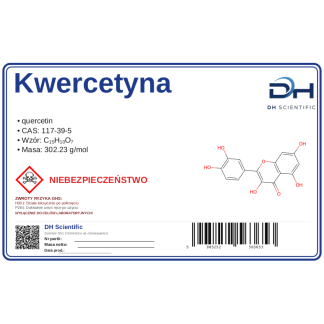
📥 Pobierz BibTeX📥 Pobierz RISImport do Zotero/Mendeley/EndNote/Papers.