Klasyfikacja CLP (H-statements): H227 (Flammable liquids), H315 (Skin corrosion/irritation), H319 (Serious eye damage/eye irritation), H335 (Specific target organ toxicity, single exposure), H371 (Specific target organ toxicity, single exposure) (PubChem GHS)
4,99 €
Związek chemiczny do celów analitycznych i produkcyjnych.
🔒 Mode démo — cet article n'est pas à vendre.
Substance légale. dhscientific.com est une démonstration de la plateforme MOL-GOD — nous ne vendons rien et aucune commande n'est traitée. Les substances interdites sont bloquées ici automatiquement à partir du canon réglementaire (comparez p. ex. l'heptachlore).
Palasingh C; Janewithayapun R; Cavalcanti LP; Abik F; Mikkonen KS; Cousin F. 2026. "Aggregation of Modified Glucuronoxylan in Water and DMSO." Biopolymers. https://doi.org/10.1002/bip.70091.
Befekadu R; Bosnjak N; Uhlin M; Wikman A; Sandgren P. 2025. "Innovations in Platelet Cryopreservation: Evaluation of DMSO-Free Controlled-Rate Freezing and the Role of a Deep Eutectic Solvent as an Ad
Clinical Immunology and Transfusion Medicine (KITM)
Liu H; Wang A; Chen X; Hou S; Li A. 2025. "Overestimated cytotoxicity and underestimated whitening efficacy of glabridin: A result of its poor solubility in DMSO." PloS one. https://doi.org/10.1371/jo
Sources des données :
PubChem, NIST Chemistry WebBook, CRC Handbook of Chemistry and Physics (103rd ed.)
Dernière mise à jour : 2026-04-26
Statut réglementaire de la substance
Cette substance est soumise à des exigences réglementaires : gestion des déchets dangereux (BDO). Détails dans la section « Statut réglementaire (REACH/ECHA/CLP) » et sur la FDS. Information réglementaire — ne restreint pas l'achat dans la boutique.
📚 La bibliographie des ouvrages est en attente de génération. Des manuels généraux sélectionnés sont disponibles ci-dessous ; les ouvrages Google Books spécifiques au CAS peuvent être récupérés depuis le panneau d'administration.
National Institute of Standards and Technology. 2024. "NIST Chemistry WebBook, SRD 69." Gaithersburg, MD: NIST. Accessed 2025-01-01. ↗
Spectral Database for Organic Structure Determination (SDBS). 2024. National Institute of Advanced Industrial Science and Technology (AIST), Japan. Accessed 2025-01-01. ↗
Ulrich, Eldon L., Hideo Akutsu, John F. Doreleijers, Yoko Harano, Yannis E. Ioannidis, Jundong Lin, Miron Livny, et al. 2008. "BioMagResBank." Nucleic Acids Research 36 (D1): D402–D408. [DOI ↗]
Horai, Hisayuki, Masanori Arita, Shigehiko Kanaya, Yoshito Nihei, Tasuku Ikeda, Kazuhiro Suwa, Yuya Ojima, et al. 2010. "MassBank: A Public Repository for Sharing Mass Spectral Data for Life Sciences." Journal of Mass Spectrometry 45 (7): 703–714. [DOI ↗]
Linstrom, P.J., and W.G. Mallard, eds. 2024. NIST Chemistry WebBook, NIST Standard Reference Database Number 69. Gaithersburg, MD: National Institute of Standards and Technology. ↗
McDonald, M. Shane, Mike McAvoy, and Ajit Bhalerao. 1988. "JCAMP-DX: A Standard Form for Exchange of Infrared Spectra in Computer Readable Form." Applied Spectroscopy 42 (1): 151–162. [DOI ↗]
PubChem. 2024. "PubChem Compound Database." National Library of Medicine, National Institutes of Health. Accessed 2025-01-01. ↗
📊Bases de données de spectres spectroscopiques — données inline9 sourcesMolGod_SPECDB_2
Les spectres sont récupérés à la demande depuis 9 sources. Chaque spectre est enregistré dans notre base — la prochaine ouverture = zéro requête vers l'API externe. Téléchargez JCAMP-DX / CSV / PNG pour chaque spectre sans avoir à chercher.
Données récupérées par MolGod_Spectra_Remote_Fetcher (parseur JCAMP-DX) et enregistrées dans la table wp_molgod_spectra_cache. Zéro téléchargement en double, zéro requête vers NIST lors des ouvertures suivantes. Licences respectées (seuls un deep-link et notre propre visualisation sont publiés).
Données récupérées en direct depuis plusieurs sources (priority-chain). JCAMP-DX / CSV / PNG disponibles au téléchargement sous chaque spectre. ⓘ Source unique ★★☆☆☆ⓘ Source unique ★★☆☆☆
IR — infrarouge à transformée de Fourier
Chargement de IR — infrarouge à transformée de Fourier…
MS — spectrométrie de masse (EI 70eV)
Chargement de MS — spectrométrie de masse (EI 70eV)…
Prédiction des bandes IR / FTIR (groupes fonctionnels)
(2 bandes)
Bandes prédites heuristiquement à partir du SMILES (CS(=O)C) sur la base des tables de corrélation de Silverstein/Coates/Stuart/Smith. Triées par ordre décroissant de nombre d'onde (cm⁻¹).
Groupe
Plage (cm⁻¹)
Mode
Intensité
Exemples
C–H alifatyczne (sp3)
2850–3000
C–H stretch
silne
CCCC (butan); CC(C)C (izobutan)
Sulfotlenek (S=O)
1030–1070
S=O stretch
silne
CS(=O)C (DMSO)
Bibliographie (Chicago)
Coates, John. 2000. "Interpretation of Infrared Spectra, A Practical Approach." In Encyclopedia of Analytical Chemistry, edited by Robert A. Meyers, 10815-10837. Chichester: Wiley.
Stuart, Barbara H. 2004. "Infrared Spectroscopy: Fundamentals and Applications." Chichester: Wiley.
Smith, Brian C. 2018. "Infrared Spectral Interpretation: A Systematic Approach." Boca Raton, FL: CRC Press.
Smith, Brian C. 2011. "Fundamentals of Fourier Transform Infrared Spectroscopy." 2nd ed. Boca Raton, FL: CRC Press.
Larkin, Peter. 2017. "Infrared and Raman Spectroscopy: Principles and Spectral Interpretation." 2nd ed. Amsterdam: Elsevier.
Hesse, Manfred, Herbert Meier, and Bernd Zeeh. 2007. "Spektroskopische Methoden in der organischen Chemie." 8th ed. Stuttgart: Thieme.
Workman, Jerry, and Lois Weyer. 2012. "Practical Guide to Interpretive Near-Infrared Spectroscopy." Boca Raton, FL: CRC Press.
Banwell, Colin N., and Elaine M. McCash. 1994. "Fundamentals of Molecular Spectroscopy." 4th ed. London: McGraw-Hill.
Kalsi, P. S. 2010. "Spectroscopy of Organic Compounds." 6th ed. New Delhi: New Age International.
🧮 Comparaison DFT vs expérience (IR)
Superposition du spectre IR expérimental sur le spectre calculé théoriquement par la méthode B3LYP/6-31G* (facteur d'échelle 0.9614, Scott & Radom 1996).
Becke, Axel D. 1993. "Density-Functional Thermochemistry. III. The Role of Exact Exchange." Journal of Chemical Physics 98 (7): 5648–5652. Définition de la fonctionnelle B3LYP.
Scott, Anthony P., and Leo Radom. 1996. "Harmonic Vibrational Frequencies: An Evaluation of Hartree–Fock, Møller–Plesset, Quadratic Configuration Interaction, Density Functional Theory, and Semiempirical Scale Factors." Journal of Physical Chemistry 100 (41): 16502–16513. Facteurs d'échelle pour la DFT (p. ex. 0.9614 pour B3LYP/6-31G*).
Merrick, Jeffrey P., Damian Moran, and Leo Radom. 2007. "An Evaluation of Harmonic Vibrational Frequency Scale Factors." Journal of Physical Chemistry A 111 (45): 11683–11700. Mise à jour de Scott & Radom — facteurs d'échelle pour des fonctionnelles DFT plus récentes.
Lee, Chengteh, Weitao Yang, and Robert G. Parr. 1988. "Development of the Colle-Salvetti Correlation-Energy Formula into a Functional of the Electron Density." Physical Review B 37 (2): 785–789. Corrélation LYP — complément à Becke 1993 pour B3LYP.
Hehre, Warren J., Robert Ditchfield, and John A. Pople. 1972. "Self-Consistent Molecular Orbital Methods. XII. Further Extensions of Gaussian-Type Basis Sets." Journal of Chemical Physics 56 (5): 2257–2261. Définition de la base 6-31G* (split-valence + polarisation).
Johnson, Russell D., III, ed. 2022. "NIST Computational Chemistry Comparison and Benchmark Database (CCCBDB)." NIST Standard Reference Database 101, Release 22. https://cccbdb.nist.gov. Benchmark pour les valeurs théoriques — lien de secours dans le widget.
Cramer, Christopher J. 2004. "Essentials of Computational Chemistry: Theories and Models." 2nd ed. Chichester: Wiley. Manuel des méthodes DFT et du calcul des fréquences de vibration.
Jensen, Frank. 2017. "Introduction to Computational Chemistry." 3rd ed. Chichester: Wiley. Chimie computationnelle moderne — jeux de bases et méthodes pour les spectres vibrationnels.
Foresman, James B., and Æleen Frisch. 2015. "Exploring Chemistry with Electronic Structure Methods." 3rd ed. Wallingford, CT: Gaussian, Inc. Guide pratique Gaussian — IR + Raman + NMR par DFT.
🎓 Guide d'interprétation des spectres (pour étudiants)
Wyjaśnienia każdego pasma w widmie — dlaczego pojawia się tam, gdzie się pojawia, i co świadczy o strukturze.
IR (infrarouge) (8 pics)
Le spectre IR (infrarouge) contient 8 bandes identifiées. L'analyse ci-dessous explique ce que chacune signifie sur le plan structural et pourquoi elle apparaît dans cette plage précise.
C–H stretch (sp3, alkyl)CH3/CH2● high
La bande "C–H stretch (sp3, alkyl)" apparaît dans les cas suivants : 2,898.0 cm⁻¹ (faible (w)). Il s'agit de l'élongation des liaisons C–H aliphatiques sp³. Présente dans pratiquement tout composé organique doté d'une chaîne alkyle.
C–O stretch (alcohol primary, ester)CO● medium
La bande "C–O stretch (alcohol primary, ester)" apparaît dans les cas suivants : 1,092.0 cm⁻¹ (forte (s)). Le groupe fonctionnel est identifié sur la base de sa plage caractéristique (Pavia/Silverstein) — le mécanisme physique précis dépend des plus proches voisins chimiques.
C–N stretch (amine), C–O stretch (alcohol/ether)CN/CO● medium
La bande "C–N stretch (amine), C–O stretch (alcohol/ether)" apparaît dans les cas suivants : 1,296.0 cm⁻¹ (faible (w)). Le groupe fonctionnel est identifié sur la base de sa plage caractéristique (Pavia/Silverstein) — le mécanisme physique précis dépend des plus proches voisins chimiques.
O–H stretch (broad, COOH dimer)COOH● medium
La bande "O–H stretch (broad, COOH dimer)" apparaît dans les cas suivants : 2,978.0 cm⁻¹ (faible (w)). Une bande O–H très large (~2500–3300) associée à C=O (~1710) constitue la signature classique d'un acide carboxylique (dimère).
📚 Bibliographie (Chicago)
Field, Leslie D., Sev Sternhell, and John R. Kalman. 2013. "Organic Structures from Spectra." 5th ed. Chichester: Wiley. Un manuel d'exercices pour étudiants (compagnon du guide d'interprétation).
Williams, Dudley H., and Ian Fleming. 2008. "Spectroscopic Methods in Organic Chemistry." 6th ed. London: McGraw-Hill. Un classique de l'interprétation narrative des spectres — explique "pourquoi le pic est ici".
Crews, Phillip, Jaime Rodríguez, and Marcel Jaspars. 2009. "Organic Structure Analysis." 2nd ed. New York: Oxford University Press. Un flux de travail pour l'interprétation structurale multiparamétrique.
McLafferty, Fred W., and František Tureček. 1993. "Interpretation of Mass Spectra." 4th ed. Mill Valley, CA: University Science Books. Mécanismes de fragmentation MS — réarrangement de McLafferty, m/z 29 = CHO.
Reusch, William. 2013. "Virtual Textbook of Organic Chemistry: Spectroscopy." East Lansing, MI: Michigan State University. https://www2.chemistry.msu.edu/faculty/reusch/VirtTxtJml/Spectrpy/spectro.htm. Un guide didactique ouvert sur IR/NMR/MS/UV — idéal pour expliquer les groupes fonctionnels.
Hesse, Manfred, Herbert Meier, and Bernd Zeeh. 2007. "Spektroskopische Methoden in der organischen Chemie." 8th ed. Stuttgart: Thieme. Le manuel de référence allemand sur l'interprétation des spectres.
Lampman, Gary M., Donald L. Pavia, George S. Kriz, and James R. Vyvyan. 2010. "Spectroscopy." 4th ed. Belmont, CA: Cengage Learning. Un cahier d'exercices avec des explications interprétatives intégrées.
Kalsi, P. S. 2010. "Spectroscopy of Organic Compounds." 6th ed. New Delhi: New Age International. Un manuel complet sur l'interprétation des spectres IR/NMR/MS/UV.
🔎 Recherche par spectre (JCAMP-DX)
Téléversez un fichier JCAMP-DX (.jdx, .dx, .jcm) — le système calculera la similarité cosinus par rapport à tous les spectres de la base de données et affichera les TOP 10 correspondances.
📚 Bibliographie (Chicago)
McLafferty, Fred W., ed. 2018. Wiley Registry of Mass Spectral Data. 11th ed. Hoboken, NJ: Wiley. Une bibliothèque MS de référence (~775k spectres).
Stein, Stephen E., and Donald R. Scott. 1994. "Optimization and Testing of Mass Spectral Library Search Algorithms for Compound Identification." Journal of the American Society for Mass Spectrometry 5 (9): 859–866. L'algorithme cosine + dot-product de NIST MS Search.
McDonald, Robert S., and Paul A. Wilks Jr. 1988. "JCAMP-DX: A Standard Form for Exchange of Infrared Spectra in Computer Readable Form." Applied Spectroscopy 42 (1): 151–162. La spécification JCAMP-DX (étendue à 5.01 pour NMR/MS).
McLafferty, Fred W., and František Tureček. 1993. "Interpretation of Mass Spectra." 4th ed. Mill Valley, CA: University Science Books. Appariement par similarité cosinus et fragmentation MS — le fondement de l'algorithme de recherche.
Sumner, Lloyd W., Alexander Amberg, Dave Barrett, Michael H. Beale, Richard Beger, Clare A. Daykin, Teresa W.-M. Fan, et al. 2007. "Proposed Minimum Reporting Standards for Chemical Analysis." Metabolomics 3 (3): 211–221. MSI Level 1-4 — normes de niveau de confiance pour l'appariement spectral.
Stein, Stephen E. 1999. "An Integrated Method for Spectrum Extraction and Compound Identification from Gas Chromatography/Mass Spectrometry Data." Journal of the American Society for Mass Spectrometry 10 (8): 770–781. L'algorithme AMDIS — déconvolution + library match (NIST).
Lindon, John C., George E. Tranter, and David W. Koppenaal, eds. 2017. "Encyclopedia of Spectroscopy and Spectrometry." 3rd ed. Amsterdam: Academic Press. Entrées encyclopédiques sur la recherche en bibliothèque spectrale.
Smith, Brian C. 2011. "Fundamentals of Fourier Transform Infrared Spectroscopy." 2nd ed. Boca Raton, FL: CRC Press. FT-IR et le format JCAMP-DX pour les spectres de transmission.
Larkin, Peter. 2017. "Infrared and Raman Spectroscopy: Principles and Spectral Interpretation." 2nd ed. Amsterdam: Elsevier. Principes de l'appariement en bibliothèque IR/Raman et du prétraitement des pics.
Haynes, William M., ed. 2024. CRC Handbook of Chemistry and Physics. 105th ed. Boca Raton: CRC Press/Taylor & Francis. ISBN 978-1-032-55554-4. ↗
National Institute of Standards and Technology. 2024. "NIST Chemistry WebBook, SRD 69." Gaithersburg, MD: NIST. Accessed 2025-01-01. ↗
Yaws, Carl L. 2014. The Yaws Handbook of Physical Properties for Hydrocarbons and Chemicals. 2nd ed. Oxford: Gulf Professional Publishing.
PubChem. 2024. "PubChem Compound Database." National Library of Medicine, National Institutes of Health. Accessed 2025-01-01. ↗
Marrero, J., and R. Gani. 2001. "Group-Contribution Based Estimation of Pure Component Properties." Fluid Phase Equilibria 183–184: 183–208. ↗
Joback, K. G., and R. C. Reid. 1987. "Estimation of Pure-Component Properties from Group-Contributions." Chemical Engineering Communications 57 (1–6): 233–243. ↗
Sangster, J. 1997. Octanol-Water Partition Coefficients: Fundamentals and Physical Chemistry. Chichester: Wiley. ISBN 978-0-471-97397-3.
Mannhold, Raimund, and Han van de Waterbeemd. 2001. "Substructure and Whole Molecule Approaches for Calculating Log P." Journal of Computer-Aided Molecular Design 15 (4): 337–354. ↗
Perrin, Ditlev D., Boyd Dempsey, and E. P. Serjeant. 1981. pKa Prediction for Organic Acids and Bases. London: Chapman and Hall. ISBN 0-412-21090-5.
Constantinou, Leonidas, and Rafiqul Gani. 1994. "New Group Contribution Method for Estimating Properties of Pure Compounds." AIChE Journal 40 (10): 1697–1710. ↗
Ertl, Peter, Bernhard Rohde, and Paul Selzer. 2000. "Fast Calculation of Molecular Polar Surface Area as a Sum of Fragment-Based Contributions and Its Application to the Prediction of Drug Transport Properties." Journal of Medicinal Chemistry 43 (20): 3714–3717. ↗
🔄 Convertisseur d'unités de concentration LIVEMolGod_UNITCONV_1
Saisissez la concentration Dimethyl Sulfoxide dans n'importe quelle unité — le reste sera calculé automatiquement.
Cohen ER, Cvitaš T, Frey JG, Holmström B, Kuchitsu K, Marquardt R, Mills I, Pavese F, Quack M, Stohner J, Strauss HL, Takami M, Thor AJ (2007)
g/L ↔ molarity
c (mol/L) = (g/L) / MW
±0.1% (depends on MW precision)
Cohen ER, Cvitaš T, Frey JG, Holmström B, Kuchitsu K, Marquardt R, Mills I, Pavese F, Quack M, Stohner J, Strauss HL, Takami M, Thor AJ (2007)
mmol/L ↔ molarity
c (mol/L) = mmol/L × 10⁻³
Exact
Cohen ER, Cvitaš T, Frey JG, Holmström B, Kuchitsu K, Marquardt R, Mills I, Pavese F, Quack M, Stohner J, Strauss HL, Takami M, Thor AJ (2007)
Celsius ↔ Kelvin
T(K) = t(°C) + 273.15
±0.01 K (ITS-90 scale)
BIPM (Bureau International des Poids et Mesures) (2019)
Celsius ↔ Fahrenheit
T(°F) = T(°C) × 9/5 + 32
±0.1 °F
Thompson A, Taylor BN (2008)
density-corrected % ↔ molarity
c (mol/L) = (%w/w × ρ × 10) / MW, ρ in g/mL
±0.1% when ρ known to 3 decimals
Cohen ER, Cvitaš T, Frey JG, Holmström B, Kuchitsu K, Marquardt R, Mills I, Pavese F, Quack M, Stohner J, Strauss HL, Takami M, Thor AJ (2007)
📚 Bibliographie (8 sources faisant autorité)
Thompson A, Taylor BN (2008). Guide for the Use of the International System of Units (SI). NIST Special Publication 811 · DOI: 10.6028/NIST.SP.811-2008 → Primary SI standard for US scientific usage
Cohen ER, Cvitaš T, Frey JG, Holmström B, Kuchitsu K, Marquardt R, Mills I, Pavese F, Quack M, Stohner J, Strauss HL, Takami M, Thor AJ (2007). Quantities, Units and Symbols in Physical Chemistry — The IUPAC Green Book. RSC Publishing, 3rd ed. · DOI: 10.1039/9781847557889 · ISBN: 978-0-85404-433-7 → Canonical IUPAC guide for chemistry quantities/units
BIPM (Bureau International des Poids et Mesures) (2019). The International System of Units (SI), 9th edition. BIPM · ↗ → International SI definitions (incl. redefined kilogram 2019)
ISO/IEC (2022). Quantities and units — Part 1: General. International Organization for Standardization — ISO 80000-1:2022 · ↗ → General rules for physical quantities and units
ISO/IEC (2019). Quantities and units — Part 9: Physical chemistry and molecular physics. International Organization for Standardization — ISO 80000-9:2019 · ↗ → Concentration / molality / amount-of-substance conventions
Tiesinga E, Mohr PJ, Newell DB, Taylor BN (2021). CODATA recommended values of the fundamental physical constants: 2018. Rev. Mod. Phys. 93(2):025010 · DOI: 10.1103/RevModPhys.93.025010 → Avogadro, gas constant, molar volume (2019 SI revision)
IUPAC (2019). Compendium of Chemical Terminology — the IUPAC Gold Book (online). IUPAC · DOI: 10.1351/goldbook → Definitions of mass fraction, molality, normality, ppm, activity
Mills IM, Cvitaš T, Homann K, Kallay N, Kuchitsu K (1988). Quantities, Units and Symbols in Physical Chemistry. Blackwell Scientific Publications, 1st ed. · ISBN: 0-632-01773-5 → Historical predecessor of IUPAC Green Book
🧪 Assistant de préparation de solution WIZARDMolGod_PREP_1
Rumble, John R., ed. 2023. CRC Handbook of Chemistry and Physics. 104th ed. Boca Raton, FL: CRC Press. [link ↗]
International Association for the Properties of Water and Steam (IAPWS). 1997. "Release on the Static Dielectric Constant of Ordinary Water Substance." IAPWS R8-97. [link ↗]
Reichardt, Christian, and Thomas Welton. 2011. Solvents and Solvent Effects in Organic Chemistry. 4th ed. Weinheim: Wiley-VCH. https://doi.org/10.1002/9783527632220. [link ↗]
Hansen, Charles M. 2007. Hansen Solubility Parameters: A User's Handbook. 2nd ed. Boca Raton, FL: CRC Press. https://doi.org/10.1201/9781420006834. [link ↗]
IFA. n.d. "Water." GESTIS Substance Database. Institut für Arbeitsschutz der Deutschen Gesetzlichen Unfallversicherung. Accessed April 25, 2026. [link ↗]
Rumble, John R., ed. 2023. CRC Handbook of Chemistry and Physics. 104th ed. Boca Raton, FL: CRC Press. [link ↗]
Reichardt, Christian, and Thomas Welton. 2011. Solvents and Solvent Effects in Organic Chemistry. 4th ed. Weinheim: Wiley-VCH. https://doi.org/10.1002/9783527632220. [link ↗]
Snyder, Lloyd R., Joseph J. Kirkland, and John W. Dolan. 2010. Introduction to Modern Liquid Chromatography. 3rd ed. Hoboken, NJ: Wiley. https://doi.org/10.1002/9780470508183. [link ↗]
Smallwood, Ian M. 1996. Handbook of Organic Solvent Properties. London: Arnold. https://doi.org/10.1016/B978-0-340-64578-9.X5000-9. [link ↗]
Reichardt, Christian, and Thomas Welton. 2011. Solvents and Solvent Effects in Organic Chemistry. 4th ed. Weinheim: Wiley-VCH. https://doi.org/10.1002/9783527632220. [link ↗]
Hansen, Charles M. 2007. Hansen Solubility Parameters: A User's Handbook. 2nd ed. Boca Raton, FL: CRC Press. [link ↗]
Rumble, John R., ed. 2023. CRC Handbook of Chemistry and Physics. 104th ed. Boca Raton, FL: CRC Press. [link ↗]
Smallwood, Ian M. 1996. Handbook of Organic Solvent Properties. London: Arnold. [link ↗]
National Institute of Standards and Technology. n.d. "Methane, dichloro- (CAS 75-09-2)." NIST Chemistry WebBook, SRD 69. Accessed April 25, 2026. [link ↗]
Hansen, Charles M. 2007. Hansen Solubility Parameters: A User's Handbook. 2nd ed. Boca Raton, FL: CRC Press. [link ↗]
International Agency for Research on Cancer. 1999. "Dichloromethane." IARC Monographs on the Evaluation of Carcinogenic Risks to Humans 71: 251–315. [link ↗]
Reichardt, Christian, and Thomas Welton. 2011. Solvents and Solvent Effects in Organic Chemistry. 4th ed. Weinheim: Wiley-VCH. [link ↗]
Armarego, Wilfred L. F., and Christina Li Lin Chai. 2009. Purification of Laboratory Chemicals. 6th ed. Oxford: Butterworth-Heinemann. https://doi.org/10.1016/B978-1-85617-567-8.50003-3. [link ↗]
Hansen, Charles M. 2007. Hansen Solubility Parameters: A User's Handbook. 2nd ed. Boca Raton, FL: CRC Press. [link ↗]
National Institute of Standards and Technology. n.d. "Furan, tetrahydro- (CAS 109-99-9)." NIST Chemistry WebBook. Accessed April 25, 2026. [link ↗]
Smallwood, Ian M. 1996. Handbook of Organic Solvent Properties. London: Arnold. [link ↗]
National Institute of Standards and Technology. n.d. "Hexane (CAS 110-54-3)." NIST Chemistry WebBook. Accessed April 25, 2026. [link ↗]
Hansen, Charles M. 2007. Hansen Solubility Parameters: A User's Handbook. 2nd ed. Boca Raton, FL: CRC Press. [link ↗]
Snyder, Lloyd R., Joseph J. Kirkland, and John W. Dolan. 2010. Introduction to Modern Liquid Chromatography. 3rd ed. Hoboken, NJ: Wiley. [link ↗]
Agency for Toxic Substances and Disease Registry. 1999. Toxicological Profile for n-Hexane. Atlanta, GA: U.S. Department of Health and Human Services. [link ↗]
International Agency for Research on Cancer. 1999. "Chloroform." IARC Monographs on the Evaluation of Carcinogenic Risks to Humans 73: 131–182. [link ↗]
National Institute of Standards and Technology. n.d. "Methane, trichloro- (CAS 67-66-3)." NIST Chemistry WebBook. Accessed April 25, 2026. [link ↗]
Hansen, Charles M. 2007. Hansen Solubility Parameters: A User's Handbook. 2nd ed. Boca Raton, FL: CRC Press. [link ↗]
Reichardt, Christian, and Thomas Welton. 2011. Solvents and Solvent Effects in Organic Chemistry. 4th ed. Weinheim: Wiley-VCH. [link ↗]
Théorie de la solubilité (appliquée à la prédiction de la compatibilité) :
Yalkowsky, Samuel H., and Shri C. Valvani. 1980. "Solubility and Partitioning I: Solubility of Nonelectrolytes in Water." Journal of Pharmaceutical Sciences 69 (8): 912–922. https://doi.org/10.1002/jps.2600690814 — General Solubility Equation (GSE): logS = 0.5 − logP − 0.01(MP−25).
Hansen, Charles M. 2007. Hansen Solubility Parameters: A User's Handbook. 2nd ed. Boca Raton, FL: CRC Press. https://doi.org/10.1201/9781420006834 — Triplet HSP (dD, dP, dH) + formule Ra.
Reichardt, Christian, and Thomas Welton. 2011. Solvents and Solvent Effects in Organic Chemistry. 4th ed. Weinheim: Wiley-VCH. https://doi.org/10.1002/9783527632220 — E_T(30) polarity scale, solwatochromia.
Snyder, Lloyd R., Joseph J. Kirkland, and John W. Dolan. 2010. Introduction to Modern Liquid Chromatography. 3rd ed. Hoboken, NJ: Wiley. https://doi.org/10.1002/9780470508183 — Eluotropic series, polarity index.
PubChem Compound Database — CAS 67-68-5 lookup ↗ — logP (XLogP3), water solubility experimental + predicted.
Bibliographie complète dans l'accordéon RÉFÉRENCES (en bas de la page) — Chicago Manual of Style 17th ed., Author-Date.
🛡️ Sécurité — CAS 67-68-5MolGod_SAFEHUB_MAIN
Avis sur les limitations des données. Les informations de sécurité figurant sur cette page sont fournies à titre indicatif et ne remplacent pas une fiche de données de sécurité (SDS) complète. Avant d'utiliser le produit, consultez la fiche de données de sécurité actuelle du fabricant ainsi que les directives GHS/CLP. La classification CLP s'applique à la substance pure en vrac, et non aux préparations commerciales.
P261 — Éviter de respirer les poussières/fumées/gaz/brouillards/vapeurs/aérosols.
P210 — Tenir à l'écart de la chaleur, des surfaces chaudes, des étincelles, des flammes nues et de toute autre source d'inflammation. Ne pas fumer.
✓ Classification harmonisée conformément à l'annexe VI du règlement CLP (CE) 1272/2008 (classification officielle, contraignante).
Traductions : Règlement CLP (CE) 1272/2008, Annexe III et IV. Données : PubChem/NLM.
☢️ Données toxicologiques (IARC + EPA CTX)
📖 Résumé toxicologique
Dimetylosulfotlenek (DMSO, CAS 67-68-5; EC 200-664-3) jest aprotonowym polarnym rozpuszczalnikiem o wyjątkowo niskiej toksyczności ostrej. LD50 doustnie u szczura wynosi 14 500 mg/kg masy ciała wg dossier ECHA REACH [1] i danych RTECS [2]; cross-referencja [1,2]; substancja klasy 5 Hodge'a i Sternera ("praktycznie nieszkodliwa"). NIOSH nie ustala limitów narażenia zawodowego; substancja nie figuruje w listach OSHA PEL ani ACGIH TLV [3]. IARC nie zaklasyfikowała DMSO [4]; brak CMR w Aneksie VI CLP [1]. DMSO jest zatwierdzonym przez FDA nośnikiem farmaceutycznym (Inactive Ingredient Database) w preparatach miejscowych i pozajelitowych; lecznicze zastosowanie DMSO zostało zatwierdzone przez FDA w 1978 r. dla śródpęcherzowego leczenia śródmiąższowego zapalenia pęcherza (DMSO 50%) [5]. Wyjątkowa właściwość penetracji: DMSO przenika skórę i błony biologiczne w ciągu sekund, transportując jednocześnie cząsteczki rozpuszczone — wymaga ostrożności przy jednoczesnej ekspozycji na inne substancje chemiczne. Charakterystyczny marker narażenia: przenoszenie zapachu "czosnku/ostryg" do wydychanego powietrza i moczu przez metabolit dimetylosulfid [6].
🔖 Citations des sources (6) — Chicago Notes-Bibliography
U.S. National Institute for Occupational Safety and Health (NIOSH) / RTECS. 2023. "Dimethyl Sulfoxide (CAS 67-68-5)." RTECS No. PV6210000. Atlanta: CDC/NIOSH. https://www.cdc.gov/niosh/rtecs/.
U.S. National Institute for Occupational Safety and Health (NIOSH). 2007. NIOSH Pocket Guide to Chemical Hazards. DHHS (NIOSH) Pub. No. 2007-151. Rev. 2018. Atlanta: CDC/NIOSH. https://www.cdc.gov/niosh/npg/. [Brak wpisu REL/PEL dla DMSO.]
International Agency for Research on Cancer (IARC). 2025. "List of Classifications." Lyon: IARC/WHO. https://monographs.iarc.who.int/list-of-classifications/. [CAS 67-68-5 nie sklasyfikowany.]
U.S. Food and Drug Administration (FDA). 2023. "Dimethyl Sulfoxide (DMSO) — Approved Drug Products." Silver Spring, MD: FDA. https://www.accessdata.fda.gov/scripts/cder/daf/. [NDA 017423; śródpęcherzowe leczenie IC, zatwierdzone 1978.]
Santos, Nuno C., João Figueira-Coelho, João Martins-Silva, and Carlota Saldanha. 2003. "Multidisciplinary Utilization of Dimethyl Sulfoxide: Pharmacological, Cellular, and Molecular Aspects." Biochemical Pharmacology 65(7):1035–1041. DOI: 10.1016/S0006-2952(03)00046-X. [Peer-reviewed; przegląd zastosowań; metabolizm; marker oddechowy.]
Format : Chicago Notes-Bibliography (numéroté). [n,m] = référence croisée : les deux sources confirment indépendamment la même valeur. Liens DOI = études scientifiques évaluées par les pairs. RESTRICTED = accès via une bibliothèque scientifique.
Aucune entrée IARC individuelle pour ce CAS
Aucune monographie IARC distincte dans les listes vérifiées — ceci N'EST PAS une confirmation de l'absence de cancérogénicité. Vérifiez la classification CLP/GHS (section CMR / GHS).
🌍 Ecotoxicology & environmental fate (SDS sec. 8/12)
ℹ️ Notifications GHS des fournisseurs (auto-classification — non contraignantes)
Aucune classification harmonisée CLP (Annexe VI) n'est disponible pour ce numéro CAS. Les codes ci-dessous sont des auto-classifications agrégées des fournisseurs (notifications ECHA C&L mises à disposition via PubChem) — elles ne constituent PAS une classification harmonisée et peuvent être redondantes. La fiche de données de sécurité (FDS) du fournisseur demeure la source contraignante.
Mention d'avertissement la plus élevée signalée : Warning
(selon les déclarations des notifiants, non contraignant)
La numérotation [n] correspond aux notes de bas de page en exposant dans le texte ci-dessus. [n,m] = référence croisée : les deux sources confirment indépendamment la même valeur.
U.S. National Institute for Occupational Safety and Health (NIOSH) / RTECS. 2023. "Dimethyl Sulfoxide (CAS 67-68-5)." RTECS No. PV6210000. Atlanta: CDC/NIOSH. https://www.cdc.gov/niosh/rtecs/. 🔗
U.S. National Institute for Occupational Safety and Health (NIOSH). 2007. NIOSH Pocket Guide to Chemical Hazards. DHHS (NIOSH) Pub. No. 2007-151. Rev. 2018. Atlanta: CDC/NIOSH. https://www.cdc.gov/niosh/npg/. [Brak wpisu REL/PEL dla DMSO.] 🔗
International Agency for Research on Cancer (IARC). 2025. "List of Classifications." Lyon: IARC/WHO. https://monographs.iarc.who.int/list-of-classifications/. [CAS 67-68-5 nie sklasyfikowany.] 🔗
U.S. Food and Drug Administration (FDA). 2023. "Dimethyl Sulfoxide (DMSO) — Approved Drug Products." Silver Spring, MD: FDA. https://www.accessdata.fda.gov/scripts/cder/daf/. [NDA 017423; śródpęcherzowe leczenie IC, zatwierdzone 1978.] 🔗
Santos, Nuno C., João Figueira-Coelho, João Martins-Silva, and Carlota Saldanha. 2003. "Multidisciplinary Utilization of Dimethyl Sulfoxide: Pharmacological, Cellular, and Molecular Aspects." Biochemical Pharmacology 65(7):1035–1041. DOI: 10.1016/S0006-2952(03)00046-X. [Peer-reviewed; przegląd zastosowań; metabolizm; marker oddechowy.] [DOI]
📖 Littérature toxicologique générale (module)
Palasingh C; Janewithayapun R; Cavalcanti LP; Abik F; Mikkonen KS; Cousin F. 2026. "Aggregation of Modified Glucuronoxylan in Water and DMSO." Biopolymers. https://doi.org/10.1002/bip.70091. [DOI]
Huang CJ; Chiu L; Chuang HJ; Wu SM. 2026. "Transgenerational effects of maternal exposure to diethyl phthalate (DEP) and dimethyl sulfoxide (DMSO) in zebrafish (Danio rerio)." Aquatic toxicology (Amsterdam, Netherlands). https://doi.org/10.1016/j.aquatox.2026.107787. [DOI]
Ismail OA; Stape THS; Shaalan O; Taymour N; Basha IE; Alsamoully WMA. 2026. "Clinical evaluation of composite restorations placed on dimethyl sulfoxide-treated cervical carious lesions: a 36-month randomized double-blind controlled trial." Journal of dentistry. https://doi.org/10.1016/j.jdent.2026.106587. [tło tematyczne — CAS niezweryfikowany w tej publikacji] [DOI]
Klbik I; Melicherčík M; Račko D; Maťko I; Lakota J; Šauša O. 2026. "Reassessing DMSO-lipid interactions: Improved AMBER force fields emphasize solvent rather than bilayer effects in cryoprotection." Biochimica et biophysica acta. Biomembranes. https://doi.org/10.1016/j.bbamem.2025.184481. [DOI]
Befekadu R; Bosnjak N; Uhlin M; Wikman A; Sandgren P. 2025. "Innovations in Platelet Cryopreservation: Evaluation of DMSO-Free Controlled-Rate Freezing and the Role of a Deep Eutectic Solvent as an Additional Cryoprotective Agent." International journal of molecular sciences. https://doi.org/10.3390/ijms262010013. [DOI]
Chen C; Chong J; Bertoft E; Zhu F. 2025. "Chemical gelatinization of pea and chickpea starch granules in dimethyl sulfoxide: Structural and physicochemical analysis." Carbohydrate polymers. https://doi.org/10.1016/j.carbpol.2025.124293. [DOI]
Ghonyan S; Poghosyan D; Martirosyan A; Margaryan S; Avetisyan A; Khachatryan Z. 2025. "Unraveling the functional landscape of ATRA- and DMSO-differentiated HL-60 cells." PloS one. https://doi.org/10.1371/journal.pone.0331783. [DOI]
Kolić D; Gerlits O; Kucharski M; Gorecki L; Joiner N; Kovalevsky A. 2025. "Kinetic and structural evidence for specific DMSO interference with reversible binding of uncharged bis-oximes to hAChE and their reactivation kinetics of OP-hAChE." Chemico-biological interactions. https://doi.org/10.1016/j.cbi.2025.111649. [DOI]
Liu H; Wang A; Chen X; Hou S; Li A. 2025. "Overestimated cytotoxicity and underestimated whitening efficacy of glabridin: A result of its poor solubility in DMSO." PloS one. https://doi.org/10.1371/journal.pone.0325247. [DOI]
International Agency for Research on Cancer (IARC). 2024. "IARC Monographs on the Identification of Carcinogenic Hazards to Humans." Lyon: IARC. 🔗
U.S. EPA. 2024. "ECOTOX Knowledgebase." Washington, DC: U.S. Environmental Protection Agency. 🔗
ECHA. 2024. "Chemical Safety Assessment." European Chemicals Agency. 🔗
U.S. National Toxicology Program. 2024. Report on Carcinogens. 15th ed. Research Triangle Park, NC: National Institute of Environmental Health Sciences. 🔗
GESTIS. 2024. "GESTIS Substance Database." Institute for Occupational Safety and Health of the German Social Accident Insurance (DGUV). 🔗
U.S. EPA. 2024. "CompTox Chemicals Dashboard." Washington, DC: U.S. Environmental Protection Agency. 🔗
🆘 Premiers secours — procédures d'urgenceCAS 67-68-5
Attention
Classe de danger : Irritant
⚠️ IMPORTANT :
En cas d'incident grave — appelez le 112 ou le Centre antipoison : +48 42 631 47 24 (Łódź).
DMSO : agent pénétrant — n'appliquez pas avec d'autres produits chimiques (absorption systémique). NE PAS utiliser de gants en latex.
🩹
Contact cutané
⏱ Chronologie : Brak ostrych objawów; ewentualne podrażnienie po >30 min
🔴 Symptômes
Pieczenie, swędzenie
PENETRANT — przenosi rozpuszczone substancje przez skórę
Czosnkowy posmak/zapach z ust w 1 min
✅ Que faire
Zdejmij odzież NATYCHMIAST
Spłucz dużą ilością wody 15 min
Sprawdź czy DMSO nie zawierał innych chemikaliów (przenosi je do krwiobiegu)
❌ Ce qu'il faut éviter
NIGDY nie nakładaj DMSO z innymi chemikaliami na skórę (przenoszenie systemowe)
NIE używaj rękawic lateksowych (przenikają DMSO)
🚑 Ambulance : Brak — utrzymujące się objawy >24h skontaktuj lekarza POZ
Goldfrank, Lewis R., Robert S. Hoffman, Mary Ann Howland, Neal A. Lewin, Lewis S. Nelson, and Silas W. Smith. 2019. Goldfrank's Toxicologic Emergencies. McGraw-Hill Education.
Olson, Kent R., Ilene B. Anderson, Neal L. Benowitz, Paul D. Blanc, Richard F. Clark, Thomas E. Kearney, Susan Y. Kim-Katz, and Alan H. B. Wu. 2018. Poisoning & Drug Overdose. McGraw-Hill.
World Health Organization (WHO). 2007. Antidotes for Poisoning by Cyanide (IPCS Evaluation Series 21). International Programme on Chemical Safety, WHO Press. ↗
Howland, Mary Ann, and Robert S. Aaron. 2002. Goldfrank's Antidotes for Pediatric Emergency Care. Lippincott Williams & Wilkins.
Centrum Zatruć Łódź. 2024. Procedury kliniczne w zatruciach ostrych — wytyczne dla ratowników. Centrum Informacji Toksykologicznej. ↗
National Institute for Occupational Safety and Health (NIOSH). 2007. Recommendations for First Aid Procedures for Chemical Exposures (NIOSH Pocket Guide to Chemical Hazards, DHHS Publication No. 2005-149). U.S. Department of Health and Human Services. ↗
United Nations Economic Commission for Europe (UNECE). 2021. Globally Harmonized System of Classification and Labelling of Chemicals (GHS), Revision 9. United Nations. ↗
Brent, Jeffrey. 2009. Fomepizole for the Treatment of Pediatric Ethylene and Diethylene Glycol, Butoxyethanol, and Methanol Poisonings. Clinical Toxicology 48(5): 401–406.
European Society for Paediatric Gastroenterology, Hepatology and Nutrition (ESPGHAN). 2018. Caustic Ingestion in Children — Position Paper. Journal of Pediatric Gastroenterology and Nutrition 66(5): 838–845.
Agency for Toxic Substances and Disease Registry (ATSDR). 2024. Toxicological Profiles — Medical Management Guidelines. U.S. Department of Health and Human Services. ↗
IPCS INCHEM. 2024. International Programme on Chemical Safety — Poisons Information Monographs. WHO/UNEP/ILO. ↗
American National Standards Institute (ANSI). 2014. ANSI Z358.1-2014 — Emergency Eyewash and Shower Equipment. International Safety Equipment Association.
🚨 Procédure d'urgence — déversement de produits chimiquesIrritant
CAS 67-68-5GHS:H315H319H227💨 Ventilation
🥽 EPI — Équipement de protection individuelle
Gants:gants en nitrile (>0.4mm)
Lunettes de protection:Oui
Protection respiratoire:non requis, sauf en présence de vapeurs
Combinaison:blouse de laboratoire
Chaussures:chaussures à bout fermé
📦 Petit déversement (<1L) — absorbant : vermiculite
1. Wietrzyć pomieszczenie (otwórz okna + wyciąg)
2. Załóż rękawice nitrylowe (>0.4mm) + okulary ochronne
3. Posyp absorbent (wermikulit/piasek) wokół rozlania
4. Zbierz od krawędzi do środka (nie rozprowadzaj!)
5. Umieść zanieczyszczony absorbent w szczelnym pojemniku PP/HDPE
6. Przemyj miejsce wodą z detergentem (3×)
7. Wytrzyj do sucha (ścierki → do pojemnika odpadów)
8. Umyj ręce nawet przez rękawice (DMSO penetruje!)
🛢️ Grand déversement (>1L) ⚠️ Matière dangereuse
1. EWAKUUJ personel niezaangażowany w oczyszczanie (>5m)
2. Wietrzyć intensywnie (>30 min)
3. Załóż pełne PPE: rękawice nitrylowe + kombinezon chemoodporny + gogle + respirator P2 (jeśli pary)
4. Otamuj rozlanie (użyj absorpcyjnych barier/poduszek)
5. Nie dopuść do kanalizacji/gleby (użyj zapór)
6. Zbierz mechanicznie (pompą próżniową do beczki UN)
7. Posyp pozostałości absorbent (wermikulit 50L/m²)
8. Zbierz łopatą/miotłą do kontenera 200L UN
9. Przemyj teren wodą (do odzysku!) 3×
10. Zgłoś incydent kierownikowi BHP + wpisz do rejestru
🩹 Premiers secours
🧴 Peau
1. Zdejmij zanieczyszczoną odzież NATYCHMIAST
2. Przemyj skórę wodą z mydłem (15 min)
3. UWAGA: DMSO penetruje skórę i przenosi inne substancje! Jeśli na skórze były inne chemikalia → LEKARZ NATYCHMIAST
4. W razie podrażnienia → lekarz
👁️ Yeux
1. Przemyj NATYCHMIAST czystą wodą (15 min)
2. Trzymaj oczy otwarte podczas płukania
3. Usuń soczewki kontaktowe jeśli możliwe
4. ZAWSZE → OKULISTA (nawet bez objawów)
🫁 Inhalation
1. Wyprowadź poszkodowanego na świeże powietrze
2. Jeśli oddycha z trudem → tlen
3. Nie oddychało → CPR + wzywaj 112
4. Obserwuj 24h (opóźnione objawy oddechowe)
🍽️ Ingestion
1. NIE WYWOŁUJ WYMIOTÓW
2. Wypłucz usta wodą
3. Wypij szklankę wody
4. LEKARZ NATYCHMIAST + pokaż etykietę produktu
5. Centrum Zatruć: +48 42 631 47 24
🌍 Environnement :
Eau : Modérée; Sol : Faible; ❌ Ne pas rejeter dans les égouts; Code déchet : 07 01 04*
Goldfrank, Lewis R., Neal Flomenbaum, Neal A. Lewin, Mary Ann Howland, Robert S. Hoffman, and Lewis S. Nelson. 2015. Goldfrank's Toxicologic Emergencies. McGraw-Hill Education.
10th ed. ISBN 978-0071801843.
U.S. Occupational Safety and Health Administration. 2024. 29 CFR 1910.120 — Hazardous Waste Operations and Emergency Response (HAZWOPER). U.S. Code of Federal Regulations.
[lien ↗]
National Fire Protection Association. 2018. NFPA 472: Standard for Competence of Responders to Hazardous Materials/Weapons of Mass Destruction Incidents. NFPA.
[lien ↗]
European Parliament and Council. 2012. Directive 2012/18/EU on the Control of Major-Accident Hazards Involving Dangerous Substances (Seveso III). Official Journal of the European Union L 197: 1–37.
[lien ↗]
U.S. National Institute for Occupational Safety and Health. 2024. NIOSH Pocket Guide to Chemical Hazards. Centers for Disease Control and Prevention.
[lien ↗]
European Chemicals Agency. 2020. Guidance on the Compilation of Safety Data Sheets (SDS), Version 3.1. ECHA.
[lien ↗]
Sources : ECHA SDS · NIOSH Pocket Guide · GESTIS · Goldfrank Toxicologic Emergencies 10th ed..
Dernière vérification : 2026-04-26 10:00:00.
Données indicatives — en cas d'urgence, suivez toujours les instructions du fournisseur + la réglementation locale en matière de santé et sécurité au travail (SST).
⚠️ Guide visuel des EPI (équipements de protection individuelle)Irritant
🧤 Gants
Nitrile standard >0.1 mm EN 374-1 typ C
Protection standard contre l'irritation cutanée
👁️ Lunettes de sécurité / Lunettes-masque
EN 166 D
Protection contre les particules solides et les gouttelettes ; catégorie de base
🥼 Blouse / combinaison
Blouse de laboratoire en coton standard EN 13688
Manche longue boutonnée standard
💨 Ventilation
4 ACH(air changes/hour) Ventilation générale du laboratoire
4 ACH minimum pour les opérations ouvertes ; hotte aspirante pour les poussières concentrées de CaCl2
📚 Références scientifiques (Chicago Author-Date)
European Committee for Standardization (CEN). 2016. EN 374-1:2016 — Protective gloves against dangerous chemicals and micro-organisms — Part 1: Terminology and performance requirements for chemical risks. CEN, Brussels. EN 374-1:2016. [link ↗] — Classification des gants résistants aux produits chimiques type A/B/C ; tests de perméation JKLPT
European Committee for Standardization (CEN). 2001. EN 166:2001 — Personal eye-protection — Specifications. CEN, Brussels. EN 166:2001. [link ↗] — Marquages : B = énergie d'impact moyenne, T = températures extrêmes, 9 = métaux fondus et solides
European Committee for Standardization (CEN). 2009. EN 14605:2005+A1:2009 — Protective clothing against liquid chemicals — Performance requirements for clothing with liquid-tight (Type 3) or spray-tight (Type 4) connections. CEN, Brussels. EN 14605:2009. [link ↗] — Type 3 (jet-tight) et Type 4 (spray-tight) — protection contre les produits chimiques liquides
National Institute for Occupational Safety and Health (NIOSH). 2017. Recommendations for Chemical Protective Clothing: A Companion to the NIOSH Pocket Guide. U.S. Department of Health & Human Services / CDC. [link ↗] — Guide pratique de sélection des CPC par substance et scénario d'exposition
Occupational Safety and Health Administration (OSHA). 2011. Personal Protective Equipment — General requirements. U.S. Department of Labor — 29 CFR 1910.132. 29 CFR 1910.132. [link ↗] — L'employeur doit fournir des EPI + une formation + une évaluation des risques documentée par écrit
🗄️ Matrice de compatibilité de stockage (6×6)
Toxique
Carte visuelle de compatibilité des classes de stockage — vérifiez avant de placer des conteneurs les uns à côté des autres. Survolez une cellule avec le curseur pour afficher l'explication et la règle source (NFPA / OSHA / Bretherick / ECHA).
Toxiques ↔ tout : PRUDENCE (armoire séparée, étiquetés)
📚 Références scientifiques (Chicago Author-Date)
National Fire Protection Association (NFPA). 2024. NFPA 30: Flammable and Combustible Liquids Code. NFPA, Quincy, MA. NFPA 30 (2024 ed.). [link ↗] — §9.4–9.7 — class-based storage segregation rules (the canonical US lab/industrial reference)
Occupational Safety and Health Administration (OSHA). 2023. 29 CFR 1910.106 — Flammable Liquids. U.S. Department of Labor, Federal Register. 29 CFR 1910.106. [link ↗] — (d)(5)(i)–(iv) — flammable storage cabinet, inside-storage room, and segregation requirements
European Chemicals Agency (ECHA). 2024. Annex VI to Regulation (EC) No 1272/2008 (CLP) — Harmonised Classification and Labelling. ECHA, Helsinki / Official Journal of the European Union. CLP Annex VI. [link ↗] — §2.4–2.5 — EU-level classification driving storage compatibility under REACH/CLP
♻️ Élimination des déchets chimiques (BDO)Irritant⚠️ BDO requis
📋 Code EWC (Catalogue européen des déchets) : 07 01 04*Autres solvants organiques et liqueurs mères (DMSO, DMF, NMP)
Un code avec un astérisque (*) = déchet dangereux nécessitant un enregistrement BDO + un protocole de transport (Carte de transfert des déchets).
🌍Danger pour l'environnement:
OUI
💧Risque de contamination de l'eau:
OUI
🌱Risque de contamination du sol:
NON
🚫NE PAS jeter à l'égout:
OUI
🚛HAZMAT transport (ADR):
OUI
🏭 Entreprises autorisées à l'élimination (BDO) — 8 sur 8 au total
📋 Liste BDO complète :bdo.mos.gov.pl ↗
— registre officiel du ministère du Climat et de l'Environnement. Carte de transfert des déchets (KPO) :modèle BDO
obligatoire pour chaque livraison de déchets dangereux.
📚 Références scientifiques (Chicago Author-Date)
European Commission. 2014. Commission Decision 2014/955/EU on the list of waste pursuant to Directive 2008/98/EC. Official Journal of the European Union. Decyzja 2014/955/UE. [link ↗] — European List of Waste (LoW) — codes EWC à 6 chiffres + astérisque pour les déchets dangereux
Ministerstwo Klimatu i Środowiska Rzeczypospolitej Polskiej. 2020. Rozporządzenie Ministra Klimatu z dnia 2 stycznia 2020 r. w sprawie katalogu odpadów. Dziennik Ustaw RP 2020 poz. 10. [link ↗] — Catalogue polonais des déchets — mise en œuvre de la Décision 2014/955/UE
Główny Inspektorat Ochrony Środowiska (GIOŚ). 2024. Baza Danych O Odpadach (BDO) — System rejestracji firm utylizacyjnych. Ministerstwo Klimatu i Środowiska. [link ↗] — Registre central BDO — liste complète des entreprises autorisées à la gestion des déchets
Polska — Sejm RP. 2012. Ustawa z dnia 14 grudnia 2012 r. o odpadach. Dz.U. 2013 poz. 21 (z późn. zm.). [link ↗] — Loi nationale — définit les obligations du producteur de déchets + enregistrement BDO
Furr, A. Keith, ed.. 2000. CRC Handbook of Laboratory Safety. CRC Press. — Classification des déchets de laboratoire + procédures de tri (chap. Waste Management) ; EN 374:2013 normes de gants pour les personnes manipulant des déchets dangereux.
Pohanish, Richard P.. 2017. Sittig's Handbook of Toxic and Hazardous Chemicals and Carcinogens. Elsevier. — Classification des déchets par CAS + incompatibilités — donnée d'entrée pour le mappage EWC.
Lewis, Richard J.. 2012. Sax's Dangerous Properties of Industrial Materials. Wiley. — Réactivité + compatibilité de stockage des déchets (oxydants vs inflammables — flux séparés).
NIOSH. 2024. Pocket Guide to Chemical Hazards. U.S. Department of Health and Human Services. [link ↗] — PEL/REL/IDLH par CAS — base pour l'EPI requis lors du transport des déchets (KPO).
OSHA. 2024. Occupational Chemical Database — Hazardous Waste Operations (HAZWOPER). Occupational Safety and Health Administration. [link ↗] — 29 CFR 1910.120 — formations + EPI pour la manipulation des déchets dangereux.
European Parliament and Council. 2008. Directive 2008/98/EC on waste (Waste Framework Directive). Official Journal of the European Union L 312/3. [link ↗] — Hiérarchie de la gestion des déchets (prévention → valorisation → élimination) ; définit les « déchets dangereux ».
European Parliament and Council. 2009. Regulation (EC) No 1272/2008 (CLP) on classification, labelling and packaging of substances and mixtures. Official Journal of the European Union L 353. [link ↗] — Classification CLP des mentions de danger H → mappage vers EWC * (astérisque = dangereux).
United Nations Economic Commission for Europe (UNECE). 2023. European Agreement concerning the International Carriage of Dangerous Goods by Road (ADR 2025). UNECE. [link ↗] — ADR — exigences pour le transport des déchets dangereux (KPO + numéro UN + classes 1–9).
IPCS INCHEM. 2024. International Programme on Chemical Safety — Waste Management Guidelines. WHO/UNEP/ILO. [link ↗] — Lignes directrices internationales de neutralisation + élimination par CAS.
European Parliament and Council. 2006. Regulation (EC) No 1013/2006 on Shipments of Waste. Official Journal of the European Union L 190: 1–98. [link ↗] — Transfert transfrontalier de déchets dangereux — exigences de notification + consentement avant l'exportation
📋 Conformité réglementaire (liste de contrôle de conformité)Irritant7 requis12 éléments
ℹ️ Liste de contrôle des obligations réglementaires pour CAS 67-68-5.
Statut basé sur : ADR 2023 (Tableau A), REACH Annexe XVII, CLP Annexe VI (classification harmonisée), hazard class de m14-spill DB, SVHC, GIS et VLEP PL. Principe : absence de données = absence d'affirmation (NOUS ne déclarons pas « absence de restrictions » sans fondement).
✅FDS (fiche de données de sécurité) disponiblesatisfait
Comment assurer la conformité : SATISFAIT — fiche de données de sécurité v18 (PL) disponible au téléchargement sur cette page. Exigence : FDS à jour conforme au Règl. 1907/2006 (REACH) Annexe II, format à 16 sections.
Base légale : Rozporządzenie (WE) 1907/2006 (REACH) Art. 31 + Aneks II
Comment assurer la conformité : L'étiquette doit comporter : pictogrammes GHS, mention d'avertissement (Danger/Attention), mentions de danger (H) et conseils de prudence (P), coordonnées du fabricant. Obligatoire depuis 2010 (substances) et 2015 (mélanges).
Base légale : Rozporządzenie (WE) 1272/2008 (CLP) Art. 17-33
❌Formation SST chimique (spécifique à la substance)requis
Comment assurer la conformité : Personnel de laboratoire : formation initiale (instruction générale + spécifique au poste) + recyclage tous les 5 ans (ou tous les 3 ans pour les postes d'ingénierie et techniques). Documentation conservée dans les dossiers personnels.
Base légale : Rozp. MGiP Dz.U. 2004 nr 180 poz. 1860 (szkolenia BHP)
❌Enregistrement BDO (base de données polonaise sur les déchets)requis
Comment assurer la conformité : L'enregistrement BDO est obligatoire pour les producteurs de déchets dangereux. Une carte de transfert de déchets (KPO) est requise pour chaque livraison. Rapport annuel à remettre avant le 15 mars de l'année suivante.
Base légale : Ustawa z 14 grudnia 2012 r. o odpadach (Dz.U. 2013 poz. 21)
Comment assurer la conformité : Conformément à l'ADR 2023, la substance n'est pas classée comme marchandise dangereuse pour le transport routier — transport standard. Confirmez toujours la forme/concentration avec la section 14 de la fiche de données de sécurité.
Base légale : Umowa europejska ADR 2025 + Ustawa z 19 sierpnia 2011 r. o przewozie towarów niebezpiecznych
Comment assurer la conformité : Les importateurs/fabricants ≥1 tonne/an doivent enregistrer la substance auprès de l'ECHA (dossier technique + Chemical Safety Report si ≥10 t). Consultez ECHA Annex VI / registered substances list.
Base légale : Rozporządzenie (WE) 1907/2006 (REACH) Art. 5-22
Comment assurer la conformité : Nie figuruje na liście kandydackiej SVHC REACH (art. 59) — stan listy ECHA: 2026-05-23. Lista kandydacka to NIE załącznik XIV.
Base légale : REACH Art. 7(2) + 33 — SVHC notification + communication
❓Annexe XVII REACH (restrictions d'utilisation/commercialisation)à vérifier
Comment assurer la conformité : Brak wpisu w zbiorze klasyfikacji zharmonizowanej (CLP Załącznik VI) dla tego numeru CAS — status poz. 28–30 (zakaz CMR) NIEZWERYFIKOWANY; nie zakładać braku ograniczenia. Zbiór ograniczeń Załącznika XVII również niepełny — sprawdź skonsolidowany Załącznik XVII oraz klasyfikację zharmonizowaną CMR na stronach ECHA.
Base légale : Rozporządzenie (WE) 1907/2006 (REACH) Załącznik XVII — ograniczenia produkcji/obrotu/stosowania
Comment assurer la conformité : Absence de données VLEP dans l'ensemble MOL-GOD (ensemble incomplet — ~41 des ~600 substances de la liste). L'absence NE signifie PAS l'absence de VLEP — vérifiez la liste complète Dz.U. 2024 pos. 1017 (Règlement MRiPS du 4 septembre 2024), et en l'absence, appliquez les VLEP des directives UE ou recommandées par NIOSH/ACGIH.
Base légale : Rozp. MRiPS z 4 września 2024 r. (Dz.U. 2024 poz. 1017) — NDS i NDSCh
Comment assurer la conformité : Ne figure pas dans l'ensemble de travail disponible des précurseurs (liste incomplète). L'absence N'est PAS une confirmation — vérifiez par rapport à l'annexe I du Règlement (CE) 273/2004 et la liste GIS avant la mise sur le marché.
Base légale : Rozp. (WE) 273/2004 + Ustawa o przeciwdziałaniu narkomanii (Dz.U. 2005 nr 179 poz. 1485)
✅Fiche de données de sécurité en polonaissatisfait
Comment assurer la conformité : SATISFAIT — fiche en langue polonaise (v18) disponible sur cette page. Exigence : SDS en polonais pour la mise sur le marché en PL (Art. 31 REACH + Loi sur les substances chimiques Art. 17).
Base légale : Ustawa z 25 lutego 2011 r. o substancjach chemicznych i ich mieszaninach (Dz.U. 2011 nr 63 poz. 322)
European Parliament and Council. 2008. Regulation (EC) No 1272/2008 on classification, labelling and packaging of substances and mixtures (CLP). Official Journal of the European Union L 353/1. CLP Regulation 1272/2008. [link ↗] — Classification, étiquetage et emballage des substances + mélanges (mise en œuvre du GHS dans l'UE)
European Parliament and Council. 2006. Regulation (EC) No 1907/2006 concerning the Registration, Evaluation, Authorisation and Restriction of Chemicals (REACH). Official Journal of the European Union L 396/1. REACH Regulation 1907/2006. [link ↗] — REACH — enregistrement, évaluation et autorisation des produits chimiques ; SVHC ; SDS Annexe II
Ministerstwo Rodziny i Polityki Społecznej Rzeczypospolitej Polskiej. 2024. Rozporządzenie Ministra Rodziny i Polityki Społecznej z dnia 4 września 2024 r. w sprawie najwyższych dopuszczalnych stężeń i natężeń czynników szkodliwych dla zdrowia w środowisku pracy. Dziennik Ustaw RP 2024 poz. 1017. [link ↗] — VLEP et VLEPc pour ~600 substances chimiques — limites polonaises actuelles d'exposition professionnelle
United Nations Economic Commission for Europe (UNECE). 2023. European Agreement concerning the International Carriage of Dangerous Goods by Road (ADR), 2025 Edition. United Nations, Geneva. ADR 2025. [link ↗] — Accord international relatif au transport routier des marchandises dangereuses — numéros ONU, classes, emballages
📚 Références scientifiques consolidées — Chicago auteur-date 10 sources
Références collectées dans tous les onglets du Safety Hub. CAS : 67-68-5 ·
PubChem ↗
Parlament Europejski i Rada UE. 2008. "Rozporządzenie (WE) nr 1272/2008 w sprawie klasyfikacji, oznakowania i pakowania substancji (CLP)." Dz.Urz. UE L 353. [↗]
GHS, Réglementations
United Nations Economic Commission for Europe (UNECE). 2021. "Globally Harmonized System of Classification and Labelling of Chemicals (GHS), Ninth Revised Edition." United Nations, Geneva. [↗]
GHS
Goldfrank, Lewis R., Robert S. Hoffman, Mary Ann Howland, et al.. 2019. "Goldfrank's Toxicologic Emergencies, 11th ed.." McGraw-Hill Education, New York. ISBN 978-1-25-985961-8.
Pierwsza pomoc, Toksykologia
National Institute for Occupational Safety and Health (NIOSH). 2023. "NIOSH Pocket Guide to Chemical Hazards (DHHS Publ. 2005-149)." U.S. Department of Health and Human Services / CDC, Cincinnati, OH. [↗]
Pierwsza pomoc, PPE, Toksykologia
European Committee for Standardization (CEN). 2016. "EN 374-1:2016 — Protective gloves against dangerous chemicals and micro-organisms." CEN, Brussels. [↗]
PPE
UNECE. 2023. "European Agreement Concerning the International Carriage of Dangerous Goods by Road (ADR 2025)." United Nations, Geneva. [↗]
Utylizacja, Regulacje
National Fire Protection Association (NFPA). 2022. "NFPA 400 — Hazardous Materials Code." NFPA, Quincy, MA. [↗]
Magazynowanie
Urben, P.G. (ed.). 2017. "Bretherick's Handbook of Reactive Chemical Hazards, 8th ed.." Butterworth-Heinemann / Elsevier, Oxford. [↗]
Magazynowanie
Ministerstwo Klimatu i Środowiska RP. 2023. "Baza danych o produktach i opakowaniach oraz o gospodarce odpadami (BDO)." Ministerstwo Klimatu i Środowiska, Warszawa. [↗]
Utylizacja
International Agency for Research on Cancer (IARC / WHO). 2024. "IARC Monographs on the Identification of Carcinogenic Hazards to Humans — List of Classifications." WHO, Lyon. [↗]
Toksykologia
Les onglets possédant leurs propres références (Emergency, PPE, Storage, Waste) contiennent des entrées bibliographiques supplémentaires au sein de leurs sections respectives.
Collez une série de mesures répétées (CSV ou un nombre par ligne). Le calculateur calculera la moyenne, l'écart-type, l'IC à 95 %, et détectera les valeurs aberrantes (Grubbs + Dixon Q).
Séparateur : virgule, espace, tabulation, nouvelle ligne. Min. 3 mesures.
ℹ️ Single-CAS Integrity: Les solvants suivants sont des outils analytiques (phase mobile HPLC) — NE sont PAS la substance analysée. Les valeurs affichées dans les autres accordéons (MW, GHS, toxicologie) se rapportent à la molécule actuelle, pas à ces solvants. Exception : Single-CAS Integrity (catégorie « solvants/tampons/méthodes analytiques »).
Phase
Solvant / CAS
Statut
Action
A
Woda + 10mM bufor wodorowęglanu amonu CAS 7732-18-5
An Integrated Strategy for Rapid Discovery and Identification of Quality Markers in Gardenia Fructus Using an Omics Discrimination-Grey Correlation-Biological Verification Method
HPLCFrontiers in Pharmacology202190% ✓CC-BYResearch method (specificity, robustness)
Colonne : C18, 5 μm
Phase : mobile phase was composed of formic acid–water (0
Détection : MS
Débit : 1.00 mL/min
Temp. : 60.0 °C
Inj.: 25 μL
Gradient: of the drug group was set as shown in the…
Dong R, Tian Q, Shi Y, Chen S, Zhang Y, Deng Z, et al. An Integrated Strategy for Rapid Discovery and Identification of Quality Markers in Gardenia Fructus Using an Omics Discrimination-Grey Correlation-Biological Verification Method. Frontiers in Pharmacology. 2021;12:705498. doi:10.3389/fphar.2021.705498
Background: Gardenia Fructus (GF), a traditional Chinese medicine of Gardenia Ellis in Rubiaceae family, has the potential to clear heat and purge fire and has been widely used to treat multiple infection-related diseases. However, the quality markers (Q-Markers) of GF have not been revealed comprehensively.
Methods: In this experiment, the transgenic zebrafish lines, Tg (l-fabp:EGFP) and Tg (lyz:EGFP), were used to evaluate two main kinds of traditional efficacies of GF, hepatoprotective and anti-inflammatory effects. All the GF samples from different production areas were tested their anti-liver injury and anti-inflammantory activities. High-performance liquid chromatography-quadrupole time-of-flight mass spectrometry method (HPLC-Q-TOF/MS) was employed for herbal metabonomic analysis of GF samples. Gray correlation analysis (GCA) was utilized to screen out the components closely associated with the activities. Finally, the zebrafish model was applied to verify the bioactivity of the crucial components to determine the Q-Markers of GF.
Results: The zebrafish models were established by inducing with hydrogen peroxide or copper sulfate and applied to quickly evaluate the hepatoprotective effect and inflammation of GF samples. 27 potentially active components for liver protection and 21 potentially active components with anti-inflammatory properties were identified by herbal metabolomic analysis based on HPLC-Q-TOF/MS. The GCA result showed that five of the 27 components were highly correlated with liver protection, 15 of the 21 components were highly correlated with anti-inflammatory activity. Among them, geniposide and crocin-1 were confirmed their bioactivities on zebrafish experiment to be responsible for the protective effects of GF against liver injury, and genipin-1-β-D-gentiobioside, quinic acid, gardenoside, d-glucuronic acid, l-malic acid, mannitol, rutin, and chlorogenic acid were confirmed to be responsible for the anti-inflammatory effects. Finally, acco...
Comparison of Quantification Using UV-Vis, NMR, and HPLC Methods of Retinol-Like Bakuchiol Present in Cosmetic Products
HPLC-DADInternational Journal of Molecular Sciences202590% ✓CC-BYResearch method (specificity, robustness)
Colonne : C18, 5 μm
Phase : mobile phase consists of 1% formic acid and acetonitrile, 35/65 (v/v)
Détection : UV 300 nm
Débit : 1.00 mL/min
Temp. : 35.0 °C
Inj.: 20 μL
Gradient: pump, a diode-array detector, an autosampler with a thermostat, and…
Grzelecka M, Siudem P, Tyburc N, Triyasmono L, Holzgrabe U, Paradowska K. Comparison of Quantification Using UV-Vis, NMR, and HPLC Methods of Retinol-Like Bakuchiol Present in Cosmetic Products. International Journal of Molecular Sciences. 2025;26:6638. doi:10.3390/ijms26146638
Retinoids are used in cosmetics as anti-aging ingredients, along with other substances. However, due to limitations in use (such as photodegradation), it seems necessary to look for retinoid alternatives to be applied in cosmetic products. Bakuchiol, a natural alternative of retinoids, isolated from Psolarea corylifolia, is one such compound. It has great cosmetic potential and its mechanism of action is not yet fully explored. From the point of view of the bioactive compound, it is also essential to develop a method for rapid quality control of cosmetic preparations containing bakuchiol. The aim of this study was to apply and compare methods for the quantification of bakuchiol in cosmetic products using UV-Vis, 1H qNMR, and HPLC. The results show the possibility of using the 1H NMR method in the routine quality control of cosmetics with bakuchiol because of its comparable results with HPLC analysis and significantly shorter analysis time.
cosmeticsbakuchiolH qNMRHPLCUV-Vis
📄
Identification of the Antidepressant Function of the Edible Mushroom Pleurotus eryngii
HPLCJournal of Fungi202193% ✓CC-BYResearch method (specificity, robustness)
Colonne : C18, 10 x 250 mm, 5 μm
Phase : mobile phase was methanol:water (50:50)
Détection : UV 550 nm
Débit : 1.00 mL/min
Temp. : 60.0 °C
Inj.: 5 μL
Gradient: procedure as the analytical column
Park Y, Jang S, Lee H, Kang S, Seo H, Yeon S, et al. Identification of the Antidepressant Function of the Edible Mushroom Pleurotus eryngii. Journal of Fungi. 2021;7:190. doi:10.3390/jof7030190
Pleurotus eryngii produces various functional molecules that mediate physiological functions in humans. Recently, we observed that P. eryngii produces molecules that have antidepressant functions. An ethanol extract of the fruiting body of P. eryngii was obtained, and the extract was purified by XAD-16 resin using an open column system. The ethanol eluate was separated by HPLC, and the fraction with an antidepressant function was identified. Using LC-MS, the molecular structure of the HPLC fraction with antidepressant function was identified as that of tryptamine, a functional molecule that is a tryptophan derivative. The antidepressant effect was identified from the ethanol extract, XAD-16 column eluate, and HPLC fraction by a serotonin receptor binding assay and a cell-based binding assay. Furthermore, a forced swimming test (FST) showed that the mice treated with purified fractions of P. eryngii exhibited decreased immobility time compared with nontreated mice. From these results, we suggest that the extract of P. eryngii has an antidepressant function and that it may be employed as an antidepressant health supplement.
antidepressantstryptaminemushroomsfungi
📈 Validation de la méthode (ICH Q2)
Aucune donnée de validation. Contactez l'auteur de la méthode.
📚 Références scientifiques (Chicago Author-Date) — cliquez pour développer
Normes de validation des méthodes analytiques — 4 sources indépendantes (ICH + USP + AOAC + Snyder).
International Conference on Harmonisation (ICH). 2005. Validation of Analytical Procedures: Text and Methodology Q2(R1). ICH Expert Working Group. [link ↗] — Gold-standard ICH guideline — accepted by EMA, FDA, MHLW, NMPA
United States Pharmacopeia (USP) Convention. 2024. USP General Chapter <621> Chromatography. USP-NF 2024 ed. USP. [link ↗]
AOAC International. 2016. Appendix F: Guidelines for Standard Method Performance Requirements. AOAC INTERNATIONAL. [link ↗] — AOAC SMPR — alternative to ICH Q2 for food/dietary supplements
Snyder, Lloyd R., Joseph J. Kirkland, and John W. Dolan. 2010. Introduction to Modern Liquid Chromatography. 3rd ed. John Wiley & Sons. ISBN 978-0-470-16754-0. https://doi.org/10.1002/9780470508183 [link ↗] — Industry standard textbook — Chapter 11 covers method validation
Snyder, L. R., J. J. Kirkland, and J. L. Glajch. 1997. Practical HPLC Method Development. 2nd ed. Wiley. ISBN 978-0-471-00703-6. — Classic method-development reference (DryLab heritage).
Rozet, Eric, et al.. 2013. Analysis of recent pharmaceutical regulatory documents on analytical method validation. https://doi.org/10.1016/j.chroma.2007.03.111 [link ↗] — Comparison of FDA / EMA / ICH validation expectations — used for ICH Q2(R1) interpretation.
Heyden, Yvan Vander, et al.. 2009. Robustness of pharmaceutical liquid chromatographic methods. https://doi.org/10.1016/j.jchromb.2008.10.052 [link ↗] — Plackett-Burman design for robustness — basis of ICH Q2 §3.7.
Dong, Michael W.. 2019. HPLC and UHPLC for Practicing Scientists. 2nd ed. Wiley. ISBN 978-1-119-31378-3. https://doi.org/10.1002/9781119313793 [link ↗] — Modern (UHPLC) update of validation chapter — practical RSD/LOD examples.
Meyer, Veronika R.. 2010. Practical High-Performance Liquid Chromatography. 5th ed. Wiley. ISBN 978-0-470-68218-0. — European pharmacopeial perspective — complements USP/AOAC.
Kazakevich, Yuri V., and Rosario LoBrutto, eds.. 2007. HPLC for Pharmaceutical Scientists. Wiley-Interscience. ISBN 978-0-471-68162-4. https://doi.org/10.1002/9780470087954 [link ↗] — Pharma-focused validation case studies (specificity, robustness).
European Medicines Agency (EMA). 2011. Guideline on bioanalytical method validation EMEA/CHMP/EWP/192217/2009. EMA Committee for Medicinal Products for Human Use. [link ↗] — EMA bioanalytical companion to ICH Q2(R1) for clinical samples.
🔧 Dépannage HPLC — arbre de décision6 problèmes courants
Diagnostic des 12 problèmes HPLC les plus courants avec un arbre de décision (5 étapes par problème). Source : Snyder/Kirkland/Dolan 3rd ed. Chapter 17 + LCGC LC Troubleshooting columns 1989-2024.
Pics élargis (broad peaks) medium
Symptôme : Tous les pics du chromatogramme sont plus larges que prévu (FWHM > 2× la normale)
🔍 Arbre diagnostique :
1. Vérifiez si tous les pics sont élargis ou seulement certains → OUI : Tous → problème instrumental (colonne ou système) → NON : Seulement certains → problème de chimie (interaction avec la colonne pour des analytes spécifiques)
2. Remplacez par une colonne de test — le problème disparaît-il ? → OUI : COLONNE usée — garnissage endommagé, void dans les premiers mm. Remplacez-la. → NON : Problème dans le système LC
3. Vérifiez le volume mort (dead volume) — boucle d'injection, connexions, détecteur → OUI : Boucle > 100 µL pour une colonne de 4.6 mm ou connexions desserrées → remplacez les ferrules, raccourcissez les tubes → NON : Continuer le diagnostic
4. Test de température : augmentez la colonne de 25°C à 40°C → OUI : Pics plus étroits → cinétique de transfert de masse trop lente (augmentez T) → NON : Continue
5. Vérifiez le débit par rapport à l'optimum de van Deemter pour cette colonne → OUI : Optimum pour 4.6mm/5µm = 1.0 mL/min, pour 2.1mm/3µm = 0.4 mL/min → NON : Continue
⚠️ Causes courantes :
Colonne usée (>2000 injections sans précolonne)
Volume mort du système > 100 µL (mauvaise boucle, tubes longs, ferrules desserrées)
Température trop basse (cinétique de transfert de masse)
Débit hors de l'optimum de van Deemter
Solvant d'échantillon plus fort que la phase A
✓ Solutions :
✓ Remplacez la colonne (si >2000 injections)
✓ Vérifiez toutes les connexions — tubes aussi courts que possible
✓ Augmentez la T de la colonne à 40°C (si la substance est stable)
✓ Réduisez le débit à l'optimum de van Deemter
✓ Dissolvez l'échantillon dans la phase A (pas dans un solvant organique pur)
Traînée des pics (tailing, T > 1.5) high
Symptôme : Les pics présentent une "traînée" allongée du côté de l'élution tardive (asymétrie T = b/a > 1.5 selon l'USP)
🔍 Arbre diagnostique :
1. La substance contient-elle des groupes basiques (amino, pyridine) ? → OUI : Oui → interactions silanol ! Ajoutez 0.1% de TFA ou 5-10 mM de TEA à la phase A. → NON : Continue
2. Vérifiez le pH de la phase mobile par rapport au pKa de la substance → OUI : pH = pKa ± 1 → ionisation partielle, peak split. Placez le pH à ≥ 2 unités du pKa. → NON : Continue
3. Vérifiez l'âge de la colonne (>1500 injections ?) → OUI : Oui → silanols exposés (column bleed). Remplacez par une colonne à endcapping supérieur (XTerra, Symmetry). → NON : Continue
4. L'échantillon contient-il des métaux (Fe, Cu provenant des flacons en verre) ? → OUI : Oui → utilisez des flacons incolores de type II ou en PFA. EDTA 0.1mM dans l'échantillon. → NON : Continue
⚠️ Causes courantes :
Interactions silanol (analyte basique + silanols libres du gel de silice)
Surcharge de la colonne (>50 µg sur une colonne de 4.6mm)
✓ Solutions :
✓ Ajoutez 0.1% de TFA (UV) ou 0.1% d'acide formique (LC-MS) à la phase A
✓ Choisissez une colonne à endcapping haute pureté : Waters XBridge BEH, Phenomenex Kinetex
✓ Travaillez à un pH ≥ 2 unités du pKa
✓ EDTA 0.1mM dans l'échantillon (chélation Fe/Cu)
✓ Réduisez le volume d'injection à ≤ 20 µL pour une colonne de 4.6mm
Dérive de la ligne de base (baseline drift) medium
Symptôme : La ligne de base monte ou descend systématiquement pendant >5 minutes
🔍 Arbre diagnostique :
1. Utilisez-vous un gradient (B% augmente) ? → OUI : Oui → absorption différente des phases A vs B à dλ. Changement de solvant dans la coupure UV. Vérifiez l'absorbance UV du % d'organique. → NON : Continuer (isocratique)
2. Vérifiez la température de la colonne — est-elle stable à ±0.5°C ? → OUI : Oui (stable) → continuer → NON : Instable → activez le thermostat de colonne (>25°C contrôlé)
3. Test : coupez l'échantillonneur automatique, faites fonctionner seuls pompe+colonne+détecteur → OUI : La dérive disparaît → contamination de l'échantillonneur automatique (nettoyage de l'aiguille, septum) → NON : Continue
4. Vérifiez l'âge de la lampe (D2 pour UV) → OUI : Oui (>1500 heures) → remplacez la lampe → NON : Continue
⚠️ Causes courantes :
Élution en gradient avec coupure UV différente des phases
T de colonne instable
Contamination de l'aiguille/septum de l'échantillonneur automatique
Lampe UV ancienne (>1500h)
Cellule à circulation du détecteur encrassée
Colonne non équilibrée (<10 volumes de colonne)
✓ Solutions :
✓ Pré-équilibrez la colonne sur 10-15 volumes de colonne à 100% A
✓ Thermostat de colonne activé, T 30-40°C stable
✓ Nettoyez la cellule à circulation du détecteur avec une solution 50:50 ACN:H2O
✓ Remplacez la lampe D2 si >1500h
✓ Utilisez la soustraction de ligne de base (Chromeleon, fonction native d'Empower)
Absence de pic / pic perdu (no peak) critical
Symptôme : Le pic d'analyte attendu n'apparaît pas sur le chromatogramme
🔍 Arbre diagnostique :
1. L'injection a-t-elle réellement eu lieu ? → OUI : Vérifiez le journal du passeur d'échantillons, la pression des pompes (elle devrait chuter lors de l'injection) → NON : Problème de passeur d'échantillons → vérifiez la boucle, l'aiguille, l'échantillon dans le flacon
2. L'échantillon est-il dans le flacon (volume correct, non évaporé) ? → OUI : Continue → NON : Pas d'échantillon — repipetez
3. Stabilité de l'échantillon — préparé il y a >24h ? → OUI : Oui → dégradation. Préparez un nouvel échantillon frais. → NON : Continue
4. Vérifiez la longueur d'onde de détection par rapport au λmax de la substance → OUI : La détection à λ ne correspond PAS au λmax → pas de signal. Scannez le DAD 200-400nm. → NON : Continue
5. Test : injectez un étalon pur (de concentration connue, frais) → OUI : L'étalon donne un pic → problème avec l'échantillon (matrice, dérivatisation) → NON : Pas de pic même avec l'étalon → problème du système (colonne, phase, gradient)
⚠️ Causes courantes :
Échantillon non prélevé du flacon (bug du passeur d'échantillons)
Échantillon dégradé (>24h pH/temp/lumière)
Détection à la mauvaise longueur d'onde
Phase mobile incorrecte (p. ex. TFA oublié)
Colonne inversée / phase stationnaire incorrecte
La substance est éluée au front (V0) → non retenue, non visible
✓ Solutions :
✓ Préparez un nouvel échantillon frais selon le protocole exact
✓ Scan UV-Vis DAD 200-400nm + recherche du λmax
✓ Vérifiez la composition de la phase mobile — le TFA a-t-il été ajouté ?
✓ Testez le sens inverse de la colonne (prudemment !)
✓ Pour une rétention <1 min — abaissez le % B, MeOH au lieu d'ACN
✓ Vérifiez la table "expected_rt" dans wp_molgod_hplc_methods
Pression trop élevée (pressure too high) critical
Symptôme : Pression des pompes > 80% du maximum de la colonne ou arrêt du système avec une erreur de haute pression
🔍 Arbre diagnostique :
1. Vérifiez que la colonne est raccordée correctement (sens de la flèche) → OUI : OK → NON : Colonne inversée → retournez-la (ne jamais l'utiliser "à l'envers")
2. Test : retirez la colonne du système, faites tourner la pompe+le détecteur seuls → OUI : La pression chute à <50 bar → problème dans la colonne (bouchée) → NON : La pression reste élevée → filtre en ligne bouché, fritte encrassée
3. Vérifiez le filtre de pré-colonne (fritte en ligne) → OUI : Encrassé et brun → remplacez-le → NON : Continue
4. Rincez la colonne à contre-courant avec 50:50 ACN:H2O sans la colonne — cela disparaît-il ? → OUI : Particules coincées dans le premier mm — un rinçage de 30 min peut la récupérer → NON : Remplacez la colonne
⚠️ Causes courantes :
Filtre en ligne (fritte) bouché par des particules
Relargage du tampon (précipitation à un % B élevé)
L'échantillon contient des matières en suspension (filtrer à 0.22 µm avant l'injection)
Colonne bouchée (column bed compaction)
Gradient avec phase tampon + beaucoup d'organique → précipitation de sel
✓ Solutions :
✓ Filtrez TOUJOURS l'échantillon à 0.22 µm PVDF avant l'injection
✓ Remplacez le filtre en ligne toutes les 100 injections (ou lorsque la pression augmente de >20%)
✓ N'utilisez PAS >20mM de tampon phosphate + >70% d'ACN (le sel précipite)
✓ Rincez la colonne 30 min avec 50:50 ACN:H2O en sens inverse (lorsque le fabricant l'autorise)
✓ Pré-colonne 4×3mm pour protéger la colonne principale
Pics fantômes (ghost peaks) high
Symptôme : Pics inexpliqués sur le chromatogramme, absents de la calibration
🔍 Arbre diagnostique :
1. Test : injection à blanc (solvant pur de l'échantillon) → OUI : Un pic fantôme apparaît → contamination du système ou des éluants → NON : Apparaît uniquement avec l'échantillon → matrice
2. Le pic fantôme croît-il avec le gradient (élue à % B élevé) ? → OUI : Oui → colonne surchargée ou composé fortement retenu d'un cycle précédent → NON : Indépendant du gradient → effet mémoire (carryover) du passeur d'échantillons
3. Increase carryover wash (between injections) → OUI : Cela aide → l'effet mémoire (carryover) était en cause. Protocole de lavage plus puissant. → NON : Continue
4. Injection d'eau pure — y a-t-il un pic ? → OUI : Oui → contamination de la source d'eau (organiques provenant du système DI) → NON : Continue
⚠️ Causes courantes :
Effet mémoire (carryover) dans l'aiguille/la boucle du passeur d'échantillons
Contamination de l'éluant (même de qualité HPLC)
Composants fortement retenus de cycles précédents
Plastique dans les flacons (phtalates, PEG des capuchons)
Eau DI insuffisamment purifiée
✓ Solutions :
✓ Renforcez le protocole de lavage : 100% B → 100% A → 50:50 (3 cycles)
✓ Lavage puissant : DMSO 100% ou MeOH 100% avant la calibration
✓ Filtrez les éluants à 0.22 µm PTFE en cas de doute
✓ Utilisez du verre ambré + des capuchons à revêtement Téflon pour les échantillons
✓ Rampe de gradient périodique jusqu'à 100% B pendant 10 min (nettoyage)
📚 Références scientifiques (Chicago Author-Date) — cliquez pour développer
Snyder, Lloyd R., Joseph J. Kirkland, and John W. Dolan. 2010. Introduction to Modern Liquid Chromatography. 3rd ed. John Wiley & Sons. Chapter 17 (Troubleshooting) pp. 559-616. ISBN 978-0-470-16754-0. https://doi.org/10.1002/9780470508183 [link ↗]
Dolan, John W.. 2014. LC Troubleshooting (monthly column 1989-2024). LCGC North America. [link ↗] — John Dolan 35-letnia seria miesięcznych artykułów problemowych
Kromidas, Stavros. 2017. HPLC Made to Measure: A Practical Handbook for Optimization. 2nd ed. Wiley-VCH. ISBN 978-3-527-31377-1. — Praktyczny przewodnik problem-solving dla labs analitycznych
Dolan, John W.. 2013. When to Modify Method Conditions. 192-199. [link ↗] — Decision flow for changing flow rate / temperature / %B vs swapping columns.
Dong, Michael W.. 2019. HPLC and UHPLC for Practicing Scientists. 2nd ed. Wiley. ISBN 978-1-119-31378-3. https://doi.org/10.1002/9781119313793 [link ↗] — Chapter 9 covers troubleshooting modern UHPLC systems (sub-2 µm particles).
Snyder, L. R., J. J. Kirkland, and J. L. Glajch. 1997. Practical HPLC Method Development. 2nd ed. Wiley. ISBN 978-0-471-00703-6. — Method-development companion volume with troubleshooting cross-refs.
Carr, Peter W.. 2009. The new physical chemistry of HPLC. 1764-1772. https://doi.org/10.1016/j.chroma.2008.11.094 [link ↗] — Theoretical basis for diagnosing efficiency losses (mass-transfer, eddy diffusion).
Heyden, Yvan Vander, et al.. 2009. Robustness of pharmaceutical liquid chromatographic methods. 2120-2129. https://doi.org/10.1016/j.jchromb.2008.10.052 [link ↗] — How to diagnose method failures vs. system failures (Plackett-Burman).
Engelhardt, Heinz. 2014. 100 Years of Chromatography. 2nd ed. Wiley-VCH. ISBN 978-3-527-33473-5. — Historical context for ghost-peak phenomenology (silica chemistry).
Stoll, Dwight R., and Peter W. Carr. 2017. Two-Dimensional Liquid Chromatography: A State of the Art Tutorial. 519-531. https://doi.org/10.1021/acs.analchem.6b03506 [link ↗]
Carr, Peter W.. 2009. The new physical chemistry of HPLC. 1764-1772. https://doi.org/10.1016/j.chroma.2008.11.094 [link ↗]
Wu, Naijun, and Anton M. Clausen. 2007. Fundamental and practical aspects of ultrahigh pressure liquid chromatography for fast separations. 1167-1182. https://doi.org/10.1002/jssc.200700026 [link ↗]
Engelhardt, Heinz. 2014. 100 Years of Chromatography. 2nd ed. Wiley-VCH. ISBN 978-3-527-33473-5.
Vivó-Truyols, Gabriel, and Hans-Gerd Janssen. 2010. Probabilistic approach to peak deconvolution in chromatography. 8525-8531. https://doi.org/10.1021/ac101742z [link ↗]
🧪 Solubilité et compatibilité avec les solvants MolGod_SOLUB_1
Molécule
Dimethyl Sulfoxide
Formule
C2H6OS
logP
-0.60
Masse (g/mol)
78.14
Polarité
Hydrophile (polaire)
⚠️ Estimation HSP (littérature / contribution de groupes). Données indicatives — ne remplacent pas les études expérimentales.
Théorie de la solubilité (appliquée à la prédiction de la compatibilité) :
Yalkowsky, Samuel H., and Shri C. Valvani. 1980. "Solubility and Partitioning I: Solubility of Nonelectrolytes in Water." Journal of Pharmaceutical Sciences 69 (8): 912–922. https://doi.org/10.1002/jps.2600690814 — General Solubility Equation (GSE): logS = 0.5 − logP − 0.01(MP−25).
Hansen, Charles M. 2007. Hansen Solubility Parameters: A User's Handbook. 2nd ed. CRC Press. https://doi.org/10.1201/9781420006834 — Triplet HSP (dD, dP, dH) + formule Ra.
Stefanis, E., and C. Panayiotou. 2008. "Prediction of Hansen Solubility Parameters with a New Group-Contribution Method." Int J Thermophys 29: 568–585. https://doi.org/10.1007/s10765-008-0415-z
Reichardt, Christian, and Thomas Welton. 2011. Solvents and Solvent Effects in Organic Chemistry. 4th ed. Wiley-VCH. https://doi.org/10.1002/9783527632220 — E_T(30) polarity scale, solwatochromia.
Snyder, Lloyd R., Joseph J. Kirkland, and John W. Dolan. 2010. Introduction to Modern Liquid Chromatography. 3rd ed. Wiley. https://doi.org/10.1002/9780470508183 — Eluotropic series, polarity index.
Van Krevelen, D. W., and K. Te Nijenhuis. 2009. Properties of Polymers. 4th ed. Elsevier. https://doi.org/10.1016/B978-0-08-054819-7.X0001-5 — Hoftyzer–Van Krevelen group contribution dla dD/dP/dH z SMILES.
Marcus, Yizhak. 1998. The Properties of Solvents. Wiley Series in Solution Chemistry, Vol. 4. ISBN 9780471983699 — Ensemble tabulaire complet de 250+ solvants (ε, μ, donicité, nombres accepteurs).
PubChem Compound Database — CAS 67-68-5 lookup ↗ — logP (XLogP3), water solubility experimental + predicted.
Bibliographie complète dans l'accordéon RÉFÉRENCES (en bas de la page) — Chicago Manual of Style 17th ed., Author-Date.
🧮 Calculateur de solubilité
Solubilité :—
logS:—
Méthode :—
⚠️ —
Solubilité vs température
🌐 Hansen Solubility Sphere (3D)
Plus on est proche de la molécule (sphère rouge), meilleur est le solvant. · Avancé : étiquettes + grille + axes + pulsation.
Votre molécule
Bon (Ra < 5)
Moyen (Ra 5-10)
Faible (Ra > 10)
📚 Sources de données HSP + Ra
Palasingh C; Janewithayapun R; Cavalcanti LP; Abik F; Mikkonen KS; Cousin F. 2026. "Aggregation of Modified Glucuronoxylan in Water and DMSO." Biopolymers. https://doi.org/10.1002/bip.70091. [DOI ↗]
Huang CJ; Chiu L; Chuang HJ; Wu SM. 2026. "Transgenerational effects of maternal exposure to diethyl phthalate (DEP) and dimethyl sulfoxide (DMSO) in zebrafish (Danio rerio)." Aquatic toxicology (Amsterdam, Netherlands). https://doi.org/10.1016/j.aquatox.2026.107787. [DOI ↗]
Ismail OA; Stape THS; Shaalan O; Taymour N; Basha IE; Alsamoully WMA. 2026. "Clinical evaluation of composite restorations placed on dimethyl sulfoxide-treated cervical carious lesions: a 36-month randomized double-blind controlled trial." Journal of dentistry. https://doi.org/10.1016/j.jdent.2026.106587. [tło tematyczne — CAS niezweryfikowany w tej publikacji] [DOI ↗]
Klbik I; Melicherčík M; Račko D; Maťko I; Lakota J; Šauša O. 2026. "Reassessing DMSO-lipid interactions: Improved AMBER force fields emphasize solvent rather than bilayer effects in cryoprotection." Biochimica et biophysica acta. Biomembranes. https://doi.org/10.1016/j.bbamem.2025.184481. [DOI ↗]
Befekadu R; Bosnjak N; Uhlin M; Wikman A; Sandgren P. 2025. "Innovations in Platelet Cryopreservation: Evaluation of DMSO-Free Controlled-Rate Freezing and the Role of a Deep Eutectic Solvent as an Additional Cryoprotective Agent." International journal of molecular sciences. https://doi.org/10.3390/ijms262010013. [DOI ↗]
Chen C; Chong J; Bertoft E; Zhu F. 2025. "Chemical gelatinization of pea and chickpea starch granules in dimethyl sulfoxide: Structural and physicochemical analysis." Carbohydrate polymers. https://doi.org/10.1016/j.carbpol.2025.124293. [DOI ↗]
Ghonyan S; Poghosyan D; Martirosyan A; Margaryan S; Avetisyan A; Khachatryan Z. 2025. "Unraveling the functional landscape of ATRA- and DMSO-differentiated HL-60 cells." PloS one. https://doi.org/10.1371/journal.pone.0331783. [DOI ↗]
Kolić D; Gerlits O; Kucharski M; Gorecki L; Joiner N; Kovalevsky A. 2025. "Kinetic and structural evidence for specific DMSO interference with reversible binding of uncharged bis-oximes to hAChE and their reactivation kinetics of OP-hAChE." Chemico-biological interactions. https://doi.org/10.1016/j.cbi.2025.111649. [DOI ↗]
Méthode : Group Contribution (GC) — estimation rapide de δD/δP/δH à partir du logP en l'absence de données expérimentales. Précision ±2 MPa^½. Pour plus de précision → logiciel HSPiP.
❓ Jak przygotować roztwór standardowy DMSO o stężeniu 0.1 M?
Aby przygotować roztwór standardowy DMSO o stężeniu 0.1 M, należy obliczyć masę potrzebnej substancji. Masa molowa DMSO wynosi 78.14 g/mol. Dla 1 litra roztworu (1000 ml) o stężeniu 0.1 M, potrzebna masa DMSO to: 0.1 mol/l * 78.14 g/mol = 7.814 g. Następnie należy odważyć 7.814 g DMSO i rozpuścić w około 900 ml wody destylowanej, a następnie uzupełnić do 1 litra wodą destylowaną.
Utile ?
❓ Jak przechowywać DMSO, aby zachować jego stabilność?
DMSO należy przechowywać w temperaturze pokojowej (15-25°C), z dala od bezpośredniego światła słonecznego i źródeł ciepła. Wilgotność powietrza nie powinna być zbyt wysoka, ponieważ DMSO jest higroskopijny. Zaleca się przechowywanie w szczelnie zamkniętym pojemniku z ciemnego szkła lub tworzywa sztucznego odpornego na rozpuszczalniki organiczne.
Utile ?
❓ Jaka metoda analityczna jest najbardziej odpowiednia do analizy czystego DMSO?
Najbardziej odpowiednią metodą analityczną do analizy czystego DMSO jest chromatografia gazowa (GC) ze względu na jego niską masę molową (78.14 g/mol) i lotność. Alternatywnie, można zastosować wysokosprawną chromatografię cieczową (HPLC), jeśli wymagana jest wyższa rozdzielczość lub analiza w warunkach niskiej temperatury.
Utile ?
❓ Jakie są potencjalne reaktywności i niezgodności chemiczne DMSO?
DMSO jest silnym rozpuszczalnikiem aprotycznym i może reagować z niektórymi metalami, tworząc kompleksy. Może również reagować z silnymi utleniaczami. Nie należy go mieszać z reduktorami organicznymi ani stosować w obecności substancji wrażliwych na utlenianie. DMSO może powodować korozję niektórych metali, takich jak aluminium.
Utile ?
❓ W jakich praktycznych zastosowaniach laboratoryjnych wykorzystuje się DMSO?
DMSO jest powszechnie stosowany jako rozpuszczalnik w syntezie organicznej, do ekstrakcji substancji czynnych z roślin, jako środek konserwujący próbki biologiczne oraz jako nośnik w dostarczaniu leków. Jest również używany w spektroskopii NMR jako rozpuszczalnik deuterowany (DMSO-d6).
Dimethyl sulfoxide: history, chemistry, and clinical utility in dermatology
Capriotti, K.; Capriotti, J.A. (2007) · Journal of Clinical and Aesthetic Dermatology
Pourquoi c'est important :
Citation obligatoire (canon) · 190 citations
SCORE 7.64PharmacologieMUST-CITECitations : 190
🎯 Sujets de recherche connexes (TF-IDF)10 tags
📊 Thèmes extraits automatiquement à partir des résumés de 3 publications pour CAS 67-68-5.
Algorithme : TF-IDF (Salton & Buckley 1988) — fréquence du terme × fréquence inverse de document.
Profesjonalny produkt chemiczny dostępny w naszym sklepie. Gwarantujemy wysoką jakość i szybką wysyłkę w ciągu 24 godzin.
Zastosowania
Produkt przeznaczony do zastosowań technicznych, laboratoryjnych lub przemysłowych. Przed użyciem zapoznaj się z kartą charakterystyki.
⚠ UWAGA — ODCZYNNIK CHEMICZNY
DMSO Dimetylosulfotlenek (C2H6OS) powszechnie znana jako DMSO to odczynnik chemiczny przeznaczony wyłącznie do zastosowań laboratoryjnych, badawczych i profesjonalnych. Numer CAS: 67-68-5 Numer WE (EC): 200-664-3 Nazwa IUPAC:dimetylosulfotlenek
NIE NADAJE SIĘ DO SPOŻYCIA przez ludzi ani zwierzęta. Produkt nie jest lekiem, suplementem diety, kosmetykiem ani środkiem spożywczym. Jakiekolwiek inne zastosowanie niż laboratoryjne lub przemysłowe jest niezgodne z przeznaczeniem produktu.
Wymagane środki ochrony osobistej: rękawice ochronne, okulary lub gogle, fartuch laboratoryjny, praca w dobrze wentylowanym pomieszczeniu lub pod wyciągiem chemicznym.
Przed użyciem zapoznaj się z kartą charakterystyki substancji (SDS/MSDS) zgodnie z rozporządzeniem REACH (WE) 1907/2006 oraz CLP (WE) 1272/2008. Sprzedaż wyłącznie do celów technicznych.
Najczęstsze pytania
Jak przechowywać ten produkt?
Przechowywać w oryginalnym opakowaniu, w suchym i chłodnym miejscu (15-25°C). Chronić przed bezpośrednim działaniem promieni słonecznych i wilgocią.
Czy nadaje się do analiz ilościowych?
Tak, odczynniki klasy analitycznej (czda, p.a.) spełniają wymagania dla analiz ilościowych wg norm PN-EN i ISO.
Czy mogę zwrócić produkt?
Tak, oferujemy prawo zwrotu. Produkt musi być w oryginalnym, nienaruszonym opakowaniu.
Jaki jest termin ważności?
Termin ważności podany na etykiecie. Przy prawidłowym przechowywaniu produkt zachowuje pełne właściwości przez cały okres deklarowanej trwałości.
Jaka jest czystość tego odczynnika?
Czystość określona na etykiecie produktu. Dostępne w klasach: techniczny, czysty, czysty do analizy (czda/p.a.). Certyfikat analizy na życzenie.
Jak szybko otrzymam przesyłkę?
Zamówienia realizujemy w ciągu 1-2 dni roboczych od zaksięgowania płatności.
Reviews
There are no reviews yet.
Be the first to review “diméthylsulfoxyde” Cancel reply
Gradient basé sur PubChem XLogP3 + LSS (Snyder et al. 2010, chap. 9).
Colonne: C18
Tampon: phosphate
Débit: 1 mL/min
logP:
-0.6(PubChem XLogP3)
Rampe: 5% → 95% B, 10 min
Temps d'analyse total: 23 min
t (min)
%A
%B
flow (mL/min)
Commentaire
0
95
5
1
début (équilibre)
2
95
5
1
fin du palier initial
12
5
95
1
fin de la rampe LSS
17
5
95
1
lavage de la colonne
18
95
5
1
retour à init
23
95
5
1
rééquilibrage
📚 Références scientifiques (Chicago Author-Date)
Snyder, Lloyd R., John W. Dolan, and Joseph J. Kirkland. 2010. Introduction to Modern Liquid Chromatography. Wiley. — Chapter 9 — gradient elution, LSS theory (cited as Snyder et al. 2010 in tool description).
Schoenmakers, Peter J. 1986. Optimization of Chromatographic Selectivity: A Guide to Method Development. Elsevier. — Numerical optimization of gradient programs.
Snyder, L. R., and J. W. Dolan. 2007. High-Performance Gradient Elution: The Practical Application of the Linear-Solvent-Strength Model. Wiley. — Foundational LSS reference for the %B_init = 5 + 8·logP heuristic implemented here.
Nikitas, Pavlos, and Adrian Pappa-Louisi. 2009. "Retention models for isocratic and gradient elution in reversed-phase liquid chromatography." Journal of Chromatography A 1216: 1737-1755. [DOI ↗] — Modern review of gradient retention models — basis for non-LSS extensions.
Carr, Peter W.. 2009. "The new physical chemistry of HPLC." Journal of Chromatography A 1216: 1764-1772. [DOI ↗]
Dong, Michael W. 2019. HPLC and UHPLC for Practicing Scientists. Wiley. https://doi.org/10.1002/9781119313793. — Modern UHPLC gradient programming, sub-2 µm scaling rules.
Wu, Naijun, and Anton M. Clausen. 2007. "Fundamental and practical aspects of ultrahigh pressure liquid chromatography for fast separations." Journal of Separation Science 30: 1167-1182. [DOI ↗]
Stoll, Dwight R., and Peter W. Carr. 2017. "Two-Dimensional Liquid Chromatography: A State of the Art Tutorial." Analytical Chemistry 89: 519-531. [DOI ↗] — Reference for orthogonal gradient design (2D-LC second dimension).
Dolan, John W.. 2013. "When to Modify Method Conditions." LCGC North America 31: 192-199.
Meyer, Veronika R. 2010. Practical High-Performance Liquid Chromatography. Wiley. — Chapter 7 — practical gradient design with isokratyczny scouting.
Stoll, Dwight R., and Peter W. Carr. 2017. "Two-Dimensional Liquid Chromatography: A State of the Art Tutorial." Analytical Chemistry 89: 519-531. [DOI ↗]
Carr, Peter W.. 2009. "The new physical chemistry of HPLC." Journal of Chromatography A 1216: 1764-1772. [DOI ↗]
Wu, Naijun, and Anton M. Clausen. 2007. "Fundamental and practical aspects of ultrahigh pressure liquid chromatography for fast separations." Journal of Separation Science 30: 1167-1182. [DOI ↗]
Engelhardt, Heinz. 2014. 100 Years of Chromatography. Wiley-VCH.
Vivó-Truyols, Gabriel, and Hans-Gerd Janssen. 2010. "Probabilistic approach to peak deconvolution in chromatography." Analytical Chemistry 82: 8525-8531. [DOI ↗]
REST: /wp-json/molgod/v1/hplc/gradient/67-68-5
🌈 Détecteur + longueur d'onde (UV/Vis)215 nm
Composé
Dimethyl sulfoxide (DMSO)
λmax
215 nm
λmin
200 nm
εmax (M⁻¹·cm⁻¹)
6,700
Solvant (référence)
water
λ suggérée
215 nm
Détecteur recommandé
UV
Alternatives
PDA/DAD, MS, FLD
Source de données: Pavia 2014, ch. 5 (n-to-pi* of S=O chromophore)
⚠ Compatibilité avec la phase mobile
warning
λ=215 nm proche du seuil Ethanol (210 nm) — bruit de fond et dérive possibles, utilisez des réactifs de pureté supérieure.
warning
λ=215 nm proche du seuil 0.1% TFA in water (210 nm) — bruit de fond et dérive possibles, utilisez des réactifs de pureté supérieure.
advisory
Le travail en dessous de 220 nm exige : des solvants de qualité HPLC, un dégazage de la phase mobile, un tampon propre (éviter TFA/acétate) ainsi qu'une lampe au deutérium en bon état.
Skoog, Douglas A., F. James Holler, and Stanley R. Crouch. 2017. "Principles of Instrumental Analysis." 7th ed. Cengage Learning. ISBN 978-1-305-57721-3.
Perkampus, Heinz-Helmut. 1992. "UV-VIS Spectroscopy and Its Applications." Springer. ISBN 978-3-642-77479-9. →
Sadek, Paul C.. 2002. "The HPLC Solvent Guide." 2nd ed. Wiley-Interscience. ISBN 978-0-471-41138-4.
Snyder, Lloyd R., Joseph J. Kirkland, and John W. Dolan. 2010. "Introduction to Modern Liquid Chromatography." 3rd ed. Wiley. ISBN 978-0-470-16754-0. →
Dong, Michael W.. 2019. "HPLC and UHPLC for Practicing Scientists." 2nd ed. Wiley. ISBN 978-1-119-31378-3. →
Stoll, Dwight R., and Peter W. Carr. 2017. "Two-Dimensional Liquid Chromatography: A State of the Art Tutorial." Analytical Chemistry 89: 519-531 →
Vivó-Truyols, Gabriel, and Hans-Gerd Janssen. 2010. "Probabilistic approach to peak deconvolution in chromatography." Analytical Chemistry 82: 8525-8531 →
Kazakevich, Yuri V., and Rosario LoBrutto, eds.. 2007. "HPLC for Pharmaceutical Scientists." Wiley-Interscience. ISBN 978-0-471-68162-4. →
Kim, Sunghwan, et al.. 2023. "PubChem 2023 update." Nucleic Acids Research 51: D1373-D1380 →
Stoll, Dwight R., and Peter W. Carr. 2017. "Two-Dimensional Liquid Chromatography: A State of the Art Tutorial." Analytical Chemistry 89: 519-531 →
Carr, Peter W.. 2009. "The new physical chemistry of HPLC." Journal of Chromatography A 1216: 1764-1772 →
Wu, Naijun, and Anton M. Clausen. 2007. "Fundamental and practical aspects of ultrahigh pressure liquid chromatography for fast separations." Journal of Separation Science 30: 1167-1182 →
Engelhardt, Heinz. 2014. "100 Years of Chromatography." 2nd ed. Wiley-VCH. ISBN 978-3-527-33473-5.
Vivó-Truyols, Gabriel, and Hans-Gerd Janssen. 2010. "Probabilistic approach to peak deconvolution in chromatography." Analytical Chemistry 82: 8525-8531 →
REST: /wp-json/molgod/v1/hplc/detector/67-68-5
📐 Calculateur de symétrie de pic HPLC (USP Tf / As)
Calculez le facteur de traînée USP (T) et l'asymétrie (As) à partir des demi-largeurs du pic. Saisissez a (demi-largeur gauche) et b (demi-largeur droite) mesurées à 5% ou 10% de la hauteur du pic.
📚 Références (Chicago Author-Date)
USP General Chapter <621>. 2024. "Chromatography." United States Pharmacopeial Convention. [link ↗] — Defines USP Tailing Factor T = (a+b)/(2a) measured at 5% peak height.
International Council for Harmonisation (ICH). 2023. "Validation of Analytical Procedures Q2(R2)." ICH Expert Working Group. [link ↗] — Tailing factor is a system suitability parameter (Section 6).
Foley, Joe P., and John G. Dorsey. 1983. "Equations for calculation of chromatographic figures of merit for ideal and skewed peaks." Analytical Chemistry 55: 730-737 https://doi.org/10.1021/ac00255a033 [link ↗] — Original asymmetry factor As = b/a at 10% height (Foley & Dorsey 1983).
Snyder, Lloyd R., Joseph J. Kirkland, and John W. Dolan. 2010. "Introduction to Modern Liquid Chromatography." Wiley. https://doi.org/10.1002/9780470508183 [link ↗] — Chapter 2.4 — peak shape diagnostics and remedies.
Dolan, John W.. 2003. "Peak tailing and resolution." LCGC North America 21: 610-614 [link ↗] — How tailing factor degrades effective resolution.
Vivó-Truyols, Gabriel, and Hans-Gerd Janssen. 2010. "Probabilistic approach to peak deconvolution in chromatography." Analytical Chemistry 82: 8525-8531 https://doi.org/10.1021/ac101742z [link ↗] — Modern numerical deconvolution for asymmetric peaks.
Kromidas, Stavros. 2017. "HPLC Made to Measure: A Practical Handbook for Optimization." Wiley-VCH. — Practical Tf and As thresholds for routine QC.
Dong, Michael W.. 2019. "HPLC and UHPLC for Practicing Scientists." Wiley. https://doi.org/10.1002/9781119313793 [link ↗]
Heyden, Yvan Vander, et al.. 2009. "Robustness of pharmaceutical liquid chromatographic methods." Journal of Chromatography B 877: 2120-2129 https://doi.org/10.1016/j.jchromb.2008.10.052 [link ↗]
Stoll, Dwight R., and Peter W. Carr. 2017. "Two-Dimensional Liquid Chromatography: A State of the Art Tutorial." Analytical Chemistry 89: 519-531 https://doi.org/10.1021/acs.analchem.6b03506 [link ↗]
Carr, Peter W.. 2009. "The new physical chemistry of HPLC." Journal of Chromatography A 1216: 1764-1772 https://doi.org/10.1016/j.chroma.2008.11.094 [link ↗]
Wu, Naijun, and Anton M. Clausen. 2007. "Fundamental and practical aspects of ultrahigh pressure liquid chromatography for fast separations." Journal of Separation Science 30: 1167-1182 https://doi.org/10.1002/jssc.200700026 [link ↗]
Engelhardt, Heinz. 2014. "100 Years of Chromatography." Wiley-VCH.
Vivó-Truyols, Gabriel, and Hans-Gerd Janssen. 2010. "Probabilistic approach to peak deconvolution in chromatography." Analytical Chemistry 82: 8525-8531 https://doi.org/10.1021/ac101742z [link ↗]
📊 Calculateur de résolution et de nombre de plateaux (Rs, N, H)
Calculez la résolution Rs, le nombre de plateaux théoriques N et la HETP (H) pour une paire de pics HPLC. Saisissez les temps de rétention, les largeurs de pic (à 50% ou à la base) et la longueur de la colonne.
📚 Références (Chicago Author-Date)
Snyder, Lloyd R., Joseph J. Kirkland, and John W. Dolan. 2010. "Introduction to Modern Liquid Chromatography." 3rd ed. John Wiley & Sons. ISBN 978-0-470-16754-0. https://doi.org/10.1002/9780470508183 [link ↗] — Chapter 2 covers resolution, plate count and HETP fundamentals (Snyder et al. 2010).
USP General Chapter <621>. 2024. "Chromatography." USP-NF 2024 ed. United States Pharmacopeial Convention. [link ↗] — Defines Rs >= 1.5 acceptance criterion and N calculation methods.
Dolan, John W.. 2003. "How much resolution is enough?." LCGC North America 21: 350-353 [link ↗] — Practical guidance on Rs targets for routine method development.
Van Deemter, J. J., F. J. Zuiderweg, and A. Klinkenberg. 1956. "Longitudinal diffusion and resistance to mass transfer as causes of nonideality in chromatography." Chemical Engineering Science 5: 271-289 https://doi.org/10.1016/0009-2509(56)80003-1 [link ↗] — Origin of N = 5.54·(tr/w0.5)² half-height plate count formulation.
Giddings, J. Calvin. 1965. "Dynamics of Chromatography, Part I: Principles and Theory." Marcel Dekker. ISBN 978-0-8247-1357-7. — Resolution equation Rs = (1/4)·√N·(α-1)/α·k/(1+k) (master equation).
Foley, Joe P., and John G. Dorsey. 1983. "Equations for calculation of chromatographic figures of merit for ideal and skewed peaks." Analytical Chemistry 55: 730-737 https://doi.org/10.1021/ac00255a033 [link ↗] — Skewed-peak corrections to apparent N.
Knox, John H.. 1977. "Practical aspects of LC theory." Journal of Chromatographic Science 15: 352-364 https://doi.org/10.1093/chromsci/15.9.352 [link ↗]
Carr, Peter W.. 2009. "The new physical chemistry of HPLC." Journal of Chromatography A 1216: 1764-1772 https://doi.org/10.1016/j.chroma.2008.11.094 [link ↗]
Dong, Michael W.. 2019. "HPLC and UHPLC for Practicing Scientists." 2nd ed. Wiley. ISBN 978-1-119-31378-3. https://doi.org/10.1002/9781119313793 [link ↗]
Stoll, Dwight R., and Peter W. Carr. 2017. "Two-Dimensional Liquid Chromatography: A State of the Art Tutorial." Analytical Chemistry 89: 519-531 https://doi.org/10.1021/acs.analchem.6b03506 [link ↗]
Carr, Peter W.. 2009. "The new physical chemistry of HPLC." Journal of Chromatography A 1216: 1764-1772 https://doi.org/10.1016/j.chroma.2008.11.094 [link ↗]
Wu, Naijun, and Anton M. Clausen. 2007. "Fundamental and practical aspects of ultrahigh pressure liquid chromatography for fast separations." Journal of Separation Science 30: 1167-1182 https://doi.org/10.1002/jssc.200700026 [link ↗]
Engelhardt, Heinz. 2014. "100 Years of Chromatography." 2nd ed. Wiley-VCH. ISBN 978-3-527-33473-5.
Vivó-Truyols, Gabriel, and Hans-Gerd Janssen. 2010. "Probabilistic approach to peak deconvolution in chromatography." Analytical Chemistry 82: 8525-8531 https://doi.org/10.1021/ac101742z [link ↗]
🧪 Conformité du système — calculateur en direct (USP <621>)
Saisissez les données de 5-6 injections (aires, tr, traînée, plateaux) — le calculateur calcule le %RSD, les moyennes et vérifie la conformité à l'USP <621>. Vous pouvez coller un CSV (séparé par des virgules) ou modifier des valeurs individuelles.
📚 Références (Chicago Author-Date)
USP General Chapter <621>. 2024. "Chromatography (System Suitability section)." USP-NF 2024 ed. United States Pharmacopeial Convention. [link ↗] — Defines RSD area < 2%, tailing < 2.0, N > 2000 acceptance criteria.
International Council for Harmonisation (ICH). 2023. "Validation of Analytical Procedures Q2(R2)." ICH Expert Working Group. [link ↗] — Section 5.4 — system suitability is part of method validation.
US Food and Drug Administration (FDA). 2018. "Reviewer Guidance: Validation of Chromatographic Methods." US Food and Drug Administration. [link ↗] — CDER reviewer perspective on chromatographic validation expectations.
Snyder, Lloyd R., Joseph J. Kirkland, and John W. Dolan. 2010. "Introduction to Modern Liquid Chromatography." 3rd ed. Wiley. — Chapter 2 — system suitability fundamentals (RSD, Tf, N).
Heyden, Yvan Vander, et al.. 2009. "Robustness of pharmaceutical liquid chromatographic methods." — Robustness vs. system suitability — design-of-experiments framework.
Rozet, Eric, et al.. 2013. "Analysis of recent pharmaceutical regulatory documents on analytical method validation."
European Medicines Agency (EMA). 2011. "Guideline on bioanalytical method validation EMEA/CHMP/EWP/192217/2009." EMA. [link ↗] — EMA companion guideline with bioanalytical SS criteria.
Dong, Michael W.. 2019. "HPLC and UHPLC for Practicing Scientists." 2nd ed. Wiley. — UHPLC-specific suitability adjustments (n=5 vs. n=6).
Kazakevich, Yuri V., and Rosario LoBrutto, eds.. 2007. "HPLC for Pharmaceutical Scientists." Wiley-Interscience.
AOAC International. 2016. "Appendix F: Guidelines for Standard Method Performance Requirements." AOAC INTERNATIONAL. [link ↗] — Alternative SS thresholds for food/dietary samples.
Stoll, Dwight R., and Peter W. Carr. 2017. "Two-Dimensional Liquid Chromatography: A State of the Art Tutorial."
Carr, Peter W.. 2009. "The new physical chemistry of HPLC."
Wu, Naijun, and Anton M. Clausen. 2007. "Fundamental and practical aspects of ultrahigh pressure liquid chromatography for fast separations."
Engelhardt, Heinz. 2014. "100 Years of Chromatography." 2nd ed. Wiley-VCH.
Vivó-Truyols, Gabriel, and Hans-Gerd Janssen. 2010. "Probabilistic approach to peak deconvolution in chromatography."
BGS. 2024. "World Mineral Statistics." British Geological Survey. https://www.bgs.ac.uk/mineralsuk/.
Emsley, John. 2001. "Nature's Building Blocks: An A-Z Guide to the Elements." Oxford University Press.
Wood, Eric J. 2013. "The Periodic Table and the Chemical Industry." Chemistry Education Research and Practice 14 (1): 5-16.
Tufte, Edward R. 2006. "Beautiful Evidence." Graphics Press.
Few, Stephen. 2009. "Now You See It: Simple Visualization Techniques for Quantitative Analysis." Analytics Press.
Mayer, Richard E. 2009. "Multimedia Learning." 2nd ed. Cambridge University Press.
📈 Prédicteur de spectre UV-VIS (200-400 nm)λmax 215 nmMolGod_UVVIS_1
Composé
Dimethyl sulfoxide (DMSO)
λmax
215 nm
λmin
200 nm
εmax (M⁻¹·cm⁻¹)
6,700
Solvant (requête)
water
Solvant (référence)
water
Concentration (M)
1e-4
Longueur du trajet optique (cm)
1
FWHM de la courbe
30 nm
Modèle : courbe de Gauss centrée sur λmax avec mise à l'échelle selon la loi de Beer-Lambert A = ε · c · l. Transmittance T = 10^(-A) · 100%.
📚 Références scientifiques (Chicago Author-Date)
Palasingh C; Janewithayapun R; Cavalcanti LP; Abik F; Mikkonen KS; Cousin F. 2026. "Aggregation of Modified Glucuronoxylan in Water and DMSO." Biopolymers. https://doi.org/10.1002/bip.70091. [DOI]
Huang CJ; Chiu L; Chuang HJ; Wu SM. 2026. "Transgenerational effects of maternal exposure to diethyl phthalate (DEP) and dimethyl sulfoxide (DMSO) in zebrafish (Danio rerio)." Aquatic toxicology (Amsterdam, Netherlands). https://doi.org/10.1016/j.aquatox.2026.107787. [DOI]
Ismail OA; Stape THS; Shaalan O; Taymour N; Basha IE; Alsamoully WMA. 2026. "Clinical evaluation of composite restorations placed on dimethyl sulfoxide-treated cervical carious lesions: a 36-month randomized double-blind controlled trial." Journal of dentistry. https://doi.org/10.1016/j.jdent.2026.106587. [tło tematyczne — CAS niezweryfikowany w tej publikacji] [DOI]
Klbik I; Melicherčík M; Račko D; Maťko I; Lakota J; Šauša O. 2026. "Reassessing DMSO-lipid interactions: Improved AMBER force fields emphasize solvent rather than bilayer effects in cryoprotection." Biochimica et biophysica acta. Biomembranes. https://doi.org/10.1016/j.bbamem.2025.184481. [DOI]
Befekadu R; Bosnjak N; Uhlin M; Wikman A; Sandgren P. 2025. "Innovations in Platelet Cryopreservation: Evaluation of DMSO-Free Controlled-Rate Freezing and the Role of a Deep Eutectic Solvent as an Additional Cryoprotective Agent." International journal of molecular sciences. https://doi.org/10.3390/ijms262010013. [DOI]
Chen C; Chong J; Bertoft E; Zhu F. 2025. "Chemical gelatinization of pea and chickpea starch granules in dimethyl sulfoxide: Structural and physicochemical analysis." Carbohydrate polymers. https://doi.org/10.1016/j.carbpol.2025.124293. [DOI]
Ghonyan S; Poghosyan D; Martirosyan A; Margaryan S; Avetisyan A; Khachatryan Z. 2025. "Unraveling the functional landscape of ATRA- and DMSO-differentiated HL-60 cells." PloS one. https://doi.org/10.1371/journal.pone.0331783. [DOI]
Kolić D; Gerlits O; Kucharski M; Gorecki L; Joiner N; Kovalevsky A. 2025. "Kinetic and structural evidence for specific DMSO interference with reversible binding of uncharged bis-oximes to hAChE and their reactivation kinetics of OP-hAChE." Chemico-biological interactions. https://doi.org/10.1016/j.cbi.2025.111649. [DOI]
Liu H; Wang A; Chen X; Hou S; Li A. 2025. "Overestimated cytotoxicity and underestimated whitening efficacy of glabridin: A result of its poor solubility in DMSO." PloS one. https://doi.org/10.1371/journal.pone.0325247. [DOI]
Linstrom, Peter J., and William G. Mallard, eds. 2023. NIST Chemistry WebBook, NIST Standard Reference Database Number 69. Gaithersburg, MD: National Institute of Standards and Technology. [DOI]
Mayerhöfer, Thomas G., Samir Pahlow, and Jürgen Popp. 2020. "The Bouguer-Beer-Lambert Law: Shining Light on the Obscure." ChemPhysChem 21 (18): 2029-2046. [DOI]
Skoog, Douglas A., F. James Holler, and Stanley R. Crouch. 2017. Principles of Instrumental Analysis. 7th ed. Boston: Cengage Learning. ISBN 978-1-305-57721-3.
Lindon, John C., George E. Tranter, and David W. Koppenaal, eds. 2017. "Encyclopedia of Spectroscopy and Spectrometry." 3rd ed. Amsterdam: Academic Press. ISBN 978-0-12-803224-4.
Field, Leslie D., Sev Sternhell, and John R. Kalman. 2013. "Organic Structures from Spectra." 5th ed. Chichester: Wiley. ISBN 978-1-119-96582-6.
Reusch, William. 2013. "Virtual Textbook of Organic Chemistry: Spectroscopy." East Lansing, MI: Michigan State University.
Lampman, Gary M., Donald L. Pavia, George S. Kriz, and James R. Vyvyan. 2010. "Spectroscopy." 4th ed. Belmont, CA: Cengage Learning. ISBN 978-0-495-88992-9.
Kalsi, P. S. 2010. "Spectroscopy of Organic Compounds." 6th ed. New Delhi: New Age International. ISBN 978-81-224-2032-9.
Williams, Dudley H., and Ian Fleming. 2008. "Spectroscopic Methods in Organic Chemistry." 6th ed. London: McGraw-Hill. ISBN 978-0-07-711559-0.
Sadek, Paul C. 2002. The HPLC Solvent Guide. 2nd ed. Hoboken: Wiley. ISBN 978-0-471-41242-2.
Banwell, Colin N., and Elaine M. McCash. 1994. "Fundamentals of Molecular Spectroscopy." 4th ed. London: McGraw-Hill. ISBN 978-0-07-707976-1.
Perkampus, Heinz-Helmut. 1992. UV-VIS Spectroscopy and Its Applications. Berlin: Springer. https://doi.org/10.1007/978-3-642-77479-9.
Fieser, Louis F. 1949. "Extension of Woodward's Rules for Prediction of Conjugated Diene Absorption." Journal of the American Chemical Society 71 (5): 1854-1857. [DOI]
Woodward, Robert B. 1942. "Structure and the Absorption Spectra of Alpha,Beta-Unsaturated Ketones." Journal of the American Chemical Society 64 (1): 72-75. [DOI]
Beer, August. 1852. "Bestimmung der Absorption des rothen Lichts in farbigen Flüssigkeiten." Annalen der Physik und Chemie 86: 78-88. https://doi.org/10.1002/andp.18521620505.
Lambert, Johann Heinrich. 1760. Photometria. Augsburg: Sumptibus Vidae.
📖 Wartość λmax = 215 nm pochodzi z bazy/literatury. Brak niezależnego potwierdzenia krzyżowego (NIST / CrossRef / PubChem) — weryfikacja krzyżowa niedostępna.
Source : Bartsch et al. 1976, Arch. Toxicol.; Gaylord Chemical SDS (1976). CAS 67-68-5.
Les données DL50/CL50 sont fournies à titre indicatif uniquement ; elles ne remplacent ni la fiche de données de sécurité (FDS) ni l'évaluation d'un expert toxicologue. Classification GHS pour la voie orale (mg/kg pc) selon UN GHS, 10e rév. 2023, Annexe 1 §3.1.1.
Bibliographie (Chicago)
Hodge, Harold C., and James H. Sterner. 1949. "Tabulation of toxicity classes." American Industrial Hygiene Association Quarterly 10 (4): 93-96.
U.S. EPA. 2024. "ChemView." https://chemview.epa.gov/.
United Nations. 2023. "Globally Harmonized System of Classification and Labelling of Chemicals (GHS)." 10th rev. ed. New York: UN.
Lipnick, Robert L., et al. 1995. "Comparison of the up-and-down, conventional LD50, and fixed-dose acute toxicity procedures." Food and Chemical Toxicology 33 (3): 223-231.
ATSDR. 2024. "Toxicological Profiles." Agency for Toxic Substances and Disease Registry. https://www.atsdr.cdc.gov/.
Hayes, Wallace, and Claire L. Kruger, eds. 2014. "Hayes' Principles and Methods of Toxicology." 6th ed. CRC Press.
Lewis, Richard J. 2012. "Sax's Dangerous Properties of Industrial Materials." 12th ed. Wiley.
IARC. 2024. "Monographs on the Evaluation of Carcinogenic Risks to Humans." International Agency for Research on Cancer (per kryteria klasyfikacji rakotwórczości IARC Group 1/2A/2B).
Pohanish, Richard P. 2017. "Sittig's Handbook of Toxic and Hazardous Chemicals and Carcinogens." 7th ed. Elsevier.
Bingham, Eula, Barbara Cohrssen, and Charles H. Powell, eds. 2012. "Patty's Toxicology." 6th ed. Wiley.
WHO. 2023. "Recommended Classification of Pesticides by Hazard." World Health Organization (zgodne z UN GHS Annex 1 §3.1.1).
⚠️ Interakcje lekowe (1)MolGod_DRUGINT_1
Znane interakcje farmakokinetyczne i farmakodynamiczne dla CAS 67-68-5 wg konsensusowych źródeł klinicznych. Niniejsze informacje są edukacyjne — nie zastępują konsultacji lekarskiej.
Mechanizm: DMSO zwiększa przepuszczalność błon biologicznych i może nasilać układową absorpcję heparyny stosowanej miejscowo. Dodatkowo DMSO wykazuje słabe działanie antyagregacyjne (hamowanie OH• i fibryny).
Skutek kliniczny: Możliwe nasilenie efektu antykoagulacyjnego i ryzyka krwawienia, zwłaszcza przy aplikacji przezskórnej DMSO + heparyna.
Postępowanie: Unikać łączenia w aplikacjach skórnych. Monitorować APTT/anty-Xa przy heparynie systemowej i ekspozycji zawodowej na DMSO.
Źródło: Stockley 2021
Bibliographie (Chicago)
Hansten, Philip D., and John R. Horn. 2024. "The Top 100 Drug Interactions: A Guide to Patient Management." H&H Publications.
Stockley, Ivan H., ed. 2021. "Stockley's Drug Interactions." 12th ed. Pharmaceutical Press.
Indiana University. 2024. "P450 Drug Interaction Table." https://drug-interactions.medicine.iu.edu/.
Lexicomp. 2024. "Lexicomp Drug Interactions Database." Wolters Kluwer.
U.S. FDA. 2023. "Drug Development and Drug Interactions Table of Substrates, Inhibitors and Inducers." https://www.fda.gov/drugs/drug-interactions-labeling/drug-development-and-drug-interactions-table-substrates-inhibitors-and-inducers.
Goldfrank, Lewis R., et al. 2019. "Goldfrank's Toxicologic Emergencies." 11th ed. McGraw-Hill (rozdz. Drug Interactions — synergie + antagonizmy w zatruciach mieszanych).
Olson, Kent R., et al. 2018. "Poisoning & Drug Overdose." 7th ed. McGraw-Hill (kliniczne management interakcji w przedawkowaniu).
Dollery, Colin, ed. 1999. "Therapeutic Drugs." 2nd ed. Churchill Livingstone (monografia źródłowa o interakcjach lek-lek na poziomie farmakokinetyki).
Rosenstock, Linda, et al. 2005. "Textbook of Clinical Occupational and Environmental Medicine." 2nd ed. Elsevier Saunders (occupational + drug exposure interakcje).
Lippmann, Morton. 2009. "Environmental Toxicants: Human Exposures and Their Health Effects." 3rd ed. Wiley (modulacja CYP3A4/CYP2D6 przez ekspozycje środowiskowe).
Hayes, Wallace, and Claire L. Kruger, eds. 2014. "Hayes' Principles and Methods of Toxicology." 6th ed. CRC Press (in vitro screening DDI: rola P-gp, BCRP).
🧪 Voies de synthèse classiques1 historyczna trasaMolGod_SYNTH_2
Voies de synthèse vérifiées historiquement. Citations au style Chicago auteur-date.
Voie 1 : Oxidation of dimethyl sulfide with NO2 / HNO3 (2014)
Gaylord Chemical Company. 2014. "DMSO Reaction Solvent: Technical Bulletin 102." Slidell, LA: Gaylord Chemical. Accessed via https://www.gaylordchemical.com/literature/.
Bibliographie générale (Chicago) :
March, Jerry, and Michael B. Smith. 2020. "March's Advanced Organic Chemistry: Reactions, Mechanisms, and Structure." 8th ed. Wiley.
Carey, Francis A., and Richard J. Sundberg. 2007. "Advanced Organic Chemistry, Part B: Reactions and Synthesis." 5th ed. Springer.
Corey, E. J., and Xue-Min Cheng. 1995. "The Logic of Chemical Synthesis." Wiley.
Greene, Theodora W., and Peter G. M. Wuts. 2014. "Greene's Protective Groups in Organic Synthesis." 5th ed. Wiley.
Smith, Michael B. 2020. "Organic Synthesis." 4th ed. Academic Press.
Carey, Francis A., and Richard J. Sundberg. 2007. "Advanced Organic Chemistry, Part A: Structure and Mechanisms." 5th ed. New York: Springer.
Anslyn, Eric V., and Dennis A. Dougherty. 2006. Modern Physical Organic Chemistry. Sausalito, CA: University Science Books.
Bretherick, Leslie. 1990. Bretherick's Handbook of Reactive Chemical Hazards. 4th ed. London: Butterworths.
Urben, Peter, ed. 2017. Bretherick's Handbook of Reactive Chemical Hazards. 8th ed. Oxford: Butterworth-Heinemann.
Yoshida, Tadao, Yusaku Iwata, Hiroshi Itoh, and Mitsuru Arai. 2009. Safe Storage of Reactive Chemicals. New York: Plenum Press.
Mortimer, Charles E. 2005. Chemistry: A Conceptual Approach. 9th ed. Belmont, CA: Wadsworth.
Engel, Thomas, and Philip Reid. 2013. Physical Chemistry. 3rd ed. Boston: Pearson.
Steinfeld, Jeffrey I., Joseph S. Francisco, and William L. Hase. 1998. Chemical Kinetics and Dynamics. 2nd ed. Upper Saddle River, NJ: Prentice Hall.
Houston, Paul L. 2001. Chemical Kinetics and Reaction Dynamics. New York: McGraw-Hill.
Eyring, Henry. 1935. "The Activated Complex in Chemical Reactions." Journal of Chemical Physics 3 (2): 107–115. https://doi.org/10.1063/1.1749604.
Kresge, A. Jerry. 2001. "Reaction kinetics in 100-year-old laboratories." Chemical Society Reviews 30 (4): 197–200. https://doi.org/10.1039/B100445F.
Brönsted, J. N. 1929. "Acid and Basic Catalysis." Chemical Reviews 5 (3): 231–338. https://doi.org/10.1021/cr60019a001.
Larock, Richard C. 2018. Comprehensive Organic Transformations: A Guide to Functional Group Preparations. 3rd ed. Hoboken, NJ: John Wiley & Sons.
Mundy, Bradford P., Michael G. Ellerd, and Frank G. Favaloro Jr. 2005. Name Reactions and Reagents in Organic Synthesis. 2nd ed. Hoboken, NJ: Wiley-Interscience.
Li, Jie Jack. 2014. Name Reactions: A Collection of Detailed Mechanisms and Synthetic Applications. 5th ed. Heidelberg: Springer.
Kürti, László, and Barbara Czakó. 2005. Strategic Applications of Named Reactions in Organic Synthesis. Burlington, MA: Elsevier Academic Press.
Trost, Barry M., and Ian Fleming, eds. 1991. Comprehensive Organic Synthesis: Selectivity, Strategy, and Efficiency in Modern Organic Chemistry. 9 vols. Oxford: Pergamon Press.
Jacobsen, Eric N., Andreas Pfaltz, and Hisashi Yamamoto, eds. 1999. Comprehensive Asymmetric Catalysis. 3 vols. Berlin: Springer.
Hartwig, John F. 2010. Organotransition Metal Chemistry: From Bonding to Catalysis. Sausalito, CA: University Science Books.
Crabtree, Robert H. 2014. The Organometallic Chemistry of the Transition Metals. 6th ed. Hoboken, NJ: John Wiley & Sons.
Negishi, Ei-ichi, ed. 2002. Handbook of Organopalladium Chemistry for Organic Synthesis. 2 vols. New York: Wiley-Interscience.
de Meijere, Armin, and François Diederich, eds. 2004. Metal-Catalyzed Cross-Coupling Reactions. 2nd ed. 2 vols. Weinheim: Wiley-VCH.
Berkessel, Albrecht, and Harald Gröger. 2005. Asymmetric Organocatalysis: From Biomimetic Concepts to Applications in Asymmetric Synthesis. Weinheim: Wiley-VCH.
Dalko, Peter I., ed. 2007. Enantioselective Organocatalysis: Reactions and Experimental Procedures. Weinheim: Wiley-VCH.
List, Benjamin, Richard A. Lerner, and Carlos F. Barbas III. 2000. "Proline-catalyzed direct asymmetric aldol reactions." Journal of the American Chemical Society 122 (10): 2395–2396. https://doi.org/10.1021/ja994280y.
MacMillan, David W. C. 2008. "The advent and development of organocatalysis." Nature 455 (7211): 304–308. https://doi.org/10.1038/nature07367.
Noyori, Ryōji. 2002. "Asymmetric catalysis: science and opportunities (Nobel lecture)." Angewandte Chemie International Edition 41 (12): 2008–2022. https://doi.org/10.1002/1521-3773(20020617)41:12<2008::AID-ANIE2008>3.0.CO;2-4.
Sharpless, K. Barry. 2002. "Searching for new reactivity (Nobel lecture)." Angewandte Chemie International Edition 41 (12): 2024–2032. https://doi.org/10.1002/1521-3773(20020617)41:12<2024::AID-ANIE2024>3.0.CO;2-O.
Knowles, William S. 2002. "Asymmetric hydrogenations (Nobel lecture)." Angewandte Chemie International Edition 41 (12): 1998–2007. https://doi.org/10.1002/1521-3773(20020617)41:12<1998::AID-ANIE1998>3.0.CO;2-8.
Grubbs, Robert H. 2006. "Olefin-metathesis catalysts for the preparation of molecules and materials (Nobel lecture)." Angewandte Chemie International Edition 45 (23): 3760–3765. https://doi.org/10.1002/anie.200600680.
Schrock, Richard R. 2006. "Multiple metal-carbon bonds for catalytic metathesis reactions (Nobel lecture)." Angewandte Chemie International Edition 45 (23): 3748–3759. https://doi.org/10.1002/anie.200600085.
Suzuki, Akira. 2011. "Cross-coupling reactions of organoboranes: an easy way to construct C-C bonds (Nobel lecture)." Angewandte Chemie International Edition 50 (30): 6722–6737. https://doi.org/10.1002/anie.201101379.
Negishi, Ei-ichi. 2011. "Magical power of transition metals: past, present, and future (Nobel lecture)." Angewandte Chemie International Edition 50 (30): 6738–6764. https://doi.org/10.1002/anie.201101380.
List, Benjamin, and David W. C. MacMillan. 2022. "Asymmetric organocatalysis (Nobel lecture)." Angewandte Chemie International Edition 61 (38): e202205927. https://doi.org/10.1002/anie.202205927.
Bertozzi, Carolyn R., Morten Meldal, and K. Barry Sharpless. 2023. "Click chemistry and bioorthogonal chemistry (Nobel lectures)." Angewandte Chemie International Edition 62 (16): e202300332. https://doi.org/10.1002/anie.202300332.
Wittcoff, Harold A., Bryan G. Reuben, and Jeffrey S. Plotkin. 2013. Industrial Organic Chemicals. 3rd ed. Hoboken, NJ: John Wiley & Sons.
Appl, Max. 2006. "Ammonia, 2. Production Processes." In Ullmann's Encyclopedia of Industrial Chemistry. Weinheim: Wiley-VCH. https://doi.org/10.1002/14356007.o02_o11.
Thiemann, Michael, Erich Scheibler, and Karl Wilhelm Wiegand. 2000. "Nitric Acid, Nitrous Acid, and Nitrogen Oxides." In Ullmann's Encyclopedia of Industrial Chemistry. Weinheim: Wiley-VCH. https://doi.org/10.1002/14356007.a17_293.
Hocking, Martin B. 2005. Handbook of Chemical Technology and Pollution Control. 3rd ed. Burlington, MA: Academic Press.
Corey, E. J., and László Kürti. 2010. Enantioselective Chemical Synthesis: Methods, Logic, and Practice. Direct Book Publishing.
Nicolaou, K. C., and E. J. Sorensen. 1996. Classics in Total Synthesis: Targets, Strategies, Methods. Weinheim: VCH.
Nicolaou, K. C., and Jason S. Chen. 2011. Classics in Total Synthesis III: Further Targets, Strategies, Methods. Weinheim: Wiley-VCH.
House, Herbert O. 1972. Modern Synthetic Reactions. 2nd ed. Menlo Park, CA: W. A. Benjamin.
Organic Syntheses, Inc. 2024. "Organic Syntheses Collective Volumes 1–10 (1932–2004) and Annual Volumes 1–100 (1922–2024)." Hoboken, NJ: Wiley. https://www.orgsyn.org/.
Paquette, Leo A., David Crich, Philip L. Fuchs, Gary A. Molander, and Andre B. Charette, eds. 2009. Encyclopedia of Reagents for Organic Synthesis (e-EROS). 2nd ed. Hoboken, NJ: Wiley. https://onlinelibrary.wiley.com/doi/book/10.1002/047084289X.
PUBPalasingh C; Janewithayapun R; Cavalcanti LP; Abik F; Mikkonen KS; Cousin F. 2026. "Aggregation of Modified Glucuronoxylan in Water and DMSO." Biopolymers. https://doi.org/10.1002/bip.70091.
PUBHuang CJ; Chiu L; Chuang HJ; Wu SM. 2026. "Transgenerational effects of maternal exposure to diethyl phthalate (DEP) and dimethyl sulfoxide (DMSO) in zebrafish (Danio rerio)." Aquatic toxicology (Amsterdam, Netherlands). https://doi.org/10.1016/j.aquatox.2026.107787.
PUBBefekadu R; Bosnjak N; Uhlin M; Wikman A; Sandgren P. 2025. "Innovations in Platelet Cryopreservation: Evaluation of DMSO-Free Controlled-Rate Freezing and the Role of a Deep Eutectic Solvent as an Additional Cryoprotective Agent." International journal of molecular sciences. https://doi.org/10.3390/ijms262010013.
💎 Formes cristallines / Polymorphes1 forma w bazieMolGod_POLYMORPH_2
Source : Cambridge Structural Database (CSD) + littérature primaire. Le polymorphisme influe sur la solubilité, la biodisponibilité et la stabilité (Brittain 2009 ; Bernstein 2020).
PUBKlbik I; Melicherčík M; Račko D; Maťko I; Lakota J; Šauša O. 2026. "Reassessing DMSO-lipid interactions: Improved AMBER force fields emphasize solvent rather than bilayer effects in cryoprotection." Biochimica et biophysica acta. Biomembranes. https://doi.org/10.1016/j.bbamem.2025.184481.
PUBChen C; Chong J; Bertoft E; Zhu F. 2025. "Chemical gelatinization of pea and chickpea starch granules in dimethyl sulfoxide: Structural and physicochemical analysis." Carbohydrate polymers. https://doi.org/10.1016/j.carbpol.2025.124293.
PUBGhonyan S; Poghosyan D; Martirosyan A; Margaryan S; Avetisyan A; Khachatryan Z. 2025. "Unraveling the functional landscape of ATRA- and DMSO-differentiated HL-60 cells." PloS one. https://doi.org/10.1371/journal.pone.0331783.
PUBKolić D; Gerlits O; Kucharski M; Gorecki L; Joiner N; Kovalevsky A. 2025. "Kinetic and structural evidence for specific DMSO interference with reversible binding of uncharged bis-oximes to hAChE and their reactivation kinetics of OP-hAChE." Chemico-biological interactions. https://doi.org/10.1016/j.cbi.2025.111649.
PUBLiu H; Wang A; Chen X; Hou S; Li A. 2025. "Overestimated cytotoxicity and underestimated whitening efficacy of glabridin: A result of its poor solubility in DMSO." PloS one. https://doi.org/10.1371/journal.pone.0325247.
📚 Références scientifiques (Chicago Author-Date)
Anonymous. 2026. "Review for "A Practical and Scalable Pathway for DMSO-Based Perovskite Modules: All-Green, Ambient-Air Fabrication via Direct α-Phase Transition.". https://doi.org/10.1039/d6el00082g/v1/review1. [DOI]
Anonymous. 2026. "Review for "A Practical and Scalable Pathway for DMSO-Based Perovskite Modules: All-Green, Ambient-Air Fabrication via Direct α-Phase Transition.". https://doi.org/10.1039/d6el00082g/v1/review3. [DOI]
Anonymous. 2026. "Review for "A Practical and Scalable Pathway for DMSO-Based Perovskite Modules: All-Green, Ambient-Air Fabrication via Direct α-Phase Transition.". https://doi.org/10.1039/d6el00082g/v1/review2. [DOI]
Anonymous. "Dope-Dyed Electrospun PA6/DMSO-PEDOT:PSS All-Polymer Multilayer Composite Film for Synchronous Visual/Infrared Stealth.". https://doi.org/10.1021/acsapm.6c02046.s001. [DOI]
Palasingh C; Janewithayapun R; Cavalcanti LP; Abik F; Mikkonen KS; Cousin F. 2026. "Aggregation of Modified Glucuronoxylan in Water and DMSO." Biopolymers. https://doi.org/10.1002/bip.70091. [DOI]
Huang CJ; Chiu L; Chuang HJ; Wu SM. 2026. "Transgenerational effects of maternal exposure to diethyl phthalate (DEP) and dimethyl sulfoxide (DMSO) in zebrafish (Danio rerio)." Aquatic toxicology (Amsterdam, Netherlands). https://doi.org/10.1016/j.aquatox.2026.107787. [DOI]
Ismail OA; Stape THS; Shaalan O; Taymour N; Basha IE; Alsamoully WMA. 2026. "Clinical evaluation of composite restorations placed on dimethyl sulfoxide-treated cervical carious lesions: a 36-month randomized double-blind controlled trial." Journal of dentistry. https://doi.org/10.1016/j.jdent.2026.106587. [tło tematyczne — CAS niezweryfikowany w tej publikacji] [DOI]
Klbik I; Melicherčík M; Račko D; Maťko I; Lakota J; Šauša O. 2026. "Reassessing DMSO-lipid interactions: Improved AMBER force fields emphasize solvent rather than bilayer effects in cryoprotection." Biochimica et biophysica acta. Biomembranes. https://doi.org/10.1016/j.bbamem.2025.184481. [DOI]
Befekadu R; Bosnjak N; Uhlin M; Wikman A; Sandgren P. 2025. "Innovations in Platelet Cryopreservation: Evaluation of DMSO-Free Controlled-Rate Freezing and the Role of a Deep Eutectic Solvent as an Additional Cryoprotective Agent." International journal of molecular sciences. https://doi.org/10.3390/ijms262010013. [DOI]
Chen C; Chong J; Bertoft E; Zhu F. 2025. "Chemical gelatinization of pea and chickpea starch granules in dimethyl sulfoxide: Structural and physicochemical analysis." Carbohydrate polymers. https://doi.org/10.1016/j.carbpol.2025.124293. [DOI]
Ghonyan S; Poghosyan D; Martirosyan A; Margaryan S; Avetisyan A; Khachatryan Z. 2025. "Unraveling the functional landscape of ATRA- and DMSO-differentiated HL-60 cells." PloS one. https://doi.org/10.1371/journal.pone.0331783. [DOI]
Kolić D; Gerlits O; Kucharski M; Gorecki L; Joiner N; Kovalevsky A. 2025. "Kinetic and structural evidence for specific DMSO interference with reversible binding of uncharged bis-oximes to hAChE and their reactivation kinetics of OP-hAChE." Chemico-biological interactions. https://doi.org/10.1016/j.cbi.2025.111649. [DOI]
Liu H; Wang A; Chen X; Hou S; Li A. 2025. "Overestimated cytotoxicity and underestimated whitening efficacy of glabridin: A result of its poor solubility in DMSO." PloS one. https://doi.org/10.1371/journal.pone.0325247. [DOI]
Newman, David J., and Gordon M. Cragg. 2020. "Natural Products as Sources of New Drugs over the Nearly Four Decades from 01/1981 to 09/2019." Journal of Natural Products 83 (3): 770-803.
Macrae, Clare F., Ioana Sovago, Simon J. Cottrell, et al. 2020. "Mercury 4.0: from visualization to analysis, design and prediction." Journal of Applied Crystallography 53 (1): 226-235. https://doi.org/10.1107/S1600576719014092.
International Conference on Harmonisation. 2017. "ICH Q6A: Specifications: Test Procedures and Acceptance Criteria for New Drug Substances and New Drug Products." Geneva: ICH. https://www.ich.org/page/quality-guidelines.
Groom, Colin R., Ian J. Bruno, Matthew P. Lightfoot, and Suzanna C. Ward. 2016. "The Cambridge Structural Database." Acta Crystallographica Section B: Structural Science, Crystal Engineering and Materials 72 (2): 171-179.
Davies, Mark, Michał Nowotka, George Papadatos, et al. 2015. "ChEMBL Web Services: Streamlining Access to Drug Discovery Data and Utilities." Nucleic Acids Research 43 (W1): W612-W620.
Price, Sarah L. 2014. "Predicting crystal structures of organic compounds." Chemical Society Reviews 43 (7): 2098-2111. https://doi.org/10.1039/C3CS60279F.
Hann, Michael M. 2011. "Molecular Obesity, Potency and Other Addictions in Drug Discovery." MedChemComm 2 (5): 349-355.
Yu, Lian. 2010. "Polymorphism in molecular solids: an extraordinary system of red, orange, and yellow crystals." Accounts of Chemical Research 43 (9): 1257-1266. https://doi.org/10.1021/ar100040r.
Spek, Anthony L. 2009. "Structure validation in chemical crystallography." Acta Crystallographica D 65 (2): 148-155. https://doi.org/10.1107/S090744490804362X.
Sheldrick, George M. 2008. "A short history of SHELX." Acta Crystallographica A 64 (1): 112-122. https://doi.org/10.1107/S0108767307043930.
Florence, Alastair J. 2008. "Approaches to high-throughput physical form screening and discovery." In Polymorphism: in the Pharmaceutical Industry, edited by Rolf Hilfiker, 139-184. Weinheim: Wiley-VCH.
Leeson, Paul D., and Brian Springthorpe. 2007. "The Influence of Drug-Like Concepts on Decision-Making in Medicinal Chemistry." Nature Reviews Drug Discovery 6 (11): 881-890.
Bond, Andrew D., Roland Boese, and Gautam R. Desiraju. 2007. "On the polymorphism of aspirin: crystalline aspirin as intergrowths of two polymorphic domains." Angewandte Chemie International Edition 46 (4): 618-622. https://doi.org/10.1002/anie.200603373.
Hilfiker, Rolf, ed. 2006. Polymorphism in the Pharmaceutical Industry. Weinheim: Wiley-VCH.
Singhal, Dharmendra, and William Curatolo. 2004. "Drug Polymorphism and Dosage Form Design: A Practical Perspective." Advanced Drug Delivery Reviews 56 (3): 335-347.
Datta, Sapan, and David J. W. Grant. 2004. "Crystal structures of drugs: advances in determination, prediction and engineering." Nature Reviews Drug Discovery 3 (1): 42-57. https://doi.org/10.1038/nrd1280.
Allen, Frank H. 2002. "The Cambridge Structural Database: a quarter of a million crystal structures and rising." Acta Crystallographica B 58 (3): 380-388. https://doi.org/10.1107/S0108768102003890.
Bauer, Jeffery, Stephen Spanton, Rodger Henry, et al. 2001. "Ritonavir: an extraordinary example of conformational polymorphism." Pharmaceutical Research 18 (6): 859-866. https://doi.org/10.1023/A:1011052932607.
Vippagunta, Sudha R., Harry G. Brittain, and David J. W. Grant. 2001. "Crystalline solids." Advanced Drug Delivery Reviews 48 (1): 3-26. https://doi.org/10.1016/S0169-409X(01)00097-7.
Mullin, John W. 2001. Crystallization. 4th ed. Oxford: Butterworth-Heinemann.
Chemburkar, Sanjay R., Jeffery Bauer, Klaus Deming, et al. 2000. "Dealing with the impact of ritonavir polymorphs on the late stages of bulk drug process development." Organic Process Research & Development 4 (5): 413-417. https://doi.org/10.1021/op000023y.
Davey, Roger J., and John Garside. 2000. From Molecules to Crystallizers: An Introduction to Crystallization. Oxford Chemistry Primer 86. Oxford: Oxford University Press.
U.S. Food and Drug Administration. 2000. "Guidance for Industry — Q6A Specifications: Test Procedures and Acceptance Criteria for New Drug Substances and New Drug Products: Chemical Substances." Silver Spring, MD: FDA. https://www.fda.gov/media/71361/download.
Bernstein, Joel, and Anthony L. Henck. 1998. "Disappearing and Reappearing Polymorphs — An Anathema to Crystal Engineering?" Crystal Engineering 1 (2): 119-125.
Threlfall, Terence L. 1995. "Analysis of organic polymorphs: a review." The Analyst 120 (10): 2435-2460. https://doi.org/10.1039/AN9952002435.
Desiraju, Gautam R. 1995. "Supramolecular synthons in crystal engineering — a new organic synthesis." Angewandte Chemie International Edition 34 (21): 2311-2327. https://doi.org/10.1002/anie.199523111.
Bürgi, Hans-Beat, and Jack D. Dunitz, eds. 1994. Structure Correlation. 2 vols. Weinheim: VCH.
Gavezzotti, Angelo. 1994. "Are crystal structures predictable?" Accounts of Chemical Research 27 (10): 309-314. https://doi.org/10.1021/ar00046a004.
Etter, Margaret C. 1990. "Encoding and decoding hydrogen-bond patterns of organic compounds." Accounts of Chemical Research 23 (4): 120-126. https://doi.org/10.1021/ar00172a005.
Burger, Artur, and Rudolf Ramberger. 1979. "On the polymorphism of pharmaceuticals and other molecular crystals. I. Theory of thermodynamic rules." Mikrochimica Acta 72 (3-4): 259-271. https://doi.org/10.1007/BF01197379.
Haleblian, John, and Walter McCrone. 1969. "Pharmaceutical applications of polymorphism." Journal of Pharmaceutical Sciences 58 (8): 911-929. https://doi.org/10.1002/jps.2600580802.
McCrone, Walter C. 1965. "Polymorphism." In Physics and Chemistry of the Organic Solid State, edited by David Fox, Mortimer M. Labes, and Arnold Weissberger, vol. 2, 725-767. New York: Interscience.
Ostwald, Wilhelm. 1897. "Studien über die Bildung und Umwandlung fester Körper." Zeitschrift für Physikalische Chemie 22: 289-330.
📤 Intégrez cette molécule sur votre site
Vous avez un blog, un forum ou un service scientifique ? Intégrez la molécule 3D interactive sur votre site — chacun de vos lecteurs la verra, avec en dessous un lien vers notre boutique où il peut acheter le réactif.
🔗 Code HTML iframe (le plus simple — fonctionne partout)
Copiez et collez dans l'éditeur HTML de votre site :
Ajustez width et height à votre mise en page.
⚙ WordPress Shortcode (pour d'autres boutiques avec MOL-GOD)
🌐 Lien direct (pour e-mails, chats, LinkedIn, Twitter)
📱 QR code (pour l'impression sur flyers / étiquettes / catalogues)
Placez-le dans un catalogue de produits, sur une étiquette de flacon ou un flyer. Le client le scanne — il voit la molécule 3D sur son téléphone, avec un lien vers votre boutique.
🖼 Open Graph image (pour les balises meta des réseaux sociaux)
En partageant le lien, Facebook/LinkedIn/Discord récupérera automatiquement l'aperçu de l'image :
📋 Licence : L'intégration conserve un lien retour vers DH Scientific (requis — la boutique est la source des données). Les données chimiques proviennent de PubChem (CC0 — domaine public). L'intégration est GRATUITE pour un usage éducatif, commercial et de loisir.
📚 RÉFÉRENCES (Bibliographie agrégée, Chicago Author-Date) 111 éléments
Toutes les sources scientifiques citées dans les accordéons ci-dessus pour le CAS 67-68-5. Format : Chicago Manual of Style, 17e éd., système Auteur-Date.
AIST. 2026. Spectral Database for Organic Compounds (SDBS): CAS 67-68-5. Tsukuba, Japan: National Institute of Advanced Industrial Science and Technology. https://sdbs.db.aist.go.jp/. (Accessed 2026-11-12.)
PubChem. 2026. PubChem Compound Summary: CAS 67-68-5. Bethesda, MD: National Center for Biotechnology Information (NCBI), National Library of Medicine. https://pubchem.ncbi.nlm.nih.gov/#query=67-68-5. (Accessed 2026-11-12.)
European Chemicals Agency (ECHA). 2024. "Annex VI to Regulation (EC) No 1272/2008 (CLP) — Harmonised Classification and Labelling." ECHA, Helsinki / Official Journal of the European Union. https://echa.europa.eu/regulations/clp/clp-classification.
National Institute for Occupational Safety and Health (NIOSH). 2017. "Recommendations for Chemical Protective Clothing: A Companion to the NIOSH Pocket Guide." U.S. Department of Health & Human Services / CDC. https://www.cdc.gov/niosh/ncpc/default.html.
Connors, Kenneth A., Gordon L. Amidon, and Valentino J. Stella. 1986. Chemical Stability of Pharmaceuticals: A Handbook for Pharmacists, 2nd ed.. New York: Wiley. https://doi.org/10.1002/0471734683.
Rumble, John R., ed. 2019. CRC Handbook of Chemistry and Physics: 100th Edition. Boca Raton, FL: CRC Press. https://hbcp.chemnetbase.com/.
IARC. 2026. IARC Monographs on the Identification of Carcinogenic Hazards to Humans: CAS 67-68-5. Lyon, France: International Agency for Research on Cancer, World Health Organization. (Accessed 2026-11-12.)
📄 Articles scientifiques (évalués par les pairs)
Stefanis, Emmanuel, and Costas Panayiotou. 2008. "Prediction of Hansen Solubility Parameters with a New Group-Contribution Method." International Journal of Thermophysics 29: 568-585. https://doi.org/10.1007/s10765-008-0415-z.
Stoll, Vincent S., and John S. Blanchard. 1990. "Buffers: Principles and Practice: In Methods in Enzymology, vol. 182." San Diego: Academic Press. https://doi.org/10.1016/0076-6879(90)82008-P.
European Parliament. 2008. "Regulation (EC) No 1272/2008 on Classification, Labelling and Packaging of Substances and Mixtures (CLP)." Official Journal of the European Union L 353: 1–1355.
United Nations. 2021. Globally Harmonized System of Classification and Labelling of Chemicals (GHS). 9th revised ed. ST/SG/AC.10/30/Rev.9. New York and Geneva: United Nations. https://unece.org/ghs-rev9-2021.
Goldfrank, Lewis R., Neal Flomenbaum, Neal A. Lewin, Mary Ann Howland, Robert S. Hoffman, and Lewis S. Nelson (2015) — Goldfrank's Toxicologic Emergencies
U.S. OSHA. 2026. "Occupational Safety and Health Guidance: CAS 67-68-5." Washington, DC: U.S. Occupational Safety and Health Administration. https://www.osha.gov/hazwoper. (Accessed 2026-11-12.)
National Fire Protection Association (2018) — NFPA 472: Standard for Competence of Responders to Hazardous Materials/Weapons of Mass Destruction Incidents https://www.nfpa.org/codes-and-standards/nfpa-472.
U.S. National Institute for Occupational Safety and Health (2024) — NIOSH Pocket Guide to Chemical Hazards https://www.cdc.gov/niosh/npg/.
Snyder, Lloyd R., John W. Dolan, and Joseph J. Kirkland. 2010. Introduction to Modern Liquid Chromatography. Wiley.
Schoenmakers, Peter J.. 1986. Optimization of Chromatographic Selectivity: A Guide to Method Development. Elsevier.
Snyder, L. R., and J. W. Dolan. 2007. High-Performance Gradient Elution: The Practical Application of the Linear-Solvent-Strength Model. Wiley.
Nikitas, Pavlos, and Adrian Pappa-Louisi. 2009. "Retention models for isocratic and gradient elution in reversed-phase liquid chromatography." Journal of Chromatography A 1216: 1737-1755. https://doi.org/10.1016/j.chroma.2008.10.005.
Wu, Naijun, and Anton M. Clausen. 2007. "Fundamental and practical aspects of ultrahigh pressure liquid chromatography for fast separations." Journal of Separation Science 30: 1167-1182. https://doi.org/10.1002/jssc.200700026.
Engelhardt, Heinz. 2014. 100 Years of Chromatography. Wiley-VCH.
Vivó-Truyols, Gabriel, and Hans-Gerd Janssen. 2010. "Probabilistic approach to peak deconvolution in chromatography." Analytical Chemistry 82: 8525-8531. https://doi.org/10.1021/ac101742z.
Van Deemter, J. J., F. J. Zuiderweg, and A. Klinkenberg. 1956. "Longitudinal diffusion and resistance to mass transfer as causes of nonideality in chromatography." https://doi.org/10.1016/0009-2509(56)80003-1.
Giddings, J. Calvin. 1965. "Dynamics of Chromatography, Part I: Principles and Theory." Marcel Dekker.
Wu, Naijun, and Anton M. Clausen. 2007. "Fundamental and practical aspects of ultrahigh pressure liquid chromatography for fast separations." https://doi.org/10.1002/jssc.200700026.
Snyder, L. R., J. J. Kirkland, and J. L. Glajch. 1997. "Practical HPLC Method Development." Wiley.
Vivó-Truyols, Gabriel, and Hans-Gerd Janssen. 2010. "Probabilistic approach to peak deconvolution in chromatography." https://doi.org/10.1021/ac101742z.
Sadek, Paul C.. 2002. "The HPLC Solvent Guide." Wiley-Interscience.
Foley, Joe P., and John G. Dorsey. 1983. "Equations for calculation of chromatographic figures of merit for ideal and skewed peaks." https://doi.org/10.1021/ac00255a033.
Snyder, Lloyd R., Joseph J. Kirkland, and John W. Dolan. 2010. "Introduction to Modern Liquid Chromatography." Wiley. https://doi.org/10.1002/9780470508183.
United States Pharmacopeial Convention. 2024. "USP <621> Chromatography." In United States Pharmacopeia and National Formulary, USP 47-NF 42. Rockville, MD: USP. https://www.uspnf.com/.
International Organization for Standardization. 2017. "ISO/IEC 17025:2017 General Requirements for the Competence of Testing and Calibration Laboratories." Geneva: ISO. https://www.iso.org/standard/66912.html.
Kolthoff, Izaak Maurits, and Philip J. Elving, eds. 1978. Treatise on Analytical Chemistry, Part I: Theory and Practice. 2nd ed. New York: Wiley-Interscience.
Skoog, Douglas A., F. James Holler, and Stanley R. Crouch. 2018. Principles of Instrumental Analysis. 7th ed. Boston: Cengage Learning.
Christian, Gary D., Purnendu K. Dasgupta, and Kevin A. Schug. 2014. Analytical Chemistry. 7th ed. Hoboken, NJ: Wiley.
Snyder, Lloyd R., Joseph J. Kirkland, and John W. Dolan. 2010. "Introduction to Modern Liquid Chromatography." John Wiley & Sons. https://doi.org/10.1002/9780470508183.
U.S. FDA. 2026. "FDA Guidance and Resources: CAS 67-68-5." Silver Spring, MD: U.S. Food and Drug Administration. https://www.fda.gov/media/74954/download. (Accessed 2026-11-12.)
International Organization for Standardization. 1994. "ISO 5725-2:1994 Accuracy (Trueness and Precision) of Measurement Methods and Results — Part 2: Basic Method for the Determination of Repeatability and Reproducibility of a Standard Measurement Method." Geneva: ISO. https://www.iso.org/standard/11834.html.
Grubbs, Frank E. 1950. "Sample Criteria for Testing Outlying Observations." Annals of Mathematical Statistics 21 (1): 27–58.
Dixon, Wilfrid J. 1950. "Analysis of Extreme Values." Annals of Mathematical Statistics 21 (4): 488–506.
Snedecor, George W., and William G. Cochran. 1989. Statistical Methods. 8th ed. Ames, IA: Iowa State University Press.
Student [William Sealy Gosset]. 1908. "The Probable Error of a Mean." Biometrika 6 (1): 1–25.
International Organization for Standardization. 2005. "ISO 3534-1:2006 Statistics — Vocabulary and Symbols — Part 1: General Statistical Terms and Terms Used in Probability." Geneva: ISO. https://www.iso.org/standard/40145.html.
Thompson, Michael, Stephen L. R. Ellison, and Roger Wood. 2002. "Harmonized Guidelines for Single-Laboratory Validation of Methods of Analysis." Pure and Applied Chemistry 74 (5): 835–855.
United Nations Economic Commission for Europe. 2024. European Agreement Concerning the International Carriage of Dangerous Goods by Road (ADR), Applicable as from 1 January 2025 (ECE/TRANS/352). Geneva: UNECE. https://unece.org/transport/dangerous-goods/adr-2025-edition.
Ministerstwo Klimatu i Srodowiska. 2026. "Baza Danych o Odpadach (BDO): CAS 67-68-5." Warszawa: Ministerstwo Klimatu i Srodowiska. https://bdo.mos.gov.pl/. (Accessed 2026-11-12.)
Pohanish, Richard P.. 2017. "Sittig's Handbook of Toxic and Hazardous Chemicals and Carcinogens." Elsevier.
Lewis, Richard J.. 2012. "Sax's Dangerous Properties of Industrial Materials." Wiley.
NIOSH. 2024. "Pocket Guide to Chemical Hazards." U.S. Department of Health and Human Services. https://www.cdc.gov/niosh/npg/.
IPCS INCHEM. 2024. "International Programme on Chemical Safety — Waste Management Guidelines." WHO/UNEP/ILO. https://www.inchem.org/.
International Organization for Standardization. 2017. "ISO/IEC 17025:2017 General requirements for the competence of testing and calibration laboratories." ISO. https://www.iso.org/standard/66912.html.
World Health Organization. 2010. "WHO Good Manufacturing Practices for Pharmaceutical Products: Main Principles (WHO Technical Report Series No. 957, Annex 3)." WHO Press. https://www.who.int/publications/m/item/trs957-annex3.
Pharmaceutical Inspection Co-operation Scheme (PIC/S). 2021. "Guide to Good Manufacturing Practice for Medicinal Products PE 009-15." PIC/S Secretariat, Geneva. https://picscheme.org/en/publications.



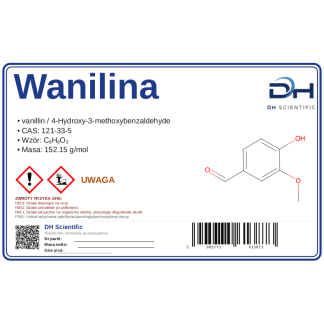
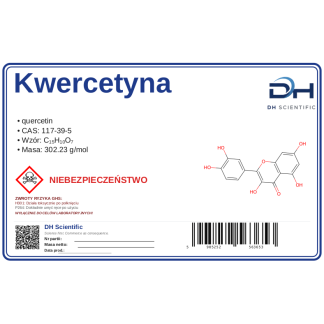
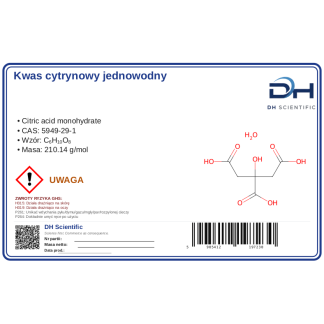
Reviews
There are no reviews yet.